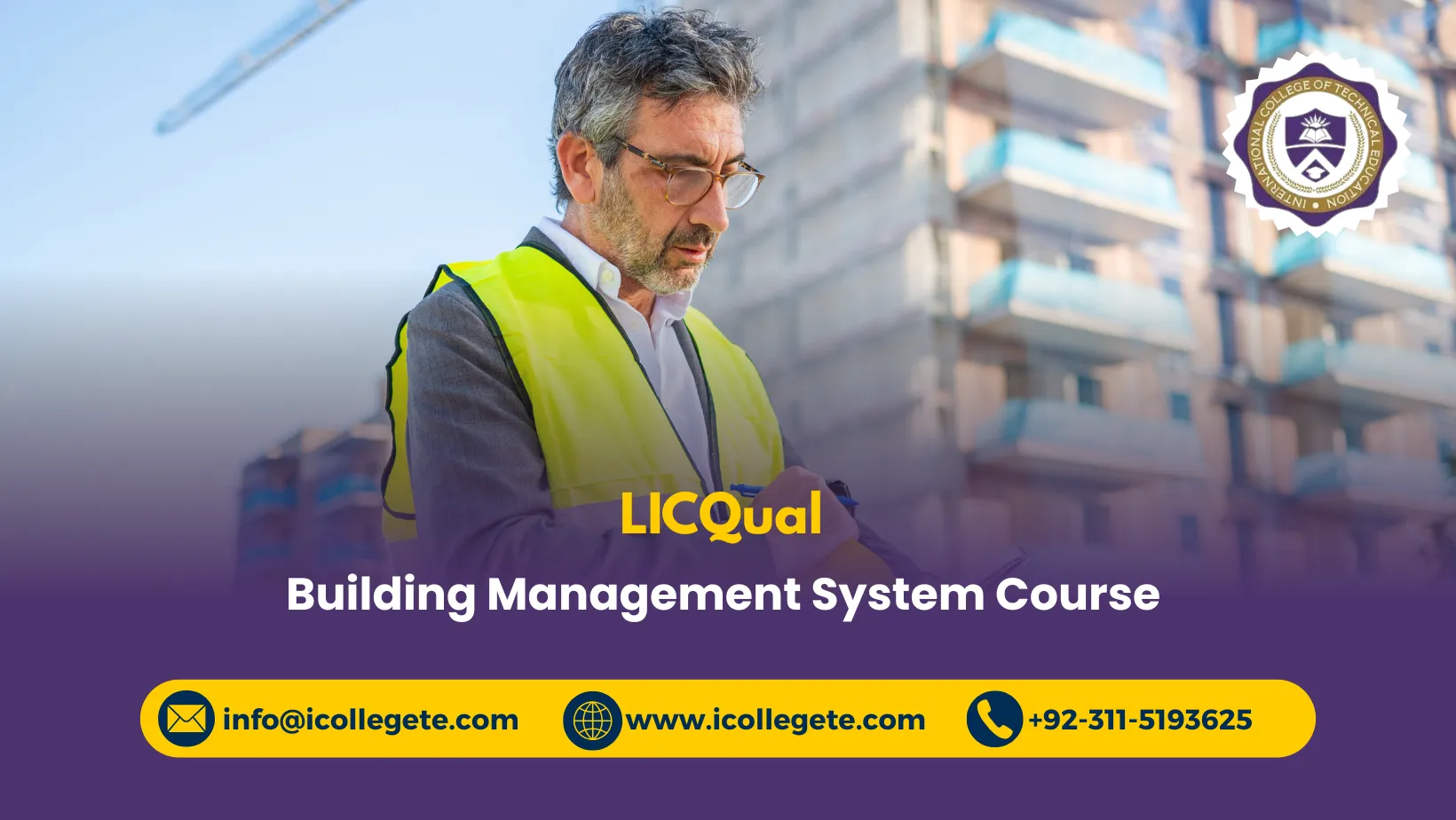
The LICQual Building Management System Course in Pakistan is designed to provide learners with practical and technical knowledge of modern Building Management Systems (BMS), building automation, energy management, HVAC controls, facility operations, and smart building technologies. A BMS integrates and monitors essential building services such as heating, ventilation and air conditioning, electrical systems, lighting, security, environmental controls, and other operational systems through centralised monitoring and control. LICQual’s published Building Management System qualification information also highlights energy management, automation, environmental control, sustainability, and maintenance as key areas of BMS competence.
The course develops an understanding of how electrical and mechanical controls interact with building services and how automation can improve operational efficiency, occupant comfort, safety, reliability, and energy performance. Learners also explore preventive maintenance, troubleshooting, facility operations, sustainability practices, and practical BMS applications.
The programme is particularly relevant to Pakistan’s evolving commercial, industrial, residential, healthcare, hospitality, and institutional building environments. Pakistan’s Energy Conservation Building Code 2023 establishes requirements related to energy-efficient building design and operation, while the Green Building Code of Pakistan includes provisions concerning energy data collection, building controls, HVAC systems, and automated demand response.
Through theoretical learning, practical activities, and case studies, the LICQual Building Management System Course helps learners develop workplace-relevant capabilities for supporting efficient, safe, automated, and sustainable building operations.
Course Study Units
Unit 1: Introduction to Building Management Systems
This unit introduces the fundamental principles, purpose, architecture, and applications of Building Management Systems.
Key areas include:
- Definition and purpose of Building Management Systems
- BMS architecture and operating principles
- Main components of a BMS
- Sensors, controllers, actuators, and interfaces
- Central monitoring and control
- Building services integrated with BMS
- BMS applications in commercial and industrial buildings
- Benefits of building automation
- Relationship between BMS and facility management
- Introduction to data monitoring and system alarms
Unit 2: Basics of Electrical and Mechanical Controls
This unit develops foundational knowledge of electrical and mechanical control systems used within modern buildings.
Key areas include:
- Electrical control fundamentals
- Mechanical control principles
- Switches, relays, contactors, and control devices
- Sensors and actuators
- Temperature, pressure, humidity, and flow monitoring
- Control loops and feedback
- Direct Digital Control principles
- Motor and equipment control
- Basic control troubleshooting
- Electrical and mechanical safety considerations
Unit 3: HVAC Systems and Energy Efficiency
This unit focuses on HVAC systems and their integration with BMS technologies for effective environmental control and energy performance.
Key areas include:
- Heating, ventilation, and air conditioning fundamentals
- HVAC components and operating principles
- Temperature and humidity control
- Airflow and ventilation management
- HVAC sensors and actuators
- HVAC scheduling and set-point management
- Energy-efficient HVAC operation
- Monitoring energy consumption
- Demand management
- Preventive maintenance of HVAC systems
- BMS-based HVAC optimisation
Energy management is a significant component of modern BMS applications. Pakistan’s ECBC-2023 specifically addresses energy-efficient operation of building systems and equipment.
Unit 4: Building Automation and Smart Technologies
This unit explores the technologies transforming conventional buildings into connected and intelligent environments.
Key areas include:
- Building automation concepts
- Smart building architecture
- Automated lighting controls
- Smart HVAC controls
- Digital monitoring systems
- IoT applications in buildings
- Communication between building systems
- BMS software and graphical interfaces
- Data acquisition and monitoring
- Alarm and event management
- Smart sensors and connected devices
- Introduction to building analytics
International work on building automation and controls increasingly links automation functions with building energy performance. ISO is currently developing a new edition of ISO 52120-1 covering the contribution of building automation, controls, and building management to building energy performance.
Unit 5: Safety Regulations and Compliance Standards
This unit develops awareness of safety, regulatory, and compliance requirements relevant to building systems and operations.
Key areas include:
- Building safety principles
- Electrical safety requirements
- Mechanical safety considerations
- Fire and emergency systems
- Safe operation of building services
- Risk assessment principles
- Permit and control procedures
- Compliance monitoring
- Emergency response systems
- Documentation and record keeping
- National and international standards
- Responsibilities of building management personnel
Learners develop the ability to recognise compliance requirements and incorporate safety considerations into BMS operation and facility management.
Unit 6: Facility Operations and Maintenance
This unit focuses on maintaining reliable and efficient building operations.
Key areas include:
- Facility management fundamentals
- Planned preventive maintenance
- Corrective maintenance
- Maintenance scheduling
- Equipment inspections
- BMS alarm management
- Fault identification
- Troubleshooting procedures
- Maintenance records
- Performance monitoring
- Contractor and service coordination
- Asset management
- Operational continuity
The aim is to help learners understand how BMS information can support maintenance planning, fault identification, operational decisions, and building performance improvement.
Unit 7: Energy Conservation and Sustainability Practices
This unit examines strategies for reducing energy consumption and improving environmental performance.
Key areas include:
- Energy conservation principles
- Building energy monitoring
- Energy performance indicators
- Efficient lighting systems
- HVAC energy optimisation
- Building occupancy controls
- Automated scheduling
- Energy-efficient equipment operation
- Renewable energy integration
- Water and resource conservation
- Sustainable building practices
- Energy performance improvement plans
The Green Building Code of Pakistan includes requirements concerning automated collection and display of energy data and provisions for building controls supporting demand response.
Unit 8: Practical Training and Case Studies
This unit provides opportunities to apply theoretical BMS knowledge to realistic building-management scenarios.
Practical activities may include:
- Identifying BMS components
- Reading basic control diagrams
- Understanding sensor and actuator operation
- Monitoring HVAC parameters
- Analysing BMS alarms
- Reviewing energy consumption data
- Developing basic maintenance schedules
- Identifying operational faults
- Evaluating building automation scenarios
- Analysing energy-efficiency opportunities
- Reviewing real-world building case studies
- Developing recommendations for improved building performance
Course Learning Outcomes
Upon successful completion of the LICQual Building Management System Course in Pakistan, learners will be able to:
Understanding BMS Fundamentals
- Explain the purpose and functions of Building Management Systems.
- Identify major BMS components and their roles.
- Describe how building services can be integrated through centralised control.
- Explain the relationship between BMS, automation, and facility management.
Electrical and Mechanical Controls
- Explain basic electrical and mechanical control principles.
- Identify common sensors, actuators, relays, controllers, and control devices.
- Interpret basic control-system information.
- Recognise common control faults and appropriate troubleshooting approaches.
HVAC and Energy Management
- Explain fundamental HVAC operating principles.
- Describe how BMS can monitor and control HVAC systems.
- Apply basic energy-efficiency principles to building services.
- Evaluate building-system performance using operational and energy data.
Automation and Smart Technologies
- Explain the principles of building automation.
- Identify applications of smart sensors and connected building technologies.
- Describe how digital monitoring can support building performance.
- Explain the role of automation in modern smart buildings.
Safety and Compliance
- Recognise safety requirements associated with building systems.
- Apply basic risk-control principles to building operations.
- Identify the importance of compliance documentation.
- Support safe and compliant operation of building services.
Facility Operations and Maintenance
- Explain planned and corrective maintenance approaches.
- Support maintenance scheduling and equipment monitoring.
- Identify common operational problems.
- Use BMS information to support maintenance and troubleshooting activities.
Sustainability and Energy Conservation
- Identify opportunities for reducing building energy consumption.
- Explain sustainable building-management practices.
- Monitor basic energy-performance information.
- Recommend practical improvements for operational efficiency.
Practical Application
- Apply BMS concepts to realistic building scenarios.
- Analyse basic building-management case studies.
- Identify operational and energy-efficiency issues.
- Develop practical recommendations for improving building performance.
Course Benefits
Develop BMS Technical Knowledge
Learners gain structured knowledge of BMS architecture, control systems, HVAC integration, automation, sensors, monitoring, and facility operations.
Build Practical Building Automation Skills
The course connects theoretical concepts with practical building-management scenarios, helping learners understand how automated systems operate in real facilities.
Improve HVAC and Energy Management Knowledge
Learners develop an understanding of HVAC control, energy monitoring, scheduling, set-point management, and energy-conservation strategies.
Understand Smart Building Technologies
The course introduces learners to smart sensors, connected systems, digital monitoring, automation, and data-driven building management.
Strengthen Maintenance Capabilities
Learners develop knowledge of preventive maintenance, troubleshooting, alarm management, equipment monitoring, and operational documentation.
Support Sustainable Building Operations
The programme develops awareness of energy conservation and sustainability practices relevant to modern building management.
Develop Workplace-Relevant Competence
The combination of technical knowledge, practical training, and case studies helps learners apply BMS principles to realistic workplace situations.
Support International Career Development
BMS skills can be relevant across commercial buildings, industrial facilities, hospitals, hotels, educational institutions, shopping centres, residential developments, and smart-building projects.
Who Is This Course For?
The LICQual Building Management System Course in Pakistan is suitable for:
- Building management professionals
- Facility management personnel
- Facility supervisors
- Building operators
- Maintenance technicians
- Electrical technicians
- Mechanical technicians
- HVAC technicians
- Building services professionals
- Electrical engineering professionals
- Mechanical engineering professionals
- Construction professionals
- Property management personnel
- Maintenance supervisors
- Energy management personnel
- Smart-building technology professionals
- Individuals seeking BMS technical skills
- Learners planning a career in building automation
Basic knowledge of electrical, mechanical, construction, engineering, or building services can be beneficial, although specific entry requirements should be confirmed with the approved training centre offering the qualification.
Why Choose the LICQual Building Management System Course?
Industry-Relevant BMS Knowledge
The course focuses on technologies and operational practices used in modern building environments, including automation, HVAC controls, energy management, maintenance, and smart technologies.
Comprehensive Curriculum
The curriculum covers the complete learning pathway from BMS fundamentals and control systems to automation, compliance, facility operations, sustainability, and practical case studies.
Practical Orientation
Practical activities and case studies help bridge the gap between technical theory and workplace application.
Focus on Energy Efficiency
Energy management is integrated throughout the programme, reflecting the growing importance of efficient building operation and energy monitoring.
Smart Building Awareness
Learners gain exposure to automation, connected systems, digital monitoring, and smart-building technologies.
Suitable for Multiple Industries
BMS knowledge can be applied across offices, factories, hospitals, hotels, shopping centres, educational facilities, residential buildings, and other managed properties.
Structured Professional Development
The course provides a structured route for learners seeking to develop or strengthen technical knowledge in building automation and facility systems.
LICQual’s published qualification information similarly positions Building Management System learning around energy management, automation, maintenance, sustainability, and compliance.
Career Opportunities
After completing the course and gaining relevant practical experience, learners may explore roles such as:
- Building Management System Technician
- BMS Operator
- Building Automation Technician
- Facilities Technician
- Facilities Management Assistant
- HVAC Controls Technician
- Building Services Technician
- Maintenance Technician
- Building Automation Support Technician
- Energy Management Assistant
- Facility Operations Coordinator
- Building Systems Support Technician
Actual job titles, responsibilities, and progression opportunities depend on employer requirements, technical experience, additional qualifications, and local regulations.
Future Progression
The LICQual Building Management System Course in Pakistan can provide a foundation for continued professional development in building automation, facilities management, HVAC controls, energy management, smart buildings, and related technical disciplines.
Possible progression areas include:
Advanced Building Management
Learners can develop deeper expertise in BMS architecture, control strategies, system integration, monitoring, commissioning, and optimisation.
HVAC Controls and Automation
Further technical development can focus on advanced HVAC controls, DDC systems, sensors, actuators, control sequences, and HVAC optimisation.
Facilities Management
Learners can progress towards broader facility operations, maintenance management, asset management, contractor coordination, and building performance responsibilities.
Energy Management
Further study and professional development can support progression into energy monitoring, energy auditing, energy efficiency, sustainability, and building performance management.
Smart Building Technologies
Learners can specialise in IoT-enabled buildings, intelligent controls, building analytics, connected sensors, digital twins, and integrated smart-building platforms.
Building Automation and Controls
Further technical training can support progression towards specialist roles involving BMS programming, system commissioning, integration, troubleshooting, and optimisation.
Sustainability and Green Building
Learners can build additional competence in sustainable building operations, energy conservation, environmental performance, and green-building practices.
Engineering and Technical Management
With appropriate additional qualifications and experience, learners can progress towards supervisory and management responsibilities within building services, facilities, maintenance, automation, or energy-management environments.
Take the Next Step Toward World LICQual Building Management System Course-Enroll Now