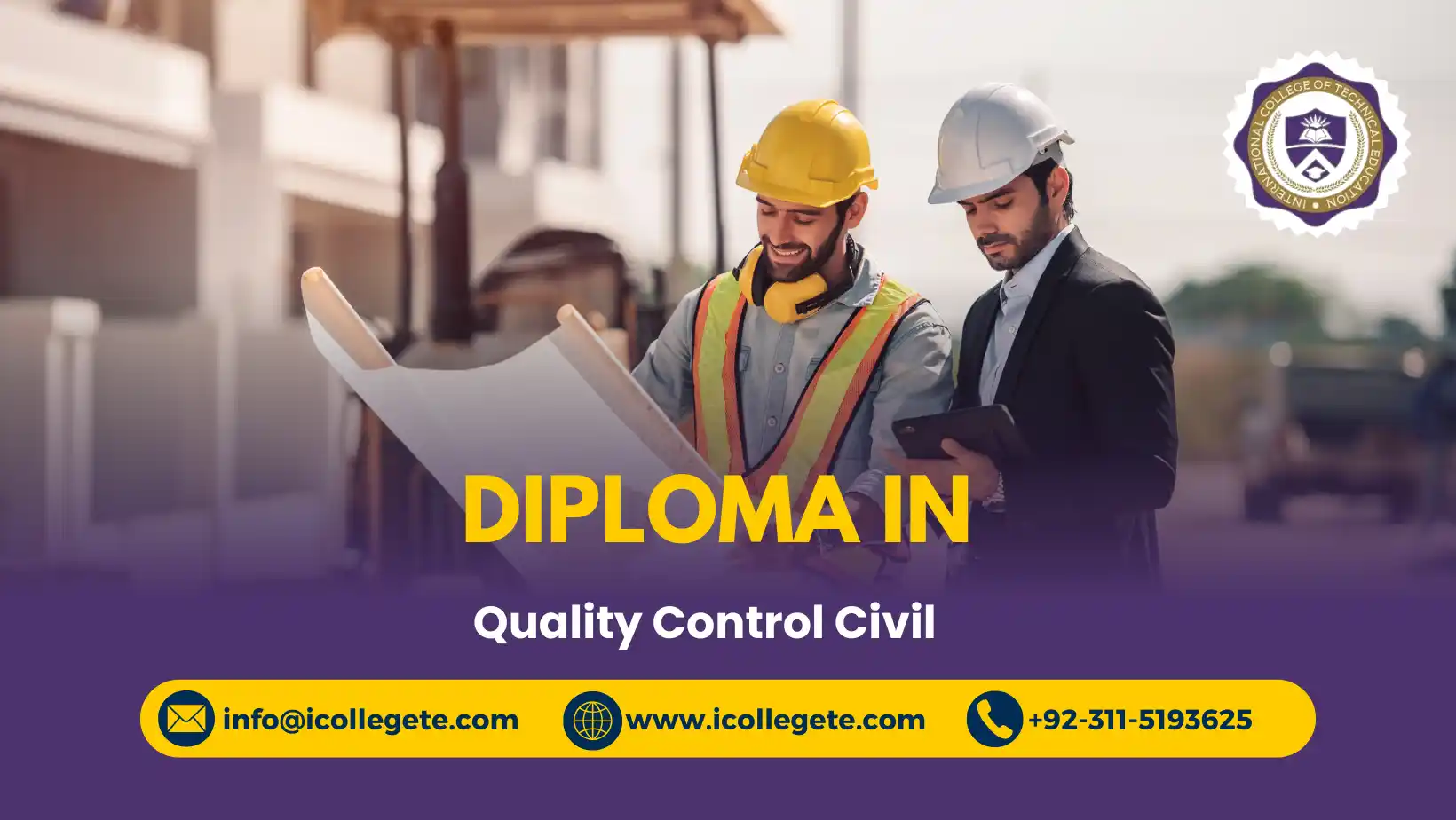
The Diploma in Quality Control Civil course is a professional program designed to train learners in the principles of quality assurance and control within civil engineering projects. It focuses on ensuring that construction works meet industry standards, safety regulations, and durability requirements. Students gain a strong foundation in monitoring, evaluating, and maintaining the quality of materials, processes, and structures used in civil engineering.
Throughout the diploma, learners are introduced to practical skills such as construction materials testing, site inspection, quality assurance techniques, and project documentation. The curriculum emphasizes hands-on training, enabling students to apply theoretical knowledge to real-world projects such as roads, bridges, and large-scale infrastructure.
Completing the Diploma in Quality Control Civil opens doors to rewarding career opportunities. Graduates can work as quality control engineers, site supervisors, or construction project managers. This diploma not only strengthens technical expertise but also enhances employability in the competitive construction industry, making it an excellent choice for those aiming to build a successful career in civil engineering quality management.
The Diploma in Quality Control Civil course is divided into several key units, each focusing on a specific area of quality control within the civil engineering field. Below is a breakdown of the study units:
- Introduction to Quality Control in Civil Engineering
- Fundamentals of quality control and quality assurance
- The role of quality control in construction projects
- Overview of the construction industry and its challenges in quality management
- Materials Testing and Inspection
- Types of construction materials and their properties
- Testing methods for concrete, steel, asphalt, and other materials
- Techniques for inspecting the quality of materials used in construction
- Quality Assurance Systems and Standards
- Introduction to quality management systems (QMS)
- Understanding ISO standards for construction quality (e.g., ISO 9001)
- Procedures for ensuring adherence to quality assurance protocols
- Building Codes and Regulations
- Overview of building codes and legal requirements for construction
- The role of regulations in maintaining safety and quality standards
- How to comply with local and international building codes
- Risk Management in Construction Quality Control
- Identifying potential risks in construction projects
- Techniques for assessing and mitigating quality-related risks
- Developing risk management plans for quality control
- Statistical Methods for Quality Control
- Using statistical tools to monitor and evaluate construction quality
- Process control techniques such as control charts and sampling
- Applying Six Sigma principles in construction projects
- Quality Audits and Inspections
- Conducting quality audits on construction projects
- Methods for performing inspections at various stages of construction
- Preparing inspection reports and corrective action plans
- Safety, Environmental, and Sustainability Standards
- Ensuring safety and environmental compliance in construction quality control
- Integrating sustainability into quality management processes
- Adopting green building practices and their impact on quality control
- Final Project & Assessment
- A comprehensive project where students apply their knowledge to a real-world construction quality control scenario
- Assessment of practical and theoretical skills through written exams and project work
Upon successful completion of the Diploma in Quality Control Civil, students will be able to:
- Understand the principles of quality control and quality assurance in construction projects.
- Conduct tests and inspections on construction materials to ensure they meet the required specifications and standards.
- Implement quality management systems to monitor and improve construction processes.
- Interpret and apply national and international building codes, regulations, and standards in quality control practices.
- Analyze and control the risks associated with construction quality management.
- Use statistical tools to evaluate construction processes and identify areas for improvement.
- Perform quality audits and inspections to ensure compliance with project requirements.
- Manage safety, environmental, and sustainability aspects in the context of quality control in civil engineering.
The Diploma in Quality Control Civil offers a multitude of benefits that can significantly enhance your career in construction and civil engineering:
- Increased Career Opportunities
- With the growing demand for skilled professionals who can ensure high-quality standards in construction, this diploma opens up a wide range of job opportunities in construction companies, consultancy firms, and government agencies.
- Comprehensive Knowledge and Skills
- This course provides a well-rounded understanding of the key principles and practices involved in quality control, ensuring you are equipped with the skills necessary for success in the field.
- Practical Experience
- The course includes practical training that allows students to apply their learning to real-world construction scenarios, providing them with the hands-on experience necessary to excel in their roles.
- Enhanced Earning Potential
- Professionals with expertise in quality control are highly sought after and typically command higher salaries. Completing this diploma increases your value in the job market, leading to better career prospects and earning potential.
- Career Progression
- By gaining specialized knowledge in quality control, you’ll have the potential to move into higher-level positions, including quality manager, project manager, or senior consultant roles.
- Global Relevance
- The course covers international quality standards and practices, preparing graduates to work in a variety of construction environments around the world.
The Diploma in Quality Control Civil is ideal for:
- Aspiring Quality Control Engineers: Individuals looking to build a career in quality control within the construction or civil engineering sectors.
- Current Civil Engineers and Technicians: Professionals in the construction industry who want to specialize in quality control and improve their skill set.
- Construction Managers: Managers seeking to enhance their understanding of quality assurance systems to better oversee construction projects.
- Project Managers: Professionals who wish to improve their knowledge of quality management systems and processes for better project execution.
- Quality Inspectors: Those working in construction quality inspection who want to formalize their skills with a recognized qualification.
- Graduates in Civil Engineering: Recent graduates seeking to gain expertise in quality control to enhance their employability in the competitive construction job market.