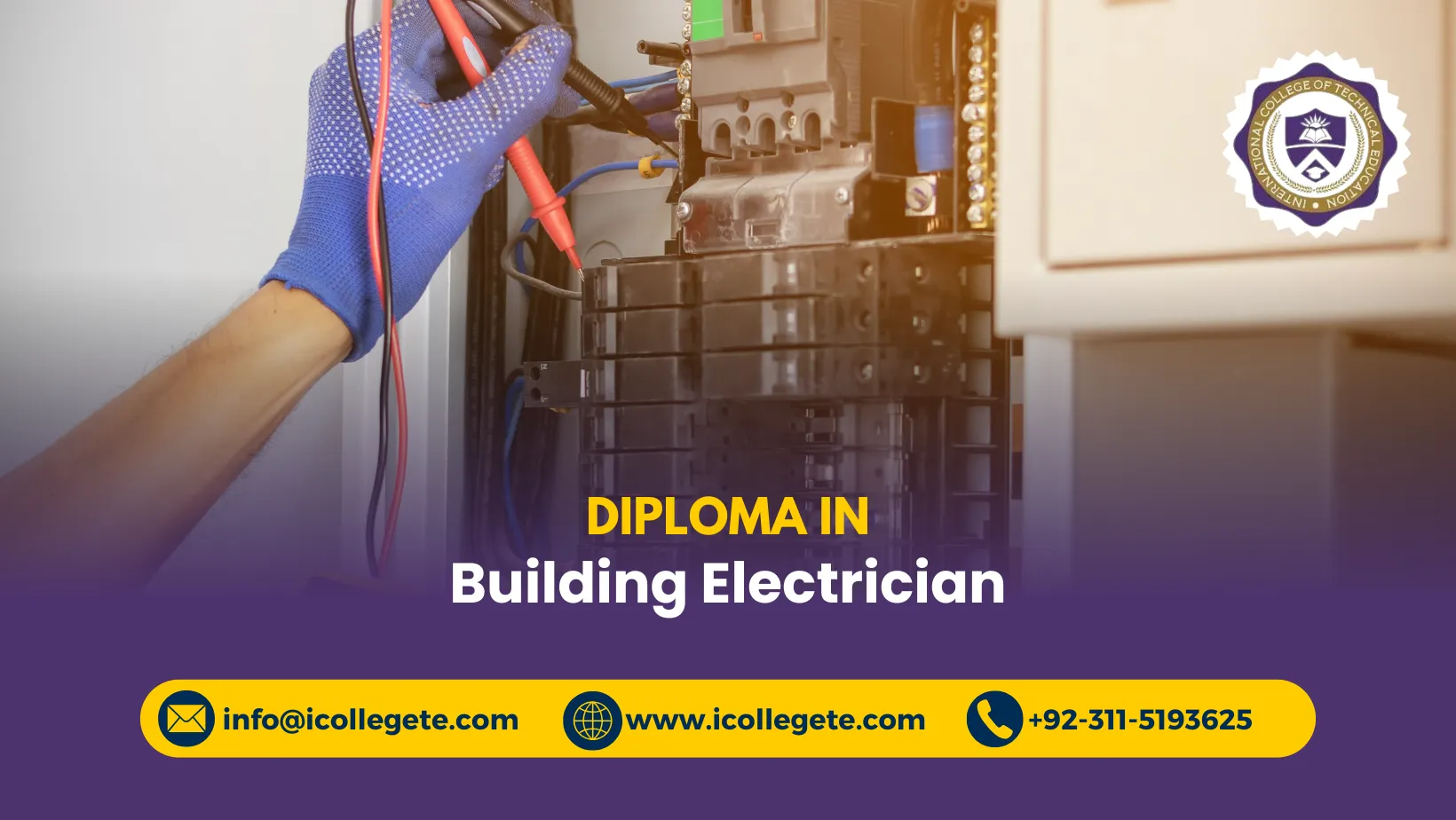
The Diploma in Building Electrician is a practical, career-focused electrical course designed to develop the knowledge and skills required for electrical installation, maintenance, testing, and fault-finding in residential, commercial, and other building environments. The course provides learners with a clear understanding of electrical principles, wiring systems, distribution boards, lighting circuits, socket outlets, protective devices, earthing, electrical safety, and safe working practices. It is suitable for individuals who want to build a strong foundation in building electrical work and develop practical competence for real-world applications.
Throughout the Diploma in Building Electrician, learners explore essential techniques for planning and installing electrical systems while understanding how to identify faults and carry out appropriate maintenance procedures. The course also introduces learners to electrical drawings, circuit diagrams, cable selection, testing procedures, and safety requirements relevant to building electrical installations. By combining theoretical knowledge with practical, industry-focused learning, the diploma helps learners understand how electrical systems are designed, installed, inspected, and maintained safely and efficiently.
This course is suitable for aspiring building electricians, electrical technicians, maintenance personnel, construction workers, and individuals seeking to develop professional skills in building electrical installation and maintenance.
The Diploma in Building Electrician includes the following key study units:
- Fundamentals of Electrical Principles and Safety
- Building Wiring Systems and Circuit Layouts
- Power Distribution and Load Management in Buildings
- Motor Controls and Electrical Equipment Installation
- Maintenance, Repair, and Preventive Practices
- Fault Diagnosis, Troubleshooting, and Use of Diagnostic Tools
Upon completing the Diploma in Building Electrician , learners will have achieved the following outcomes:
Fundamentals of Electrical Principles and Safety
Learners will understand the basic principles of electricity, current, voltage, and resistance. They will also apply safety standards and practices to ensure safe handling of electrical systems in building environments.
Building Wiring Systems and Circuit Layouts
Students will be able to interpret wiring diagrams and circuit layouts accurately. They will gain the ability to install and test building wiring systems for residential and commercial projects.
Power Distribution and Load Management in Buildings
Graduates will understand power distribution systems and load balancing techniques. They will learn to manage electrical loads effectively to ensure efficiency and safety in building installations.
Motor Controls and Electrical Equipment Installation
Learners will identify different types of motors and electrical equipment used in buildings. They will develop skills to install, maintain, and troubleshoot motor control systems and electrical devices.
Maintenance, Repair, and Preventive Practices
Students will perform routine maintenance and repair of building electrical systems. They will apply preventive practices to extend the life of installations and reduce system failures.
Fault Diagnosis, Troubleshooting, and Use of Diagnostic Tools
Graduates will operate diagnostic tools such as multimeters and testers. They will detect faults in building electrical systems and implement effective troubleshooting solutions.
The Diploma in Building Electrician provides practical electrical knowledge and industry-relevant skills for working with electrical systems in residential, commercial, and building environments. Key benefits include:
- Develop a strong understanding of electrical principles and building electrical systems.
- Learn practical techniques for electrical wiring, installation, and maintenance.
- Understand lighting circuits, socket outlets, distribution boards, and electrical accessories.
- Develop skills in cable selection, circuit design, and electrical system planning.
- Learn how to identify, diagnose, and troubleshoot common electrical faults.
- Gain knowledge of protective devices, earthing, bonding, and electrical safety.
- Develop the ability to read and interpret electrical drawings and circuit diagrams.
- Understand electrical testing and inspection procedures for building installations.
- Improve awareness of safe working practices and electrical hazards.
- Build practical knowledge relevant to residential and commercial construction projects.
- Strengthen technical skills for electrician and electrical maintenance roles.
- Develop a foundation for applying electrical knowledge in real workplace environments.
- Enhance professional confidence when working with building electrical installations.
- Support career opportunities in construction, property maintenance, facilities management, and electrical services.
The Diploma in Building Electrician is suitable for individuals who want to develop practical and technical knowledge in building electrical installation, maintenance, testing, and fault-finding. The course can be particularly beneficial for:
- Aspiring building electricians seeking professional electrical skills.
- Beginners interested in starting a career in electrical installation.
- Electrical technicians wanting to strengthen their building electrical knowledge.
- Construction workers involved in electrical installation activities.
- Maintenance workers responsible for building electrical systems.
- Facilities and property maintenance personnel.
- Individuals working on residential electrical installation projects.
- Commercial building maintenance and electrical support staff.
- Apprentices seeking structured knowledge of electrical systems.
- Skilled workers looking to expand their technical capabilities.
- Career changers interested in the electrical and construction sectors.
- Individuals seeking practical knowledge of wiring, lighting, distribution, and electrical safety.
- Professionals who want to improve their understanding of electrical testing and fault diagnosis.