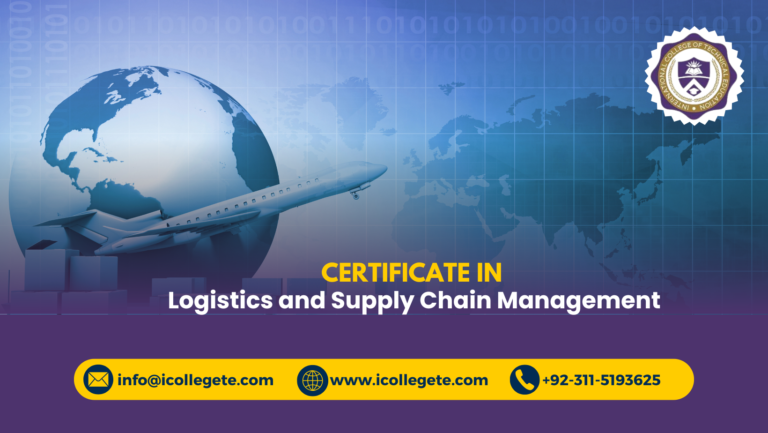

The Diploma in Logistics and Supply Chain Management is a professional program designed to equip learners with the essential knowledge and skills required to manage the flow of goods, services, and information across global supply chains. This course focuses on the strategic and operational aspects of logistics, procurement, inventory management, transportation, warehousing, and distribution.
Students will gain insights into supply chain planning, demand forecasting, lean operations, and international trade regulations, while also learning how to optimize efficiency and reduce costs in complex supply networks. The program blends theoretical concepts with practical applications, preparing graduates to handle real-world challenges in logistics and supply chain operations.
Career opportunities for graduates include roles such as Supply Chain Analyst, Logistics Coordinator, Procurement Specialist, Warehouse Manager, and Operations Executive across industries like manufacturing, retail, e-commerce, transportation, and international trade.
The Diploma in Logistics and Supply Chain Management includes several key modules that cover essential aspects of supply chain management:
- Introduction to Logistics and Supply Chain Management
- Overview of logistics and supply chain concepts.
- The role of supply chain management in modern business environments.
- Supply Chain Strategy and Design
- Development of supply chain strategies aligned with business goals.
- Design of efficient and cost-effective supply chains.
- Procurement and Sourcing
- Sourcing strategies and supplier relationship management.
- Contract negotiation and procurement best practices.
- Inventory Management and Control
- Techniques for inventory optimization, demand forecasting, and stock replenishment.
- Inventory control methods such as Just-in-Time (JIT) and Economic Order Quantity (EOQ).
- Transportation and Distribution Management
- Study of transportation modes (land, sea, air) and their pros and cons.
- Strategies for optimizing transportation routes and managing distribution costs.
- Warehouse and Distribution Center Management
- Principles of warehouse operations, layout planning, and inventory management.
- Use of technology in warehouse management (e.g., Warehouse Management Systems).
- Risk Management and Resilience in Supply Chains
- Identifying and managing risks in the supply chain.
- Creating contingency plans and improving supply chain resilience.
- Technology in Supply Chain Management
- The role of ERP systems, RFID, and other technologies in streamlining supply chain operations.
- Automation and data analytics in logistics and supply chain management.
Upon completing the Diploma in Logistics and Supply Chain Management, students will be able to:
- Understand Supply Chain Operations: Develop a deep understanding of the end-to-end logistics and supply chain processes, from procurement to distribution.
- Optimize Logistics Networks: Gain the skills to optimize transportation, warehousing, and inventory management for cost reduction and efficiency.
- Develop Supply Chain Strategies: Learn how to create effective supply chain strategies and align them with organizational goals.
- Manage Procurement and Sourcing: Understand the procurement process and how to manage suppliers and contracts effectively.
- Implement Warehouse and Inventory Management Systems: Learn how to implement and optimize inventory control systems, reducing stockouts and excess inventory.
- Use Technology to Enhance Supply Chain Performance: Gain proficiency in using supply chain management software, technologies, and tools to increase productivity and visibility.
- Handle Supply Chain Risks: Learn how to assess and mitigate risks in the supply chain, ensuring business continuity in case of disruptions.
- Improve Customer Satisfaction: Understand how logistics decisions impact customer satisfaction and learn to create systems that deliver on-time, high-quality service.
The Diploma in Logistics and Supply Chain Management offers a variety of benefits for students looking to enhance their skills and advance their careers:
- Career Advancement Opportunities: A comprehensive understanding of logistics and supply chain management opens doors to career opportunities in procurement, warehousing, transportation, and more.
- Practical, In-Demand Skills: Learn practical, hands-on techniques that can be directly applied to real-world logistics and supply chain challenges.
- Improved Efficiency: Learn how to design and optimize supply chain processes that reduce operational costs, improve efficiency, and boost overall performance.
- Increased Earning Potential: With expertise in supply chain management, you can increase your chances of securing higher-paying roles in logistics, management, and consulting.
- Global Applicability: Logistics and supply chain management are essential in industries across the globe, meaning your skills will be transferable to various sectors and geographic locations.
- Networking Opportunities: Gain the opportunity to connect with industry professionals and expand your network in the field of logistics and supply chain management.
The Diploma in Logistics and Supply Chain Management is ideal for individuals who are looking to develop their knowledge in logistics and supply chain operations or advance their careers within this field. This course is suitable for:
- Aspiring Supply Chain Managers: Those looking to take on management roles in logistics, procurement, or supply chain operations.
- Current Professionals in Logistics or Operations: Professionals who want to expand their expertise and take on more responsibility in supply chain management.
- Business Owners and Entrepreneurs: Entrepreneurs looking to better understand supply chain and logistics strategies to enhance their operations.
- Graduates in Business, Engineering, or Logistics: Students with backgrounds in business or engineering who want to specialize in logistics and supply chain management.
- Professionals Looking for Career Advancement: Those who wish to progress in their current roles, aiming for higher-level positions in logistics or supply chain management.