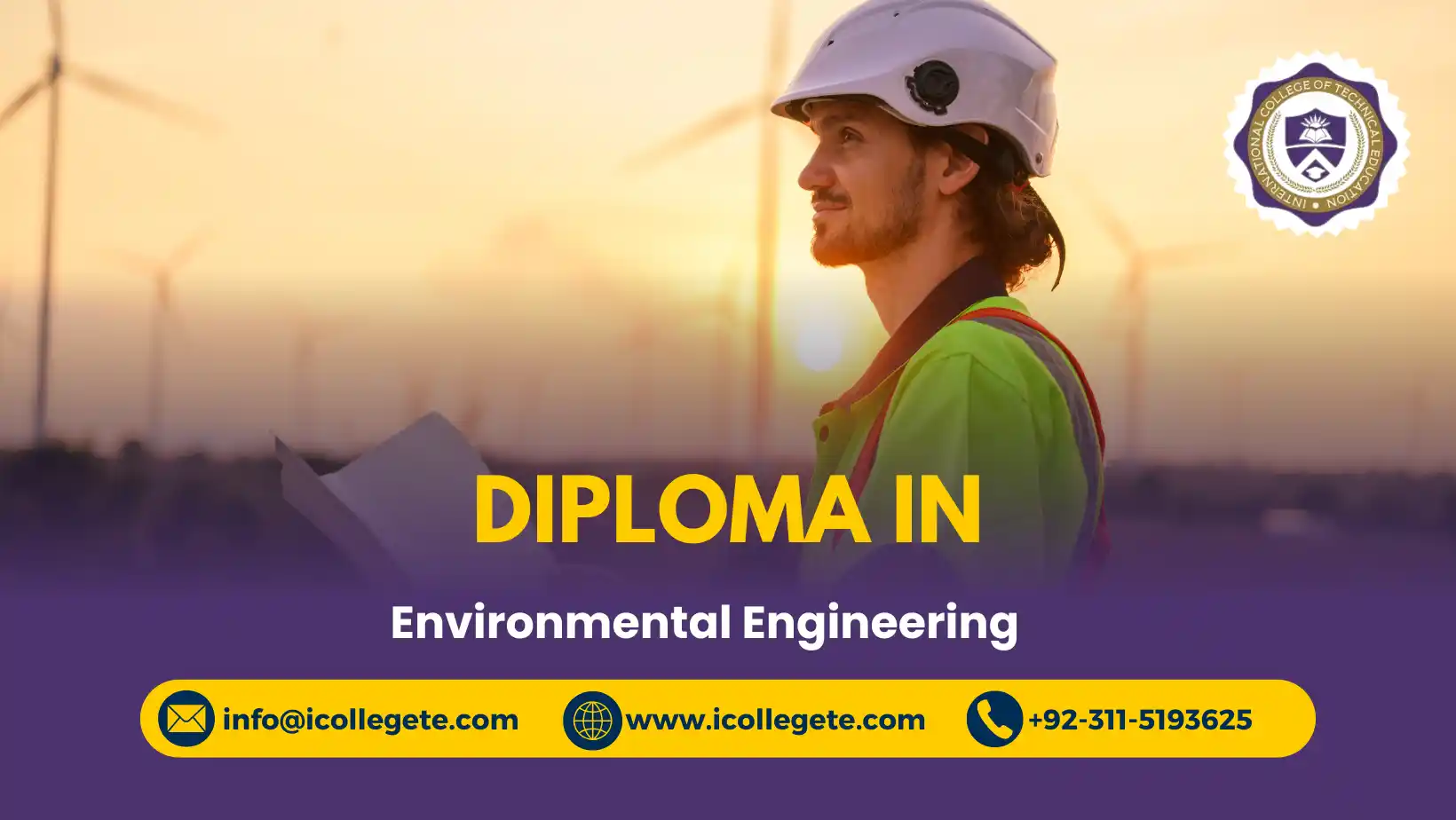
The Diploma in Environmental Engineering is a comprehensive program designed to prepare students to tackle pressing environmental challenges through innovative engineering solutions. This course blends the principles of environmental science with practical engineering applications, focusing on the sustainable management of natural resources and the protection of ecosystems.
Learners will study key areas such as water and wastewater treatment, air pollution control, solid and hazardous waste management, renewable energy systems, and environmental impact assessment. The program emphasizes both theoretical knowledge and hands-on training, ensuring graduates are capable of designing, implementing, and monitoring systems that meet environmental standards and promote sustainability.
Graduates of this diploma are well-positioned to pursue careers in environmental consulting firms, government agencies, manufacturing industries, renewable energy companies, and non-governmental organizations (NGOs). The course also serves as a strong foundation for advanced studies in environmental engineering or related fields.
The Diploma in Environmental Engineering consists of several comprehensive units that cover a wide range of topics related to environmental protection and sustainability:
- Introduction to Environmental Engineering
- Water and Wastewater Treatment
- Air Quality and Pollution Control
- Waste Management and Recycling
- Environmental Regulations and Policies
- Renewable Energy Systems
- Sustainability and Development
- Environmental Impact Assessment
The Environmental Engineering Course equips learners with essential knowledge and practical skills to address environmental challenges, improve sustainability, and manage natural resources effectively.
Introduction to Environmental Engineering
- Understand the basic concepts and scope of environmental engineering
- Identify major environmental issues and their impacts
- Learn the role of engineers in environmental protection
Water and Wastewater Treatment
- Understand water purification and wastewater treatment processes
- Learn methods for safe water supply and sanitation systems
- Develop knowledge of water quality management techniques
Air Quality and Pollution Control
- Understand causes and effects of air pollution
- Learn techniques for controlling industrial and environmental emissions
- Identify methods to improve air quality standards
Waste Management and Recycling
- Understand waste collection, treatment, and disposal methods
- Learn recycling techniques and sustainable waste management practices
- Develop awareness of environmental conservation strategies
Environmental Regulations and Policies
- Understand environmental laws and regulatory standards
- Learn compliance requirements for industries and organizations
- Identify policies related to environmental protection and sustainability
Renewable Energy Systems
- Understand different types of renewable energy sources
- Learn applications of solar, wind, and other sustainable energy systems
- Develop knowledge of energy-efficient technologies
Sustainability and Development
- Understand principles of sustainable development
- Learn strategies for balancing economic growth and environmental protection
- Develop awareness of resource conservation methods
Environmental Impact Assessment
- Understand methods for assessing environmental impacts of projects
- Learn techniques for environmental risk analysis and reporting
- Develop skills to recommend mitigation and sustainability measures
The Environmental Engineering Course provides practical knowledge and technical skills to solve environmental and sustainability challenges.
- Learn water treatment and pollution control techniques
- Develop knowledge of renewable energy systems
- Understand waste management and recycling processes
- Gain awareness of environmental laws and regulations
- Improve problem-solving and analytical skills
- Learn sustainable development and resource conservation methods
- Increase career opportunities in environmental industries
- Build a strong foundation for environmental protection careers
This course is suitable for individuals interested in environmental protection, sustainability, and engineering solutions.
- Students interested in environmental and engineering fields
- Fresh learners seeking technical and professional skills
- Individuals passionate about sustainability and conservation
- Job seekers looking for careers in environmental industries
- Professionals wanting to upgrade environmental knowledge
- Candidates interested in renewable energy systems
- Learners aiming to work in waste and pollution management
- Anyone interested in protecting natural resources and environment