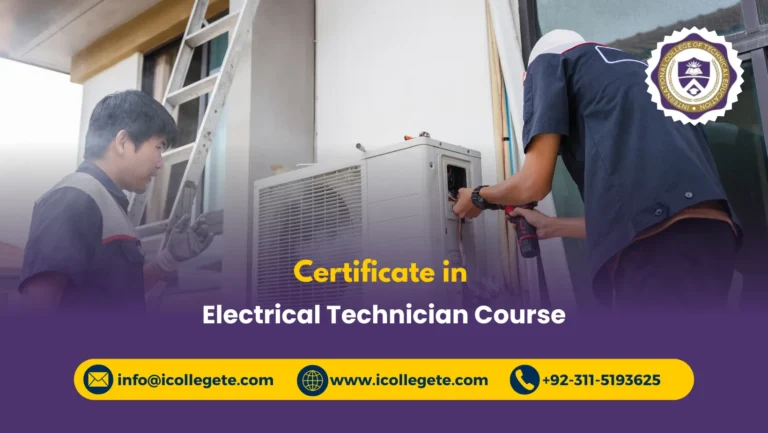
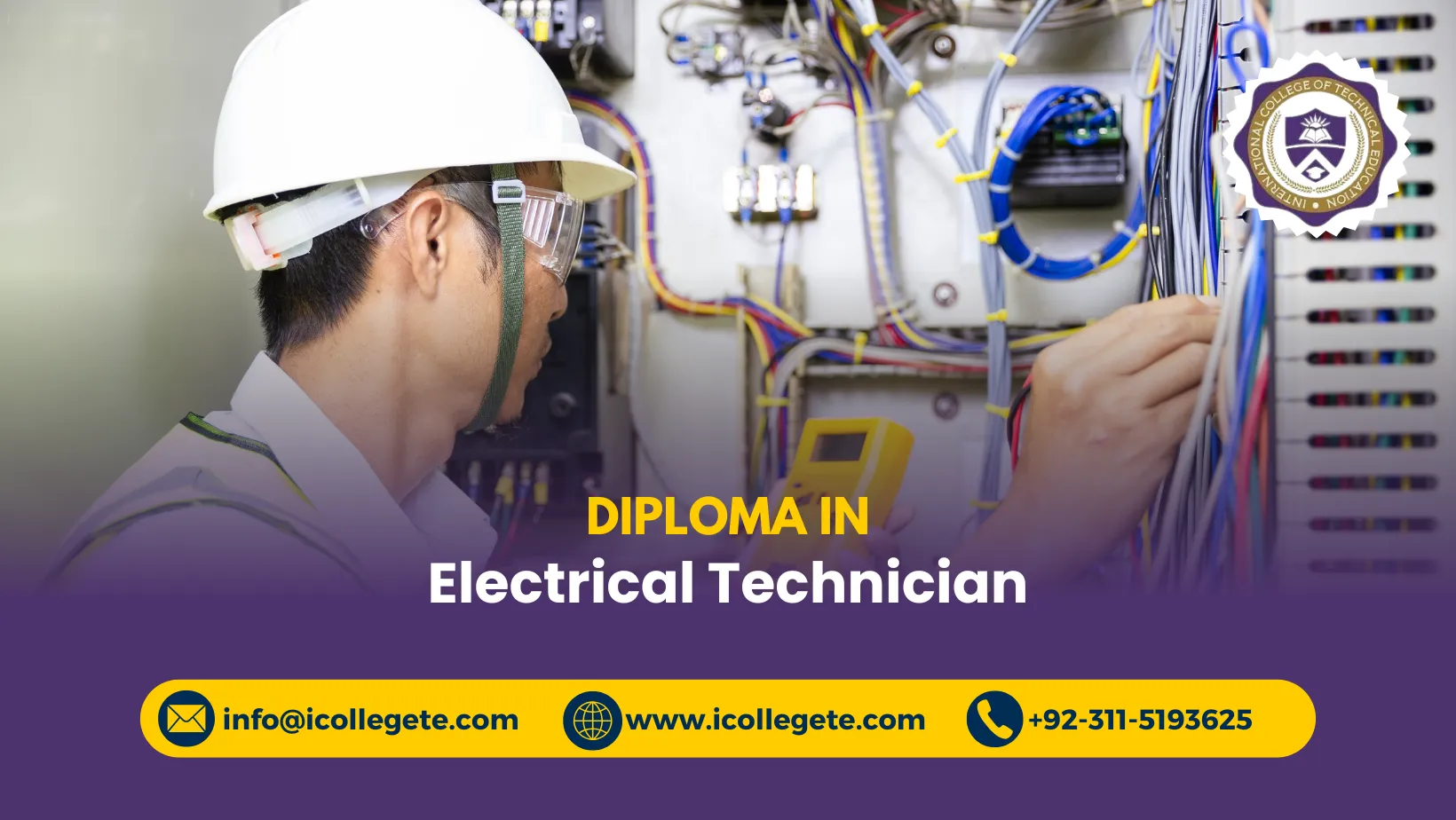
The Diploma in Electrical Technician is a practical, career-focused programme designed to develop essential knowledge and technical skills for working with electrical systems, installations, equipment, and maintenance activities. The course provides learners with a strong understanding of electrical principles, wiring practices, circuit protection, electrical components, testing procedures, and workplace safety. It is suitable for individuals who want to build practical competence and understand how electrical systems are installed, inspected, maintained, and repaired in residential, commercial, and industrial environments.
Throughout the Diploma in Electrical Technician, learners develop an understanding of electrical circuits, power distribution, wiring systems, electrical tools and equipment, fault identification, testing techniques, and preventive maintenance. The programme also highlights safe working practices, electrical hazards, risk control, and the importance of following appropriate technical procedures when carrying out electrical work.
This electrical technician diploma is relevant to learners seeking practical electrical training for technician-level roles and those looking to strengthen their existing technical knowledge. It can support employment in electrical installation, maintenance, facilities management, building services, engineering support, and related technical environments. By combining theoretical understanding with practical electrical concepts, the course helps learners develop the confidence, awareness, and technical foundation required to work responsibly with modern electrical systems.
The Diploma in Electrical Technician includes the following key study units
- Fundamentals of Electrical Principles and Safety
- Electrical Circuits and Wiring Systems
- Power Distribution and Load Management
- Motor Controls and Industrial Applications
- Installation, Maintenance, and Repair Practices
- Diagnostic Tools, Fault Detection, and Troubleshooting
Upon completing the Diploma in Electrical Technician learners will have achieved the following outcomes:
Fundamentals of Electrical Principles and Safety
- Explain the basic principles of electricity, current, voltage, and resistance.
- Apply safety standards and practices when working with electrical systems.
- Demonstrate understanding of electrical hazards and preventive measures.
Electrical Circuits and Wiring Systems
- Interpret wiring diagrams and circuit layouts accurately.
- Construct and test electrical circuits for residential and commercial use.
- Diagnose common wiring issues and apply corrective solutions.
Power Distribution and Load Management
- Understand power distribution systems and load balancing techniques.
- Apply knowledge of transformers, circuit breakers, and distribution panels.
- Manage electrical loads to ensure efficiency and safety in installations.
Motor Controls and Industrial Applications
- Identify different types of motors and their applications.
- Install and maintain motor control systems in industrial settings.
- Troubleshoot motor faults and apply repair techniques effectively.
Installation, Maintenance, and Repair Practices
- Perform installation of electrical systems in residential and commercial projects.
- Apply preventive maintenance techniques to extend system life.
- Conduct repairs and servicing to ensure optimal system performance.
Diagnostic Tools, Fault Detection, and Troubleshooting
- Operate diagnostic tools such as multimeters and testers.
- Detect and analyze faults in electrical systems using systematic methods.
- Recommend and implement effective troubleshooting solutions.
The Diploma in Electrical Technician provides a range of practical and professional benefits, helping learners develop the technical knowledge, workplace awareness, and practical understanding required to work confidently with electrical systems. Key benefits of the course include:
- Develops practical knowledge of electrical systems, circuits, wiring, and components.
- Builds a strong understanding of electrical installation and maintenance principles.
- Improves skills in identifying electrical faults and applying appropriate troubleshooting methods.
- Provides knowledge of electrical testing, inspection, and basic diagnostic procedures.
- Strengthens understanding of electrical safety, hazards, risk control, and safe working practices.
- Helps learners understand the use of electrical tools, equipment, and testing instruments.
- Covers electrical systems relevant to residential, commercial, and industrial environments.
- Develops technical problem-solving and decision-making skills for common electrical tasks.
- Enhances awareness of power distribution, circuit protection, and electrical equipment.
- Supports learners in developing practical competence for technician-level electrical responsibilities.
- Provides useful knowledge for roles in electrical installation, maintenance, facilities management, and building services.
- Strengthens a professional foundation for individuals seeking to enter or develop within the electrical engineering sector.
- Improves workplace readiness by combining technical knowledge with safety-conscious working practices.
- Helps existing electrical workers strengthen and formalise their understanding of electrical technician practices.
The Diploma in Electrical Technician is suitable for learners who want to develop practical electrical knowledge and build skills relevant to electrical installation, maintenance, testing, and technician-level work. It can be suitable for both beginners and individuals with some previous technical experience.
- Individuals interested in starting a career as an electrical technician.
- School or college leavers seeking practical electrical training.
- Beginners who want to develop foundational electrical knowledge and skills.
- Electrical workers looking to strengthen their technical understanding.
- Maintenance technicians involved in electrical equipment and systems.
- Construction workers who want to develop electrical knowledge for building projects.
- Engineering assistants and technical support staff working with electrical systems.
- Facilities and building maintenance personnel responsible for electrical equipment.
- Apprentices or trainees seeking structured knowledge of electrical technician practices.
- Professionals looking to improve their understanding of electrical safety and maintenance.
- Individuals seeking practical knowledge of wiring, circuits, testing, and fault identification.
- Learners interested in residential, commercial, or industrial electrical environments.