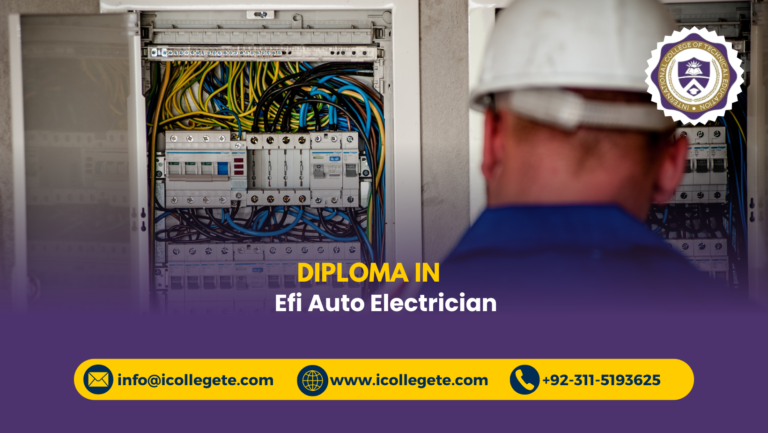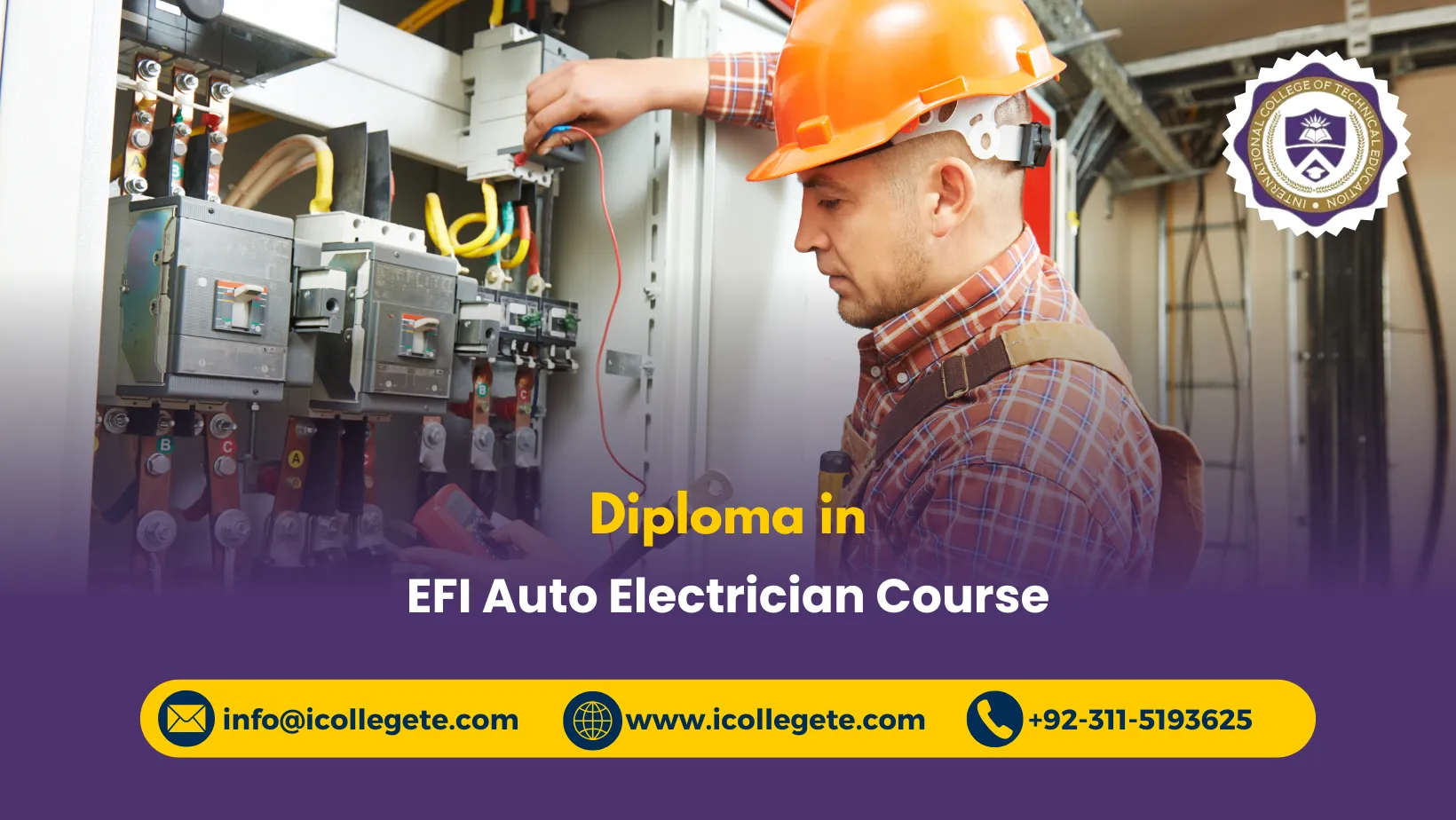
The Diploma in EFI Auto Electrician Course in Pakistan is a practical, career-focused programme designed to develop essential knowledge and technical skills in modern automotive electrical and Electronic Fuel Injection (EFI) systems. As vehicles increasingly rely on electronic control units, sensors, actuators, electrical circuits and computerised fuel management, skilled auto electricians are needed to diagnose, maintain and repair sophisticated vehicle electrical systems.
The course provides learners with a structured understanding of automotive electrical fundamentals, wiring and circuit design, EFI components, sensors, actuators, diagnostic equipment and vehicle troubleshooting procedures. Learners develop practical knowledge of how electrical and electronic systems interact with fuel injection and engine management systems to support efficient vehicle operation.
Through study of diagnostic tools and repair techniques, the Diploma in EFI Auto Electrician Course helps learners understand common electrical and EFI faults, identify their possible causes and apply appropriate troubleshooting methods. Workshop safety is also integrated throughout the programme to promote responsible working practices when handling electrical systems, diagnostic equipment and automotive components.
This course is suitable for aspiring auto electricians, automotive technicians, workshop professionals, vehicle maintenance personnel and individuals seeking practical skills for employment or self-employment in Pakistan’s growing automotive service sector. It can also provide a foundation for progression into advanced automotive diagnostics, hybrid and electric vehicle technology, automotive electronics and specialised vehicle repair.
Course Overview
The Diploma in EFI Auto Electrician Course in Pakistan focuses on the electrical, electronic and fuel-injection technologies used in modern vehicles. Learners study how vehicle electrical circuits, sensors, actuators, electronic control systems and EFI components work together.
The programme combines technical knowledge with practical diagnostic and troubleshooting concepts, helping learners develop skills relevant to automotive workshops, service centres, dealerships and independent vehicle repair businesses.
Entry Requirements
To enroll in this diploma, candidates must meet certain requirements to ensure they are prepared for the training.
- Age Requirements: Applicants must be at least 16 years old.
- Qualification Requirements: A minimum of matriculation (secondary school certificate) is required.
- Professional Experience: Prior experience in automotive or electrical work is beneficial but not mandatory.
- Educational Background: Basic knowledge of science subjects, particularly physics, is recommended.
- Language Requirements: Ability to understand and communicate in Urdu or English is necessary.
Course Study Units
Unit 1: Introduction to EFI Systems
Learners develop an understanding of Electronic Fuel Injection systems and their role in modern vehicle engine management. The unit introduces EFI operating principles, major components and the relationship between electronic control systems and engine performance.
Key areas include:
- Fundamentals of Electronic Fuel Injection
- EFI operating principles
- Engine control systems
- Electronic Control Units
- Fuel delivery and injection processes
- EFI system components
- Basic engine management concepts
- Common EFI system faults
Unit 2: Automotive Electrical Fundamentals
This unit introduces the core electrical principles required for automotive electrical work. Learners explore electrical quantities, circuits, components and vehicle power supply systems.
Key areas include:
- Basic electrical principles
- Voltage, current and resistance
- Ohm’s Law
- Automotive batteries
- Alternators and charging systems
- Starters and starting circuits
- Fuses, relays and switches
- Electrical testing principles
Unit 3: Wiring and Circuit Design
Learners develop knowledge of automotive wiring systems and circuit configurations used in modern vehicles. The unit focuses on understanding wiring diagrams and identifying electrical connections.
Key areas include:
- Automotive wiring systems
- Wiring diagrams
- Circuit identification
- Series and parallel circuits
- Connectors and terminals
- Earthing and grounding
- Fuses and circuit protection
- Relay circuits
- Wiring fault identification
Unit 4: Sensors and Actuators in EFI
This unit examines the sensors and actuators that enable an EFI system to monitor engine conditions and control vehicle operation. Learners explore how electronic signals are generated, interpreted and used by the vehicle’s control system.
Key areas include:
- Engine sensors
- Temperature sensors
- Oxygen sensors
- Throttle position sensors
- Mass airflow sensors
- Manifold pressure sensors
- Crankshaft and camshaft position sensors
- Fuel injectors
- Electronic actuators
- Sensor and actuator fault diagnosis
Unit 5: Fuel Injection System Components
Learners study the main components that make up modern fuel injection systems and examine their individual functions and interactions.
Key areas include:
- Fuel pumps
- Fuel filters
- Fuel injectors
- Fuel rails
- Fuel pressure regulators
- Electronic control units
- Throttle systems
- Fuel delivery systems
- Fuel pressure management
- EFI component inspection
Unit 6: Diagnostic Tools and Techniques
This unit develops practical knowledge of automotive diagnostic equipment and systematic fault-finding methods. Learners explore how diagnostic information can be used to identify electrical and EFI system problems.
Key areas include:
- Automotive diagnostic principles
- OBD diagnostic systems
- Diagnostic scan tools
- Multimeters
- Test lamps
- Circuit testing
- Reading diagnostic trouble codes
- Live data interpretation
- Sensor testing
- Electrical fault diagnosis
Unit 7: Troubleshooting and Repair Procedures
Learners develop structured approaches to identifying and resolving common automotive electrical and EFI faults. The unit emphasises logical diagnosis, testing and appropriate repair procedures.
Key areas include:
- Fault identification
- Diagnostic procedures
- Electrical troubleshooting
- EFI fault diagnosis
- Starting and charging faults
- Sensor-related faults
- Injector-related problems
- Wiring and connection faults
- Component testing
- Repair and verification procedures
Unit 8: Safety Practices in Automotive Workshops
This unit develops awareness of safe working practices when performing automotive electrical and EFI-related activities. Learners explore workshop hazards and methods for reducing risks.
Key areas include:
- Automotive workshop safety
- Electrical safety
- Battery handling
- Fuel system safety
- Fire prevention
- Personal protective equipment
- Safe use of diagnostic equipment
- Tool and equipment safety
- Vehicle lifting and workshop precautions
- Emergency procedures
Learning Outcomes
On successful completion of the Diploma in EFI Auto Electrician Course in Pakistan, learners should be able to:
- Explain the operating principles of Electronic Fuel Injection systems.
- Describe fundamental automotive electrical principles and components.
- Interpret basic automotive wiring diagrams and electrical circuits.
- Identify the functions of EFI sensors and actuators.
- Explain the purpose of major fuel injection system components.
- Use appropriate automotive diagnostic tools for basic fault identification.
- Apply systematic troubleshooting methods to electrical and EFI problems.
- Identify common wiring, sensor, actuator and fuel injection faults.
- Apply appropriate testing and repair procedures.
- Follow safe working practices within automotive workshop environments.
- Understand the relationship between electrical systems and engine management.
- Support routine automotive electrical inspection, maintenance and repair activities.
Course Benefits
The Diploma in EFI Auto Electrician Course in Pakistan offers several practical and career-related benefits:
- Develops knowledge of modern automotive electrical systems.
- Builds specialist understanding of Electronic Fuel Injection technology.
- Introduces practical automotive diagnostic techniques.
- Develops wiring, circuit testing and fault-finding knowledge.
- Improves understanding of sensors, actuators and engine management.
- Supports preparation for automotive workshop roles.
- Provides skills relevant to vehicle maintenance and repair businesses.
- Helps learners understand modern diagnostic equipment.
- Supports self-employment and automotive workshop opportunities.
- Provides a foundation for advanced automotive technology programmes.
- Develops awareness of safe automotive workshop practices.
- Supports continuing professional development in vehicle technology.
Who is This Course For?
The Diploma in EFI Auto Electrician Course in Pakistan is suitable for:
- Aspiring auto electricians
- Automotive technicians
- Vehicle mechanics
- Workshop technicians
- Automotive service personnel
- Vehicle maintenance workers
- Automotive engineering learners
- Existing mechanics seeking EFI skills
- Individuals planning to establish an auto electrical workshop
- Professionals interested in automotive diagnostics
- Learners seeking practical automotive technology skills
- Individuals preparing for careers in vehicle servicing and repair
The course can be particularly useful for learners who want to develop specialist knowledge of vehicle electrical systems and EFI technology alongside practical automotive repair skills.
Why Choose This Course?
Focus on Modern Automotive Technology
Modern vehicles increasingly depend on electronic systems for fuel management, engine control, monitoring and diagnostics. This course introduces learners to technologies that are widely relevant to contemporary automotive servicing.
Practical Diagnostic Knowledge
The programme covers diagnostic tools, electrical testing, fault identification and troubleshooting, helping learners understand systematic approaches to automotive problems.
Specialist EFI Skills
Electronic Fuel Injection is a core technology in modern petrol engine management. Learners develop knowledge of EFI components, sensors, actuators and control systems.
Career-Oriented Learning
The course is designed around knowledge and skills relevant to automotive workshops, service centres, vehicle maintenance businesses and auto electrical operations.
Foundation for Advanced Automotive Skills
Learners can use the knowledge developed through this programme as a foundation for studying more advanced areas such as automotive diagnostics, hybrid vehicle technology, electric vehicle technology and automotive electronics.
Suitable for Pakistani Automotive Sector
The course provides relevant technical knowledge for learners seeking opportunities within Pakistan’s automotive repair, maintenance, auto electrical and vehicle servicing sectors.
Career Opportunities
Successful learners may explore opportunities such as:
- Auto Electrician
- Automotive Electrical Technician
- EFI Technician
- Automotive Diagnostic Technician
- Vehicle Electrical Technician
- Automotive Service Technician
- Workshop Technician
- Vehicle Maintenance Technician
- Fuel Injection Technician
- Automotive Repair Technician
- Diagnostic Assistant
- Auto Electrical Workshop Assistant
Career opportunities may vary according to practical experience, additional qualifications, employer requirements and local industry conditions.
Future Progression
After completing the Diploma in EFI Auto Electrician Course in Pakistan, learners can consider further development in specialised automotive technologies.
Advanced Automotive Diagnostics
Learners can progress towards advanced diagnostic training covering electronic control units, advanced scan-tool functions, vehicle communication systems and complex fault diagnosis.
Hybrid Vehicle Technology
The course can provide useful foundational knowledge before progressing into hybrid vehicle systems, including hybrid powertrains, battery systems, electronic control systems and hybrid diagnostics.
Electric Vehicle Technology
Learners may progress into electric vehicle technology to develop knowledge of high-voltage systems, electric motors, battery management systems, charging systems and EV diagnostics.
Automotive Electronics
Further training in automotive electronics can develop specialist knowledge of electronic control modules, communication networks, sensors, actuators and vehicle electronic systems.
Automotive Workshop Management
Experienced learners may also develop business and management skills for establishing or managing an automotive electrical, diagnostic or vehicle repair workshop.
Professional Automotive Development
Continuous technical development through specialist automotive courses, manufacturer training and practical workshop experience can help learners keep pace with changing vehicle technologies and diagnostic systems.
Take the Next Step Toward World EFI Auto Electrician Course-Enroll Now