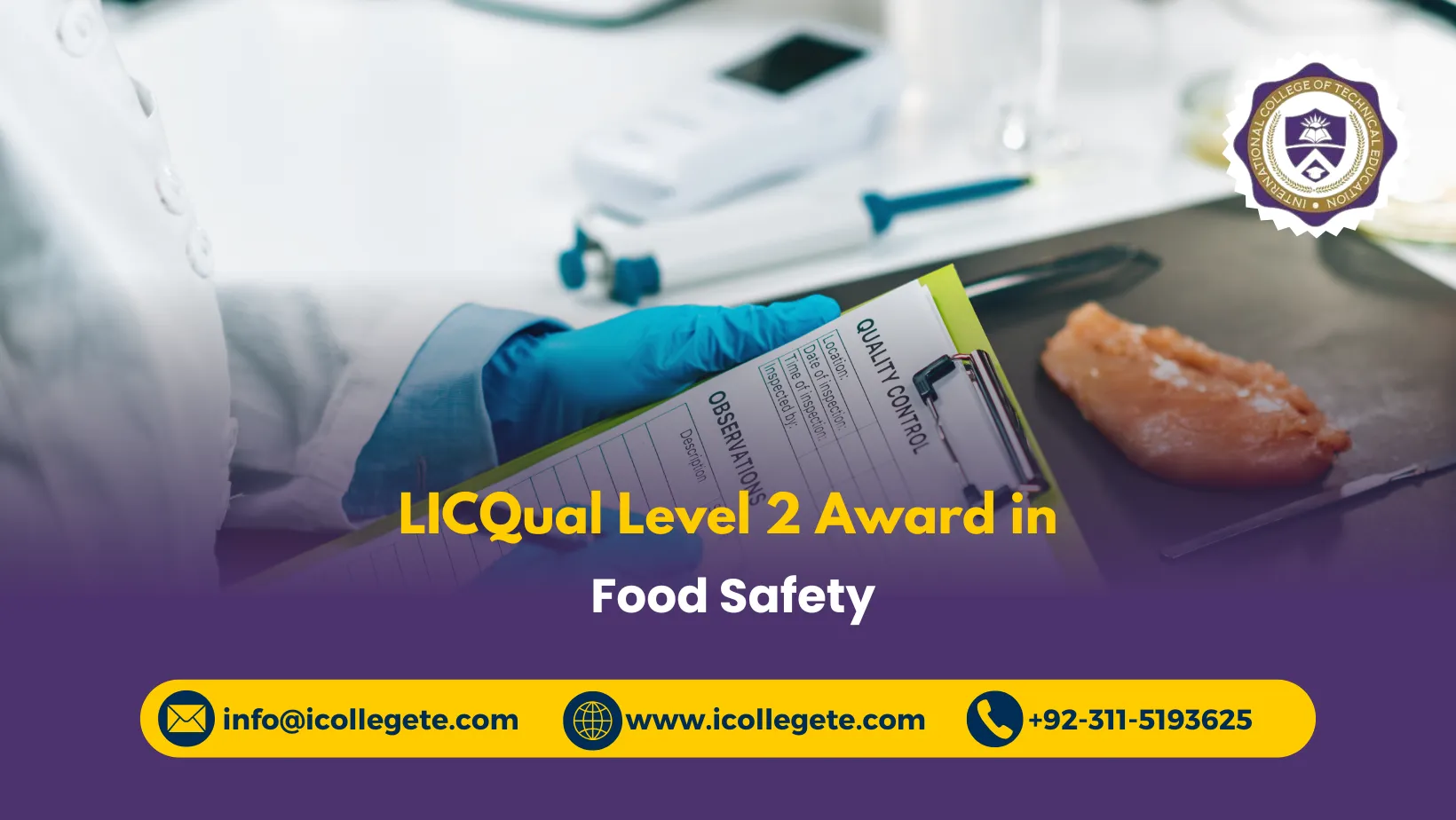
The LICQual Level 2 Award in Food Safety in Swabi is a practical food safety qualification designed for individuals who work, or plan to work, in environments where food is prepared, handled, stored, served, or sold. The course provides learners with essential knowledge and practical awareness needed to maintain safe food handling practices, reduce contamination risks, and support good food hygiene standards in the workplace.
Learners explore the fundamental principles of food safety, including common food safety hazards, routes of contamination, personal hygiene, cleaning and disinfection, food storage, temperature control, and food safety responsibilities. The course helps participants understand how unsafe food practices can affect consumers and how effective preventive controls can reduce the risk of foodborne illness.
The LICQual Level 2 Award in Food Safety in Swabi is suitable for food handlers, catering staff, kitchen assistants, restaurant employees, hospitality workers, food retail staff, and other personnel whose duties involve direct or indirect contact with food. It can also provide a structured foundation for individuals entering the food industry and seeking recognised knowledge of food hygiene and safety principles.
With its workplace-focused approach, the qualification supports learners in developing responsible food handling behaviours and understanding the importance of maintaining hygienic, safe, and compliant food operations.
Course Study Units
Unit 1: Introduction to Food Safety
This unit introduces the fundamental concepts of food safety and explains why maintaining safe food practices is essential throughout the food chain. Learners develop an understanding of food safety, food hygiene, foodborne illness, and the importance of preventing unsafe food from reaching consumers.
Key topics include:
- Meaning and importance of food safety
- Principles of food hygiene
- Foodborne illnesses and their causes
- Responsibilities of food handlers
- The food safety chain
- Preventing unsafe food practices
- Importance of effective food safety controls
- Consequences of poor food hygiene
Unit 2: Food Safety Hazards and Contamination
This unit develops learners’ understanding of the different hazards that can make food unsafe. Learners examine biological, chemical, physical, and allergenic hazards and explore how contamination can occur during food handling, preparation, storage, and service.
Key topics include:
- Biological food safety hazards
- Chemical hazards
- Physical contamination
- Allergen-related hazards
- Cross-contamination
- Sources and routes of contamination
- High-risk foods
- Preventive food safety measures
- Controlling contamination risks
Unit 3: Personal Hygiene in Food Handling
This unit focuses on personal hygiene practices required when handling food. Learners understand how food handlers can become a source of contamination and how appropriate personal hygiene can reduce food safety risks.
Key topics include:
- Importance of personal hygiene
- Effective handwashing
- Appropriate protective clothing
- Personal cleanliness
- Safe food handling behaviours
- Reporting illness and symptoms
- Cuts, wounds, and skin conditions
- Hygienic workplace behaviour
- Preventing contamination through personal hygiene
Unit 4: Cleaning and Disinfection Practices
This unit explains the importance of maintaining clean food premises, equipment, utensils, and food-contact surfaces. Learners develop awareness of appropriate cleaning and disinfection procedures and understand the difference between cleaning and disinfection.
Key topics include:
- Principles of effective cleaning
- Cleaning versus disinfection
- Food-contact surfaces
- Cleaning equipment and utensils
- Cleaning chemicals and safe use
- Cleaning schedules
- Prevention of pest-related contamination
- Waste management
- Maintaining hygienic food preparation areas
Unit 5: Safe Food Storage and Temperature Control
This unit focuses on preventing food spoilage and bacterial growth through appropriate storage and temperature control. Learners examine safe handling practices for chilled, frozen, cooked, and ready-to-eat foods.
Key topics include:
- Importance of temperature control
- Safe chilled food storage
- Frozen food storage
- Hot food holding
- Cooking and reheating principles
- Cooling food safely
- Temperature monitoring
- Stock rotation
- Preventing food spoilage and bacterial growth
Unit 6: Food Safety Legislation and Responsibilities
This unit introduces learners to the importance of food safety legislation, workplace procedures, and individual responsibilities. Learners understand why food businesses must maintain appropriate food safety standards and why food handlers have a responsibility to follow established procedures.
Key topics include:
- Purpose of food safety legislation
- Responsibilities of food businesses
- Responsibilities of food handlers
- Workplace food safety procedures
- Maintaining food hygiene standards
- Reporting food safety concerns
- Importance of documentation and records
- Consequences of non-compliance
- Supporting a positive food safety culture
Learning Outcomes
On successful completion of the LICQual Level 2 Award in Food Safety in Swabi, learners should be able to:
- Explain the fundamental principles and importance of food safety.
- Identify common food safety hazards found in food handling environments.
- Recognise biological, chemical, physical, and allergenic contamination risks.
- Explain how cross-contamination can occur and how it can be prevented.
- Apply appropriate personal hygiene practices when handling food.
- Explain the importance of effective handwashing and protective clothing.
- Recognise the importance of reporting food-handler illness and symptoms.
- Explain the difference between cleaning and disinfection.
- Identify appropriate cleaning and disinfection practices for food premises and equipment.
- Explain the importance of safe waste handling and pest prevention.
- Understand the importance of food storage and temperature control.
- Apply basic principles of safe chilled, frozen, cooked, and ready-to-eat food storage.
- Understand the importance of temperature monitoring and stock rotation.
- Explain basic food safety legislation and workplace responsibilities.
- Recognise the consequences of failing to follow food safety procedures.
- Support effective food hygiene practices within a food-handling environment.
Course Benefits
The LICQual Level 2 Award in Food Safety in Swabi provides learners with practical knowledge that can be applied across a wide range of food-related workplaces.
Key benefits include:
- Develops essential food safety and hygiene knowledge.
- Improves awareness of food contamination risks.
- Supports safer food handling practices.
- Builds understanding of personal hygiene requirements.
- Develops awareness of cleaning and disinfection procedures.
- Improves understanding of food storage and temperature control.
- Helps learners recognise common food safety hazards.
- Supports responsible workplace food handling.
- Strengthens awareness of food safety responsibilities.
- Provides a recognised qualification for food-sector learners.
- Supports professional development in catering and hospitality environments.
- Provides a foundation for developing further food safety competence.
Who Is This Course For?
The LICQual Level 2 Award in Food Safety in Swabi is suitable for individuals who handle food or work in environments where food safety and hygiene are important.
It is particularly appropriate for:
- Food handlers
- Kitchen assistants
- Catering staff
- Restaurant employees
- Café and takeaway workers
- Hotel and hospitality staff
- Food preparation workers
- Bakery and confectionery workers
- Food retail employees
- Catering supervisors
- Food service employees
- Hospitality students
- Individuals entering the food industry
- Employees seeking formal food safety knowledge
- Small food business workers and operators
The course is particularly valuable for learners who want to develop practical food hygiene knowledge, understand contamination risks, improve safe food handling behaviours, and contribute effectively to hygienic workplace food operations.
Why Choose LICQual Level 2 Award in Food Safety in Swabi?
Choosing the LICQual Level 2 Award in Food Safety in Swabi can help learners establish a strong foundation in essential food safety principles while developing knowledge that is directly relevant to workplace food handling.
Reasons to choose this course include:
- Focuses on practical food safety knowledge.
- Covers essential food hygiene principles.
- Addresses major food contamination hazards.
- Develops personal hygiene awareness.
- Covers cleaning and disinfection practices.
- Explains safe food storage and temperature control.
- Introduces food safety legislation and responsibilities.
- Suitable for a wide range of food-sector roles.
- Supports workplace competence and responsible food handling.
- Provides a structured qualification for professional development.
- Helps learners build confidence when working with food.
- Provides a foundation for further food safety learning.
Future Progression
After completing the LICQual Level 2 Award in Food Safety, learners can use their knowledge as a foundation for further professional development in food safety, food hygiene, catering, hospitality, food production, and related areas.
Potential progression routes may include:
- Advanced food safety and food hygiene qualifications
- Food safety supervision and management training
- HACCP-related training
- Food quality assurance programmes
- Food inspection and compliance-related learning
- Catering and hospitality qualifications
- Food production and manufacturing programmes
- Quality management and assurance courses
- Supervisory and management development programmes
The qualification can also support learners who wish to develop their responsibilities within food-handling workplaces, particularly by progressing from basic food handling duties toward supervisory, food safety, quality, or operational roles.
Take the Next Step Toward World LICQual Level 2 Award in Food Safety-Enroll Now