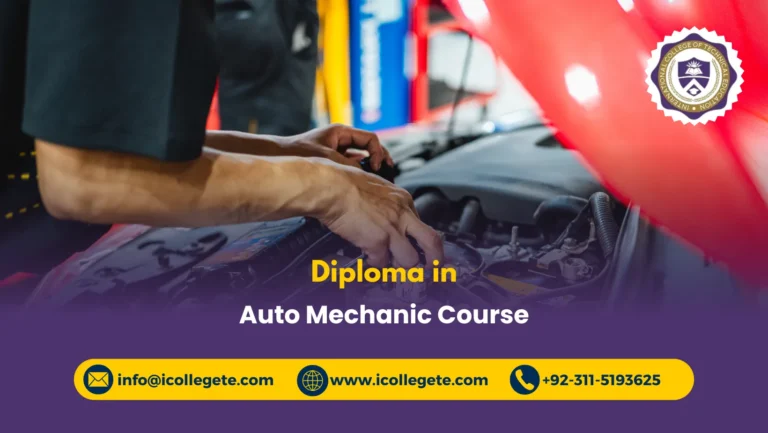

The Diploma in Auto Mechanic Course in Swabi is a practical, career-focused training programme designed to develop the technical knowledge and hands-on skills required for modern automotive repair and maintenance. The course provides learners with a structured understanding of vehicle systems, workshop practices, engine repair, transmission servicing, vehicle electrical systems, diagnostics, preventive maintenance, and fault troubleshooting.
Learners begin with the Introduction to Automotive Systems, developing an understanding of major vehicle components and their functions. They then progress to the safe and effective use of automotive tools and equipment, followed by practical knowledge of engine repair, transmission and drivetrain servicing, and vehicle electrical systems. The course also introduces diagnostic tools and techniques used to identify mechanical, electrical, and electronic faults in modern vehicles.
Particular emphasis is placed on preventive maintenance and systematic fault diagnosis, helping learners understand how regular inspection and correct troubleshooting can improve vehicle reliability, performance, and safety. Practical applications and a final project provide opportunities to apply technical knowledge to realistic automotive repair situations.
The Diploma in Auto Mechanic Course in Swabi is suitable for beginners, aspiring auto mechanics, workshop assistants, vehicle technicians, and individuals seeking practical automotive skills for employment or self-employment. It can provide a strong foundation for developing a career in automotive maintenance, repair, diagnostics, and related technical services.
Course Study Units
Unit 1: Introduction to Automotive Systems
- Overview of modern automotive systems
- Major vehicle components and their functions
- Engine, transmission, drivetrain, steering, and suspension systems
- Braking and fuel systems
- Cooling and lubrication systems
- Basic vehicle safety systems
- Introduction to conventional and modern vehicles
- Basic principles of automotive maintenance
Unit 2: Tools and Equipment for Auto Mechanics
- Identification of automotive hand tools
- Use of spanners, sockets, screwdrivers, pliers, and torque tools
- Workshop equipment and lifting equipment
- Measuring and inspection instruments
- Safe use of power and pneumatic tools
- Tool selection for different repair tasks
- Workshop housekeeping and tool maintenance
- Automotive workshop health and safety practices
Unit 3: Fundamentals of Engine Repair
- Engine components and operating principles
- Four-stroke engine cycle
- Petrol and diesel engine fundamentals
- Cylinder head and valve systems
- Pistons, connecting rods, and crankshafts
- Lubrication and cooling systems
- Engine inspection and basic servicing
- Common engine faults and repair procedures
- Engine maintenance and performance checks
Unit 4: Transmission and Drivetrain Servicing
- Functions of transmission systems
- Manual and automatic transmission fundamentals
- Clutch components and operation
- Gearbox inspection and servicing
- Driveshafts and differential systems
- Axles and drivetrain components
- Transmission fluids and servicing requirements
- Common drivetrain faults
- Basic transmission troubleshooting
Unit 5: Electrical Systems in Vehicles
- Fundamentals of automotive electricity
- Batteries and charging systems
- Starting systems and starter motors
- Alternators and electrical circuits
- Vehicle lighting systems
- Fuses, relays, switches, and wiring
- Sensors and electronic components
- Basic electrical testing
- Electrical safety and fault prevention
Unit 6: Diagnostic Tools and Techniques
- Introduction to automotive diagnostics
- Diagnostic inspection procedures
- Using multimeters and test equipment
- Introduction to OBD and vehicle diagnostic systems
- Reading and interpreting diagnostic trouble codes
- Basic electronic system testing
- Diagnostic workflow and fault verification
- Recording diagnostic findings
- Safe and systematic diagnostic practices
Unit 7: Preventive Maintenance Practices
- Importance of scheduled vehicle maintenance
- Engine oil and filter replacement
- Cooling system inspection
- Brake system maintenance
- Battery and charging system checks
- Tyre and wheel inspection
- Fluid level and condition checks
- Inspection schedules and service records
- Identifying early signs of component failure
Unit 8: Troubleshooting and Fault Diagnosis
- Principles of systematic troubleshooting
- Mechanical fault identification
- Electrical fault diagnosis
- Engine performance problems
- Starting and charging faults
- Transmission and drivetrain problems
- Brake and suspension-related faults
- Diagnostic decision-making
- Repair verification and quality checks
Unit 9: Final Project and Practical Applications
- Planning an automotive maintenance project
- Vehicle inspection and condition assessment
- Identifying practical repair requirements
- Selecting appropriate tools and equipment
- Applying diagnostic procedures
- Carrying out basic maintenance and repair tasks
- Documenting repair activities
- Testing vehicle performance after repair
- Presenting final project findings
Learning Outcomes
On successful completion of the Diploma in Auto Mechanic Course in Swabi, learners should be able to:
- Explain the purpose and operation of major automotive systems.
- Identify common vehicle components and their functions.
- Select and use appropriate automotive tools and workshop equipment.
- Apply safe working practices in an automotive workshop.
- Explain fundamental petrol and diesel engine operation.
- Carry out basic engine inspection and maintenance procedures.
- Understand manual and automatic transmission systems.
- Perform basic transmission and drivetrain servicing tasks.
- Explain vehicle electrical and starting/charging systems.
- Use basic electrical testing equipment safely.
- Understand automotive diagnostic procedures and tools.
- Interpret basic diagnostic information and fault codes.
- Apply preventive maintenance procedures to vehicles.
- Identify common mechanical and electrical faults.
- Follow a systematic approach to automotive troubleshooting.
- Perform practical vehicle inspection and maintenance activities.
- Evaluate repair requirements and select suitable tools.
- Apply acquired knowledge to a practical automotive project.
Course Benefits
The Diploma in Auto Mechanic Course in Swabi offers several practical and career-focused benefits:
- Develops practical automotive repair and maintenance skills.
- Provides knowledge of modern vehicle systems and components.
- Builds confidence in using automotive tools and workshop equipment.
- Introduces vehicle diagnostics and fault-finding techniques.
- Develops understanding of engine, transmission, drivetrain, and electrical systems.
- Strengthens preventive maintenance skills.
- Supports practical problem-solving and troubleshooting abilities.
- Provides experience applying automotive knowledge to practical tasks.
- Can support employment opportunities in automotive workshops and service centres.
- Provides a foundation for self-employment and automotive repair services.
- Helps learners develop skills relevant to conventional and increasingly computerised vehicles.
Who Is This Course For?
The Diploma in Auto Mechanic Course in Swabi is suitable for:
- Students interested in automotive technology.
- Beginners seeking professional auto mechanic training.
- Aspiring automotive technicians.
- Workshop assistants and junior mechanics.
- Individuals working in vehicle maintenance.
- Vehicle owners seeking structured technical knowledge.
- School and college graduates interested in technical careers.
- Individuals planning to establish an automotive repair business.
- Professionals seeking to strengthen their existing automotive skills.
- Learners interested in vehicle diagnostics and maintenance.
Why Choose This Course?
Choosing the Diploma in Auto Mechanic Course in Swabi can provide learners with a structured pathway into automotive maintenance and repair. Rather than focusing only on theoretical concepts, the course covers essential areas that an aspiring auto mechanic needs to understand, from workshop tools and engine systems to electrical circuits, diagnostics, preventive maintenance, and troubleshooting.
The course also reflects the changing nature of the automotive industry. Modern vehicles increasingly combine mechanical components with electrical, electronic, and computer-controlled systems. Understanding diagnostic methods alongside traditional mechanical repair can therefore help learners develop more adaptable technical skills.
For learners in Swabi and surrounding areas, the course can provide a convenient foundation for developing practical automotive competence and preparing for opportunities in workshops, garages, vehicle service centres, fleet maintenance, and independent repair services.
Future Progression of the Course
After completing the Diploma in Auto Mechanic Course in Swabi, learners can continue developing their technical knowledge through advanced automotive training and specialised areas. Possible progression routes include:
- Advanced Automotive Technology
- Automotive Electrical and Electronics
- Vehicle Diagnostic Technology
- Engine Performance and Advanced Engine Repair
- Automatic Transmission Technology
- Hybrid and Electric Vehicle Technology
- Automotive Air Conditioning and Climate Control
- Automotive Service Management
- Advanced Vehicle Maintenance
- Workshop Management
- Automotive Inspection and Quality Control
With additional training and practical experience, learners may progress towards roles such as Auto Mechanic, Automotive Technician, Vehicle Maintenance Technician, Diagnostic Technician, Workshop Assistant, Automotive Electrical Technician, Service Technician, or Workshop Supervisor.
The course can also support an entrepreneurial pathway, allowing experienced learners to build practical expertise before establishing or expanding an independent automotive repair and maintenance service.
Take the Next Step Toward World Auto Mechanic Course-Enroll Now