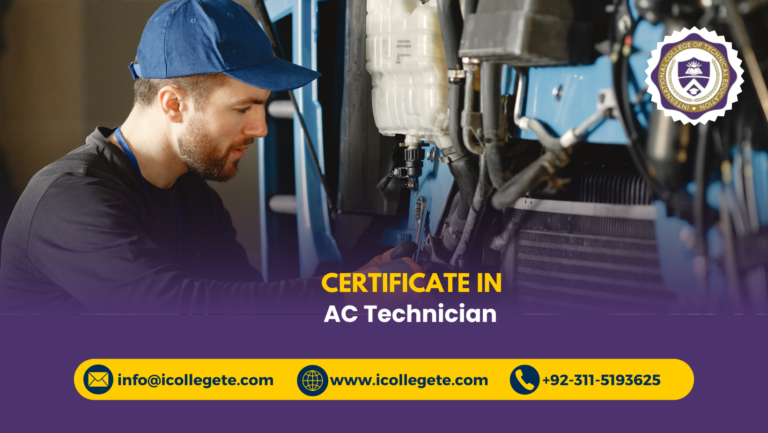
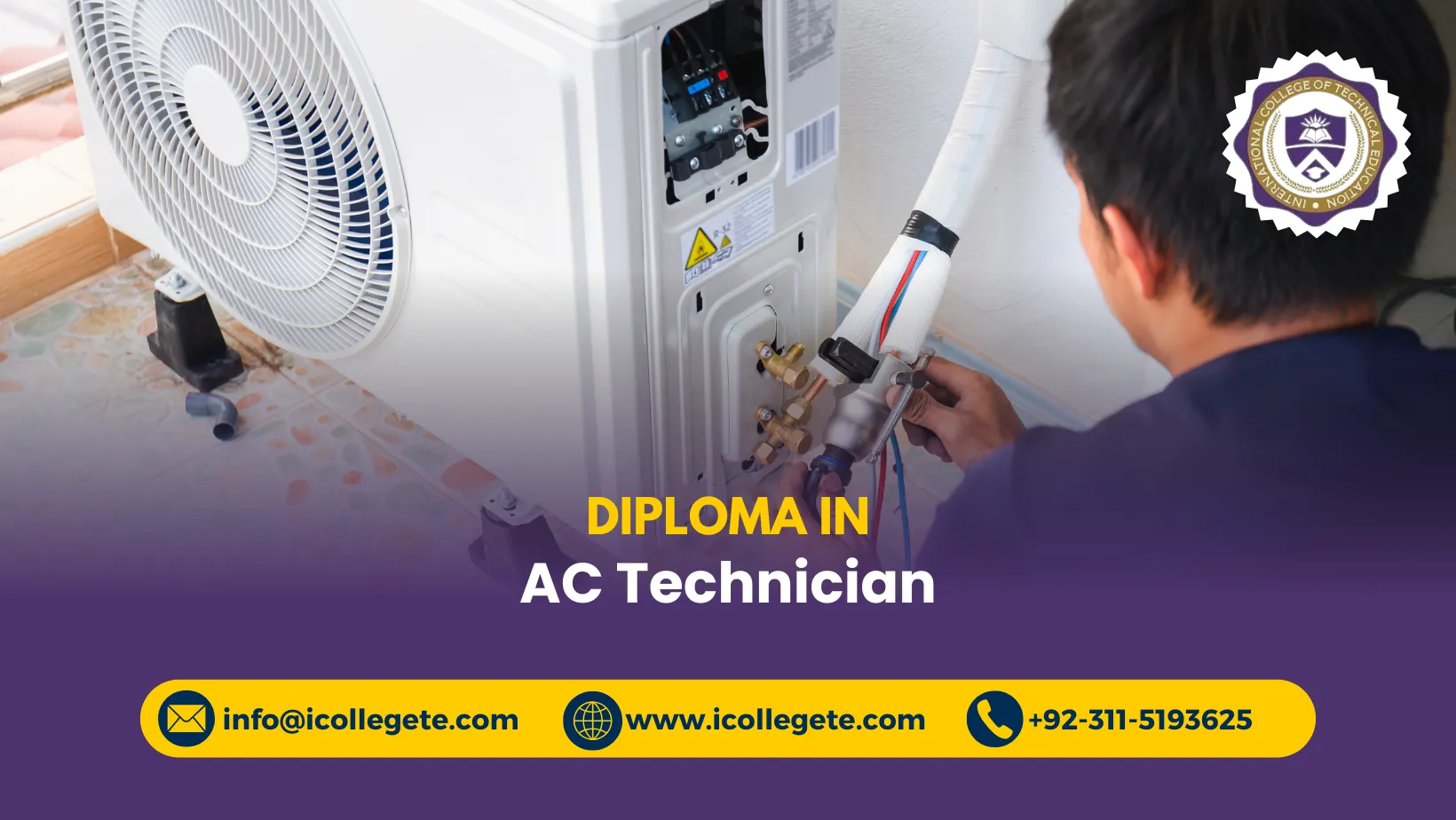
The Diploma in AC Technician is a practical, career-focused training programme designed to develop the technical knowledge and hands-on skills required to install, maintain, troubleshoot, and repair air conditioning systems. The course provides learners with a strong understanding of air conditioning principles, refrigeration cycles, electrical components, system controls, installation procedures, and routine maintenance. It is suitable for individuals who want to build practical expertise in air conditioning technology and develop the confidence to work with different types of AC equipment.
Throughout the Diploma in AC Technician, learners explore essential areas such as AC system components, refrigeration systems, compressors, condensers, evaporators, expansion devices, electrical wiring, thermostats, control systems, fault diagnosis, and preventive maintenance. Practical learning helps students understand how to identify common system problems, perform servicing tasks, follow safe working procedures, and improve the reliable operation of air conditioning equipment.
This diploma is suitable for aspiring AC technicians, maintenance workers, electrical technicians, HVAC beginners, and professionals seeking to strengthen their air conditioning skills. By combining technical knowledge with practical applications, the course provides a solid foundation for working effectively in residential, commercial, and other environments where air conditioning installation, servicing, and maintenance are required.
The Diploma in AC Technician includes the following key study units:
- Fundamentals of Refrigeration and Cooling
- Air Conditioning Components and Functions
- Electrical Systems and Wiring for AC Units
- Installation and Maintenance of AC Systems
- Diagnostic Tools and Troubleshooting Techniques
- Energy Efficiency and Modern HVAC Technologies
Upon completing the Diploma in AC Technician , learners will have achieved the following outcomes:
Fundamentals of Refrigeration and Cooling
- Explain the principles of refrigeration and heat transfer.
- Demonstrate understanding of cooling cycles and system operations.
- Apply safety practices when working with refrigeration systems.
Air Conditioning Components and Functions
- Identify and describe the role of compressors, condensers, evaporators, and expansion devices.
- Understand the function of refrigerants and filters in AC systems.
- Evaluate component performance and detect faults.
Electrical Systems and Wiring for AC Units
- Interpret wiring diagrams and electrical circuits for AC systems.
- Diagnose and repair electrical faults using systematic methods.
- Apply safe practices when handling electrical installations.
Installation and Maintenance of AC Systems
- Perform installation of split, window, and central AC units.
- Apply preventive maintenance techniques to extend system life.
- Conduct servicing and calibration to ensure optimal performance.
Diagnostic Tools and Troubleshooting Techniques
- Operate gauges, multimeters, and modern diagnostic equipment.
- Apply advanced troubleshooting methods to identify system faults.
- Interpret diagnostic data to recommend corrective actions.
Energy Efficiency and Modern HVAC Technologies
- Implement energy‑saving practices in AC system operations.
- Work with eco‑friendly refrigerants and sustainable technologies.
The Diploma in AC Technician provides practical technical knowledge and industry-relevant skills that can help learners develop competence in air conditioning installation, servicing, maintenance, and troubleshooting. Key benefits of the course include:
- Develop practical air conditioning technician skills
- Understand AC and refrigeration system principles
- Learn air conditioner installation procedures
- Gain knowledge of compressors and condensers
- Understand evaporators and expansion devices
- Develop AC electrical wiring knowledge
- Learn to identify common AC faults
- Improve air conditioning troubleshooting skills
- Understand preventive AC maintenance practices
- Learn safe AC servicing procedures
- Develop knowledge of system controls and thermostats
- Improve practical equipment handling techniques
- Understand efficient AC system operation
- Build confidence in diagnosing technical problems
- Prepare for residential and commercial AC work
- Develop skills relevant to HVAC maintenance roles
- Strengthen technical knowledge for practical workplace tasks
- Support opportunities for employment and self-employment
The Diploma in AC Technician is suitable for individuals who want to develop practical skills and technical knowledge in air conditioning installation, servicing, maintenance, and troubleshooting. The course can be particularly beneficial for:
- Beginners interested in becoming AC technicians
- Individuals starting a career in HVAC and air conditioning
- Electrical technicians seeking additional AC skills
- Maintenance workers involved in building services
- AC technicians looking to improve their technical knowledge
- Refrigeration and HVAC workers expanding their skill set
- Construction workers involved in building services
- Facility maintenance staff responsible for AC systems
- Technical workers interested in air conditioning repair
- Individuals seeking practical vocational training
- Professionals wanting to strengthen their AC maintenance skills
- Self-employed individuals planning to provide AC services
- Career changers interested in technical maintenance work