
What Does an Electrical QA/QC Engineer Do? Roles, Responsibilities and Skills
An Electrical QA/QC Engineer is responsible for ensuring that electrical installation, testing, inspection and documentation meet approved project specifications, applicable standards, drawings and quality requirements. The role combines quality assurance (QA), which focuses on preventing defects, with quality control (QC), which focuses on inspecting and verifying completed work.
Electrical QA/QC Engineers are commonly involved in construction, infrastructure, industrial, commercial, energy and engineering projects. Their work can cover electrical equipment, cables, panels, switchgear, lighting systems, earthing and grounding, power distribution, testing and commissioning.
For professionals considering an Electrical QA/QC career, understanding the role is important because the position requires more than technical electrical knowledge. It also involves inspection planning, documentation, non-conformance management, communication, problem-solving and coordination with engineers, contractors, consultants and project teams.
This guide explains what an Electrical QA/QC Engineer does, their key responsibilities, required skills, daily activities, documentation, inspection processes, qualifications and career progression.
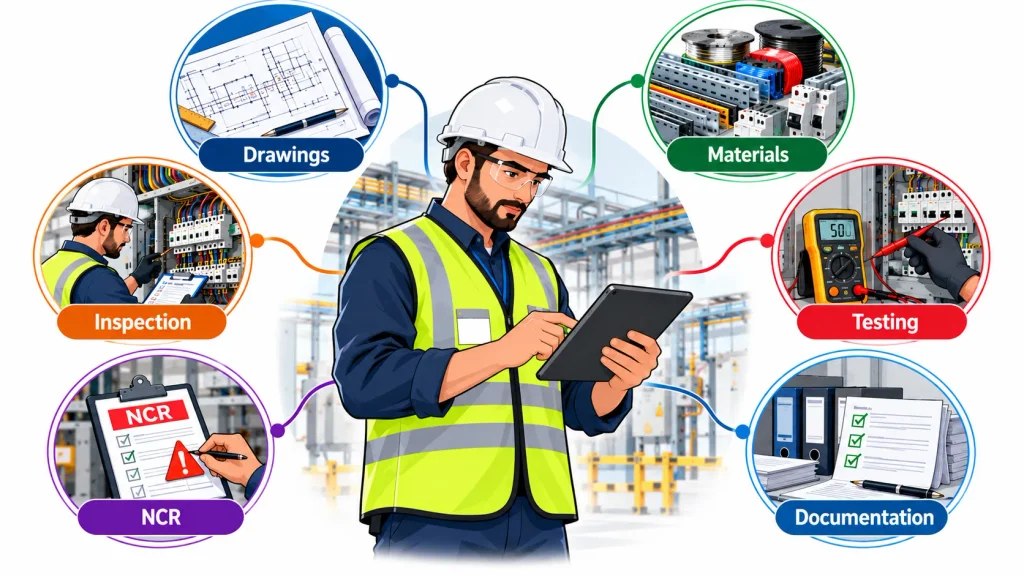
What is an Electrical QA/QC Engineer?
An Electrical QA/QC Engineer is a technical quality professional who monitors electrical work to verify that it complies with approved drawings, specifications, standards, inspection requirements and project procedures.
The role has two connected areas:
| Area | Main Focus |
|---|---|
| Quality Assurance | Preventing quality problems through planned systems and procedures |
| Quality Control | Identifying and correcting defects through inspection and testing |
| Electrical Inspection | Checking installation and workmanship against requirements |
| Testing | Verifying electrical systems and equipment perform as required |
| Documentation | Maintaining inspection, testing and quality records |
| Corrective Action | Managing defects and non-conformities until resolution |
An Electrical QA/QC Engineer therefore acts as an important quality link between design requirements, site installation and final acceptance.
Electrical QA vs QC: What Is the Difference?
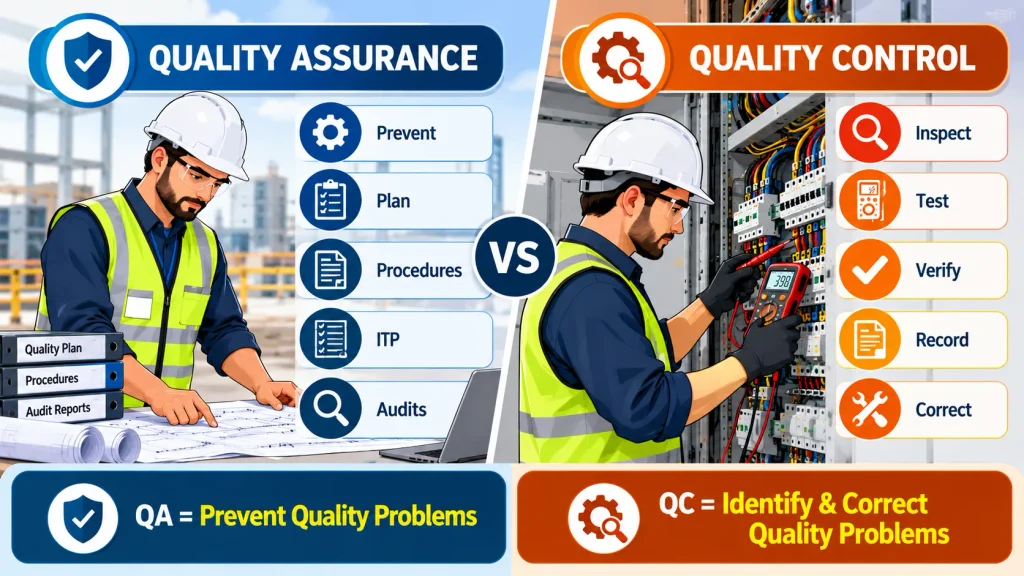
Quality Assurance (QA) and Quality Control (QC) are closely connected in electrical projects, but they serve different purposes. QA focuses on preventing quality problems, while QC focuses on identifying and correcting problems through inspection and testing.
Quality Assurance
Quality Assurance is mainly process-oriented. It establishes the procedures, plans and systems needed to ensure that electrical work is carried out according to defined quality requirements.
Common QA activities include:
- Preparing quality plans
- Reviewing project specifications
- Developing inspection procedures
- Preparing Inspection and Test Plans (ITPs)
- Reviewing method statements
- Establishing quality procedures
- Planning quality documentation
- Monitoring compliance with approved processes
- Supporting quality audits
- Reviewing supplier and subcontractor quality processes
Quality Control
Quality Control is mainly inspection- and verification-oriented. It checks whether materials, installation and completed work meet the specified requirements.
Common QC activities include:
- Electrical installation inspections
- Material inspections
- Cable and termination inspections
- Panel and equipment inspections
- Electrical testing
- Equipment verification
- Workmanship checks
- Recording inspection results
- Identifying defects
- Raising NCRs
- Verifying corrective actions
QA vs QC: Simple Example
Consider an electrical project where cables must be installed according to an approved drawing.
QA: Establishes the procedures, inspection requirements and quality documentation needed for the cable installation.
QC: Inspects the installed cables and verifies that the actual work complies with the approved drawing and specified requirements.
In simple terms, QA helps prevent defects, while QC identifies and verifies defects and their correction. Both functions work together to maintain the quality and compliance of electrical projects.
What Does an Electrical QA/QC Engineer Do?
The core responsibility of an Electrical QA/QC Engineer is to ensure that electrical work complies with specified quality requirements throughout the project lifecycle.
Key responsibilities generally include:
- Reviewing electrical drawings and specifications
- Preparing and implementing quality procedures
- Developing Inspection and Test Plans (ITPs)
- Inspecting electrical materials
- Monitoring installation activities
- Conducting inspections and testing
- Reviewing method statements
- Maintaining quality records
- Identifying defects and non-conformities
- Managing corrective actions
- Coordinating inspections with consultants and clients
- Supporting testing and commissioning
- Preparing quality reports
- Ensuring traceability of materials and inspections
- Supporting final handover documentation
The exact duties vary according to the project type, employer, contract requirements and level of responsibility.
Key Responsibilities of an Electrical QA/QC Engineer
An Electrical QA/QC Engineer is responsible for monitoring electrical work from material inspection through installation, testing and final documentation. The role focuses on ensuring that electrical activities comply with approved drawings, specifications, project procedures and quality requirements.
Reviewing Electrical Drawings and Specifications
Before electrical work begins, the engineer reviews relevant project documents to understand the required quality and inspection criteria. These may include:
- Electrical layouts
- Single-line diagrams
- Wiring diagrams
- Cable schedules
- Equipment and panel schedules
- Earthing and lighting layouts
- Power distribution drawings
- Technical specifications
- Approved material submittals
The engineer identifies key requirements that need to be verified during installation and inspection.
Preparing Inspection and Test Plans
The Inspection and Test Plan (ITP) defines the inspections and tests required for different electrical activities. It helps establish when inspections should take place and what acceptance requirements must be met.
Typical ITP activities include:
- Material receiving inspection
- Cable installation and termination
- Panel and equipment installation
- Earthing installation
- Lighting installation
- Electrical testing
- Functional testing
- Pre-commissioning and commissioning
Depending on the project, the ITP may also define hold points, witness points and other inspection stages.
Inspecting Electrical Materials
Electrical materials should be inspected before installation to verify that they meet approved project requirements. Common materials include:
- Power and control cables
- Switchboards and distribution boards
- Switchgear and circuit breakers
- Transformers
- Cable trays and conduits
- Lighting fixtures
- Earthing materials
- Electrical accessories
Checks may cover material type, manufacturer, model, rating, quantity, physical condition, certification, approved submittals and traceability.
Monitoring Electrical Installation
The engineer monitors site installation to ensure that work follows approved drawings, specifications and method statements. Inspection areas may include:
- Cable routing and support
- Cable trays and conduits
- Cable identification and termination
- Glanding
- Panel and equipment installation
- Earthing and bonding
- Lighting and accessories
- Electrical clearances
- Equipment labelling
Regular monitoring helps identify quality issues before they progress to later stages of the project.
Conducting Electrical Inspections
Electrical inspection is a core QC responsibility. Depending on the project, the engineer may inspect:
- Delivered materials
- Electrical installations
- Equipment
- Cables and terminations
- Connections
- Earthing systems
- Testing activities
- Functional performance
Inspection findings are recorded through approved checklists, inspection requests and quality reports.
Coordinating Electrical Testing
The Electrical QA/QC Engineer may coordinate, witness or review electrical testing to verify that systems meet specified requirements. Depending on the equipment and project scope, testing may include:
- Insulation resistance
- Continuity
- Earth resistance
- Cable testing
- Polarity and phase identification
- Functional testing
- Protection testing
- Switchgear testing
- Transformer testing
The applicable testing requirements depend on the system, equipment, project specifications and relevant standards.
Managing Non-Conformities
When electrical work or materials fail to meet specified requirements, the issue may be documented through a Non-Conformance Report (NCR).
The process generally involves:
- Identifying and recording the non-conformity
- Determining the applicable requirement
- Investigating the cause
- Defining corrective action
- Implementing the correction
- Reinspecting the affected work
- Verifying the corrective action
- Closing the NCR with supporting evidence
Effective NCR management helps maintain quality and reduce repeated defects.
Maintaining Electrical QA/QC Documentation
Accurate documentation provides evidence that electrical work has been properly inspected, tested and verified. Common quality records include:
- Inspection requests
- Material inspection reports
- Inspection checklists
- Inspection and Test Plans
- Method statements
- Test reports
- Calibration certificates
- Material certificates
- NCRs
- Corrective action records
- Quality reports
- As-built documents
- Handover records
Maintaining complete and traceable records is essential for project acceptance, handover and future maintenance.
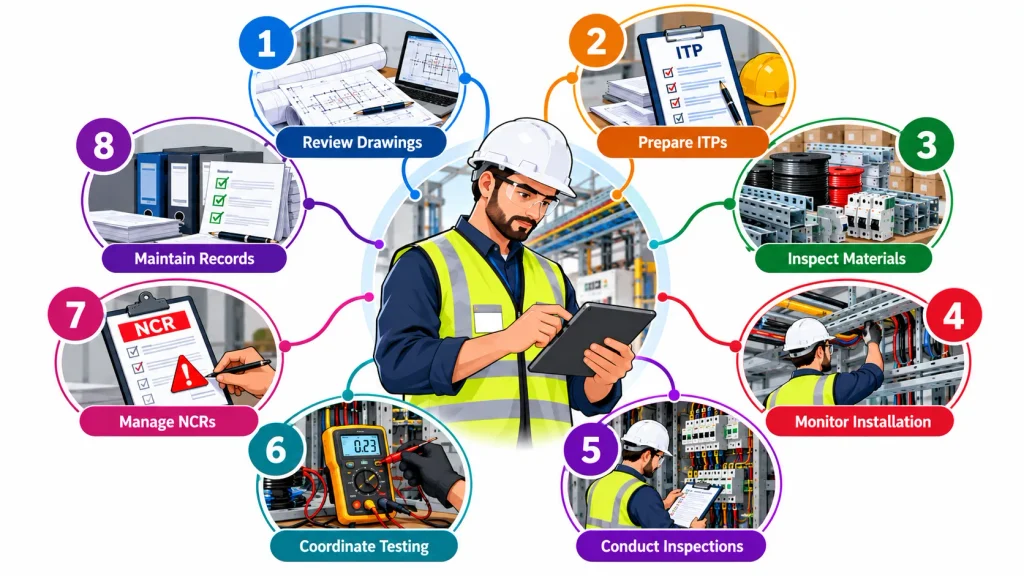
Electrical QA/QC Engineer Daily Activities
A typical day can involve a combination of site inspection, documentation, coordination and technical review.
| Activity | Typical Purpose |
|---|---|
| Site inspection | Verify electrical installation quality |
| Drawing review | Confirm work follows approved design |
| Material inspection | Verify materials before installation |
| Testing coordination | Confirm required tests are completed |
| Documentation review | Maintain accurate quality records |
| NCR follow-up | Track corrective actions |
| Contractor coordination | Resolve quality issues |
| Consultant inspection | Support formal acceptance |
| Quality reporting | Communicate project quality status |
| Handover preparation | Compile final quality records |
The exact daily routine depends on the construction phase and project requirements.
Electrical Systems Inspected by an Electrical QA/QC Engineer
An Electrical QA/QC Engineer may inspect different electrical systems throughout a project to verify that materials, installation, connections and testing meet approved project requirements.
Power Distribution Systems
Inspection of power distribution systems may include:
- Switchboards and distribution boards
- Circuit breakers
- Busbars
- Power cables
- Transformers
- Electrical panels
Cable Systems
Cable inspections focus on correct installation, identification and protection. Typical checks include:
- Cable type and size
- Routing and support
- Cable identification
- Glanding and termination
- Bending radius
- Mechanical protection
- Installation workmanship
Earthing and Grounding Systems
Earthing systems are inspected to verify proper installation, connections and testing. Checks may include:
- Earth conductors
- Earth pits
- Earth electrodes
- Bonding connections
- Continuity
- Earth resistance testing
Lighting Systems
Lighting inspections help verify correct installation and functionality. Areas commonly checked include:
- Lighting fixtures
- Mounting arrangements
- Cable connections
- Switching systems
- Emergency lighting
- Labelling
- Functional testing
Low-Voltage and Control Systems
Depending on the project scope, QA/QC inspections may also cover:
- Control panels
- Instrumentation interfaces
- Building control systems
- Fire alarm interfaces
- Security system interfaces
- Communication interfaces
Important Electrical QA/QC Documents
Proper documentation is essential for maintaining quality, traceability and compliance throughout an electrical project. Electrical QA/QC Engineers use various documents to plan inspections, record results, manage defects and support project handover.
Inspection and Test Plan (ITP)
An ITP identifies the inspections and tests required for electrical activities. It also defines inspection stages, responsibilities and relevant acceptance requirements.
Method Statement
A method statement describes how a particular electrical activity will be carried out in accordance with approved procedures, drawings, specifications and project requirements.
Inspection Request
An inspection request is submitted when completed work is ready for inspection. It allows the relevant quality or project representative to review and verify the work.
Material Inspection Report
This document records the inspection and acceptance of electrical materials received at the project site. It may include material details, specifications, quantities and supporting certificates.
Test Report
A test report records the details and results of electrical testing. It may include the test performed, equipment used, measured results and acceptance status.
Non-Conformance Report (NCR)
An NCR documents electrical work, materials or processes that do not meet specified requirements. It helps track corrective actions through to resolution and closure.
Quality Inspection Checklist
An inspection checklist provides a structured way to verify specific electrical installation and quality requirements and helps ensure important inspection points are not overlooked.
As-Built Documentation
As-built documents show the final installed condition of electrical systems. They form an important part of project handover and can support future operation, maintenance and modification work.
Skills Required for an Electrical QA/QC Engineer
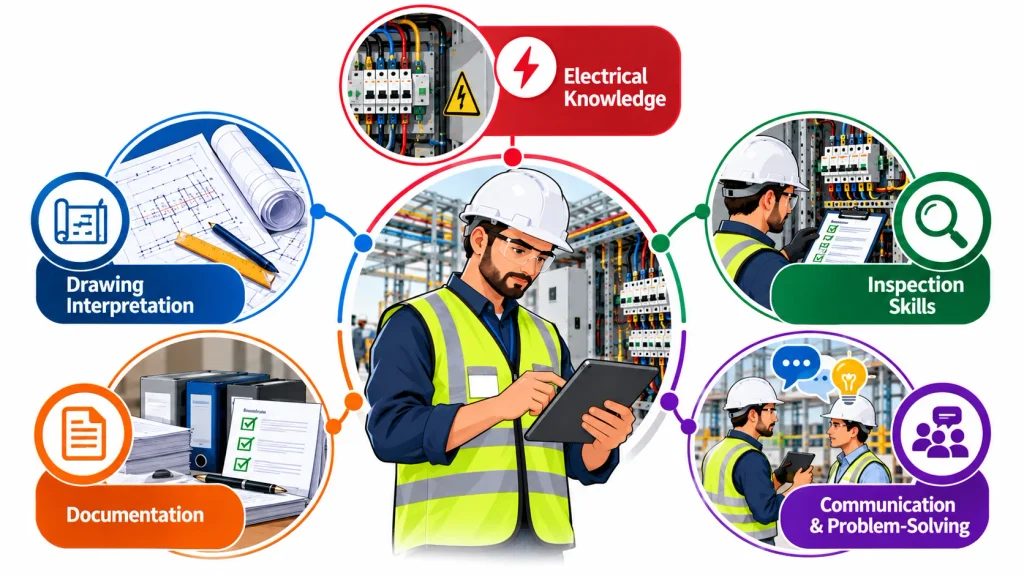
An Electrical QA/QC Engineer needs a balanced combination of electrical knowledge, inspection ability, documentation skills, communication and problem-solving skills. These skills help ensure that electrical work meets approved drawings, specifications and quality requirements.
Electrical Engineering Knowledge
A strong understanding of electrical systems is essential. Key areas include:
- Electrical circuits and power distribution
- Cables and electrical equipment
- Protection systems
- Earthing and grounding
- Electrical testing
- Installation practices
- Electrical drawings and specifications
Drawing Interpretation
The engineer should be able to read and understand electrical drawings and compare site installation with approved requirements. Common documents include:
- Single-line diagrams
- Electrical layouts
- Wiring diagrams
- Cable schedules
- Panel schedules
- Earthing drawings
- Equipment layouts
Inspection Skills
Strong inspection skills help identify defects and deviations before they affect project quality. Important abilities include:
- Checking installation quality
- Identifying defects
- Verifying equipment ratings
- Inspecting materials
- Checking workmanship
- Reviewing testing requirements
- Recording inspection findings
Documentation Skills
Accurate documentation is an essential part of Electrical QA/QC. The engineer should be competent in preparing and maintaining:
- Inspection reports
- Checklists
- NCRs
- Test reports
- Quality records
- Technical documents
- Document control records
Communication Skills
Electrical QA/QC Engineers work with contractors, subcontractors, consultants, electrical engineers, site teams and project managers. Clear communication helps explain quality requirements, report issues and coordinate inspections effectively.
Problem-Solving Skills
Quality issues often require practical analysis to identify the cause and determine an appropriate corrective action. An effective engineer should be able to assess defects, identify the relevant requirement, coordinate corrections and verify that the problem has been properly resolved.
Qualifications for an Electrical QA/QC Engineer
Requirements vary internationally and according to project complexity.
Employers commonly look for qualifications in areas such as:
- Electrical engineering
- Electrical technology
- Electrical and electronic engineering
- Engineering quality management
- Construction quality management
Additional training in quality management, inspection, testing, electrical safety and relevant technical standards can strengthen professional competence.
Practical site experience is also highly valuable because QA/QC responsibilities require the ability to interpret technical requirements and apply them to actual installation work.
Electrical QA/QC Engineer vs Electrical Engineer
These roles can overlap but their primary responsibilities are different.
| Electrical Engineer | Electrical QA/QC Engineer |
|---|---|
| Focuses on design and technical engineering | Focuses on quality compliance |
| Develops or reviews engineering solutions | Verifies installation against requirements |
| Supports technical calculations | Supports inspections and testing |
| Coordinates engineering changes | Records and manages quality issues |
| Focuses on system functionality and design | Focuses on conformity and quality evidence |
On many projects, the two roles work closely together.
Electrical QA/QC Engineer vs Electrical Inspector
| Responsibility / Area | Electrical QA/QC Engineer | Electrical Inspector |
|---|---|---|
| Primary focus | Overall quality assurance and quality control | Inspection and verification of electrical work |
| QA procedures | Develops, implements and monitors QA procedures | Usually follows established inspection procedures |
| QC inspections | Plans, coordinates and reviews inspections | Performs or supports detailed site inspections |
| Inspection and Test Plans (ITPs) | Prepares, reviews and implements ITPs | Uses ITPs to carry out required inspections |
| Method statements | Reviews and coordinates quality requirements within method statements | Verifies work against approved method statements |
| Quality documentation | Manages quality records and documentation | Completes inspection records and reports |
| NCR management | Identifies, manages and follows up non-conformities | Identifies and reports non-conforming work |
| Testing coordination | Coordinates, witnesses or reviews required testing | Performs or witnesses inspections and specified tests where authorised |
| Quality audits | May participate in or coordinate internal and project quality audits | May support audits by providing inspection records |
| Quality reporting | Prepares quality reports and monitors overall quality performance | Provides inspection findings and supporting reports |
| Corrective actions | Tracks corrective actions through to verification and closure | Verifies corrected work during reinspection |
| Project handover | Supports compilation and review of the complete quality dossier | Provides inspection and testing records for handover |
| Scope of responsibility | Generally broader and may cover the complete electrical quality process | Generally more focused on field inspection and compliance verification |
Electrical QA/QC Inspection Process
A typical electrical quality inspection process can be represented as:
Review Requirements → Plan Inspection → Inspect Materials → Monitor Installation → Test Systems → Record Results → Correct Defects → Reinspect → Close Documentation
Each stage contributes to project quality.
Step 1: Review Project Requirements
The Electrical QA/QC Engineer begins by reviewing all relevant project documents to establish the quality and inspection requirements. This includes:
- Approved electrical drawings
- Technical specifications
- Contract requirements
- Applicable codes and standards
- Approved material submittals
- Inspection and testing requirements
Step 2: Develop the Inspection Plan
Inspection activities are organised according to the project quality plan and approved procedures. The engineer establishes the required inspection stages using:
- Inspection and Test Plans (ITPs)
- Electrical inspection checklists
- Approved method statements
- Inspection schedules
- Testing procedures
Step 3: Inspect Electrical Materials
Electrical materials are inspected before they are installed or incorporated into the project. The inspection verifies that materials match approved submittals and meet the required specifications, ratings, condition and identification requirements.
Step 4: Monitor Electrical Installation
The Electrical QA/QC Engineer monitors installation activities to confirm that electrical work is being completed according to approved drawings, specifications, method statements and quality requirements. This may include checking cable installation, terminations, panels, equipment, earthing, containment and electrical accessories.
Step 5: Perform and Verify Testing
Required electrical tests are performed at the appropriate project stage. Depending on the system and project requirements, testing may include continuity, insulation resistance, earth resistance, cable testing and functional testing. Test activities and results are documented for verification.
Step 6: Document Inspection Results
All inspection and testing outcomes are recorded using approved project documentation. Records may include inspection requests, checklists, material inspection reports, test reports and other quality records. Accurate documentation provides evidence of compliance and supports project traceability.
Step 7: Identify and Correct Defects
If an inspection identifies defective or non-conforming work, the issue is documented and corrective action is initiated. The responsible contractor or team addresses the identified problem in accordance with the approved corrective action process.
Step 8: Reinspect Corrected Work
After corrective action has been completed, the affected work is reinspected to verify that the identified issue has been properly resolved. Additional testing may be required where applicable.
Step 9: Complete Quality Records and Handover
Once inspections, testing and corrective actions are satisfactorily completed, the Electrical QA/QC Engineer helps compile and verify the final quality documentation. These records may form part of the project handover package and provide evidence that the completed electrical works have been inspected and accepted in accordance with project requirements.
Common Electrical QA/QC Problems
Electrical QA/QC Engineers may encounter several recurring quality issues.
Common examples include:
- Incorrect cable size
- Incorrect cable routing
- Poor cable termination
- Inadequate cable support
- Incorrect equipment ratings
- Missing identification
- Poor earthing connections
- Incomplete testing
- Damaged electrical equipment
- Installation against outdated drawings
- Missing quality records
- Unapproved materials
- Incomplete corrective actions
Early inspection can help identify these problems before they affect later project stages.
How to Improve Electrical QA/QC Performance
Electrical quality performance can be strengthened through systematic processes.
Important practices include:
- Use approved drawings and specifications
- Maintain current document revisions
- Inspect materials before installation
- Use structured inspection checklists
- Implement ITPs effectively
- Record inspection results promptly
- Track NCRs systematically
- Verify corrective actions
- Maintain equipment calibration records
- Coordinate testing early
- Maintain complete handover documentation
- Encourage clear communication between project teams
Career Path for an Electrical QA/QC Engineer
An Electrical QA/QC career can develop through progressively greater technical and management responsibilities.
A possible career pathway is:
Electrical Technician / Junior Engineer → Electrical QA/QC Engineer → Senior QA/QC Engineer → QA/QC Manager → Quality Manager / Project Quality Manager
Progression depends on qualifications, practical experience, project exposure, technical competence and management capability.
Professionals may also specialise in areas such as:
- Electrical inspection
- Testing and commissioning
- Construction quality management
- Quality auditing
- Project quality management
- Electrical compliance
- Supplier quality
- Engineering quality systems
Why is Electrical QA/QC Important?
Electrical QA/QC is important because electrical defects can affect system reliability, safety, performance, maintainability and project acceptance.
A structured quality process helps organisations:
- Detect defects early
- Reduce rework
- Improve installation consistency
- Verify compliance with project requirements
- Maintain traceable quality records
- Support testing and commissioning
- Improve handover quality
- Reduce avoidable quality-related delays
Quality management therefore forms an important part of successful electrical construction and engineering projects.