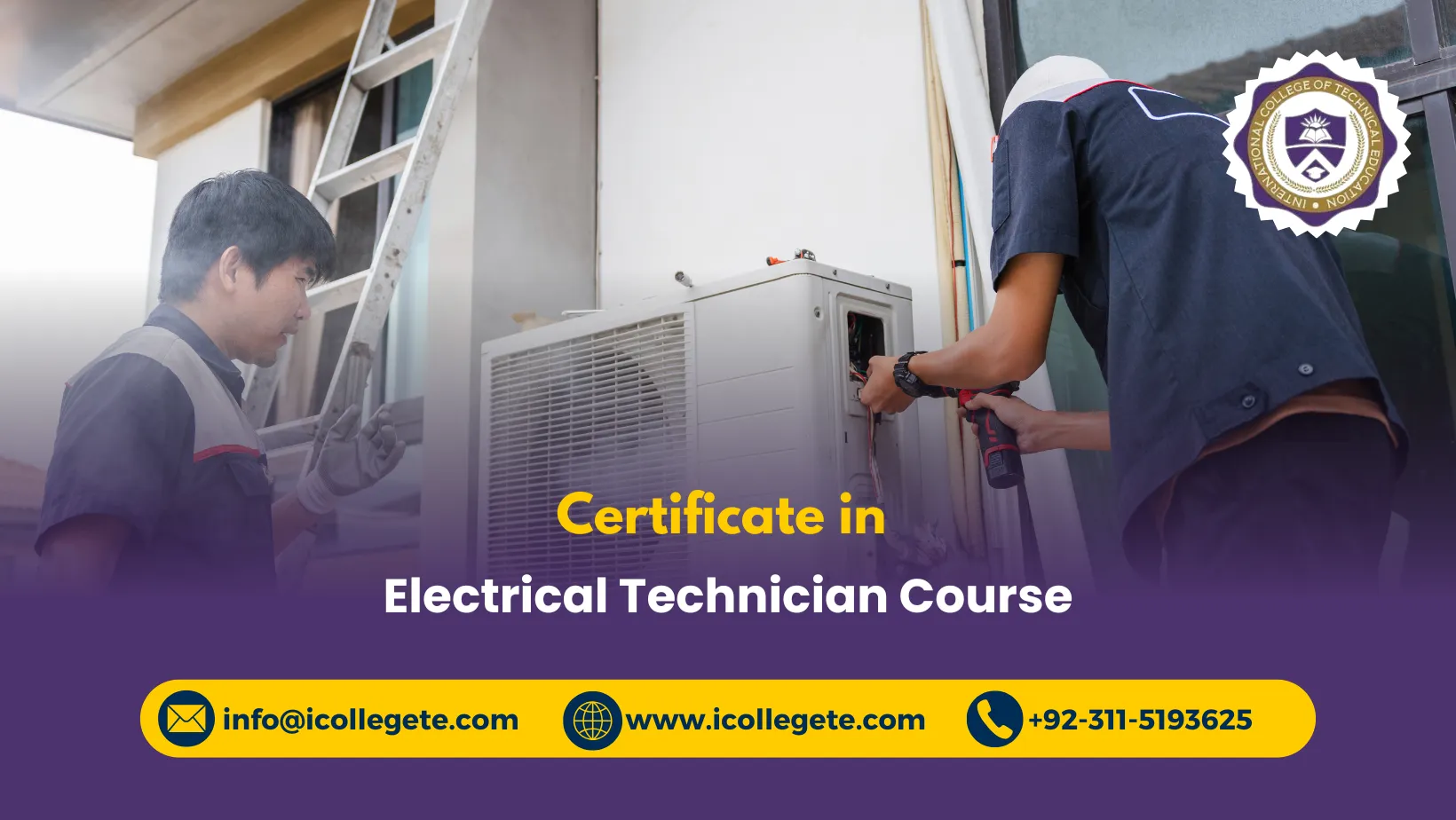
The Electrical Technician Course in Peshawar is designed to provide learners with practical knowledge and technical skills required to work safely and effectively with electrical systems, wiring installations, tools, equipment, fault diagnosis and routine maintenance. The course provides a structured introduction to electrical engineering principles while developing practical competencies relevant to residential, commercial and industrial environments.
Learners explore electrical fundamentals, electrical tools and equipment handling, wiring systems, circuit installation, safety standards, fault detection, troubleshooting and maintenance procedures. Practical workshops and case studies help learners connect theoretical concepts with realistic electrical installation and maintenance situations.
This Electrical Technician Course in Peshawar is suitable for learners seeking entry-level electrical skills, existing workers looking to strengthen their technical knowledge, and individuals planning to develop a career in electrical installation and maintenance. The course focuses on safe working practices, correct use of electrical equipment, systematic troubleshooting and responsible maintenance.
With its practical and career-focused structure, the course can support progression into roles such as electrical technician, electrical installer, maintenance technician, wiring technician and electrical maintenance assistant. Learners can develop transferable technical skills that are relevant across construction, facilities management, manufacturing, property maintenance and other sectors where electrical systems are used.
Course Overview
The Electrical Technician Course in Peshawar provides practical and technical training in electrical engineering fundamentals, wiring, circuit installation, electrical safety, troubleshooting and maintenance. The course combines theoretical learning with practical workshops and case studies to help learners understand how electrical systems are installed, inspected, tested and maintained. It is designed to develop workplace-relevant electrical skills while promoting safe working practices and effective fault diagnosis. The six study units provide a structured pathway for learners who want to develop foundational electrical technician skills for residential, commercial and industrial applications.
Entry Requirements
To enroll in this course, candidates must meet the following requirements:
- Age Requirements: Minimum age of 16 years.
- Qualification Requirements: Basic literacy and numeracy skills.
- Professional Experience: No prior experience required; suitable for beginners.
- Educational Background: General school education is sufficient.
- Language Skills: Ability to understand course materials in English or Urdu.
Course Study Units
Unit 1: Fundamentals of Electrical Engineering
This unit introduces the fundamental principles required to understand electrical systems and components. Learners develop knowledge of basic electrical concepts and how electrical quantities interact within circuits.
Key areas include:
- Basic electrical terminology and principles
- Voltage, current, resistance and power
- Ohm’s Law and basic electrical calculations
- AC and DC electrical systems
- Series and parallel circuits
- Electrical components and their functions
- Conductors, insulators and electrical materials
- Basic circuit diagrams and symbols
- Introduction to electrical measuring instruments
Unit 2: Electrical Tools and Equipment Handling
This unit develops practical knowledge of commonly used electrical tools, testing equipment and workplace equipment. Learners understand how tools should be selected, inspected, operated and stored safely.
Key areas include:
- Hand tools for electrical work
- Electrical testing instruments
- Multimeters and voltage testers
- Cable preparation tools
- Wire strippers and crimping tools
- Power tools used in electrical installation
- Tool inspection and maintenance
- Safe handling and storage procedures
- Selection of tools for specific electrical tasks
Unit 3: Wiring Systems and Circuit Installation
This unit focuses on the principles and practical requirements of electrical wiring and circuit installation. Learners explore different wiring systems and understand how circuits are planned and installed safely.
Key areas include:
- Electrical wiring principles
- Cable types and selection
- Wiring accessories
- Switches, sockets and connection points
- Lighting circuits
- Radial and ring circuits
- Distribution boards
- Circuit protection devices
- Cable routing and containment
- Basic circuit installation procedures
- Circuit testing principles
Unit 4: Electrical Safety Standards and Regulations
This unit develops awareness of electrical hazards, safe working practices and applicable electrical safety requirements. Learners understand how electrical risks can be controlled during installation, inspection and maintenance activities.
Key areas include:
- Common electrical hazards
- Electric shock prevention
- Electrical fire risks
- Isolation and safe working procedures
- Personal protective equipment
- Safe use of electrical tools
- Earthing and protective measures
- Circuit protection
- Electrical safety inspections
- Workplace electrical safety procedures
- Relevant standards, regulations and manufacturer instructions
Unit 5: Fault Detection and Troubleshooting
This unit develops systematic approaches to identifying electrical faults and determining appropriate corrective actions. Learners explore common electrical problems and practical troubleshooting techniques.
Key areas include:
- Common electrical faults
- Fault symptoms and identification
- Continuity testing
- Voltage and resistance testing
- Open and short circuits
- Overloads and protection trips
- Wiring and connection faults
- Systematic fault-finding procedures
- Safe isolation before troubleshooting
- Corrective actions and verification
Unit 6: Maintenance of Electrical Systems
This unit focuses on maintaining electrical systems to support safe, reliable and efficient operation. Learners explore preventive and corrective maintenance practices applicable to different electrical installations.
Key areas include:
- Electrical maintenance principles
- Preventive maintenance
- Corrective maintenance
- Inspection and testing
- Cleaning and tightening connections
- Component replacement
- Identifying deterioration and wear
- Maintenance records
- Safe maintenance procedures
- Basic maintenance planning
Practical Workshops and Case Studies
Practical workshops and case studies are integrated throughout the course to help learners apply electrical knowledge to realistic workplace situations. Activities may include basic circuit assembly, wiring exercises, electrical testing, fault identification, tool handling and maintenance scenarios.
Learning Outcomes
After completing the Electrical Technician Course in Peshawar, learners should be able to:
- Explain fundamental electrical engineering principles and terminology.
- Identify common electrical components and describe their functions.
- Select and safely use common electrical tools and testing equipment.
- Interpret basic electrical diagrams and circuit symbols.
- Explain different electrical wiring systems and installation methods.
- Perform basic wiring and circuit installation activities safely.
- Apply appropriate electrical safety practices during workplace activities.
- Recognise common electrical hazards and appropriate control measures.
- Use systematic methods to identify electrical faults.
- Apply basic electrical testing techniques for troubleshooting.
- Explain preventive and corrective electrical maintenance procedures.
- Identify signs of deterioration, damage and electrical system faults.
- Maintain appropriate records of inspection and maintenance activities.
- Apply technical knowledge during practical electrical workshops and case studies.
- Demonstrate responsible and safe working practices in electrical environments.
Course Benefits
The Electrical Technician Course in Peshawar can provide learners with several practical and career-focused benefits:
- Develop foundational electrical engineering knowledge.
- Build practical skills in electrical wiring and circuit installation.
- Learn how to handle electrical tools and testing equipment.
- Develop electrical fault-finding and troubleshooting skills.
- Improve understanding of electrical safety procedures.
- Learn basic electrical maintenance techniques.
- Connect theoretical learning with practical workplace scenarios.
- Develop skills relevant to residential, commercial and industrial environments.
- Improve technical confidence when working with electrical systems.
- Establish a foundation for further technical electrical training.
- Support preparation for entry-level electrical technician roles.
- Develop transferable skills applicable to construction, manufacturing and facilities environments.
Who is This Course For?
The Electrical Technician Course in Peshawar is suitable for:
- Learners seeking foundational electrical technician skills.
- Beginners interested in electrical installation and maintenance.
- Individuals preparing for entry-level electrical roles.
- Electrical workers who want to strengthen existing knowledge.
- Maintenance assistants working with electrical systems.
- Construction workers involved in basic electrical activities.
- Facilities maintenance personnel.
- Individuals interested in electrical troubleshooting and repair.
- Learners planning to establish a career in electrical engineering support.
- Professionals seeking practical knowledge of electrical safety and maintenance.
Why Choose This Electrical Technician Course in Peshawar?
Choosing the Electrical Technician Course in Peshawar can help learners develop a balanced foundation of electrical theory and practical workplace skills. The course covers essential areas from electrical fundamentals and tool handling through wiring, safety, troubleshooting and maintenance.
The practical orientation allows learners to understand how electrical principles are applied in realistic situations rather than focusing only on theoretical concepts. Case studies and workshop activities can also help develop problem-solving and technical decision-making skills.
The course is particularly valuable for learners who want a structured introduction to electrical technician work and require knowledge that can be applied across different workplace environments. Its focus on safety, fault detection, maintenance and practical application supports the development of responsible electrical working practices.
Future Progression
After completing the Electrical Technician Course in Peshawar, learners may progress towards more advanced technical training in areas such as:
- Electrical Installation
- Electrical Maintenance
- Industrial Electrical Systems
- Electrical Control Systems
- Building Services Engineering
- Industrial Automation
- Control and Instrumentation
- Renewable Energy Electrical Systems
- Solar PV Installation and Maintenance
- Electrical Inspection and Testing
- Facilities Maintenance
- Industrial Maintenance
Depending on experience, additional qualifications and employer requirements, learners may pursue roles such as:
- Electrical Technician
- Electrical Installation Assistant
- Electrical Maintenance Technician
- Wiring Technician
- Maintenance Assistant
- Electrical Workshop Technician
- Facilities Maintenance Technician
- Industrial Electrical Technician
- Electrical Service Technician
The course can therefore provide a practical foundation for continued professional development and progression within the electrical, construction, facilities management, manufacturing and engineering sectors.
Take the Next Step Toward World Electrical Technician Course – Enroll Now