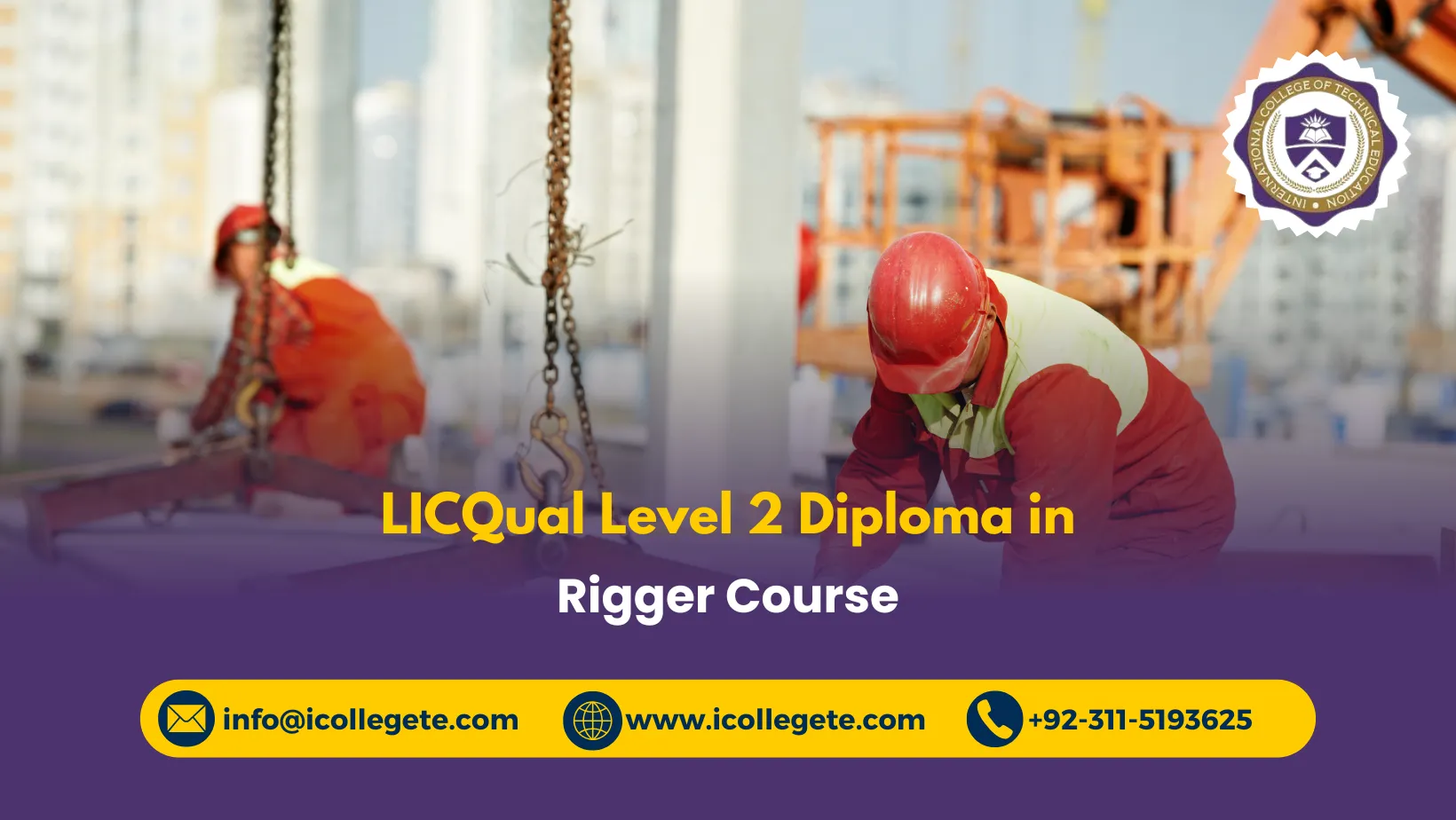
The LICQual Level 2 Diploma in Rigger Course in Peshawar is designed to develop the practical knowledge, technical understanding, and safety awareness required to perform rigging operations in construction, engineering, manufacturing, oil and gas, industrial maintenance, logistics, and heavy lifting environments. The course provides learners with a structured understanding of rigging tools, lifting equipment, load handling, weight estimation, safe lifting procedures, hazard control, inspection requirements, and practical rigging techniques.
Rigging is a safety-critical occupation where incorrect equipment selection, poor load assessment, ineffective communication, or unsafe lifting practices can result in equipment damage, dropped loads, serious injury, or fatalities. This qualification therefore focuses on developing responsible working practices and the ability to support lifting activities in accordance with recognised safety principles and workplace procedures.
Learners will study advanced rigging and safety standards, equipment handling, load calculations, heavy-load lifting practices, rigging procedures, equipment inspection, risk assessment, and practical rigging exercises. The course combines theoretical learning with practical application to help learners understand how rigging activities are planned, controlled, and carried out safely.
The LICQual Level 2 Diploma in Rigger Course in Peshawar is suitable for individuals seeking to develop occupational rigging skills and improve their readiness for employment in lifting and material-handling environments. It can also provide a foundation for learners who want to progress towards more advanced rigging, lifting supervision, or related occupational qualifications.
Course Overview
The LICQual Level 2 Diploma in Rigger Course in Peshawar is designed to develop learners’ knowledge and practical skills in rigging, lifting operations, load handling, and workplace safety. This course comprises 8 study units covering rigging and safety standards, equipment handling, load calculations, safe lifting practices, rigging techniques, equipment inspection, risk assessment, and practical exercises. Learners gain an understanding of lifting equipment selection, load weight estimation, hazard identification, and safe working procedures. Suitable for aspiring and existing rigging professionals, this qualification supports career development in construction, engineering, oil and gas, industrial maintenance, and heavy lifting operations.
Entry Requirements
To enroll in the LICQual Level 2 Diploma in Rigger Course in Peshawar, applicants must meet the following criteria:
- Age Requirements: Applicants must be at least 18 years old.
- Qualification Requirements: A minimum of matriculation or equivalent qualification is required.
- Professional Experience: Prior rigging or industrial work experience is preferred.
- Educational Background: Candidates with technical or vocational education will be given preference.
- Language Proficiency: Basic understanding of English or Urdu is required to follow course materials.
Course Study Units
Unit 1: Advanced Rigging and Safety Standards
This unit introduces learners to the fundamental safety principles, recognised standards, workplace procedures, and responsibilities associated with rigging operations. Learners develop an understanding of safe systems of work, lifting plans, communication, exclusion zones, personal protective equipment, and the importance of following manufacturer instructions and site requirements.
Unit 2: Rigging Tools and Equipment Handling
This unit develops knowledge of common rigging tools and lifting equipment used in workplace operations. Learners examine items such as slings, shackles, hooks, lifting beams, spreader equipment, wire ropes, chains, and associated accessories. Emphasis is placed on correct selection, safe handling, appropriate storage, equipment limitations, and preventing damage during use.
Unit 3: Complex Load Calculations and Weight Estimation
This unit develops learners’ understanding of load assessment and weight estimation. Learners explore load dimensions, centre of gravity, working load limits, sling angles, load distribution, lifting points, and basic calculations used when preparing lifting operations. The unit supports safer decision-making when determining whether selected equipment is suitable for a particular load.
Unit 4: Safe Lifting Practices for Heavy Loads
This unit focuses on the safe movement of heavy and awkward loads. Learners develop knowledge of pre-lift checks, lifting zones, communication, positioning, load control, environmental conditions, exclusion areas, and coordinated lifting activities. The unit also considers common causes of lifting incidents and methods for reducing operational risks.
Unit 5: Rigging Procedures and Advanced Techniques
This unit introduces learners to rigging procedures and techniques used for different load types and lifting situations. Learners develop an understanding of selecting suitable rigging arrangements, connecting lifting accessories, controlling loads, guiding suspended loads, and working effectively with lifting teams. The unit reinforces the importance of following approved lifting procedures.
Unit 6: Inspection and Maintenance of Rigging Equipment
This unit focuses on maintaining rigging equipment in safe working condition. Learners examine pre-use checks, inspection procedures, identification of defects, equipment tagging, reporting requirements, storage, cleaning, and basic maintenance practices. Particular attention is given to recognising damage, deformation, wear, corrosion, and other conditions that may make equipment unsafe.
Uit 7: Risk Assessment and Hazard Control
This unit develops learners’ ability to identify hazards associated with rigging and lifting operations and understand appropriate control measures. Topics include dropped objects, unstable loads, equipment failure, pinch points, suspended loads, poor ground conditions, overhead hazards, weather conditions, restricted work areas, and communication failures. Learners also examine the importance of risk assessments and safe systems of work.
Unit 8: Practical Rigging Exercises and Simulations
This unit provides opportunities for learners to apply rigging knowledge through practical exercises and simulated workplace activities. Learners practise equipment selection, load preparation, sling positioning, connection methods, communication, pre-use inspections, controlled lifting, load movement, and post-operation procedures. Practical activities help reinforce safe working behaviour and accurate application of rigging principles.
Learning Outcomes
On successful completion of the LICQual Level 2 Diploma in Rigger Course in Peshawar, learners should be able to:
- Explain fundamental rigging principles and workplace safety requirements.
- Identify common rigging tools, lifting accessories, and associated equipment.
- Select suitable rigging equipment according to load and operational requirements.
- Explain working load limits and basic load-handling principles.
- Estimate load weights using available information and appropriate methods.
- Understand centre of gravity and its importance during lifting operations.
- Apply safe practices when preparing and moving heavy loads.
- Follow established rigging procedures and lifting instructions.
- Apply appropriate techniques for connecting and securing loads.
- Conduct basic pre-use inspections of rigging equipment.
- Identify common defects and conditions that may affect equipment safety.
- Understand appropriate equipment storage and maintenance practices.
- Identify hazards associated with lifting and rigging operations.
- Apply suitable control measures to reduce workplace risks.
- Understand the importance of communication and coordinated teamwork.
- Participate safely in practical rigging exercises and simulations.
- Follow workplace procedures, manufacturer guidance, and approved lifting arrangements.
- Demonstrate responsible behaviour when working around suspended or moving loads.
Course Benefits
Completing the LICQual Level 2 Diploma in Rigger Course in Peshawar can provide learners with several practical and career-related benefits:
- Develops practical knowledge of rigging and lifting operations.
- Builds awareness of safe lifting practices and workplace hazards.
- Improves understanding of rigging tools and lifting accessories.
- Develops knowledge of load weight estimation and basic calculations.
- Supports safer handling of heavy and awkward loads.
- Introduces learners to equipment inspection and maintenance principles.
- Develops understanding of risk assessment and hazard control.
- Strengthens workplace communication and teamwork skills.
- Provides practical exposure through rigging exercises and simulations.
- Supports preparation for employment in lifting and material-handling environments.
- Provides a foundation for progression into more advanced rigging and lifting training.
- Helps learners understand professional responsibilities within safety-critical work environments.
Who is This Course For?
The LICQual Level 2 Diploma in Rigger Course in Peshawar is suitable for:
- Aspiring riggers seeking entry into the lifting industry.
- Individuals beginning a career in construction and engineering.
- Workers involved in lifting and material-handling activities.
- Construction site workers who want to develop rigging knowledge.
- Mechanical and industrial workers requiring rigging skills.
- Warehouse and logistics personnel involved in heavy-load handling.
- Individuals working around cranes and lifting equipment.
- Maintenance workers involved in equipment movement and installation.
- Learners seeking practical occupational training in rigging.
- Existing workers who want to strengthen their understanding of safe rigging practices.
- Individuals planning to pursue more advanced lifting and rigging qualifications.
Why Choose This Course?
Practical Rigging Knowledge
The course focuses on practical rigging principles that learners can relate to real workplace lifting operations, including equipment selection, load preparation, inspection, communication, and safe load movement.
Strong Safety Focus
Rigging involves significant workplace risks. The course develops awareness of suspended loads, equipment failure, unstable loads, pinch points, dropped objects, and other hazards while introducing appropriate control measures.
Load Assessment Skills
Learners develop knowledge of weight estimation, centre of gravity, sling arrangements, working load limits, and load distribution to support safer lifting decisions.
Equipment Awareness
The qualification introduces learners to commonly used rigging tools, lifting accessories, inspection requirements, handling practices, and storage procedures.
Practical Learning Approach
Practical exercises and simulations allow learners to connect theoretical knowledge with workplace scenarios and develop confidence in applying rigging procedures.
Career-Oriented Training
The course is designed around occupational skills relevant to construction, engineering, industrial maintenance, logistics, lifting operations, and other sectors where rigging activities are required.
Professional Safety Culture
Learners develop an understanding of responsible working behaviour, effective communication, teamwork, equipment care, risk control, and compliance with workplace procedures.
Future Progression
After completing the LICQual Level 2 Diploma in Rigger Course in Peshawar, learners can consider progressing into more advanced rigging, lifting, crane-related, and industrial safety training, subject to the entry requirements of the selected qualification or training provider.
Potential progression areas include:
- Advanced Rigger training
- Level 3 Rigging qualifications
- Crane and lifting operations training
- Lifting supervision programmes
- Banksman and Slinger training
- Lifting equipment inspection training
- Lifting planning and coordination courses
- Construction site safety qualifications
- Occupational health and safety training
- Industrial maintenance and mechanical handling training
- Heavy lifting and specialised rigging programmes
With suitable occupational experience and additional training, learners may also develop towards roles such as Rigger, Senior Rigger, Lifting Team Member, Lifting Operations Assistant, Rigging Technician, or other related positions. Career progression will depend on practical competence, employer requirements, relevant experience, site authorisations, and any additional certifications required for specific lifting equipment or work environments.
Take the Next Step Toward World LICQual Level 2 Diploma in Rigger Course – Enroll Now