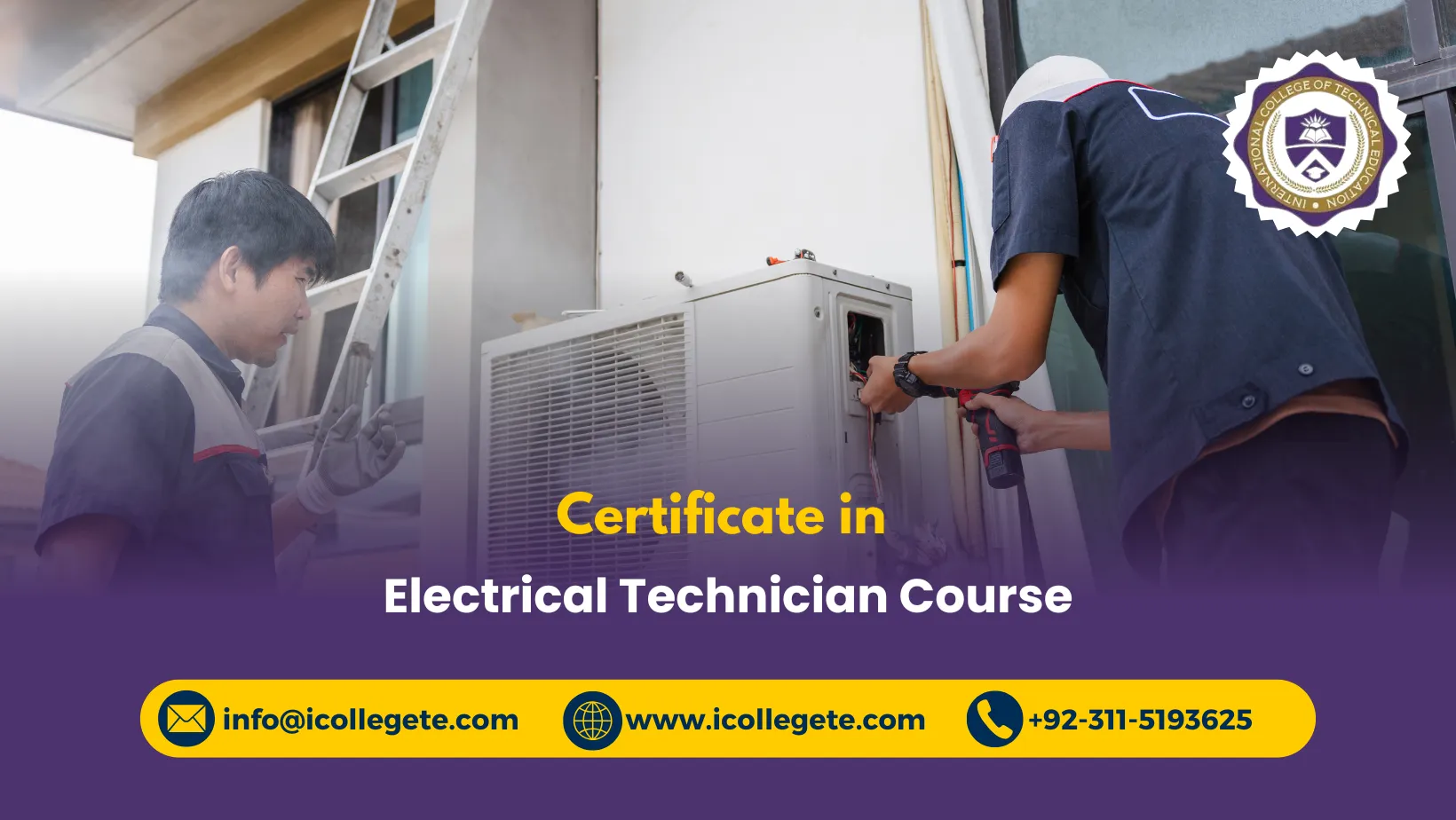
The Electrical Technician Course in Swabi is a practical, career-focused training programme designed to develop the essential knowledge and hands-on skills required to work safely and effectively with electrical systems, wiring, equipment, installation, troubleshooting, and maintenance. The course provides learners with a structured understanding of electrical engineering fundamentals while connecting theoretical concepts with practical workplace applications.
Learners begin by studying the fundamentals of electrical engineering, including basic electrical concepts, circuits, current, voltage, resistance, power, and electrical components. They then develop practical competence in selecting and using common electrical tools and equipment. The course also covers wiring systems and installations, helping learners understand electrical connections, installation methods, circuit arrangements, and good workmanship practices.
A strong emphasis is placed on electrical safety regulations, safe working procedures, hazard identification, and the responsible use of electrical equipment. Learners also develop troubleshooting and maintenance skills to identify common electrical faults, investigate their causes, and apply appropriate corrective measures. Practical applications and workshop activities provide opportunities to reinforce learning through realistic electrical tasks.
This Electrical Technician Course in Swabi is suitable for individuals seeking practical electrical skills for employment, workplace development, technical support roles, or further vocational training. It can provide a valuable foundation for building a career in electrical installation, maintenance, construction, facilities management, and related technical industries.
Course Study Units
Unit 1: Fundamentals of Electrical Engineering
- Basic principles of electricity
- Electrical quantities and units
- Voltage, current, resistance, and power
- Series and parallel circuits
- Electrical components and symbols
- Basic circuit calculations
- Introduction to AC and DC systems
- Understanding electrical drawings and diagrams
Unit 2: Electrical Tools and Equipment
- Identification of electrical tools
- Correct use of hand and measuring tools
- Testing and measuring instruments
- Multimeters and voltage testers
- Electrical installation equipment
- Tool inspection and maintenance
- Safe handling and storage of equipment
- Selecting suitable tools for electrical tasks
Unit 3: Wiring Systems and Installations
- Principles of electrical wiring
- Types of wiring systems
- Cables, conductors, and accessories
- Switches, sockets, and distribution boards
- Circuit protection devices
- Basic domestic and commercial installations
- Cable routing and termination
- Reading wiring diagrams
- Installation quality and good workmanship
Unit 4: Electrical Safety Regulations
- Electrical hazards and risks
- Electric shock and fire hazards
- Safe isolation procedures
- Personal protective equipment
- Electrical inspection and testing principles
- Safe use of electrical tools
- Workplace electrical safety procedures
- Understanding applicable electrical regulations and standards
- Emergency procedures and incident prevention
Unit 5: Troubleshooting and Maintenance
- Principles of electrical fault finding
- Identifying common electrical faults
- Testing circuits systematically
- Diagnosing faulty components
- Preventive electrical maintenance
- Corrective maintenance procedures
- Safe replacement of electrical components
- Recording maintenance activities
- Restoring systems to safe operating conditions
Unit 6: Practical Applications and Workshops
- Practical wiring exercises
- Circuit assembly and testing
- Installation of electrical accessories
- Basic fault-finding exercises
- Electrical measurements
- Equipment inspection and maintenance
- Workshop safety practices
- Practical electrical projects
- Applying theoretical knowledge to workplace situations
Learning Outcomes
After completing the Electrical Technician Course in Swabi, learners should be able to:
- Explain fundamental electrical engineering concepts and principles.
- Understand voltage, current, resistance, power, and basic electrical circuits.
- Identify common electrical tools, equipment, components, and accessories.
- Select and use appropriate electrical tools and measuring instruments.
- Understand different wiring systems and basic installation methods.
- Interpret basic electrical drawings, symbols, and wiring diagrams.
- Apply safe working practices when carrying out electrical activities.
- Recognise common electrical hazards and implement appropriate safety controls.
- Understand the principles of safe isolation and electrical risk prevention.
- Identify and investigate common electrical faults.
- Apply systematic approaches to basic electrical troubleshooting.
- Carry out basic preventive and corrective maintenance activities.
- Perform practical electrical tasks using appropriate tools and procedures.
- Demonstrate responsible working practices in an electrical workshop environment.
Course Benefits
The Electrical Technician Course in Swabi can provide learners with a combination of technical understanding and practical electrical skills relevant to modern workplaces. Key benefits include:
- Develop practical electrical technician skills.
- Build a strong foundation in electrical engineering.
- Learn electrical wiring and installation principles.
- Improve electrical fault-finding and troubleshooting abilities.
- Develop safe working practices for electrical environments.
- Gain experience using electrical tools and testing equipment.
- Understand electrical safety requirements and procedures.
- Improve confidence in carrying out practical electrical tasks.
- Develop skills relevant to construction and maintenance environments.
- Prepare for entry-level electrical technician opportunities.
- Support professional development for workers already involved in technical roles.
- Establish a foundation for further electrical and technical training.
Who Is This Course For?
The Electrical Technician Course in Swabi is suitable for:
- Individuals starting a career in electrical work.
- School and college leavers interested in technical careers.
- Aspiring electrical technicians.
- Electrical helpers seeking to develop technical knowledge.
- Maintenance workers who want to strengthen electrical skills.
- Construction workers involved in electrical activities.
- Facility and building maintenance personnel.
- Technicians seeking additional practical electrical training.
- Individuals interested in domestic and commercial electrical installations.
- Professionals planning to develop their technical qualifications.
- Learners seeking a foundation for advanced electrical training.
Why Choose This Electrical Technician Course in Swabi?
Choosing the Electrical Technician Course in Swabi can help learners develop both theoretical understanding and practical workplace skills. The course focuses on the areas an aspiring technician needs to understand, from electrical fundamentals and tools to wiring, safety, maintenance, troubleshooting, and practical workshop applications.
Key reasons to choose this course:
- Practical and career-focused electrical training.
- Covers essential electrical technician knowledge.
- Combines theory with practical applications.
- Develops electrical troubleshooting and maintenance skills.
- Emphasises safe electrical working practices.
- Suitable for beginners and developing technicians.
- Supports skills development for local and wider employment opportunities.
- Provides a structured foundation for further technical education.
- Helps learners build confidence with electrical tools and equipment.
- Relevant to construction, maintenance, facilities, and technical environments.
Future Progression
After completing the Electrical Technician Course in Swabi, learners can use their knowledge and practical foundation to pursue further technical training and career development in electrical and related fields. Depending on their experience, additional qualifications, and local occupational requirements, potential progression routes may include:
- Electrical Installation Technician
- Electrical Maintenance Technician
- Electrical Technician
- Building Services Technician
- Facilities Maintenance Technician
- Industrial Electrical Technician
- Construction Electrical Technician
- Electrical Testing and Maintenance roles
- Advanced electrical installation training
- Industrial automation and control training
- Electrical engineering qualifications
- Supervisory and technical management pathways
The course can therefore serve as a starting point for learners who want to develop progressively from basic electrical skills toward more advanced technical, maintenance, installation, supervisory, and engineering-related responsibilities.