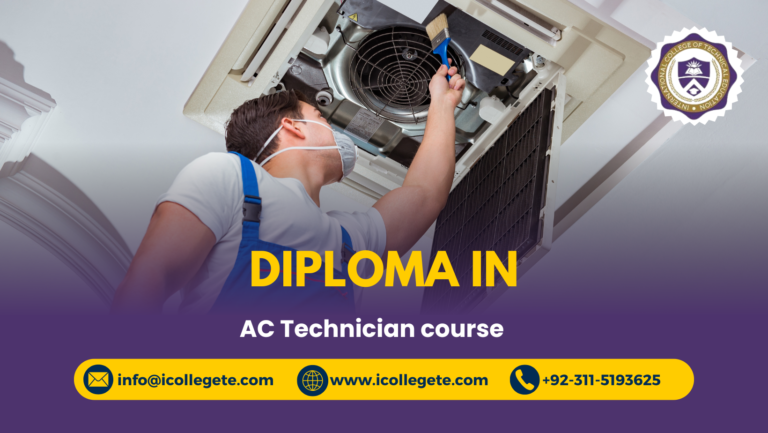
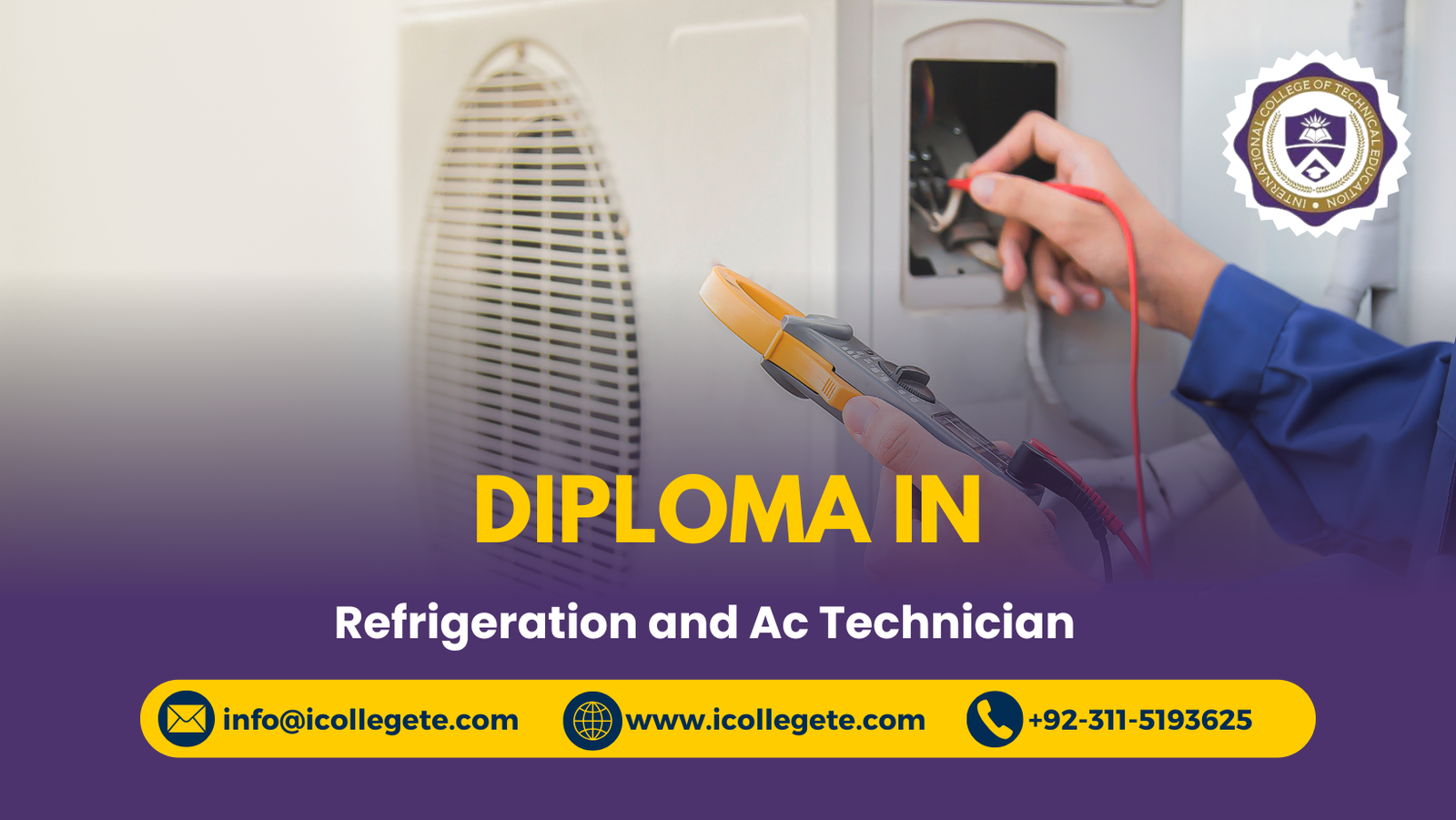
The Diploma in Refrigeration and AC Technician is a career-focused program designed to provide students with the technical expertise required in the refrigeration and air-conditioning industry. It covers the fundamentals of cooling systems, HVAC technology, and electrical components, ensuring learners gain both theoretical knowledge and practical skills.
Throughout the course, students are trained in installation, servicing, and maintenance of refrigeration and air-conditioning systems used in residential, commercial, and industrial environments. Emphasis is placed on hands-on practice, troubleshooting techniques, and safety standards, making graduates confident in handling real-world technical challenges.
This diploma opens doors to diverse career opportunities, from working with HVAC companies and manufacturing industries to starting independent service businesses. With the growing demand for skilled technicians worldwide, this program equips learners with job-ready skills and a strong foundation for long-term success in the cooling and refrigeration sector.
The curriculum for the Diploma in Refrigeration and AC Technician is structured to cover both the theoretical and practical aspects of the industry. Key study units include:
- Introduction to Refrigeration and AC Systems
- Refrigeration Cycles and Thermodynamics
- Electrical Systems in HVAC
- Installation and Maintenance
- Refrigerants and Environmental Impact
- Troubleshooting and Repair
- Energy Efficiency in HVAC
- Workplace Safety and Regulations
- Customer Interaction and Professionalism
By the end of the Diploma in Refrigeration and AC Technician course, students will:
Introduction to Refrigeration and AC Systems
- Understand the basic principles and working of refrigeration and air conditioning systems
- Identify different types of HVAC systems and their applications
- Explain the role of refrigeration in domestic, commercial, and industrial environments
Refrigeration Cycles and Thermodynamics
- Understand the refrigeration cycle and thermodynamic principles involved
- Analyze heat transfer processes in cooling systems
- Apply cycle concepts to improve system efficiency and performance
Electrical Systems in HVAC
- Understand electrical components used in HVAC systems
- Read and interpret wiring diagrams and control circuits
- Apply electrical safety practices in HVAC installations
Installation and Maintenance
- Perform installation of basic refrigeration and AC systems
- Carry out routine maintenance and servicing procedures
- Ensure proper system setup according to technical standards
Refrigerants and Environmental Impact
- Identify different types of refrigerants and their properties
- Understand environmental effects such as ozone depletion and global warming
- Apply safe handling and recovery procedures for refrigerants
Troubleshooting and Repair
- Diagnose common faults in refrigeration and AC systems
- Apply systematic troubleshooting techniques
- Perform basic repair and replacement of faulty components
Energy Efficiency in HVAC
- Understand energy-saving practices in HVAC systems
- Evaluate system performance for efficiency improvements
- Apply techniques to reduce energy consumption and operational costs
Workplace Safety and Regulations
- Follow safety standards in HVAC installation and maintenance work
- Understand industry regulations and compliance requirements
- Use protective equipment and safe working practices
Customer Interaction and Professionalism
- Develop effective communication skills with clients and customers
- Maintain professional behavior in workplace environments
- Handle customer queries and service requirements efficiently
This course provides practical technical skills and industry knowledge to build a strong career in refrigeration and air conditioning (HVAC) systems.
- Gain hands-on experience in AC installation, servicing, and maintenance
- Learn to diagnose and repair common HVAC system faults
- Develop knowledge of electrical systems and refrigeration cycles
- Understand energy efficiency techniques for modern HVAC systems
- Improve job opportunities in local and international HVAC industries
- Build professional skills for customer service and workplace safety
The Diploma in Refrigeration and AC Technician is ideal for:
- Beginners who want to start a career in HVAC field
- Students of technical, vocational, or engineering backgrounds
- Technicians and helpers working in AC repair or maintenance
- Job seekers looking for skilled trade opportunities
- Professionals aiming to upgrade HVAC installation and repair skills