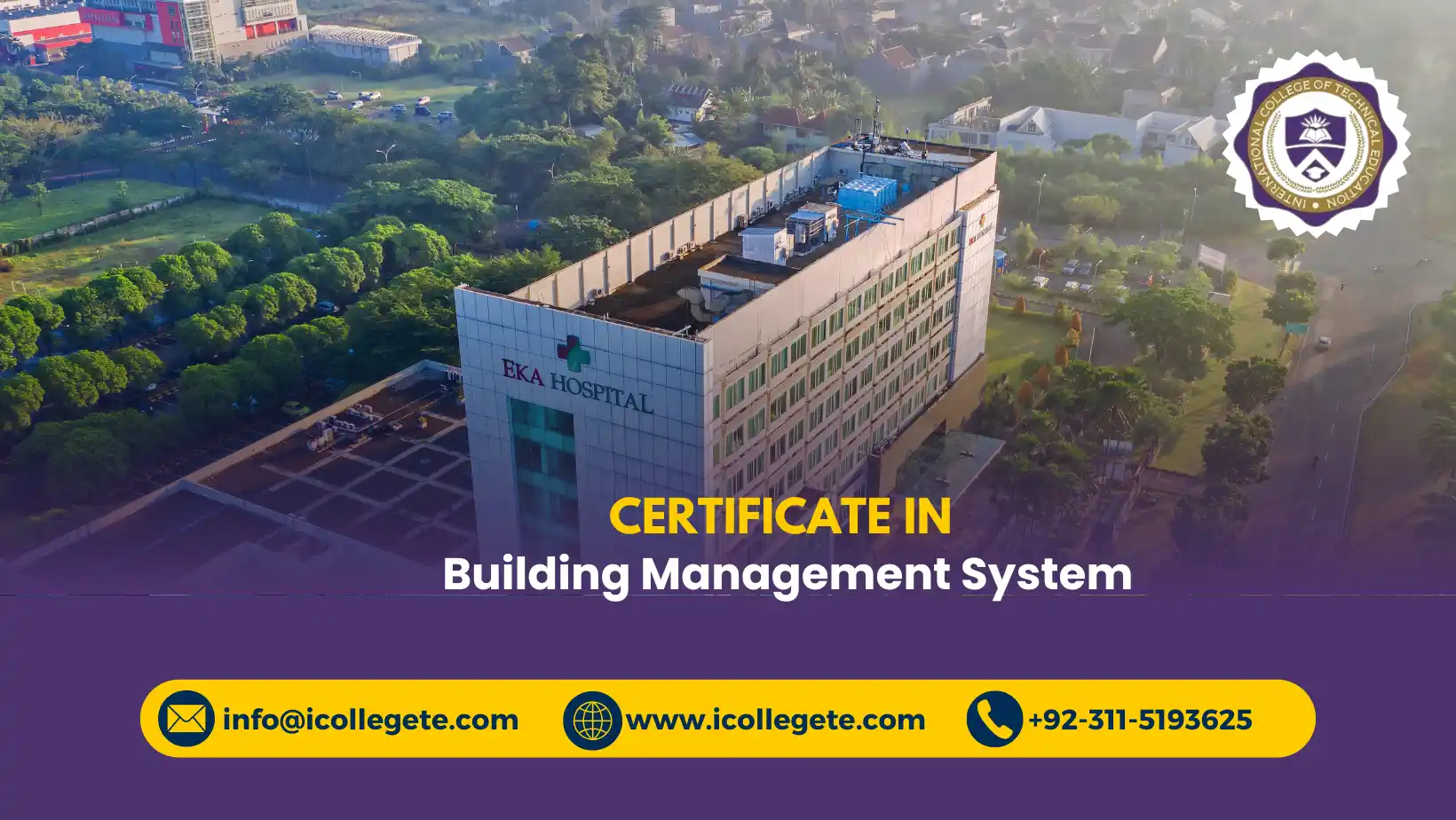
The Building Management System Course in Gujranwala is designed to develop practical knowledge and technical understanding of modern building automation, monitoring, control and energy management systems. A Building Management System (BMS) integrates essential building services such as heating, ventilation and air conditioning (HVAC), lighting, energy systems, alarms, security and other facilities through a centralised monitoring and control platform.
This course provides learners with a structured understanding of BMS architecture, system components, sensors, controllers, actuators, Human-Machine Interfaces (HMI), programming, configuration and communication protocols such as BACnet and Modbus. Learners also explore HVAC and lighting control, fire alarm and security integration, energy management, sustainability, alarm handling, data logging and fault diagnosis.
The Building Management System Course in Gujranwala is suitable for learners seeking technical skills relevant to commercial buildings, industrial facilities, hospitals, hotels, shopping centres, offices and other automated environments. The course combines foundational concepts with practical building automation scenarios, helping learners understand how BMS technologies support operational efficiency, occupant comfort, equipment performance and energy optimisation.
With the growing adoption of smart buildings and connected technologies, BMS knowledge can support career development in building automation, facilities management, HVAC controls, energy management, commissioning, maintenance and technical support roles.
Course Overview
The Building Management System Course in Gujranwala provides learners with essential knowledge of modern building automation, monitoring and control technologies. The course covers BMS architecture, sensors, controllers, actuators, HMI, programming, communication protocols, HVAC and lighting control, and integrated building services.
Learners also develop an understanding of energy management, alarm and fault monitoring, data logging, preventive maintenance and troubleshooting. The course introduces practical building automation applications and emerging smart-building technologies, supporting career development in BMS, facilities management, HVAC controls, building automation and technical maintenance.
Course Study Units
Unit1: Introduction to Building Management Systems (BMS)
- BMS fundamentals and applications
- Role of BMS in modern buildings
- Basic building automation concepts
Unit 2: Importance of BMS in Modern Infrastructure
- Building efficiency and operational control
- Occupant comfort and safety
- Energy monitoring and optimisation
Unit 3: BMS Architecture and Components
- BMS servers and controllers
- Field devices and control networks
- System interfaces and communication infrastructure
Unit 4: Sensors, Controllers and Actuators
- Temperature, humidity and pressure sensors
- Controllers and control logic
- Actuators and automated equipment control
Unit 5: Human-Machine Interface (HMI)
- HMI structure and functions
- Graphical monitoring of building systems
- Operator control and system navigation
Unit 6: System Programming and Configuration
- Basic BMS programming concepts
- Control sequences and configuration
- System parameters and commissioning settings
Unit 7: Communication Protocols
- BACnet communication
- Modbus communication
- Device integration and data exchange
Unit 8: HVAC and Lighting Control Systems
- HVAC monitoring and automated control
- Lighting control and scheduling
- Comfort and energy-efficiency strategies
Unit 9: Fire Alarm and Security System Integration
- Fire alarm system integration
- Access control and security monitoring
- Centralised alarm and event management
Unit 10: Energy Management and Sustainability
- Energy consumption monitoring
- Automated energy-saving strategies
- Sustainable building operation
Unit 11: Alarm and Fault Management
- BMS alarm identification
- Fault monitoring and reporting
- Alarm response and escalation
Unit 12: Data Logging and Monitoring Systems
- Building data collection
- Trend and performance monitoring
- Reports and operational records
Unit 13: Preventive Maintenance and Troubleshooting
- Routine BMS maintenance
- Fault diagnosis and troubleshooting
- System performance checks
Unit 14: Case Studies in Building Automation
- Practical BMS applications
- Building automation challenges
- Performance improvement examples
Unit 15: Future Trends in Smart Building Technologies
- Internet of Things (IoT) in buildings
- Cloud-based and intelligent
- BMS Artificial intelligence and smart building analytics
Learning Outcomes
By completing the Building Management System Course in Gujranwala, learners should be able to:
- Explain the purpose, applications and importance of Building Management Systems in modern buildings.
- Describe the architecture and main components of a BMS, including sensors, controllers, actuators and interfaces.
- Identify the functions of different BMS field devices and control components.
- Explain how Human-Machine Interfaces support building monitoring and control.
- Understand fundamental BMS programming and configuration principles.
- Describe common communication protocols, including BACnet and Modbus, used in building automation.
- Explain how BMS technologies control HVAC, lighting and other building services.
- Understand the integration of fire alarm, security and other building systems with a BMS platform.
- Apply basic principles of energy management and sustainability through automated building controls.
- Interpret alarms, faults, trends and monitoring data within a BMS environment.
- Understand preventive maintenance procedures and basic troubleshooting approaches.
- Evaluate building automation case studies and identify opportunities for improved system performance.
- Recognise emerging technologies and future developments in smart building automation.
Course Benefits
- Develop practical knowledge of Building Management System technologies and applications.
- Understand how automated systems monitor and control building services.
- Build knowledge of HVAC, lighting, security and fire-system integration.
- Develop awareness of BACnet, Modbus and other building automation communication protocols.
- Improve understanding of energy monitoring and building efficiency strategies.
- Learn the fundamentals of BMS programming, configuration and system operation.
- Develop fault identification, alarm management and troubleshooting knowledge.
- Understand data logging, trend analysis and real-time monitoring.
- Gain knowledge relevant to commercial, industrial and smart-building environments.
- Support career development in building automation and facilities-related technical roles.
- Develop skills that can complement existing HVAC, electrical, mechanical or facilities management experience.
- Build awareness of modern smart-building and connected automation technologies.
Who is This Course For?
The Building Management System Course in Gujranwala is suitable for:
- BMS technicians and building automation technicians
- HVAC technicians and engineers
- Electrical technicians and engineers
- Mechanical technicians and engineers
- Facilities management professionals
- Building maintenance technicians
- Energy management personnel
- Building services professionals
- Control and automation technicians
- Engineering graduates and technical learners
- Maintenance supervisors and site technicians
- Professionals seeking to develop smart-building technology skills
- Learners planning to enter the building automation sector
Why Choose This Course?
The Building Management System Course in Gujranwala provides a focused pathway for developing knowledge of building automation and integrated control technologies. It covers the complete BMS lifecycle from system architecture and field devices to monitoring, programming, fault management, maintenance and emerging smart-building technologies.
The course is particularly relevant as modern buildings increasingly use automated systems to improve energy efficiency, equipment performance, occupant comfort, operational visibility and maintenance planning. Learners gain an understanding of how different building services can communicate through integrated control platforms rather than operating as isolated systems.
The course also provides valuable cross-disciplinary knowledge. Learners with HVAC, electrical, mechanical, automation or facilities management backgrounds can use BMS knowledge to broaden their technical capabilities and understand integrated building operations.
Future Progression
After completing the Building Management System Course in Gujranwala, learners can develop their knowledge through advanced training in areas such as:
- Advanced Building Management Systems
- Building Automation and Control Systems
- HVAC Control and Automation
- Smart Building Technologies
- Energy Management Systems
- Industrial Automation and Control
- Electrical Building Services
- Facilities Management
- Building Energy Efficiency
- IoT and Connected Building Technologies
- SCADA and monitoring systems
- Control systems programming and commissioning
The course can also support progression towards roles such as BMS Technician, Building Automation Technician, HVAC Controls Technician, Facilities Technician, Controls Engineer, Building Services Technician, Energy Management Technician and BMS Commissioning Technician, depending on the learner’s existing qualifications, technical experience and employer requirements.