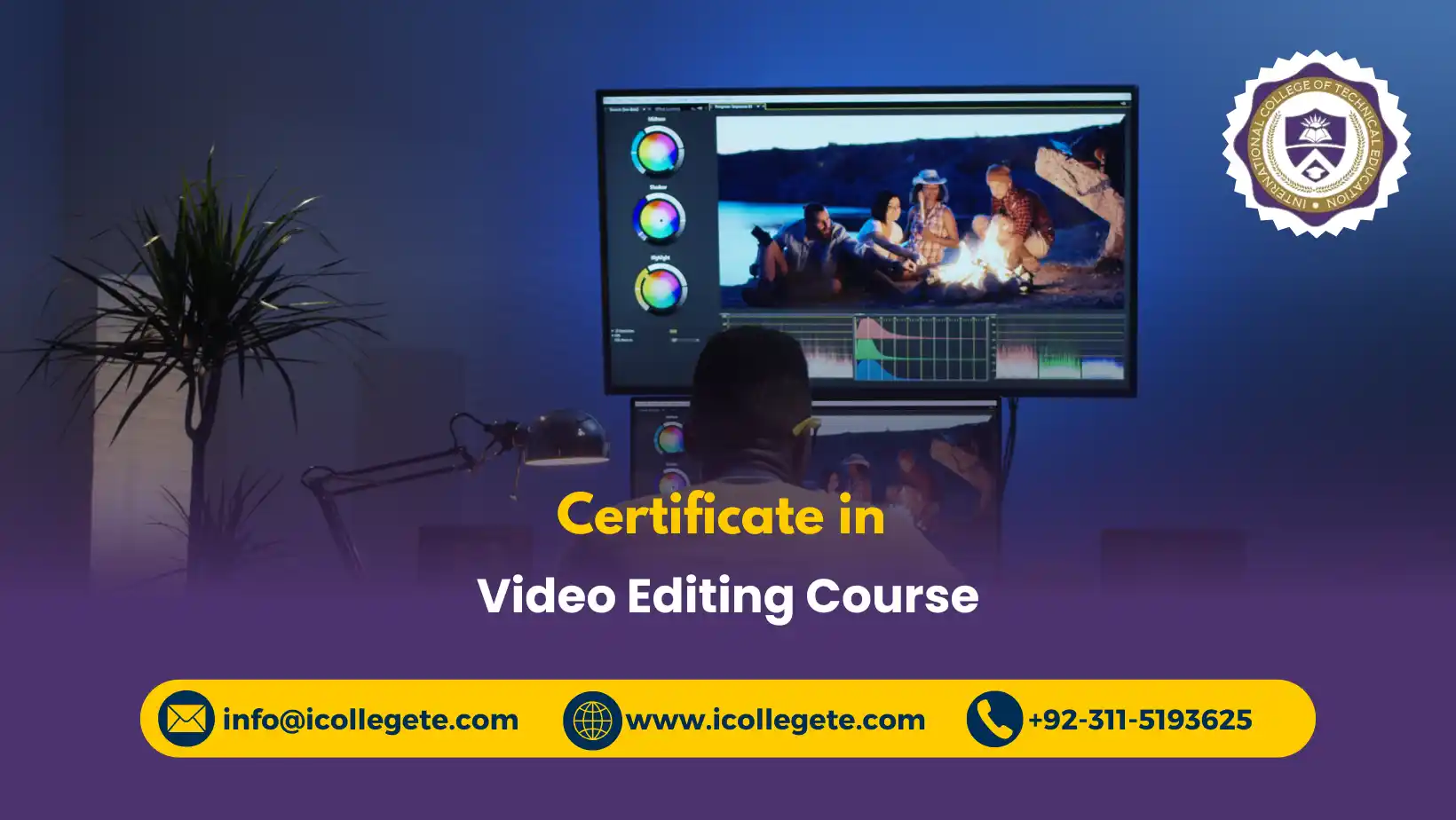
The Video Editing Course in Swabi is a practical, career-focused training programme designed to help learners develop the creative, technical, and professional skills required to produce high-quality video content. As video has become an essential communication tool for businesses, social media platforms, YouTube channels, educational institutions, brands, and digital marketing campaigns, skilled video editors are increasingly valuable in the modern digital economy.
This course provides a structured introduction to video editing concepts, editing software, timeline management, transitions, visual effects, motion graphics, audio editing, colour correction, rendering, and creative storytelling. Learners progressively move from basic editing techniques to professional video production workflows, gaining practical experience in organising footage, synchronising sound, improving visual quality, and preparing finished videos for different platforms.
The Video Editing Course in Swabi is suitable for beginners, students, content creators, freelancers, aspiring YouTubers, social media professionals, and individuals who want to establish a career in digital media. The course focuses on practical application rather than theory alone, enabling learners to develop a portfolio of edited projects that demonstrates their abilities.
By completing the course, learners can progress towards freelance video editing, social media content production, YouTube video editing, digital marketing, multimedia production, and advanced professional video production roles.
Course Study Units
Study Unit 1: Introduction to Video Editing and Software Tools
This unit introduces the fundamental concepts of video editing and digital video production. Learners explore the video editing workflow, common terminology, file formats, frame rates, resolutions, aspect ratios, codecs, and project organisation.
Key areas include:
- Understanding the role of a video editor
- Introduction to digital video production
- Understanding video formats and resolutions
- Frame rates and aspect ratios
- Introduction to professional video editing software
- Understanding editing interfaces and workspaces
- Importing and organising media files
- Basic editing tools and functions
- Managing project files and media assets
- Understanding non-linear video editing
Study Unit 2: Timeline Editing and Project Management
This unit develops practical skills in arranging and managing video content through timeline-based editing. Learners develop an understanding of clips, tracks, sequences, trimming, cutting, sequencing, and efficient project organisation.
Key areas include:
- Creating and managing editing timelines
- Importing and arranging video clips
- Cutting, trimming, splitting, and joining clips
- Working with multiple video and audio tracks
- Using markers and editing points
- Managing media and project folders
- Maintaining an organised editing workflow
- Applying basic pacing and timing
- Managing project versions and backups
- Preparing projects for efficient editing
Study Unit 3: Transitions, Effects, and Motion Graphics
This unit introduces techniques for improving the visual quality and professional appearance of videos. Learners explore transitions, effects, titles, text animation, and basic motion graphics.
Key areas include:
- Understanding video transitions
- Applying transitions appropriately
- Using visual effects
- Creating professional titles and captions
- Basic text animation
- Introduction to motion graphics
- Keyframe-based animation
- Creating logos and graphical elements
- Applying effects without distracting from content
- Developing consistent visual styles
Study Unit 4: Audio Editing and Synchronization
Good video production requires clear and well-balanced audio. This unit teaches learners how to edit dialogue, music, sound effects, and other audio elements while maintaining synchronisation with visual content.
Key areas include:
- Understanding audio tracks and waveforms
- Cutting and arranging audio
- Synchronising audio and video
- Adjusting audio levels
- Removing unwanted noise
- Using background music effectively
- Adding sound effects
- Applying audio transitions
- Balancing dialogue, music, and effects
- Preparing professional-quality audio
Study Unit 5: Color Correction and Grading Techniques
This unit focuses on improving the visual appearance and consistency of video footage. Learners develop an understanding of exposure, contrast, white balance, saturation, colour balance, and creative colour grading.
Key areas include:
- Understanding colour correction
- Correcting exposure and brightness
- Adjusting contrast and saturation
- White balance correction
- Matching footage from different cameras
- Understanding colour scopes
- Introduction to colour grading
- Creating suitable visual moods
- Maintaining colour consistency
- Applying professional colour workflows
Study Unit 6: Exporting and Rendering Professional Videos
This unit teaches learners how to prepare completed projects for final delivery. Learners explore rendering, export settings, codecs, file formats, compression, resolution, and platform-specific requirements.
Key areas include:
- Understanding rendering and exporting
- Selecting suitable video formats
- Choosing resolution and frame rates
- Understanding codecs and compression
- Exporting for social media
- Preparing videos for YouTube
- Optimising video quality and file size
- Managing export settings
- Checking final video quality
- Troubleshooting common rendering problems
Study Unit 7: Creative Storytelling and Project Presentation
The final unit combines technical editing skills with creative storytelling. Learners learn how to structure visual content, maintain audience engagement, communicate ideas effectively, and present completed projects professionally.
Key areas include:
- Understanding visual storytelling
- Developing a clear narrative structure
- Selecting appropriate footage
- Creating engaging video sequences
- Using pacing to maintain audience interest
- Combining visuals, music, dialogue, and effects
- Editing for different audiences and platforms
- Developing a professional video portfolio
- Presenting completed editing projects
- Receiving and applying creative feedback
Learning Outcomes
After completing the Video Editing Course in Swabi, learners should be able to:
- Explain fundamental video editing concepts and terminology.
- Use video editing software and its core tools effectively.
- Import, organise, and manage video and audio media.
- Create and manage professional editing timelines.
- Cut, trim, arrange, and sequence video footage.
- Apply appropriate transitions, effects, titles, and motion graphics.
- Edit and synchronise dialogue, music, and sound effects.
- Perform basic audio enhancement and balancing.
- Apply colour correction and creative colour grading techniques.
- Select appropriate export formats and rendering settings.
- Prepare videos for YouTube, social media, websites, and other platforms.
- Apply creative storytelling principles to video projects.
- Develop professional editing workflows and project management skills.
- Create completed video projects suitable for portfolio development.
- Present video editing projects professionally.
Course Benefits
The Video Editing Course in Swabi provides learners with practical skills that can be applied across creative, commercial, educational, and digital media environments.
Practical Video Editing Skills
Learners gain hands-on knowledge of editing workflows, timeline management, audio, effects, colour, rendering, and storytelling.
Career Development
The course can help learners prepare for entry-level opportunities in video editing, multimedia production, social media content creation, and digital marketing.
Freelancing Opportunities
Video editing is suitable for freelance work because businesses, influencers, YouTubers, agencies, and content creators regularly require professional video content.
YouTube and Social Media Skills
Learners develop skills relevant to creating engaging videos for YouTube, Facebook, Instagram, TikTok, websites, and other digital platforms.
Portfolio Development
Practical projects can help learners build a portfolio demonstrating their editing abilities to potential employers and clients.
Creative Development
The course encourages learners to combine technical editing techniques with storytelling, visual design, sound, and creative decision-making.
Professional Workflow
Learners understand how to organise media, manage projects, edit efficiently, review content, and deliver completed videos.
Who Is This Course For?
The Video Editing Course in Swabi is suitable for:
- Beginners who want to learn video editing from the fundamentals.
- Students interested in digital media and creative technology.
- Content creators who want to produce better videos.
- YouTubers who want to edit their own content professionally.
- Social media managers who need practical video production skills.
- Freelancers looking to offer video editing services.
- Digital marketing professionals creating promotional video content.
- Graphic designers who want to expand into video and motion content.
- Photographers interested in developing video production skills.
- Business owners who want to create professional marketing videos.
- Aspiring video editors preparing for creative media careers.
- Career changers looking to enter the growing digital content industry.
No advanced video editing experience is required for beginners, although basic computer literacy can be beneficial.
Why Choose This Video Editing Course in Swabi?
Choosing a structured Video Editing Course in Swabi can provide learners with a practical pathway into the digital content and creative media sector.
Industry-Relevant Skills
The curriculum focuses on core video editing skills used across social media, marketing, entertainment, education, corporate communication, and online content production.
Beginner-Friendly Learning Structure
The course progresses from fundamental editing concepts to more advanced creative techniques, making it suitable for learners starting from the beginning.
Practical Project-Based Learning
Learners can apply their knowledge through practical editing activities and projects rather than relying exclusively on theoretical study.
Complete Editing Workflow
The course covers the complete production process, from importing footage and timeline editing through audio, colour, effects, storytelling, rendering, and final presentation.
Supports Freelance Careers
Learners can use their skills to develop freelance services for businesses, agencies, influencers, YouTubers, and online content creators.
Local Learning Opportunity
For learners searching for a video editing course near Swabi, this programme provides an opportunity to develop valuable digital skills without needing to begin with highly advanced professional training.
Builds a Professional Portfolio
Completed projects can be organised into a portfolio that demonstrates editing ability, creativity, technical knowledge, and project presentation skills.
Future Progression of This Course
The Video Editing Course in Swabi can provide a foundation for further education, specialisation, freelancing, and employment within the digital media sector.
Advanced Video Editing
Learners can progress to advanced editing techniques, including complex multi-camera editing, advanced effects, sophisticated colour workflows, and professional post-production.
Motion Graphics and Animation
After developing basic motion graphics skills, learners can specialise in animated titles, promotional graphics, visual effects, and motion design.
YouTube Video Production
Learners can develop specialist skills for YouTube content, including audience-focused editing, thumbnails, introductions, storytelling, and platform-specific video optimisation.
Social Media Content Production
The next step can involve specialising in short-form content for platforms such as TikTok, Instagram, Facebook, and YouTube Shorts.
Freelance Video Editing
Learners can establish freelance services and develop client-management, pricing, project delivery, portfolio, and communication skills.
Digital Marketing
Video editing skills can be combined with digital marketing, content strategy, social media marketing, and advertising to create broader career opportunities.
Professional Multimedia Production
With additional education and practical experience, learners can progress towards professional roles such as:
- Video Editor
- Junior Video Editor
- Content Creator
- Social Media Video Editor
- YouTube Video Editor
- Multimedia Designer
- Motion Graphics Assistant
- Post-Production Assistant
- Digital Content Producer
- Freelance Video Editor
Long-Term Career Development
With continued practice, advanced training, professional portfolio development, and industry experience, learners can progress towards senior video editing, post-production, motion graphics, creative production, or independent video production careers.
Take the Next Step Toward World Video Editing Course-Enroll Now