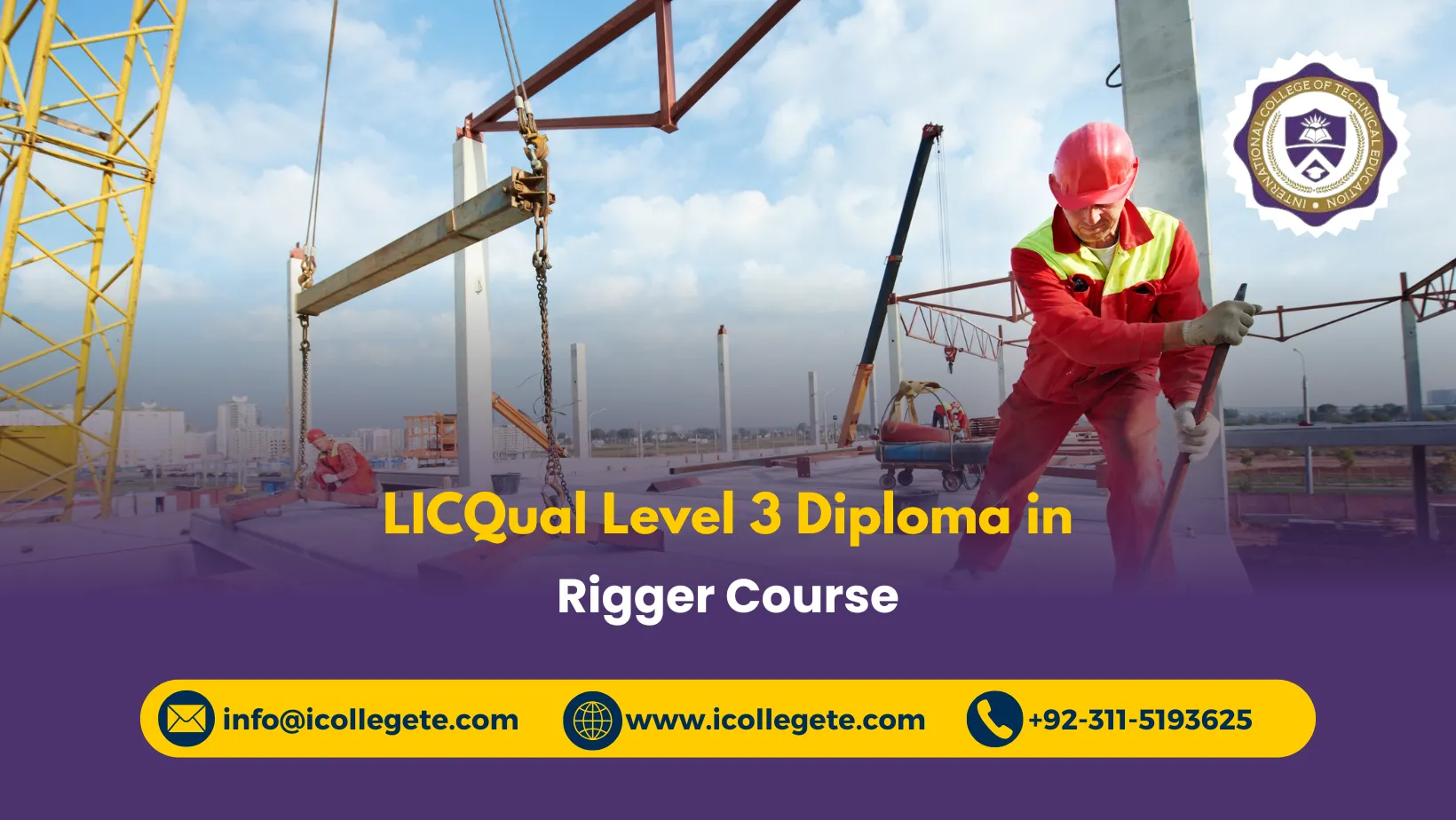
The LICQual Level 3 Diploma in Rigger Course in Pakistan is an advanced professional qualification designed for individuals who want to develop higher-level knowledge and practical competence in rigging, lifting operations, load management, equipment inspection, safety, and team coordination. The course is particularly relevant to Pakistan’s construction, oil and gas, manufacturing, power, engineering, marine, infrastructure, and heavy industrial sectors, where safe lifting and controlled movement of heavy or complex loads are essential. The official LICQual qualification information describes the Level 3 Diploma as an advanced qualification covering complex rigging and lifting operations, load calculations, safety management, equipment handling, supervision, and project planning.
This diploma develops the ability to assess lifting requirements, select appropriate rigging equipment, understand load distribution, identify hazards, implement risk controls, and coordinate lifting teams. Learners also develop advanced knowledge of inspection and maintenance requirements for rigging gear and gain an understanding of international safety practices relevant to lifting operations. These competencies are increasingly important as Pakistan strengthens occupational safety expectations in high-risk sectors, including construction.
The course combines technical understanding with leadership and practical application, helping learners progress beyond basic rigging tasks toward more responsible roles involving complex lifting operations, supervision, planning, safety coordination, and industrial rigging activities.
Course Study Units
The LICQual Level 3 Diploma in Rigger Course in Pakistan covers the following advanced study units:
Unit 1: Advanced Principles of Rigging and Lifting
This unit develops an advanced understanding of rigging and lifting principles required for complex operations.
Learners explore:
- Advanced rigging terminology and principles
- Types of lifting operations and applications
- Static and dynamic loading principles
- Centre of gravity and load stability
- Lifting points and load attachment
- Sling configurations and lifting arrangements
- Load movement and control principles
- Factors affecting lifting capacity
- Lift planning fundamentals
- Safe positioning of personnel and equipment
- Critical and non-routine lifting operations
- Principles of controlled load movement
Unit focus: developing the technical understanding required to plan and perform complex rigging operations safely and efficiently.
Unit 2: Specialized Rigging Equipment and Tools
This unit focuses on the selection, application, inspection, and safe use of specialized rigging equipment.
Learners study:
- Wire rope slings
- Chain slings
- Synthetic web slings
- Shackles and hooks
- Master links
- Spreader beams
- Lifting beams
- Eye bolts and lifting points
- Turnbuckles and rigging hardware
- Hoists and winches
- Tirfors and mechanical pulling equipment
- Tag lines and load-control equipment
- Specialized lifting accessories
- Equipment identification and capacity markings
- Safe Working Load (SWL) and Working Load Limit (WLL)
- Equipment selection based on load and environmental conditions
Learners develop the ability to match lifting accessories with the load, lifting method, environmental conditions, and operational requirements.
Unit 3: Complex Load Calculations and Distribution
This unit develops advanced competence in calculating and assessing loads before lifting operations begin.
Key topics include:
- Load weight estimation
- Centre of gravity calculations
- Load distribution
- Sling angle calculations
- Sling tension
- Multi-leg sling arrangements
- Unequal load distribution
- Lifting-point loading
- Dynamic loading considerations
- Load stability
- Equipment capacity
- SWL and WLL calculations
- Safety factors
- Load charts and technical information
- Effects of load geometry and configuration
- Complex and irregular loads
Accurate load assessment is a fundamental component of safe rigging. Professional lifting training in Pakistan commonly emphasizes load weight, centre of gravity, SWL/WLL and lifting-point considerations.
Unit 4: International Safety Standards and Risk Management
This unit focuses on the application of recognised safety principles and systematic risk management within rigging operations.
Learners examine:
- International lifting and rigging safety principles
- Occupational health and safety requirements
- Hazard identification
- Risk assessment
- Job Safety Analysis (JSA)
- Method statements
- Permit-to-work systems
- Lifting plans
- Exclusion zones
- Suspended-load hazards
- Dropped-object prevention
- Environmental hazards
- Weather and wind considerations
- Communication failures
- Emergency preparedness
- Incident prevention and reporting
- Safe systems of work
- Regulatory compliance
Relevant lifting activities may involve standards and regulatory frameworks such as OSHA, LOLER, PUWER, BS/EN standards and applicable local requirements, depending on the employer, project and jurisdiction.
Unit 5: Rigging Procedures for High-Risk Operations
This unit prepares learners to understand and control complex or high-risk lifting activities.
Topics include:
- Critical lifting operations
- Heavy and abnormal loads
- Tandem or multiple-crane lifting concepts
- Restricted-access lifting
- Lifting near structures
- Lifting in congested work areas
- Offshore and marine lifting considerations
- Industrial plant lifting
- Emergency lifting procedures
- Load-control techniques
- Tag-line applications
- Exclusion and controlled areas
- Communication during critical lifts
- Weather-related lifting risks
- Equipment failure scenarios
- Contingency planning
- Stop-work procedures
The emphasis is on planning, communication, risk control and competent supervision, rather than simply moving a load from one location to another.
Unit 6: Advanced Inspection and Maintenance of Rigging Gear
This unit develops the knowledge required to maintain rigging equipment in safe working condition.
Learners study:
- Pre-use inspections
- Thorough inspection principles
- Defect identification
- Wire rope deterioration
- Sling damage
- Chain wear
- Hook deformation
- Shackle inspection
- Corrosion and environmental damage
- Abrasion and cuts
- Heat damage
- Distortion and deformation
- Identification tags and certification
- Inspection records
- Equipment quarantine
- Rejection and removal from service
- Maintenance procedures
- Storage requirements
- Equipment traceability
The unit reinforces the principle that lifting accessories should only be used when their condition, identification and capacity are suitable for the intended operation.
Unit 7: Leadership, Team Coordination, and Communication
Safe lifting is highly dependent on effective coordination between riggers, crane operators, supervisors, lifting personnel and other site teams.
This unit develops:
- Rigging team leadership
- Allocation of responsibilities
- Communication protocols
- Standard lifting signals
- Radio communication
- Coordination with crane operators
- Toolbox talks
- Pre-lift briefings
- Team decision-making
- Conflict management
- Stop-work authority
- Supervisory responsibilities
- Communication during critical lifts
- Emergency communication
- Documentation and reporting
- Leadership during high-risk activities
Learners develop the ability to communicate clearly and coordinate people effectively before, during and after lifting operations.
Unit 8: Practical Rigging Applications in Industrial Projects
This unit brings together the technical knowledge developed throughout the diploma and applies it to realistic industrial scenarios.
Practical applications may include:
- Industrial equipment lifting
- Structural steel lifting
- Machinery positioning
- Heavy component movement
- Construction-site rigging
- Plant maintenance lifts
- Oil and gas lifting scenarios
- Power-sector lifting activities
- Manufacturing operations
- Load positioning and alignment
- Equipment selection
- Pre-lift inspection
- Lift-plan implementation
- Risk-control measures
- Team coordination
- Post-operation inspection and reporting
The practical focus enables learners to connect rigging theory, calculations, equipment selection, safety management and communication with real workplace situations.
Learning Outcomes
On successful completion of the LICQual Level 3 Diploma in Rigger Course in Pakistan, learners should be able to:
- Explain advanced principles of rigging and lifting operations.
- Analyse complex lifting requirements and operational conditions.
- Select appropriate rigging equipment for different loads and lifting scenarios.
- Identify and interpret SWL, WLL and equipment capacity information.
- Apply principles of centre of gravity and load stability.
- Perform complex load calculations and assess load distribution.
- Analyse sling angles and their effect on lifting forces.
- Identify hazards associated with complex lifting operations.
- Conduct structured risk assessments and Job Safety Analyses.
- Apply appropriate risk-control measures to rigging activities.
- Understand the requirements of recognised international lifting safety practices.
- Plan and coordinate high-risk and non-routine lifting operations.
- Identify defective, damaged or unsuitable rigging equipment.
- Apply appropriate inspection and maintenance procedures.
- Maintain inspection and equipment documentation.
- Communicate effectively with crane operators, supervisors and rigging teams.
- Demonstrate leadership and coordination during lifting activities.
- Apply safe rigging practices in industrial and construction environments.
- Respond appropriately to changing conditions and unsafe situations.
- Contribute effectively to the planning, execution and supervision of complex lifting operations.
The qualification’s published structure similarly emphasises advanced equipment, safe rigging practices, load calculations, crane and hoist operations, communication and project planning/supervision.
Course Benefits
The LICQual Level 3 Diploma in Rigger in Pakistan provides several professional and practical benefits:
1. Advanced Rigging Knowledge
Learners develop knowledge beyond basic slinging and rigging, including complex load management, specialized equipment and high-risk lifting operations.
2. Improved Workplace Safety
The course develops stronger hazard identification, risk assessment and safety-control skills, helping professionals contribute to safer lifting environments.
3. Better Load-Management Skills
Learners gain greater confidence in understanding load weight, centre of gravity, sling configurations, load distribution and lifting capacity.
4. Specialized Equipment Knowledge
Participants become familiar with a broader range of rigging equipment and lifting accessories and learn how to select equipment according to operational requirements.
5. Inspection and Maintenance Competence
The qualification strengthens the ability to identify damaged or unsuitable lifting gear and support effective inspection and maintenance systems.
6. Leadership and Communication Skills
Learners develop the communication and coordination capabilities needed when working with riggers, crane operators, lifting supervisors and other site personnel.
7. Industrial Application
The knowledge can be applied across construction, engineering, manufacturing, oil and gas, power generation, infrastructure, marine and other heavy-industry environments.
8. Professional Development
The diploma can support professionals who want to take on greater responsibility in rigging, lifting supervision, planning and safety-related activities.
9. Internationally Relevant Safety Knowledge
The course introduces learners to internationally recognised concepts and practices used within lifting and occupational safety environments.
10. Stronger Career Profile
Advanced rigging competence can strengthen a learner’s professional profile when applying for positions involving complex lifting operations, rigging supervision and industrial lifting activities.
Who Is This Course For?
The LICQual Level 3 Diploma in Rigger Course in Pakistan is suitable for:
- Experienced riggers
- Senior riggers
- Rigger team leaders
- Lifting supervisors
- Rigging supervisors
- Crane and lifting personnel
- Construction workers moving into advanced rigging roles
- Oil and gas workers
- Industrial maintenance personnel
- Mechanical technicians
- Heavy-equipment professionals
- Manufacturing-sector workers
- Power-sector lifting personnel
- Marine and offshore personnel
- Construction supervisors
- HSE professionals involved in lifting operations
- Site supervisors
- Individuals seeking advanced professional development in rigging
It is particularly appropriate for professionals who already understand basic rigging principles and want to develop greater competence in complex lifting, load calculations, equipment management, safety, supervision and leadership.
Why Choose the LICQual Level 3 Diploma in Rigger Course in Pakistan?
Advanced-Level Curriculum
The course moves beyond basic rigging concepts and addresses complex lifting operations, specialized equipment, advanced load calculations and high-risk activities.
Relevant to Pakistan’s Industrial Sectors
Pakistan has significant demand for safe lifting practices across construction, infrastructure, manufacturing, energy, engineering and other industrial activities. The country’s construction-sector OSH framework has also placed increased emphasis on strengthening occupational safety and health protections.
Focus on Practical Competence
Rather than concentrating only on theoretical knowledge, the curriculum connects technical concepts with practical rigging and industrial applications.
Strong Safety Emphasis
Risk assessment, equipment inspection, safe systems of work, emergency planning and hazard control are integrated throughout the course.
Develops Supervisory Capability
The leadership and communication unit helps experienced riggers develop skills needed to coordinate people and lifting activities effectively.
Supports Professional Growth
The qualification can help learners build a stronger technical profile for roles involving advanced rigging and lifting responsibilities.
Applicable Across Multiple Industries
The knowledge is relevant to construction sites, factories, industrial plants, oil and gas projects, power plants, infrastructure projects, marine environments and heavy engineering operations.
Future Progression of the Course
After completing the LICQual Level 3 Diploma in Rigger, learners can use their knowledge and experience to pursue greater responsibility within lifting and rigging operations.
Potential professional development areas include:
- Senior Rigger
- Lead Rigger
- Rigging Supervisor
- Lifting Supervisor
- Rigging Team Leader
- Lifting Operations Coordinator
- Rigging Foreman
- Heavy-Lift Operations Personnel
- Industrial Rigging Specialist
- Lifting Safety Coordinator
- Rigging Inspection and Equipment-Control roles
- Construction Lifting Supervisor
The qualification can also support progression into responsibilities involving lift planning, project supervision, equipment management, risk assessment, team coordination and safety management, subject to employer requirements, practical competence and any additional certifications required for specific roles.
For learners seeking broader professional development, the next stage may involve gaining specialist competence in areas such as crane operations, lifting supervision, appointed-person responsibilities, lifting-plan development, HSE management, inspection, or advanced heavy-lift operations.
Take the Next Step Toward World LICQual Level 3 Diploma in Rigger Course-Enroll Now