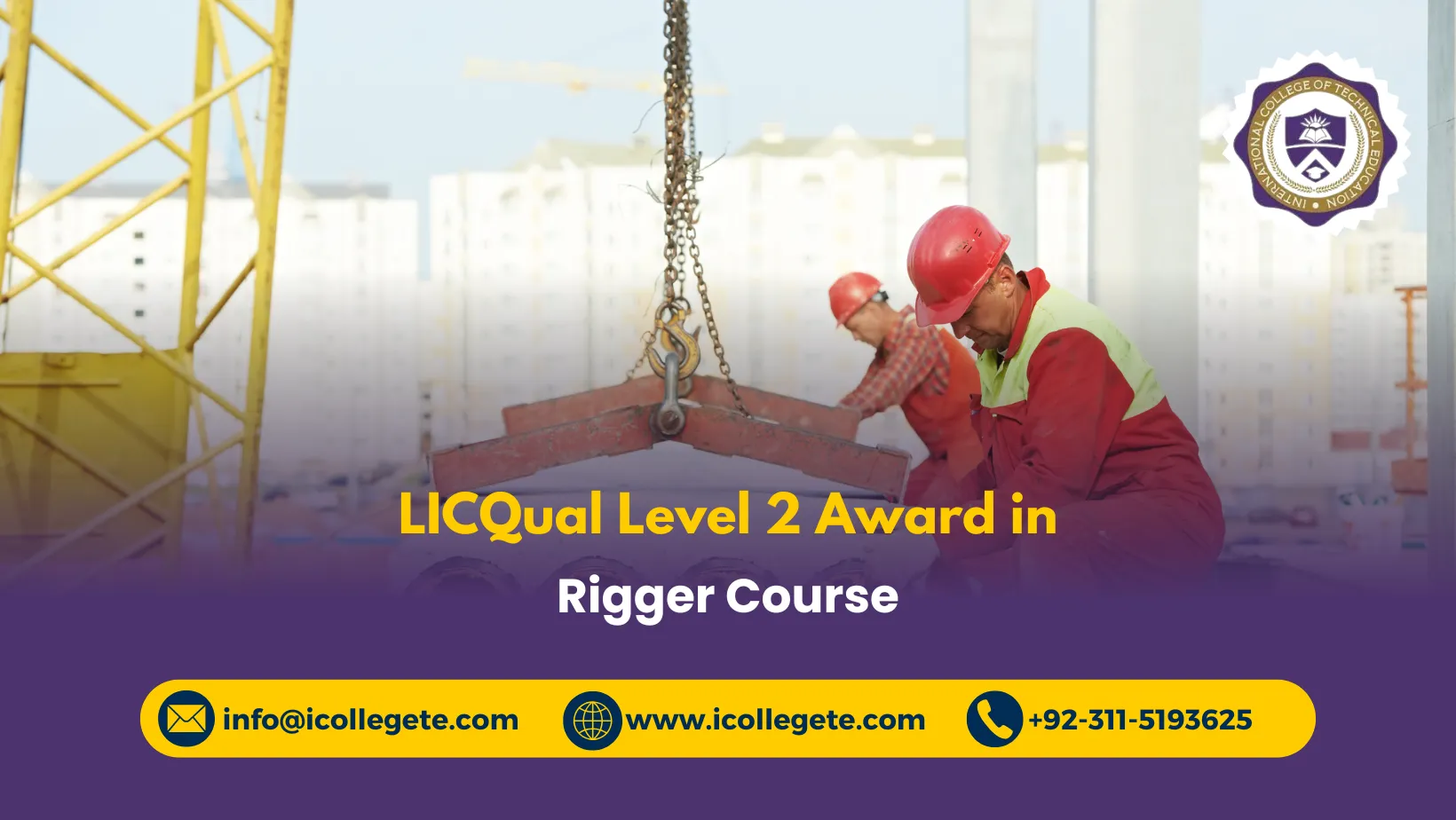
The LILICQual Level 2 Award in Rigger Course in Pakistan is designed to develop essential knowledge and practical competence for learners involved in rigging, lifting, load handling, and related workplace activities. The course focuses on safe rigging practices, equipment inspection, load control, hazard identification, lifting techniques, and compliance with recognised workplace safety principles. Effective inspection, maintenance, safe working loads, competent personnel, and appropriate training are central principles in international lifting safety guidance.
This qualification provides structured learning for learners who want to develop practical rigger skills for construction, industrial, logistics, manufacturing, oil and gas, maritime, engineering, and other environments where lifting operations are performed. The programme combines technical knowledge with practical exercises and case-study-based learning to help learners understand how lifting activities should be planned, controlled, and carried out safely.
The course also develops awareness of risk assessment, lifting hazards, rigging equipment selection, communication, load stability, safe lifting methods, and workplace compliance. Pakistan has strengthened its construction-sector occupational safety framework through a national OSH Code of Practice approved in 2026, reinforcing the importance of competent and safe working practices.
Course Study Units
Unit 1: Advanced Rigging and Lifting Operations
This unit introduces advanced principles used when preparing and supporting lifting operations. Learners develop an understanding of load characteristics, rigging configurations, lifting accessories, load stability, communication, and safe coordination between members of a lifting team.
Unit 2: Rigging Equipment and Tools – Inspection and Maintenance
This unit focuses on the identification, selection, inspection, storage, and maintenance of rigging equipment and lifting accessories.
Key topics include:
- Wire ropes and wire rope slings
- Chain slings
- Webbing slings
- Shackles
- Hooks
- Eyebolts and lifting points
- Spreader beams and lifting beams
- Turnbuckles and connecting devices
- Inspection procedures
- Identification of defects and damage
- Safe working load markings
- Equipment tagging and records
- Storage and maintenance requirements
Learners develop the ability to recognise equipment conditions that could make lifting operations unsafe. International guidance emphasises that lifting equipment should be maintained, examined, tested where required, clearly marked with safe working loads, and used by appropriately trained personnel.
Unit 3: Principles of Load Handling and Advanced Safety Techniques
This unit develops knowledge of safe load handling and the factors that influence lifting stability.
Learners explore:
- Load weight and dimensions
- Centre of gravity
- Load distribution
- Sling angles
- Sling tension
- Working load limits
- Load stability
- Dynamic loading
- Shock loading
- Tag lines
- Load control
- Exclusion zones
- Suspended-load hazards
- Safe positioning of personnel
- Communication during lifting
The emphasis is on controlling the load throughout the lifting process rather than focusing only on the initial attachment.
Unit 4: Risk Assessment and Hazard Identification in Complex Operations
This unit develops the learner’s ability to identify hazards and evaluate risks associated with complex rigging and lifting activities.
Topics include:
- Hazard identification
- Risk assessment
- Risk rating
- Control measures
- Lifting plans
- Method statements
- Permit-to-work systems
- Environmental conditions
- Overhead obstructions
- Ground conditions
- Electrical hazards
- Confined work areas
- Simultaneous operations
- Falling-object hazards
- Communication failures
- Emergency arrangements
Learners examine how the hierarchy of controls and systematic risk management can be incorporated into construction and lifting activities. The ILO’s construction safety guidance identifies lifting operations as an important area requiring effective occupational safety and health controls.
Unit 5: Safe Use of Advanced Lifting Techniques
This unit focuses on applying safe techniques when lifting, moving, positioning, and securing loads.
Learners develop knowledge of:
- Advanced sling configurations
- Multiple-leg lifting arrangements
- Load balancing
- Controlled lifting
- Tandem lifting principles
- Mechanical lifting aids
- Guide ropes and tag lines
- Load positioning
- Communication and signalling
- Controlled lowering
- Load securing
- Emergency procedures
- Safe completion of lifting operations
Practical application is emphasised so that learners can connect technical principles with workplace situations.
Unit 6: Workplace Safety and Compliance Standards
This unit develops awareness of workplace safety responsibilities and compliance requirements applicable to lifting operations.
Learners examine:
- Workplace health and safety responsibilities
- Competence and training
- Lifting equipment inspection
- Safe working load requirements
- Equipment identification
- Inspection records
- Lifting plans
- Toolbox talks
- Personal protective equipment
- Site exclusion zones
- Communication procedures
- Incident reporting
- Emergency arrangements
- International safety principles
International guidance states that lifting equipment should be appropriately designed, maintained, examined and used, with examination and testing carried out by competent persons where required by applicable national requirements.
Unit 7: Practical Rigging Exercises and Case Studies
This unit provides opportunities to apply knowledge through controlled practical activities and realistic workplace scenarios.
Practical activities may include:
- Identifying lifting accessories
- Inspecting rigging equipment
- Selecting suitable lifting gear
- Attaching loads
- Applying appropriate sling configurations
- Checking load stability
- Establishing exclusion zones
- Using communication signals
- Controlling suspended loads
- Positioning loads safely
- Conducting pre-lift checks
- Responding to simulated hazards
- Reviewing lifting case studies
Case studies allow learners to analyse common lifting problems and identify appropriate control measures before practical activities are undertaken.
Learning Outcomes
By completing the LILICQual Level 2 Award in Rigger Course in Pakistan, learners should be able to:
- Explain the fundamental principles of rigging and lifting operations.
- Identify common lifting equipment and rigging accessories.
- Select appropriate rigging equipment for different load-handling requirements.
- Inspect lifting accessories for visible defects, wear, damage, and unsafe conditions.
- Explain the importance of safe working load limits and equipment identification.
- Apply basic principles of load weight, centre of gravity, balance, and stability.
- Explain how sling angles can affect lifting forces.
- Apply appropriate safety techniques during load handling.
- Identify hazards associated with complex lifting operations.
- Contribute to suitable risk assessments and control measures.
- Apply safe lifting and load-control techniques.
- Demonstrate appropriate communication and signalling practices.
- Follow workplace safety procedures during rigging activities.
- Recognise situations requiring equipment withdrawal or escalation to a competent person.
- Maintain appropriate awareness of inspection, maintenance, and lifting records.
- Apply learning through practical rigging exercises and workplace case studies.
Course Benefits
The LILICQual Level 2 Award in Rigger Course in Pakistan can provide learners with several practical and professional benefits:
Develop Practical Rigging Knowledge
Learners gain structured knowledge of rigging equipment, lifting accessories, load handling, inspection, and safe lifting procedures.
Improve Workplace Safety Awareness
The course develops awareness of hazards such as unstable loads, defective equipment, excessive loading, poor communication, and unsafe positioning.
Strengthen Equipment Inspection Skills
Learners develop the ability to identify visible signs of damage, wear, deformation, and other conditions requiring further assessment.
Build Load Handling Competence
The programme introduces important concepts such as centre of gravity, load stability, sling configuration, and controlled movement.
Support Industry Readiness
Rigging knowledge can support work activities across construction, engineering, manufacturing, logistics, industrial maintenance, maritime, and other sectors.
Develop Risk Awareness
Learners gain structured knowledge of hazard identification, risk assessment, control measures, exclusion zones, and emergency arrangements.
Encourage Professional Working Practices
The course promotes disciplined equipment checks, communication, teamwork, documentation, and adherence to workplace procedures.
Who Is This Course For?
The course is suitable for:
- Aspiring riggers
- Junior riggers
- Lifting team members
- Construction workers
- Site operatives
- Lifting assistants
- Mechanical workers
- Industrial workers
- Warehouse and logistics personnel
- Maintenance workers
- Oil and gas support personnel
- Maritime and port workers
- Engineering technicians
- Safety personnel involved in lifting activities
- Workers seeking formal training in rigging and lifting operations
It can also be relevant for existing workers seeking to strengthen their understanding of safe rigging practices and formalise workplace knowledge.
Why Choose the LILICQual Level 2 Award in Rigger Course?
Industry-Relevant Course Content
The programme focuses on practical rigging and lifting activities, including equipment inspection, load handling, hazard identification, safe lifting techniques, and workplace compliance.
Combination of Theory and Practical Learning
Learners can connect theoretical principles with practical exercises, helping develop a stronger understanding of how safe rigging procedures operate in workplace situations.
Focus on Safety and Competence
The course places strong emphasis on equipment condition, safe working limits, risk controls, communication, and responsible lifting practices.
Suitable for Multiple Industries
Rigging and lifting skills are applicable across construction, engineering, manufacturing, logistics, maritime, industrial maintenance, and related sectors.
Internationally Relevant Safety Principles
The course content can be aligned with recognised international occupational safety principles. ILO guidance, for example, emphasises competent training, equipment maintenance, examination, safe working loads, and appropriate operating procedures.
Practical Career Preparation
The programme helps learners develop foundational occupational skills that can support entry-level and developing roles involving rigging and lifting activities.
Future Progression
After completing the LILICQual Level 2 Award in Rigger Course in Pakistan, learners may progress through additional vocational training and workplace competence development in areas such as:
- Advanced rigging operations
- Lifting supervision
- Crane signalling and banksman operations
- Lifting equipment inspection
- Advanced lifting planning
- Heavy lifting operations
- Industrial rigging
- Oil and gas lifting operations
- Offshore lifting operations
- Construction lifting supervision
- Occupational health and safety
- Lifting equipment management
With additional experience, technical training, and relevant workplace competence, learners may develop towards roles such as:
- Rigger
- Senior Rigger
- Lifting Team Member
- Rigging Technician
- Lifting Operations Assistant
- Banksman/Slinger
- Lifting Supervisor
- Rigging Foreman
- Lifting Equipment Inspector
The exact job title, responsibilities, and progression requirements depend on the employer, sector, project risk level, applicable national requirements, and additional competency or certification requirements.
Take the Next Step Toward World LICQual Level 2 Award in Rigger Course-Enroll Now