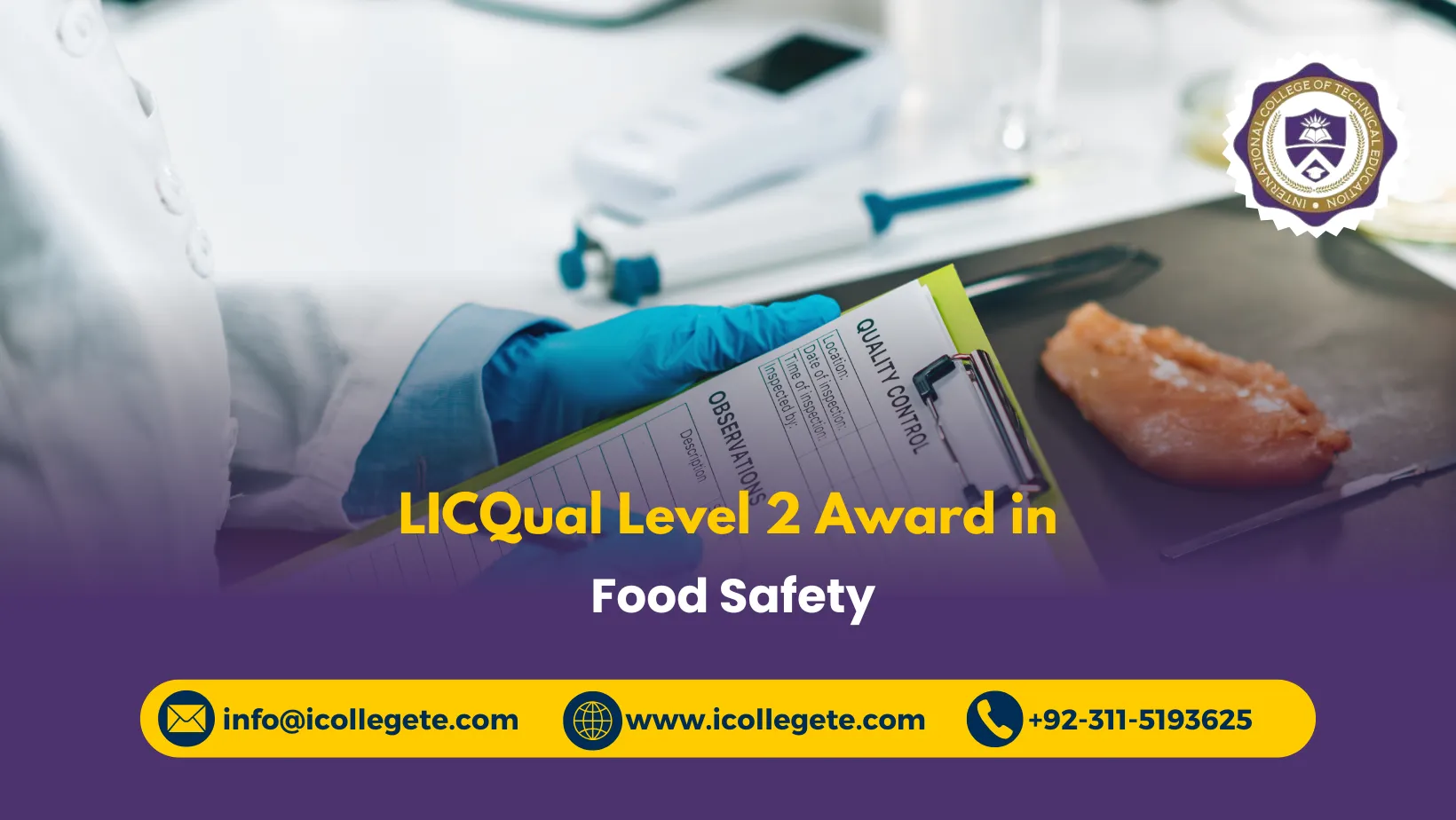
The LICQual Level 2 Award in Food Safety in Pakistan is a practical, workplace-focused qualification designed to develop essential knowledge and skills for maintaining safe and hygienic food handling practices. Food safety is a critical responsibility across restaurants, hotels, catering businesses, food manufacturing, retail, healthcare catering, schools, and other food-related environments. This qualification helps learners understand how food can become contaminated and how appropriate controls can protect consumers from foodborne illness.
The course covers fundamental areas including food safety and hygiene principles, food contamination, personal hygiene, cleaning and disinfection, pest control, safe food storage, temperature control, food safety legislation, workplace responsibilities, and hazard awareness. These areas reflect the core competencies expected of people involved in food preparation, handling, storage, service, and supervision. LICQual describes its Level 2 Award as covering foodborne hazards, safe handling and storage, contamination prevention, workplace cleanliness and personal hygiene, as well as food safety legislation.
For learners in Pakistan, the qualification provides particularly relevant foundational knowledge because food businesses are expected to maintain hygienic food-handling practices and train food handlers appropriately. Pakistani food-safety requirements also emphasize areas such as hand hygiene, safe storage and handling, cleaning, pest control, and HACCP-related practices.
By completing the LICQual Level 2 Award in Food Safety, learners can build confidence in applying food safety procedures and establish a strong foundation for further study and career development in food safety, catering, hospitality, food production, quality control, and related fields.
Course Study Units
The LICQual Level 2 Award in Food Safety in Pakistan is structured around the following study units:
Unit 1: Principles of Food Safety and Hygiene
This unit introduces the fundamental concepts of food safety and food hygiene. Learners explore why safe food practices are essential for protecting consumers and maintaining professional standards in food businesses.
Key topics include:
- Meaning and importance of food safety
- Principles of food hygiene
- Foodborne illness and food poisoning
- Importance of hygienic food handling
- Responsibilities of food handlers
- Food safety throughout the food chain
- Good hygiene practices
- Consequences of poor food safety
- Introduction to food safety management
- Importance of maintaining a food safety culture
Unit 2: Food Contamination and Control Measures
This unit develops learners’ understanding of how food contamination occurs and how contamination risks can be prevented or controlled. Learners examine the main categories of food hazards and the importance of preventing cross-contamination.
Key topics include:
- Biological contamination
- Chemical contamination
- Physical contamination
- Allergen-related hazards
- Sources of food contamination
- Routes of contamination
- Cross-contamination
- High-risk foods
- Food spoilage
- Contamination prevention
- Control measures
- Safe food-handling procedures
Understanding contamination and its prevention is a central part of food safety training, including identifying hazards and controlling risks during production, handling, storage, and preparation.
Unit 3: Personal Hygiene and Workplace Practices
This unit focuses on the personal hygiene standards and workplace behaviours expected from food handlers. Learners understand how poor personal hygiene can introduce contamination into food and how good hygiene practices reduce risk.
Key topics include:
- Importance of personal hygiene
- Effective handwashing
- When hands should be washed
- Personal cleanliness
- Protective clothing
- Hair and beard restraints
- Cuts, wounds, and appropriate covering
- Reporting illness
- Personal habits and food safety
- Hygienic food-handling behaviour
- Workplace hygiene responsibilities
Food-safety guidance emphasizes personal hygiene and effective handwashing as important controls for reducing contamination and foodborne illness.
Unit 4: Cleaning, Disinfection, and Pest Control
This unit explains the role of effective cleaning and disinfection in maintaining hygienic food premises. Learners also examine how pests can contaminate food and the importance of appropriate pest prevention and control.
Key topics include:
- Cleaning and disinfection
- Difference between cleaning and disinfection
- Cleaning schedules
- Cleaning equipment and materials
- Safe use of cleaning chemicals
- Cleaning food-contact surfaces
- Kitchen and workplace hygiene
- Waste management
- Common food premises pests
- Signs of pest activity
- Pest prevention
- Pest-control measures
Effective cleaning, sanitation and pest control are recognized as important components of food safety systems.
Unit 5: Safe Food Storage and Temperature Control
This unit develops knowledge of safe food storage and temperature control. Learners examine how inappropriate temperatures can encourage the growth of harmful microorganisms and contribute to food spoilage.
Key topics include:
- Importance of temperature control
- Safe storage principles
- Refrigerated food storage
- Frozen food storage
- Dry food storage
- Temperature monitoring
- Cooking and reheating
- Cooling food safely
- Defrosting food safely
- Preventing temperature abuse
- Stock rotation
- FIFO principles
- Protecting food during storage
Food-safety guidance highlights refrigerated and non-refrigerated storage, FIFO, safe defrosting, cooking and reheating as important practices for reducing food-safety risks.
Unit 6: Food Safety Legislation and Responsibilities
This unit introduces learners to the importance of food safety legislation, regulatory compliance, and individual responsibilities within food businesses. Learners develop awareness of how legal requirements support consumer protection and safe food operations.
Key topics include:
- Purpose of food safety legislation
- Food safety standards
- Responsibilities of food business operators
- Responsibilities of food handlers
- Workplace food safety procedures
- Legal compliance
- Food safety training
- Documentation and records
- Inspection and enforcement
- Consequences of non-compliance
- Introduction to HACCP responsibilities
The exact legal requirements applicable to a food business can vary by location within Pakistan. For example, the Islamabad Capital Territory Food Safety Act 2021 establishes a legal framework for food safety and standards within Islamabad Capital Territory.
Unit 7: Hazard Awareness in Food Handling
This unit enables learners to recognize common hazards associated with food handling and understand appropriate preventive measures. Learners develop the ability to identify risks before they result in unsafe food.
Key topics include:
- Biological hazards
- Chemical hazards
- Physical hazards
- Allergen hazards
- Foodborne microorganisms
- Food poisoning risks
- Cross-contamination hazards
- Unsafe food-handling practices
- High-risk foods
- Hazard identification
- Preventive controls
- Introduction to HACCP principles
HACCP and hazard-control principles provide a structured approach to identifying and controlling food safety hazards, and food-safety training in Pakistan also incorporates HACCP-related responsibilities.
Learning Outcomes
After successfully completing the LICQual Level 2 Award in Food Safety in Pakistan, learners should be able to:
- Explain the fundamental principles of food safety and hygiene and their importance in protecting consumers.
- Identify common food safety hazards, including biological, chemical, physical, and allergenic hazards.
- Recognize sources and routes of food contamination during preparation, handling, storage, and service.
- Apply appropriate measures to prevent cross-contamination and other contamination risks.
- Demonstrate appropriate personal hygiene practices when working with food.
- Explain the importance of effective handwashing and protective clothing in food-handling environments.
- Apply appropriate workplace hygiene practices to support a safe food environment.
- Understand effective cleaning and disinfection procedures for food premises, equipment, and food-contact surfaces.
- Recognize common pest risks and explain appropriate pest-prevention measures.
- Apply safe food storage principles for chilled, frozen, and dry foods.
- Understand the importance of temperature control during food storage, preparation, cooking, cooling, and reheating.
- Explain the importance of stock rotation and FIFO procedures in food storage.
- Understand the purpose of food safety legislation and regulatory requirements.
- Recognize the responsibilities of food handlers and food business operators.
- Identify common hazards during food handling and select appropriate control measures.
- Contribute to effective food safety practices and a positive food safety culture within the workplace.
These outcomes are aligned with the core knowledge expected from Level 2 food-safety training, including hazard recognition, contamination prevention, personal hygiene, storage, cleaning, and legal responsibilities.
Course Benefits
The LICQual Level 2 Award in Food Safety in Pakistan can provide learners with several professional and practical benefits:
1. Develop Essential Food Safety Knowledge
Learners gain a structured understanding of the principles required to handle food safely and hygienically.
2. Improve Workplace Food Hygiene
The course helps participants apply better hygiene practices during food preparation, storage, handling, and service.
3. Reduce Contamination Risks
Learners develop awareness of biological, chemical, physical, and allergenic contamination and appropriate preventive controls.
4. Strengthen Personal Hygiene Practices
Participants learn how personal cleanliness, handwashing, protective clothing, and responsible workplace behaviour contribute to food safety.
5. Improve Safe Food Storage
Learners understand the importance of temperature control, stock rotation, refrigeration, freezing, and safe food handling.
6. Support Legal and Regulatory Compliance
The qualification helps learners understand their food safety responsibilities and the importance of following applicable legislation and workplace procedures.
7. Enhance Employability
Food safety knowledge is relevant to a wide range of food-sector roles, including catering, hospitality, food retail, food production, and kitchen operations.
8. Build Professional Confidence
Learners can develop greater confidence when applying food hygiene and safety procedures in practical workplace environments.
9. Provide a Foundation for Further Study
The qualification can serve as a foundation for progression into higher-level food safety, HACCP, quality management, and food safety management qualifications.
10. Support Consumer Protection
Good food safety practices help reduce preventable contamination and contribute to the protection of public health.
Who Is This Course For?
The LICQual Level 2 Award in Food Safety in Pakistan is suitable for individuals who handle, prepare, store, serve, or work around food. It is particularly relevant to:
- Food handlers
- Kitchen assistants
- Chefs and cooks
- Catering staff
- Restaurant employees
- Hotel food-service staff
- Bakery workers
- Food retail employees
- Supermarket food-section employees
- Food production workers
- Catering supervisors
- Hospitality workers
- School and institutional catering staff
- Healthcare catering staff
- Food-service entrepreneurs
- Individuals entering the food industry
- Employees seeking formal food safety training
- Individuals wishing to strengthen their food hygiene knowledge
It is also relevant for learners who want to establish a foundation before progressing toward more advanced food safety, HACCP, quality assurance, or food safety management studies. LICQual identifies the Level 2 Award as suitable for people working in food preparation, handling and service, while its published entry information indicates that specific academic qualifications are not normally required.
Why Choose LICQual Level 2 Award in Food Safety?
There are several strong reasons to choose the LICQual Level 2 Award in Food Safety in Pakistan:
1. Practical Food Safety Focus
The qualification focuses on knowledge that can be applied directly to everyday food-handling activities.
2. Relevant to the Pakistani Food Industry
Food safety and hygiene are important across Pakistan’s restaurants, hotels, catering businesses, food manufacturing, retail, and institutional food services.
3. Covers Core Food Safety Areas
The course addresses contamination, personal hygiene, cleaning, pest control, storage, temperature control, legislation, and hazard awareness.
4. Supports Professional Development
The qualification can strengthen a learner’s professional profile and demonstrate structured learning in food safety.
5. Suitable for Different Food-Sector Roles
The knowledge is applicable across multiple food-handling environments rather than being limited to one particular type of food business.
6. Foundation for Career Progression
Level 2 provides a useful starting point for learners who intend to progress into higher-level food safety and quality-related qualifications.
7. Supports Safer Workplace Practices
Learners can use the knowledge gained to recognize hazards, follow hygiene procedures, and contribute to safer food operations.
8. Builds Food Safety Awareness
The course encourages a proactive approach to food safety rather than relying solely on corrective action after problems occur.
Future Progression of the LICQual Level 2 Award in Food Safety
The LICQual Level 2 Award in Food Safety can provide a foundation for continued professional development in food safety, hospitality, catering, food production, quality control, and related disciplines.
After completing Level 2, learners may consider progressing toward:
Level 3 Food Safety / Food Hygiene Qualifications
Learners can develop more advanced knowledge of food safety management, supervision, hazard control, and workplace implementation.
HACCP Qualifications
Further study in HACCP can help learners develop deeper knowledge of hazard analysis, critical control points, monitoring, corrective actions, verification, and food safety plans.
Food Safety Management Qualifications
Learners may progress into qualifications focused on managing food safety systems and developing organizational food safety controls.
Quality Assurance and Quality Control
Food safety knowledge can provide a useful foundation for further study in quality assurance, quality control, inspection, and compliance.
ISO 22000 and Food Safety Management Systems
Experienced learners can progress toward advanced food safety management system training, including ISO 22000-related qualifications. LICQual offers advanced qualifications covering ISO 22000, HACCP integration, auditing, risk management, and continuous improvement.
Supervisory and Management Roles
With additional experience and qualifications, learners can work toward positions such as food safety supervisor, hygiene supervisor, food safety coordinator, quality control professional, or food safety manager, depending on employer requirements and applicable regulations.
Take the Next Step Toward World LICQual Level 2 Award in Food Safety-Enroll Now