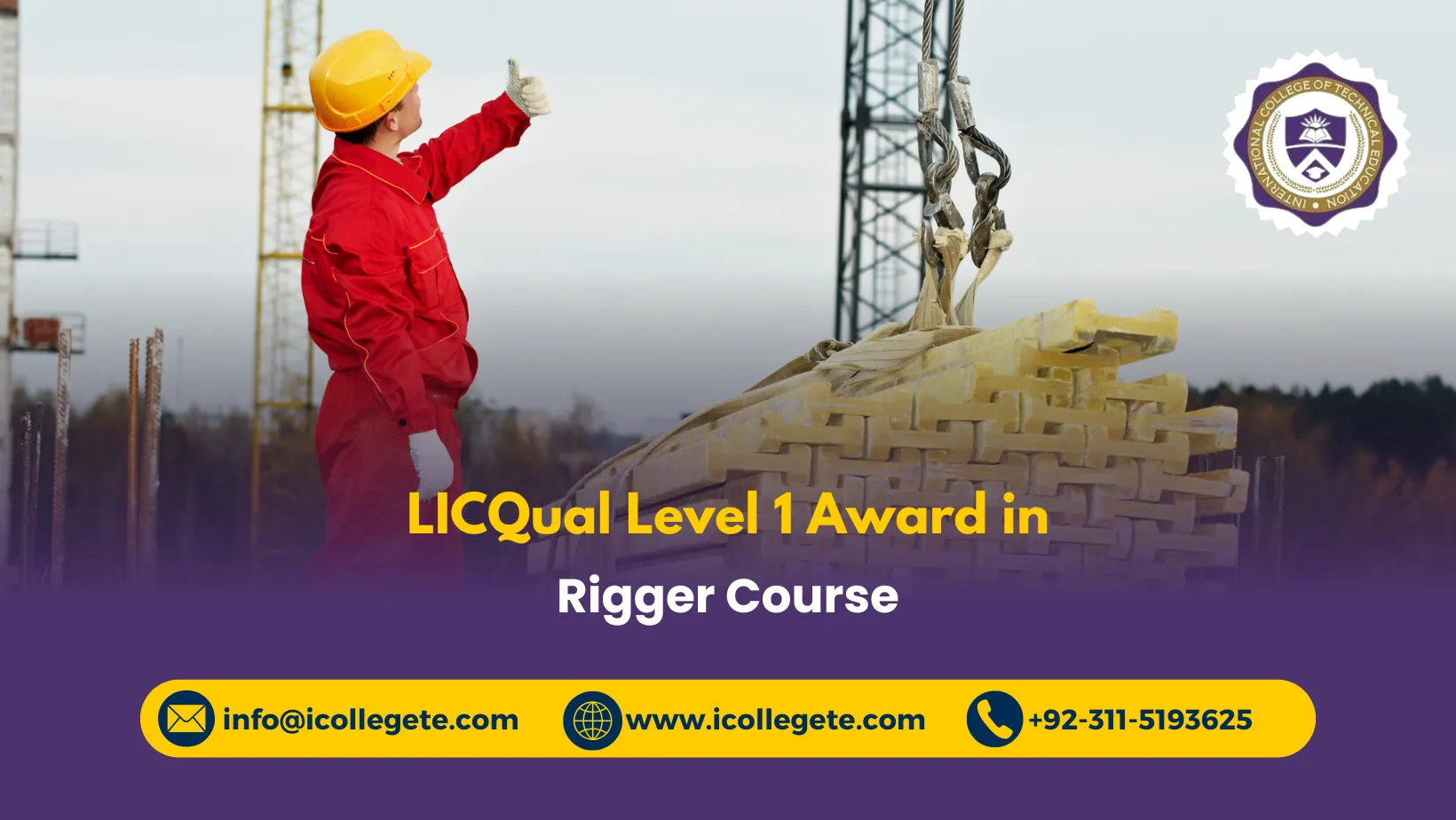
The LICQual Level 1 Award in Rigger Course in Swabi is an entry-level vocational training programme designed to introduce learners to the essential principles, equipment, procedures, and safety practices used in rigging operations. The course provides a practical foundation for individuals who want to understand how loads are prepared, secured, lifted, moved, and positioned safely in construction, industrial, manufacturing, logistics, oil and gas, and other lifting environments.
Learners develop an understanding of common rigging tools and equipment, basic load calculations, weight estimation, safe rigging techniques, workplace hazards, and risk assessment. The programme also introduces learners to relevant safety standards and compliance requirements, helping them recognise the importance of following established procedures when working around lifting operations.
Through practical applications and industry-based case studies, participants learn how rigging activities are organised and how safe working practices can reduce the likelihood of dropped loads, equipment failure, struck-by incidents, and other workplace hazards. The course is suitable for beginners with limited or no previous rigging experience and provides a structured introduction to the responsibilities of a rigger.
The LICQual Level 1 Award in Rigger Course in Swabi is particularly valuable for learners seeking foundational knowledge before entering or progressing within lifting and rigging-related occupations.
Course Study Units
Unit 1: Introduction to Rigging Operations
Learners will develop fundamental knowledge of rigging operations and understand the role of riggers within lifting activities.
Key topics include:
- Fundamentals of rigging operations
- Role and responsibilities of a rigger
- Basic lifting and rigging terminology
- Types of lifting operations
- Basic principles of load handling
- Communication during lifting operations
- Importance of following lifting procedures
- Introduction to safe working practices
Unit 2: Rigging Tools and Equipment
This unit introduces the common tools and equipment used during rigging operations.
Key topics include:
- Slings and their applications
- Shackles and lifting accessories
- Hooks and lifting points
- Wire rope and chain equipment
- Spreader beams and lifting devices
- Hand tools used in rigging
- Inspection of rigging equipment
- Equipment identification and safe selection
- Storage and care of lifting accessories
Unit 3: Load Calculations and Weight Estimation
Learners will develop basic knowledge of identifying and estimating load weights before lifting.
Key topics include:
- Understanding load weight
- Basic weight estimation
- Reading load information
- Centre of gravity
- Load dimensions and distribution
- Basic lifting capacity concepts
- Working load limits
- Selecting suitable lifting accessories
- Importance of accurate load information
Unit 4: Safety Standards and Compliance
This unit develops awareness of safety requirements that support safe rigging operations.
Key topics include:
- Basic rigging safety principles
- Workplace lifting procedures
- Personal protective equipment
- Equipment inspection requirements
- Safe working loads
- Exclusion zones
- Warning signs and safety communication
- Compliance with workplace procedures
- Reporting unsafe conditions
Unit 5: Rigging Techniques and Procedures
Learners will be introduced to fundamental techniques used when preparing and securing loads.
Key topics include:
- Basic sling arrangements
- Connecting lifting accessories
- Securing loads correctly
- Load balancing principles
- Protecting lifting equipment
- Basic hand signals
- Communication with lifting teams
- Preparing loads for lifting
- Safe positioning of personnel
Unit 6: Risk Assessment in Rigging
This unit introduces learners to recognising hazards and controlling risks associated with lifting operations.
Key topics include:
- Identifying common rigging hazards
- Basic risk assessment principles
- Dropped-load hazards
- Crush and pinch points
- Unstable loads
- Damaged lifting equipment
- Overloading risks
- Weather and environmental hazards
- Basic control measures
- Emergency procedures
Unit 7: Practical Rigging Applications
Learners will apply foundational knowledge to typical rigging activities.
Key topics include:
- Preparing lifting equipment
- Checking loads before lifting
- Selecting appropriate accessories
- Basic load securing
- Applying safe rigging procedures
- Communicating with lifting personnel
- Maintaining safe working distances
- Checking equipment after use
- Safe completion of rigging activities
Unit 8: Case Studies and Industry Practices
This unit uses practical examples to help learners understand how rigging principles are applied in real workplace situations.
Key topics include:
- Common rigging incidents
- Learning from lifting failures
- Good rigging practices
- Equipment selection scenarios
- Load-handling case studies
- Hazard identification examples
- Risk-control decisions
- Communication failures and lessons learned
- Industry-based safe working practices
Learning Outcomes
By the end of the LICQual Level 1 Award in Rigger Course in Swabi, learners should be able to:
- Explain the basic principles and purpose of rigging operations.
- Identify common rigging tools, equipment, and lifting accessories.
- Recognise basic lifting equipment capacities and working load limits.
- Demonstrate basic methods of estimating load weight.
- Explain the importance of identifying the centre of gravity.
- Describe fundamental rigging safety requirements.
- Recognise common hazards associated with lifting operations.
- Apply basic risk assessment principles to rigging activities.
- Explain the importance of equipment inspection before use.
- Identify suitable rigging accessories for basic lifting applications.
- Describe fundamental slinging and load-securing techniques.
- Apply basic communication and hand-signal principles during lifting activities.
- Explain the importance of exclusion zones and safe positioning.
- Recognise unsafe lifting conditions and appropriate control measures.
- Demonstrate awareness of safe working procedures during practical rigging activities.
- Explain lessons learned from common rigging incidents and industry case studies.
Course Benefits
The LICQual Level 1 Award in Rigger Course in Swabi provides several benefits for learners entering the lifting and rigging sector:
- Develops foundational rigging knowledge.
- Introduces essential lifting tools and equipment.
- Builds awareness of load-handling principles.
- Improves understanding of workplace lifting hazards.
- Develops basic risk assessment awareness.
- Introduces safe slinging and load-securing practices.
- Strengthens workplace safety awareness.
- Develops understanding of rigger responsibilities.
- Supports preparation for entry-level rigging roles.
- Provides a foundation for further vocational training.
- Helps learners understand professional lifting practices.
- Enhances awareness of safe communication during lifting operations.
- Supports safer participation in construction and industrial workplaces.
Who Is This Course For?
The LICQual Level 1 Award in Rigger Course in Swabi is suitable for:
- Beginners interested in rigging and lifting careers.
- Individuals entering the construction industry.
- New lifting and rigging workers.
- Construction site workers seeking basic rigging knowledge.
- Labourers involved in material handling activities.
- Warehouse and logistics personnel.
- Manufacturing and industrial workers.
- Maintenance personnel who support lifting activities.
- Individuals preparing for entry-level rigger positions.
- Employees who need introductory lifting and rigging awareness.
- Learners planning to progress to higher-level rigging qualifications.
- Anyone seeking structured foundational knowledge of safe rigging operations.
Why Choose LICQual Level 1 Award in Rigger Course in Swabi?
Choosing the LICQual Level 1 Award in Rigger Course in Swabi can provide learners with a structured starting point for developing occupational knowledge in lifting and rigging.
Beginner-Friendly Learning
The course is designed around fundamental concepts, making it suitable for learners with limited previous experience.
Practical Industry Focus
Learners are introduced to realistic rigging activities, equipment, hazards, and workplace scenarios.
Strong Safety Foundation
The programme emphasises hazard awareness, equipment inspection, safe load handling, communication, and risk control.
Career-Oriented Knowledge
The course provides foundational knowledge relevant to construction, industrial, manufacturing, logistics, and lifting environments.
Structured Vocational Development
The qualification can form part of a learner’s broader professional development within lifting and rigging.
Local Learning Opportunity in Swabi
Learners looking for rigger training in Swabi can develop relevant foundational knowledge without beginning with an advanced-level programme.
Future Progression
After completing the LICQual Level 1 Award in Rigger Course in Swabi, learners may consider progressing to higher-level qualifications and specialised training in areas such as:
- Level 2 Rigger qualifications
- Level 3 Advanced Rigger qualifications
- Lifting and rigging safety training
- Crane and lifting operations training
- Banksman and slinger training
- Lifting equipment inspection training
- Advanced load-handling programmes
- Construction site safety qualifications
- Occupational health and safety training
- Supervisory training within lifting operations
With additional training, practical workplace experience, and appropriate competence assessment, learners can work towards roles involving rigging operations, lifting support, slinging, load handling, and lifting-team activities.
Take the Next Step Toward World LICQual Level 1 Award in Rigger Course-Enroll Now