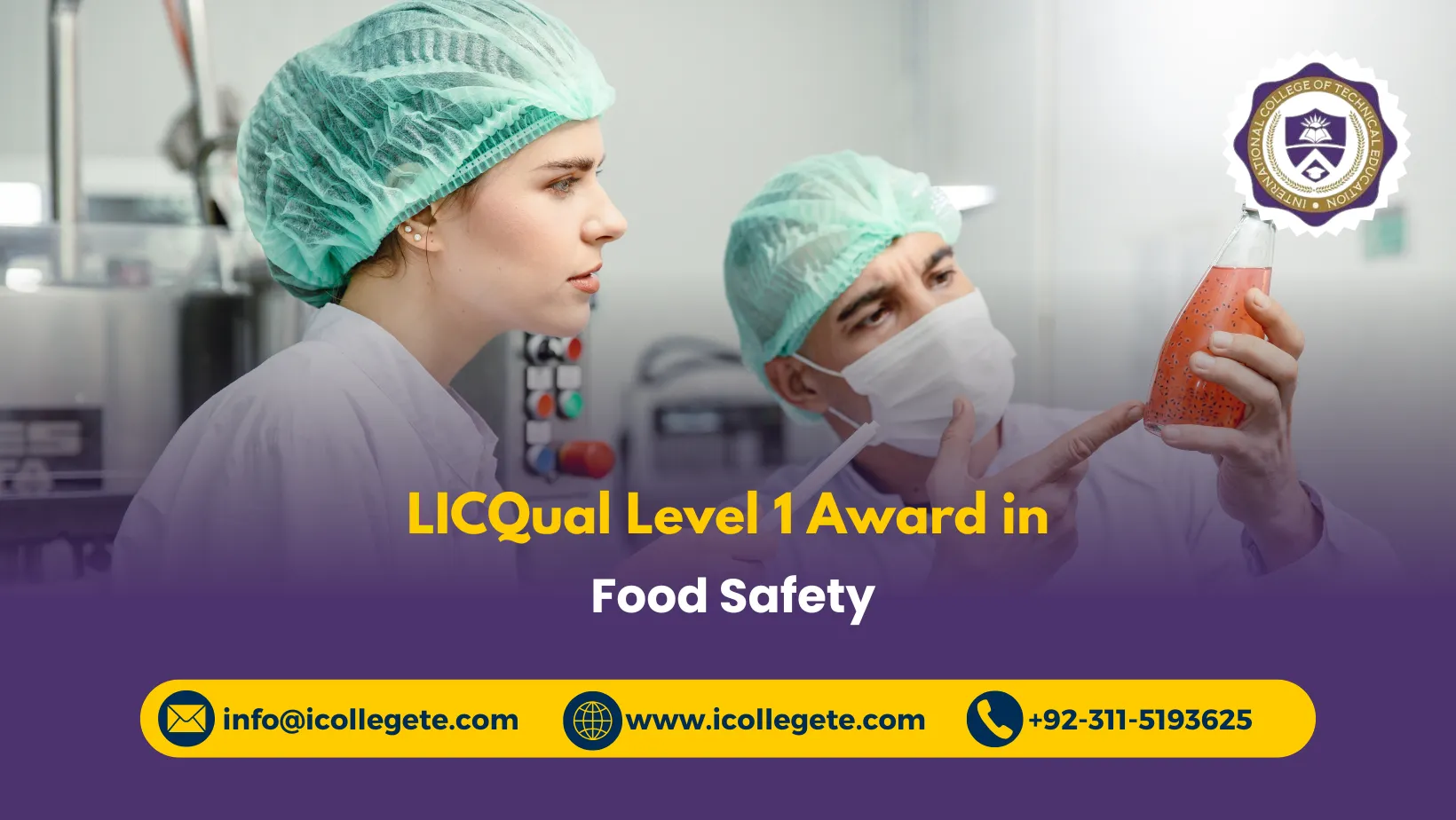
The LICQual Level 1 Award in Food Safety in Swabi is an introductory food safety qualification designed to help learners understand the essential principles of safe food handling and hygienic working practices. It provides foundational knowledge for individuals who work with, prepare, serve, store, transport, or come into contact with food in workplace environments.
The course introduces learners to the causes of food contamination and explains practical ways to prevent food from becoming unsafe. Learners develop an understanding of personal hygiene, safe food storage, temperature control, cleaning and disinfection, and the importance of following food safety procedures. The qualification also introduces food safety legislation and compliance requirements, helping learners recognise their responsibilities when working in food-related environments.
Through practical food safety applications, learners can connect theoretical knowledge with everyday workplace situations. The course uses clear and accessible content suitable for beginners, making it an appropriate starting point for people with limited or no previous food safety training.
The LICQual Level 1 Award in Food Safety in Swabi can support learners working in restaurants, cafés, hotels, catering businesses, food production, retail, hospitality, healthcare, schools, and other environments where food safety is important. It provides a useful foundation for developing safe working habits and progressing towards higher-level food safety training.
Course Study Units
Unit 1: Introduction to Food Safety
This unit introduces the fundamental principles of food safety and explains why safe food handling is important for consumers, businesses, and food handlers.
Topics include:
- Meaning and importance of food safety
- Food safety hazards
- Common causes of unsafe food
- Foodborne illness and its prevention
- Responsibilities of food handlers
- Basic principles of hygienic food handling
- Maintaining safe food throughout the food chain
Unit 2: Food Contamination and Prevention
This unit develops learners’ understanding of food contamination and the ways contamination can occur during food handling and preparation.
Topics include:
- Biological contamination
- Chemical contamination
- Physical contamination
- Allergen-related contamination
- Sources of food contamination
- Cross-contamination
- Preventive food handling practices
- Protecting food from contamination
Unit 3: Personal Hygiene in Food Handling
This unit explains how personal hygiene contributes to food safety and why food handlers must maintain appropriate hygiene standards.
Topics include:
- Importance of personal hygiene
- Effective handwashing
- Clean protective clothing
- Personal cleanliness
- Safe food handling behaviours
- Reporting illness and health concerns
- Cuts, wounds, and protective coverings
- Preventing contamination through good hygiene practices
Unit 4: Safe Food Storage and Temperature Control
This unit introduces learners to safe food storage and the importance of controlling temperature to reduce food safety risks.
Topics include:
- Principles of safe food storage
- Refrigerated and frozen food storage
- Hot and cold food control
- Temperature monitoring
- Preventing temperature-related food risks
- Safe handling of high-risk foods
- Stock rotation and date control
- Maintaining appropriate storage conditions
Unit 5: Cleaning and Disinfection Practices
This unit introduces the principles of cleaning and disinfection in food environments and explains how effective hygiene procedures help control contamination.
Topics include:
- Difference between cleaning and disinfection
- Importance of cleaning food areas
- Cleaning equipment and utensils
- Safe use of cleaning chemicals
- Cleaning schedules
- Hygiene of food-contact surfaces
- Waste management
- Preventing contamination during cleaning activities
Unit 6: Food Safety Legislation and Compliance
This unit provides an introductory understanding of the importance of food safety requirements and workplace compliance.
Topics include:
- Purpose of food safety legislation
- Responsibilities of food businesses
- Responsibilities of food handlers
- Food hygiene requirements
- Maintaining food safety records
- Following workplace food safety procedures
- Importance of compliance
- Consequences of poor food safety practices
Unit 7: Practical Food Safety Applications
This unit allows learners to apply basic food safety principles to realistic workplace activities and situations.
Topics include:
- Identifying food safety hazards
- Applying personal hygiene practices
- Preventing cross-contamination
- Checking food storage conditions
- Applying basic temperature controls
- Maintaining clean food preparation areas
- Responding to common food safety problems
- Applying safe food handling procedures
Learning Outcomes
By completing the LICQual Level 1 Award in Food Safety in Swabi, learners should be able to:
- Explain the basic principles and importance of food safety.
- Identify common biological, chemical, physical, and allergen-related food hazards.
- Recognise common causes and sources of food contamination.
- Explain how cross-contamination can occur and how it can be prevented.
- Demonstrate an understanding of appropriate personal hygiene practices.
- Explain the importance of effective handwashing and clean protective clothing.
- Describe basic requirements for safe food storage.
- Explain why temperature control is important for food safety.
- Identify appropriate cleaning and disinfection practices.
- Explain the safe handling of cleaning materials and food-contact surfaces.
- Recognise the importance of following food safety legislation and workplace procedures.
- Apply basic food safety principles to common workplace situations.
- Recognise unsafe food handling practices and appropriate preventive measures.
- Contribute to maintaining a hygienic and food-safe working environment.
Course Benefits
The LICQual Level 1 Award in Food Safety in Swabi can provide learners with several practical and professional benefits:
- Develops essential food safety awareness
- Introduces safe food handling principles
- Improves understanding of food contamination risks
- Supports better personal hygiene practices
- Develops awareness of temperature control
- Introduces effective cleaning and disinfection practices
- Helps learners understand food safety responsibilities
- Supports compliance with workplace food safety procedures
- Provides practical knowledge applicable to food-related workplaces
- Creates a foundation for further food safety training
- Enhances confidence when working around food
- Supports employability in hospitality, catering, food retail, and food service environments
Who Is This Course For?
The LICQual Level 1 Award in Food Safety in Swabi is suitable for beginners and individuals who need an introduction to food safety.
It may be particularly suitable for:
- New food handlers
- Kitchen assistants
- Catering assistants
- Restaurant staff
- Café employees
- Hotel food service staff
- Food retail workers
- Bakery assistants
- Food production workers
- Hospitality employees
- School and institutional catering staff
- Healthcare catering support staff
- Warehouse and food storage personnel
- Individuals entering the food industry
- Anyone requiring basic food safety awareness
No extensive previous food safety knowledge is required for learners who are beginning their food safety education.
Why Choose the LICQual Level 1 Award in Food Safety in Swabi?
Choosing the LICQual Level 1 Award in Food Safety in Swabi provides a structured way to develop essential knowledge before taking on more advanced food safety responsibilities.
Beginner-Friendly Learning
The qualification focuses on fundamental concepts and practical workplace behaviours, making it suitable for learners who are new to food safety.
Practical Workplace Knowledge
Learners study situations that relate directly to food handling, hygiene, storage, cleaning, contamination prevention, and temperature control.
Strong Foundation in Food Safety
The course establishes the basic knowledge needed to recognise common food safety hazards and apply appropriate preventive measures.
Relevant to Multiple Industries
Food safety principles are relevant across hospitality, catering, restaurants, hotels, food retail, food production, institutional catering, and other food-related workplaces.
Supports Professional Development
The qualification can form part of a learner’s initial professional development in food hygiene and food safety.
Accessible Learning in Swabi
Learners seeking food safety training in Swabi can use the qualification as an accessible starting point for developing workplace-relevant food safety knowledge.
Future Progression
The LICQual Level 1 Award in Food Safety in Swabi can provide a foundation for learners who want to develop their food safety knowledge further. After completing an introductory qualification, learners may consider progressing to more advanced food safety and food hygiene qualifications appropriate to their job role and responsibilities.
Potential progression routes may include:
LICQual Level 2 Award in Food Safety → Advanced Food Safety and Hygiene Training → Supervisory Food Safety Responsibilities → Food Safety Management Training
Learners working towards supervisory or management positions may subsequently benefit from higher-level food safety qualifications covering food safety management systems, hazard control, monitoring, verification, compliance, and food safety leadership.
Progression should be selected according to the learner’s existing knowledge, job responsibilities, workplace requirements, and career objectives.r success, while the detailed benefits highlight the value of the program for students, professionals, entrepreneurs, and community members alike.
Take the Next Step Toward World LICQual Level 1 Award in Food Safety-Enroll Now