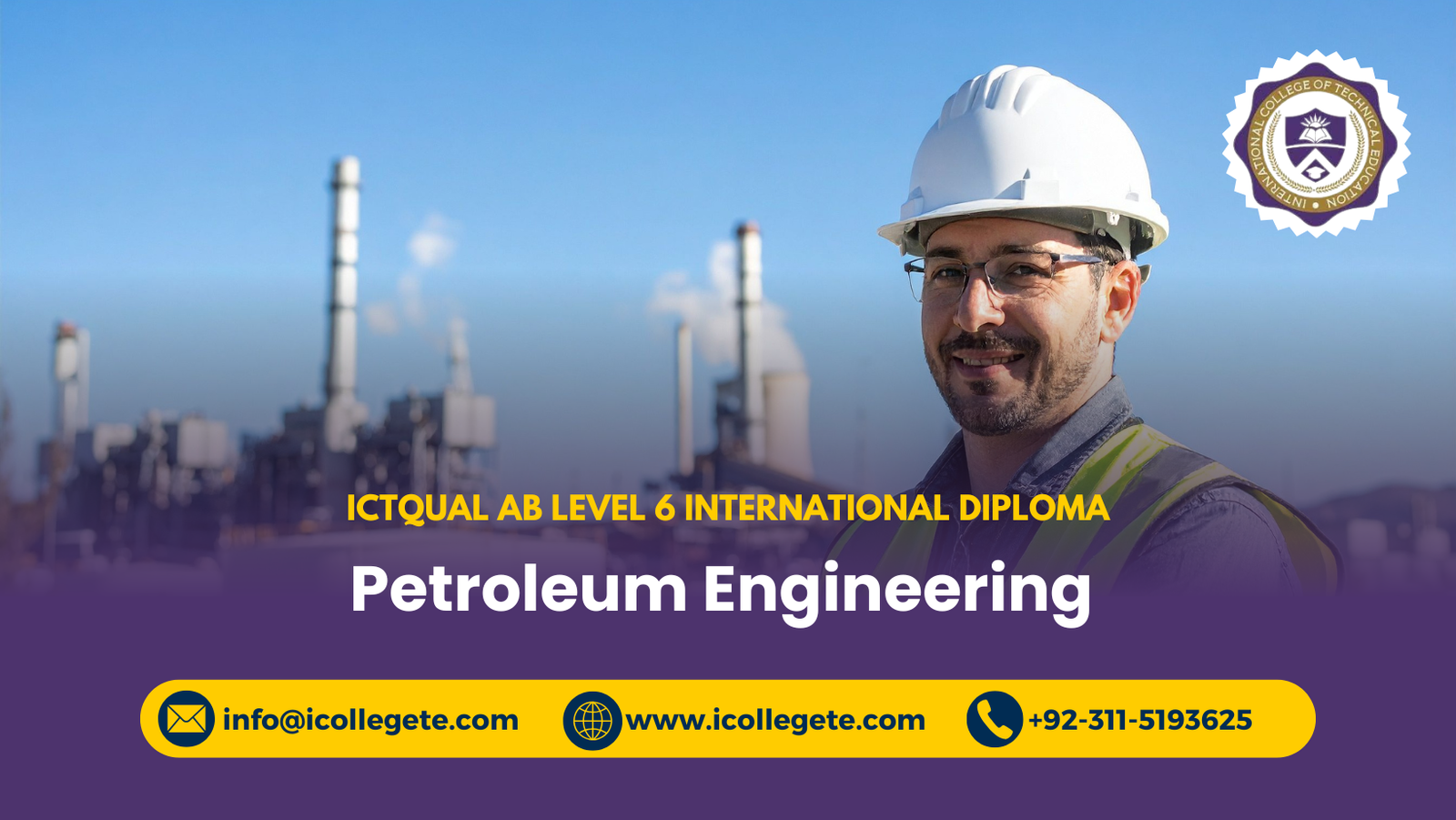
The ICTQual AB Level 6 International Diploma in Petroleum Engineering is a prestigious three‑year, 360‑credit qualification designed to provide advanced expertise in the exploration, production, and management of oil and gas resources. This internationally recognized program equips learners with the technical knowledge and practical skills required to excel in reservoir engineering, drilling operations, and production optimization.
Students gain in‑depth understanding of petroleum geology, well design, reservoir simulation, and enhanced oil recovery techniques. The curriculum emphasizes safety protocols, risk management, and sustainable practices to ensure graduates are prepared for the challenges of modern energy projects.
This diploma is ideal for fresh graduates entering the petroleum industry and experienced professionals seeking career advancement in exploration, drilling, and production management. By combining academic rigor with applied skills, the ICTQual AB Level 6 Diploma empowers learners to become leaders in the global oil and gas sector.
Year 1 – Foundation in Petroleum Engineering
- Principles of Petroleum Engineering
- Engineering Mathematics
- Fundamentals of Mechanical and Electrical Engineering
- Introduction to Petroleum Geology
- Drilling Engineering Fundamentals
- Engineering Drawing and Computer-Aided Design (CAD)
- Basics of Reservoir Engineering
- Well Logging and Formation Evaluation
- Health, Safety, and Environmental Practices in Petroleum Engineering
- Communication and Technical Report Writing
- Introduction to Project Management in Engineering
- Introduction to Oil & Gas Industry Operations
Year 2 – Intermediate Studies in Petroleum Engineering
- Advanced Drilling and Well Control
- Reservoir Rock and Fluid Properties
- Production Engineering and Well Completion
- Petroleum Facilities and Pipeline Engineering
- Applied Thermodynamics and Fluid Mechanics
- Petroleum Project Planning and Management
- Oil & Gas Exploration Techniques
- Enhanced Oil Recovery Methods
- Industrial Maintenance and Reliability in Petroleum Operations
- Applied Research Methods in Petroleum Engineering
- Sustainable Practices and Environmental Management in Petroleum
- Oil and Gas Economics and Cost Control
Year 3 – Advanced Studies in Petroleum Engineering
- Advanced Reservoir Simulation and Modelling
- Petroleum Production Systems and Optimisation
- Offshore and Subsea Engineering
- Advanced Drilling Technology and Well Intervention
- Advanced Fluid Flow and Multiphase Systems
- Petroleum Safety, Risk, and Quality Management
- Smart Technologies and Industry 4.0 in Oil & Gas
- Robotics and Automation in Petroleum Operations
- Cyber-Physical Systems and IoT in Petroleum Engineering
- Professional Ethics and Sustainability in Petroleum Engineering
- Innovation and Entrepreneurship in Oil & Gas Technology
- Final Year Major Project (Capstone Project)
Year 1 – Foundation in Petroleum Engineering
Principles of Petroleum Engineering
- Understand the fundamentals of petroleum systems, exploration, and production processes.
- Analyse upstream and downstream operations and their role in the energy industry.
- Demonstrate knowledge of basic petroleum engineering concepts and terminology.
Engineering Mathematics
- Apply calculus, algebra, and trigonometry to engineering problems.
- Use mathematical modelling to solve petroleum engineering-related tasks.
- Develop analytical and problem-solving skills for technical applications.
Fundamentals of Mechanical and Electrical Engineering
- Understand mechanical and electrical principles relevant to petroleum systems.
- Analyse basic engineering systems, circuits, and machinery.
- Apply theoretical knowledge to simple industrial applications.
Introduction to Petroleum Geology
- Identify rock types, reservoirs, and geological formations.
- Understand the origin, accumulation, and migration of hydrocarbons.
- Apply geological concepts to petroleum exploration.
Drilling Engineering Fundamentals
- Understand basic drilling operations and well construction.
- Identify drilling equipment and tools.
- Apply principles of well planning and safety considerations.
Engineering Drawing and Computer-Aided Design (CAD)
- Interpret and create engineering drawings to industry standards.
- Use CAD software for 2D and 3D modelling of petroleum systems.
- Apply geometric tolerancing and dimensioning principles.
Basics of Reservoir Engineering
- Understand fluid behaviour in reservoirs.
- Apply principles of pressure, flow, and storage in hydrocarbon reservoirs.
- Analyse basic reservoir performance and recovery methods.
Well Logging and Formation Evaluation
- Interpret well logs and subsurface data.
- Identify reservoir properties using log analysis.
- Apply formation evaluation techniques to field scenarios.
Health, Safety, and Environmental Practices in Petroleum Engineering
- Apply industry safety regulations and risk assessment methods.
- Identify hazards in drilling, production, and exploration operations.
- Understand environmental sustainability and best practices.
Communication and Technical Report Writing
- Develop clear technical documentation skills.
- Prepare professional reports, presentations, and documentation.
- Apply correct referencing and industry communication standards.
Introduction to Project Management in Engineering
- Understand project planning, scheduling, and resource allocation.
- Apply basic project management tools like Gantt charts and critical path analysis.
- Analyse risks and manage project deliverables effectively.
Introduction to Oil & Gas Industry Operations
- Understand upstream, midstream, and downstream operations.
- Identify the roles of exploration, production, and refining.
- Apply knowledge to real-world industry scenarios.
Year 2 – Intermediate Studies in Petroleum Engineering
Advanced Drilling and Well Control
- Analyse advanced drilling operations and well control techniques.
- Apply blowout prevention and pressure management methods.
- Demonstrate competency in drilling safety and problem-solving.
Reservoir Rock and Fluid Properties
- Understand porosity, permeability, and fluid characteristics.
- Analyse reservoir behaviour under varying pressure and temperature conditions.
- Apply rock and fluid data to optimise production.
Production Engineering and Well Completion
- Plan and design well completion strategies.
- Analyse production rates, artificial lift, and well performance.
- Implement techniques to maximise hydrocarbon recovery.
Petroleum Facilities and Pipeline Engineering
- Understand pipeline design, installation, and maintenance.
- Analyse surface facilities for processing and storage of hydrocarbons.
- Apply safety and regulatory compliance in facilities management.
Applied Thermodynamics and Fluid Mechanics
- Apply thermodynamic principles to petroleum processes.
- Analyse fluid flow in pipelines, wells, and surface systems.
- Solve problems related to multiphase flow and energy transfer.
Petroleum Project Planning and Management
- Plan and manage petroleum engineering projects effectively.
- Apply scheduling, cost control, and resource management techniques.
- Evaluate project risks and mitigation strategies.
Oil & Gas Exploration Techniques
- Understand geophysical and geological exploration methods.
- Analyse seismic data and subsurface structures.
- Apply exploration strategies to locate hydrocarbon reservoirs.
Enhanced Oil Recovery Methods
- Understand secondary and tertiary recovery techniques.
- Apply chemical, thermal, and gas injection methods.
- Evaluate efficiency and sustainability of recovery methods.
Industrial Maintenance and Reliability in Petroleum Operations
- Apply preventive and predictive maintenance strategies.
- Analyse equipment reliability and failure modes.
- Implement condition monitoring and optimisation techniques.
Applied Research Methods in Petroleum Engineering
- Develop research proposals and methodologies.
- Analyse qualitative and quantitative data.
- Present research findings in technical and academic formats.
Sustainable Practices and Environmental Management in Petroleum
- Implement sustainable practices in exploration and production.
- Understand environmental regulations and best practices.
- Assess the ecological impact of petroleum operations.
Oil and Gas Economics and Cost Control
- Analyse project economics and financial viability.
- Apply cost estimation, budgeting, and optimisation methods.
- Evaluate market trends and operational profitability.
Year 3 – Advanced Studies in Petroleum Engineering
Advanced Reservoir Simulation and Modelling
- Use simulation software to model reservoir behaviour.
- Analyse production forecasts and reservoir performance.
- Optimise recovery strategies through predictive modelling.
Petroleum Production Systems and Optimisation
- Analyse surface and subsurface production systems.
- Implement techniques to maximise efficiency and output.
- Apply data-driven decision-making for production optimisation.
Offshore and Subsea Engineering
- Understand design and operation of offshore platforms.
- Analyse subsea systems, risers, and pipelines.
- Apply engineering principles to offshore production challenges.
Advanced Drilling Technology and Well Intervention
- Evaluate new drilling technologies and intervention methods.
- Analyse well stimulation, workovers, and remedial operations.
- Apply safety and efficiency measures in advanced drilling.
Advanced Fluid Flow and Multiphase Systems
- Analyse multiphase flow in wells and pipelines.
- Apply hydraulic and flow assurance principles.
- Solve complex fluid dynamics problems in petroleum systems.
Petroleum Safety, Risk, and Quality Management
- Implement comprehensive safety management systems.
- Analyse operational risks and enforce quality control standards.
- Apply regulatory compliance and industry best practices.
Smart Technologies and Industry 4.0 in Oil & Gas
- Apply digital technologies, automation, and IoT in petroleum operations.
- Analyse benefits of smart monitoring and predictive maintenance.
- Implement Industry 4.0 solutions for efficiency and sustainability.
Robotics and Automation in Petroleum Operations
- Understand robotics applications in drilling, production, and maintenance.
- Analyse automated systems for subsea and offshore operations.
- Apply robotics solutions to improve safety and productivity.
Cyber-Physical Systems and IoT in Petroleum Engineering
- Integrate IoT and digital monitoring systems in operations.
- Analyse data from sensors for operational optimisation.
- Apply cyber-physical system concepts to modern petroleum facilities.
Professional Ethics and Sustainability in Petroleum Engineering
- Understand ethical responsibilities of petroleum engineers.
- Apply sustainability frameworks in engineering design and operations.
- Assess social and environmental impacts of petroleum projects.
Innovation and Entrepreneurship in Oil & Gas Technology
- Develop entrepreneurial skills for energy sector ventures.
- Innovate solutions for exploration, production, and energy management.
- Create business models and commercial strategies in petroleum engineering.
Final Year Major Project (Capstone Project)
- Undertake an independent research or applied petroleum engineering project.
- Integrate multidisciplinary knowledge and practical skills.
- Present findings in a professional report and technical presentation.
- Gain an internationally recognized qualification in petroleum engineering
- Develop strong technical and analytical skills relevant to global oil and gas industries
- Improve career opportunities in exploration, drilling, and production management
- Learn from experienced professionals and industry-standard case studies
- Enhance knowledge of sustainable and safe petroleum operations
- Build expertise in project management and economic evaluation
- Access advanced tools and techniques used in modern petroleum engineering
- Strengthen your global employability and professional profile
- Receive practical insights into real-world petroleum challenges
- Develop leadership and decision-making abilities
- Prepare for roles in both onshore and offshore projects
- Establish a foundation for future postgraduate studies
The ICTQual AB Level 6 International Diploma in Petroleum Engineering is designed for learners and professionals aiming to build or advance careers in the oil and gas industry. Enrollment is suitable for:
- Fresh graduates: Individuals with backgrounds in engineering, geology, or applied sciences who want to enter the petroleum sector.
- Petroleum professionals: Engineers, drilling supervisors, reservoir specialists, and production managers seeking advanced knowledge and career progression.
- Career changers: Professionals from related industries such as mechanical, civil, or chemical engineering who wish to transition into petroleum engineering.
- International learners: With British Council verification and MOFA & Embassy attestation, the diploma is ideal for those pursuing global career opportunities.
- Middle East job seekers: The qualification is highly valued for Iqama approval and career advancement in the Middle East oil and gas sector.