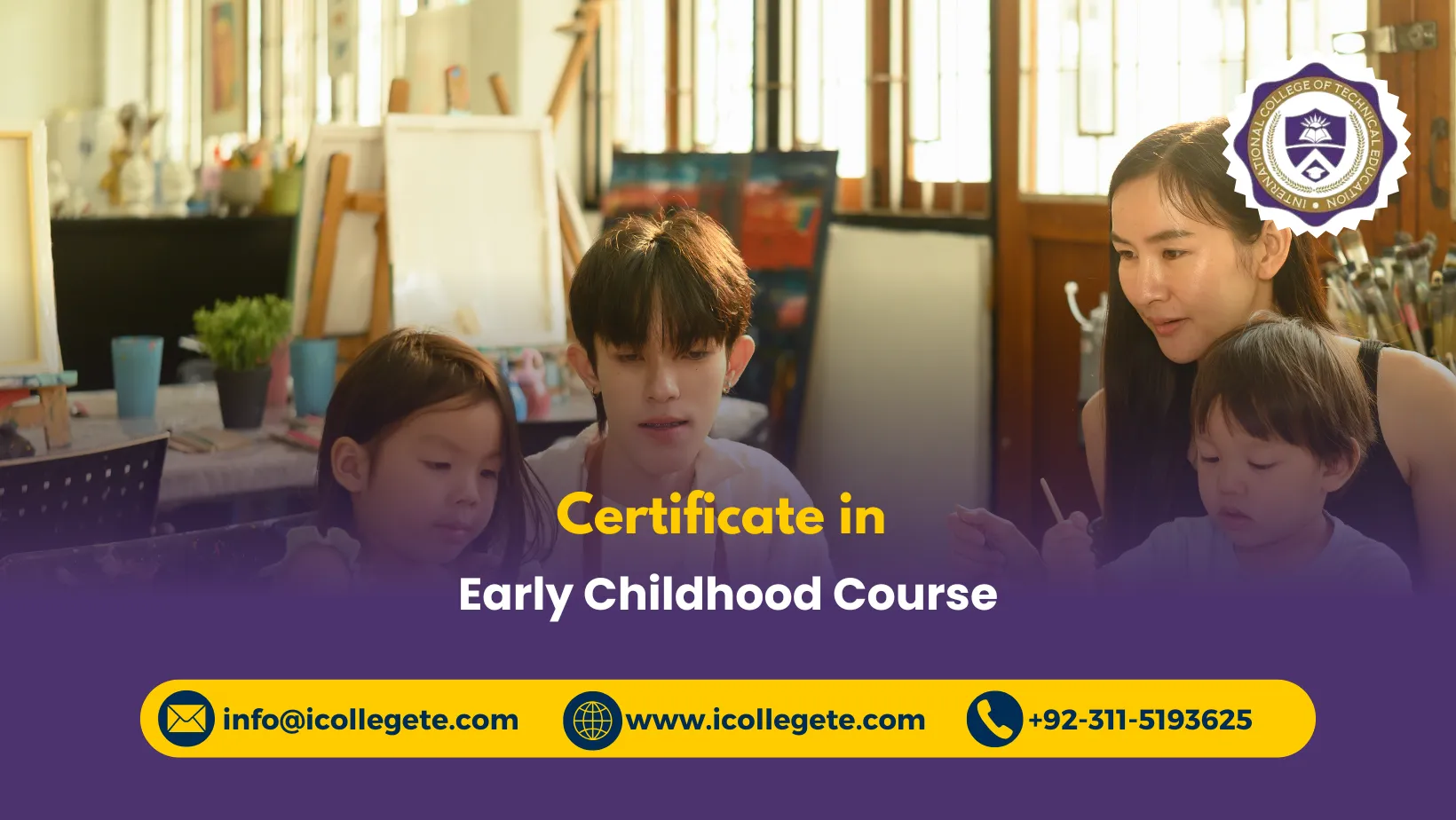
The Early Childhood Course in Pakistan is designed to develop practical knowledge and professional skills for supporting the learning, development, wellbeing and care of young children. Early childhood is a critical period in which physical, cognitive, language, social and emotional development progresses rapidly. Quality early learning experiences, responsive caregiving, safe environments and appropriate stimulation can establish strong foundations for lifelong learning and development.
This course introduces learners to the core principles of Early Childhood Education (ECE), child development and psychology, teaching approaches, classroom management, play-based learning, inclusion and communication. The course also connects theoretical knowledge with practical training and case studies, enabling learners to examine realistic situations encountered in early childhood settings.
The importance of Early Childhood Education is increasingly recognised in Pakistan, with early learning and school readiness identified as important areas within education development efforts. UNICEF Pakistan reports that investment in quality early learning can support school readiness, enrolment, retention and learning outcomes.
Through structured study units, learners develop an understanding of how young children learn, how learning environments can be organised, how play can support development, and how educators can respond to diverse learning needs. The course can therefore provide a useful foundation for individuals seeking knowledge and practical preparation for roles in preschools, early years classrooms, childcare settings, learning centres and community-based child development programmes.
Course Overview
The Early Childhood Course in Pakistan provides a structured introduction to the principles and practices of working with young children. The course covers child development, educational psychology, teaching methodologies, classroom organisation, creative learning, inclusion, communication and practical application.
The course is suitable for learners seeking to develop foundational or intermediate knowledge of Early Childhood Education and for individuals already involved in childcare, preschool education or child-focused community services.
The curriculum reflects the holistic nature of early childhood development, where education works alongside responsive caregiving, safety, health, nutrition and opportunities for early learning.
Course Study Units
Unit 1: Introduction to Early Childhood Education
This unit introduces the meaning, purpose and importance of Early Childhood Education. Learners explore the role of early years education in preparing children for lifelong learning and development.
Key topics include:
- Meaning and scope of Early Childhood Education
- Importance of early learning
- Principles of early childhood education
- Roles and responsibilities of early childhood educators
- Characteristics of effective early years settings
- Child-centred education
- Safety, wellbeing and safeguarding
- Partnership between educators, families and communities
- Early learning and school readiness
- Professional practice in early childhood settings
Unit 2: Child Development and Psychology
This unit develops an understanding of how children grow, learn and develop during the early years. Learners examine physical, cognitive, language, social and emotional development.
Key topics include:
- Stages of child development
- Physical and motor development
- Cognitive development
- Language and communication development
- Social and emotional development
- Behaviour and learning
- Individual differences
- Attachment and relationships
- Factors affecting child development
- Observation of developmental progress
- Supporting healthy development
Early childhood development is holistic, involving multiple interconnected areas of development. UNICEF identifies early childhood as a critical period extending from the prenatal stage through approximately the first eight years of life.
Unit 3: Teaching Methodologies for Young Learners
This unit explores teaching approaches appropriate for young children. Learners develop an understanding of how teaching strategies can be adapted according to developmental stage, learning needs and classroom context.
Key topics include:
- Child-centred teaching
- Experiential learning
- Active learning
- Demonstration and modelling
- Storytelling
- Songs, rhymes and movement
- Questioning techniques
- Group and individual activities
- Differentiated learning
- Early literacy and numeracy activities
- Observation-based teaching
- Supporting learner engagement
The focus is on creating learning experiences that are developmentally appropriate, meaningful and engaging.
Unit 4: Classroom Management and Learning Environment
This unit focuses on creating safe, organised and stimulating early childhood learning environments.
Key topics include:
- Principles of classroom management
- Establishing routines
- Positive behaviour management
- Classroom rules and expectations
- Organisation of learning spaces
- Safe and accessible classrooms
- Learning resources and materials
- Managing transitions
- Encouraging positive relationships
- Reducing disruptive behaviour
- Supporting emotional security
- Creating welcoming learning environments
A well-organised environment can support children’s participation, independence, exploration and social development.
Unit 5: Play-Based Learning and Creativity
This unit examines the importance of play as a method of learning and development. Learners explore how educators can use structured and unstructured play to develop children’s knowledge, skills and creativity.
Key topics include:
- Meaning and principles of play-based learning
- Types of play
- Imaginative and pretend play
- Physical play
- Constructive play
- Social play
- Sensory activities
- Creative arts and crafts
- Music and movement
- Story-based activities
- Outdoor learning
- Designing play-based activities
- Linking play with learning outcomes
Play provides opportunities for young children to explore, communicate, solve problems and develop social and cognitive skills. UNICEF also identifies talking, singing and playing as important forms of responsive interaction during early childhood.
Unit 6: Inclusive Education and Special Needs Support
This unit introduces inclusive approaches for supporting children with different abilities, backgrounds, developmental needs and learning requirements.
Key topics include:
- Principles of inclusive education
- Understanding individual differences
- Identifying barriers to participation
- Supporting children with disabilities
- Adaptation of learning activities
- Inclusive classroom resources
- Communication support
- Positive attitudes towards diversity
- Collaboration with families and professionals
- Promoting participation and belonging
- Supporting social and emotional needs
- Creating accessible learning environments
Inclusive early childhood practice aims to ensure that children can participate meaningfully in learning and social activities. Early intervention and appropriate support can be particularly important for children experiencing developmental difficulties or disabilities.
Unit 7: Communication Skills for Educators
This unit develops professional communication skills required when working with young children, parents, colleagues and other professionals.
Key topics include:
- Effective verbal communication
- Non-verbal communication
- Active listening
- Age-appropriate communication
- Giving clear instructions
- Questioning techniques
- Encouraging children to communicate
- Communicating with parents and caregivers
- Professional communication with colleagues
- Feedback and constructive responses
- Confidentiality and professional boundaries
- Communication in challenging situations
Effective communication is an important component of early childhood practice because educators need to understand children’s needs while also building constructive relationships with families and colleagues.
Unit 8: Practical Training and Case Studies
This unit provides opportunities to apply course knowledge to realistic early childhood situations. Learners analyse scenarios and develop appropriate responses to common educational and childcare challenges.
Key topics include:
- Classroom observation
- Planning early learning activities
- Child development observations
- Behaviour management scenarios
- Play-based activity planning
- Inclusive education case studies
- Communication scenarios
- Classroom safety situations
- Parent and caregiver communication
- Reflective practice
- Evaluating learning activities
- Developing practical improvement strategies
Practical case studies help connect theoretical concepts with situations that may occur in preschools, childcare centres and other early learning environments.
Learning Outcomes
On successful completion of the Early Childhood Course in Pakistan, learners should be able to:
- Explain the principles and importance of Early Childhood Education.
- Describe key stages and areas of child development.
- Explain how psychological factors can influence children’s learning and behaviour.
- Apply appropriate teaching methodologies for young learners.
- Develop suitable learning activities for early childhood settings.
- Explain effective classroom management principles.
- Contribute to safe, inclusive and stimulating learning environments.
- Apply play-based approaches to support learning and creativity.
- Identify barriers that may affect children’s participation.
- Explain approaches for supporting children with diverse learning needs.
- Demonstrate effective communication techniques for early childhood settings.
- Communicate appropriately with parents, caregivers and professional colleagues.
- Analyse early childhood education case studies.
- Apply theoretical knowledge to practical classroom situations.
- Reflect on educational practice and identify opportunities for improvement.
Course Benefits
The Early Childhood Course can provide learners with several practical and professional benefits:
- Develop foundational knowledge of Early Childhood Education.
- Understand children’s physical, cognitive, social and emotional development.
- Build knowledge of child-centred teaching approaches.
- Develop practical classroom management skills.
- Learn how to incorporate play into learning activities.
- Understand inclusive education principles.
- Develop communication skills for working with children and families.
- Improve lesson and activity planning abilities.
- Develop skills for analysing early childhood case studies.
- Strengthen professional confidence in early years environments.
- Build a foundation for progression into additional early childhood learning and training.
The course is particularly relevant to the development of early learning capabilities because Pakistan continues to focus on expanding equitable and quality Early Childhood Education and improving school readiness.
Who Is This Course For?
The Early Childhood Course in Pakistan can be suitable for:
- Aspiring early childhood educators
- Preschool teachers
- Nursery teachers
- Kindergarten teaching assistants
- Childcare workers
- Early years practitioners
- Teaching assistants
- Daycare staff
- Montessori classroom assistants
- School support staff
- Community-based child development workers
- Individuals interested in child development
- Parents and caregivers seeking structured knowledge of early childhood education
- Individuals planning a career in early years education and childcare
UNICEF Pakistan’s early childhood resources specifically recognise teachers, caregivers, families, social welfare workers and other child-focused practitioners as relevant audiences for early childhood development training.
Why Choose the Early Childhood Course in Pakistan?
Comprehensive Early Childhood Coverage
The course covers major areas of early childhood practice, from child development and teaching methods to play, inclusion, communication and practical case studies.
Practical Learning Focus
Rather than concentrating only on theory, the course introduces realistic classroom situations, activity planning, observations and case-study analysis.
Child-Centred Approach
The curriculum focuses on understanding children’s individual needs and creating learning experiences that encourage participation, exploration and development.
Relevant to Early Years Practice
The knowledge can be applied across different early childhood environments, including preschools, nurseries, childcare centres, learning centres and community programmes.
Inclusive Perspective
The course introduces learners to approaches for supporting children with different abilities and learning requirements.
Strong Foundation for Professional Development
The course can provide foundational knowledge for learners intending to develop further expertise in early childhood education, childcare, teaching or child development.
Future Progression
After completing the Early Childhood Course in Pakistan, learners may consider progressing towards more specialised education and training in areas such as:
- Early Childhood Education
- Early Years Education
- Preschool Teaching
- Montessori Education
- Child Development
- Childcare and Early Years Practice
- Teaching Assistance
- Special Educational Needs Support
- Inclusive Education
- Educational Leadership and Management
- Child Psychology
- Early Childhood Programme Management
Career development may also include roles such as preschool educator, nursery teacher, early years teaching assistant, childcare practitioner, classroom assistant, daycare practitioner or early childhood support worker, depending on the learner’s additional qualifications, practical experience and the requirements of the relevant employer or jurisdiction.
Take the Next Step Toward World Early Childhood Course-Enroll Now