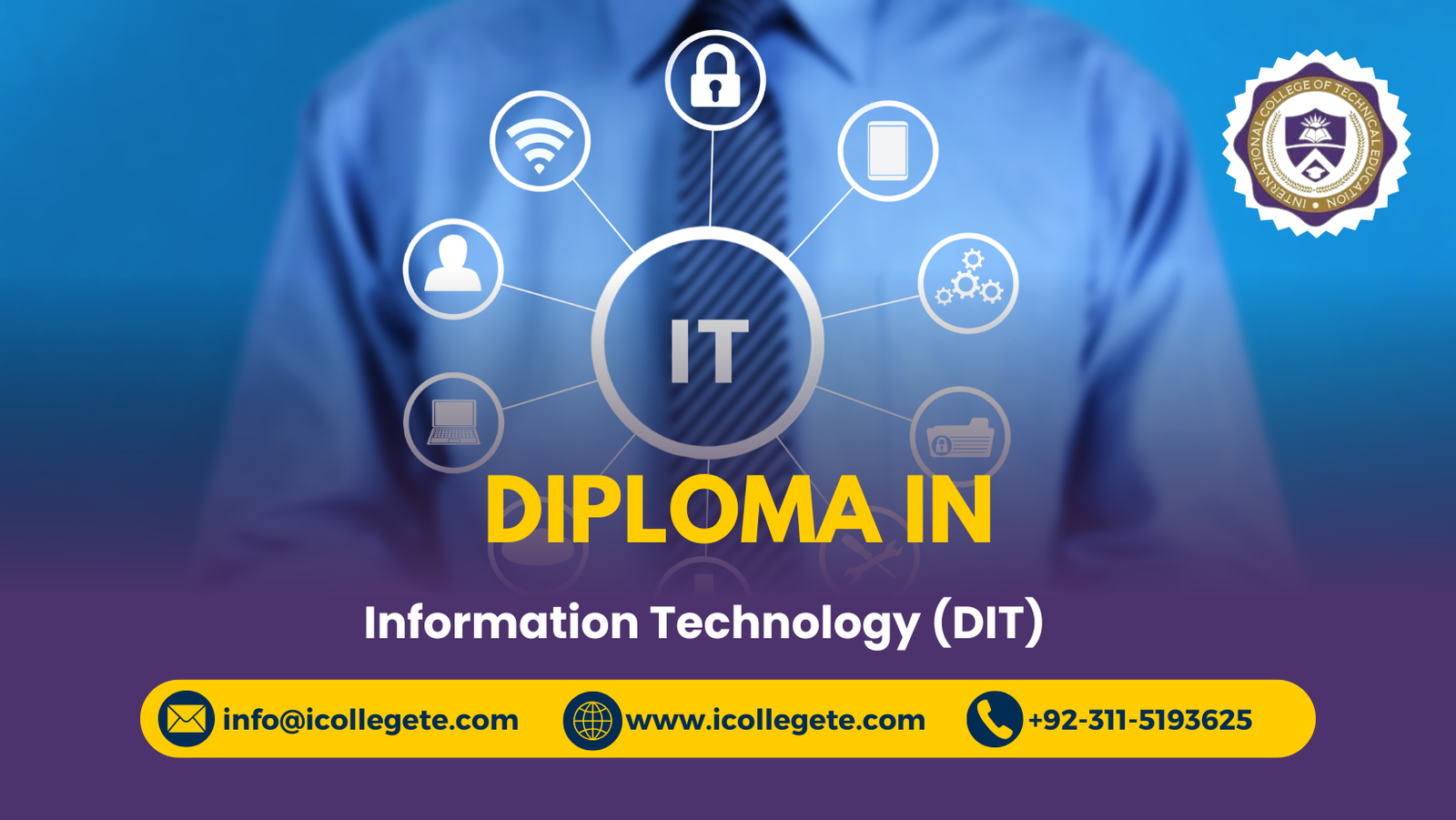
The Diploma in Information Technology (DIT) is a comprehensive program designed to equip learners with essential knowledge and practical skills in modern computing. It provides a strong foundation in areas such as programming, networking, database management, and system administration, making it ideal for students, professionals, and job seekers who want to build a career in the IT industry.
Through interactive modules and hands‑on training, participants gain expertise in software development, web design, cybersecurity, and troubleshooting. The course emphasizes real‑world applications, ensuring learners can confidently apply their skills in business environments, technical support, and digital innovation.
By the end of the program, graduates will be prepared for diverse roles in IT support, software engineering, web development, and system management. The diploma serves as proof of technical proficiency, opening opportunities for career advancement and higher education in today’s technology‑driven world.
The DIT curriculum typically includes the following study units:
- Introduction to Information Technology
- Computer Programming and Algorithms
- Web Design and Development
- Networking Principles and Protocols
- Database Design and Management
- Operating Systems and Computer Hardware
- Business Information Systems
- IT Project Management
- Cybersecurity and Data Protection
- Cloud Computing and Virtualization
By the end of the Diploma in Information Technology course, students can expect to:
Introduction to Information Technology
- Understand the basic concepts and scope of Information Technology
- Identify major components of IT systems and their applications
- Recognize the role of IT in modern businesses and industries
- Develop awareness of emerging trends in the IT field
Computer Programming and Algorithms
- Understand fundamental programming concepts and logic building
- Design and analyze basic algorithms for problem-solving
- Apply programming structures such as loops, conditions, and functions
- Develop simple programs using structured programming approaches
Web Design and Development
- Create basic static and dynamic web pages
- Understand HTML, CSS, and introductory JavaScript concepts
- Design user-friendly and responsive website layouts
- Apply web development tools and best practices
Networking Principles and Protocols
- Understand basic networking concepts and architecture
- Identify different types of networks and communication models
- Learn about network protocols and their functions
- Explain data transmission and network security basics
Database Design and Management
- Understand database concepts and relational models
- Design simple database structures using normalization techniques
- Use SQL for data retrieval and management
- Manage and organize data efficiently in database systems
Operating Systems and Computer Hardware
- Understand functions and types of operating systems
- Identify key hardware components and their roles
- Explain system processes, memory, and file management
- Perform basic system configuration and troubleshooting
Business Information Systems
- Understand the role of IT in business decision-making
- Identify different types of business information systems
- Analyze how organizations use IT for efficiency and growth
- Apply IT tools in business environments
IT Project Management
- Understand project lifecycle and management principles
- Learn planning, scheduling, and resource allocation techniques
- Apply basic project management tools and methodologies
- Manage IT projects effectively from initiation to completion
Cybersecurity and Data Protection
- Understand basic concepts of cybersecurity and threats
- Identify common security risks and vulnerabilities
- Learn data protection methods and security practices
- Apply safe computing practices to protect digital assets
Cloud Computing and Virtualization
- Understand concepts of cloud computing and service models
- Identify benefits and challenges of cloud technology
- Learn basics of virtualization and resource sharing
- Explore cloud platforms and their business applications
Diploma in Information Technology (DIT) provides essential knowledge and practical skills required to succeed in today’s fast-growing Information Technology industry.
- Gain strong foundation in core IT concepts and systems
- Learn programming, web development, and database management
- Understand networking, cybersecurity, and cloud computing basics
- Develop problem-solving and logical thinking skills
- Improve career opportunities in the IT and software industry
- Build skills required for entry-level technical jobs
- Learn how IT supports modern business operations
- Prepare for advanced IT certifications and specialization paths
The Diploma in Information Technology is ideal for:
- Students interested in IT, computer science, and software development
- Beginners who want to start a career in the technology field
- Professionals looking to upgrade their IT skills
- Individuals interested in web development, networking, or programming
- Fresh graduates seeking entry-level IT jobs
- Entrepreneurs planning to use IT for business growth
- Office workers wanting to improve computer and digital skills
- Anyone passionate about modern technology and computing