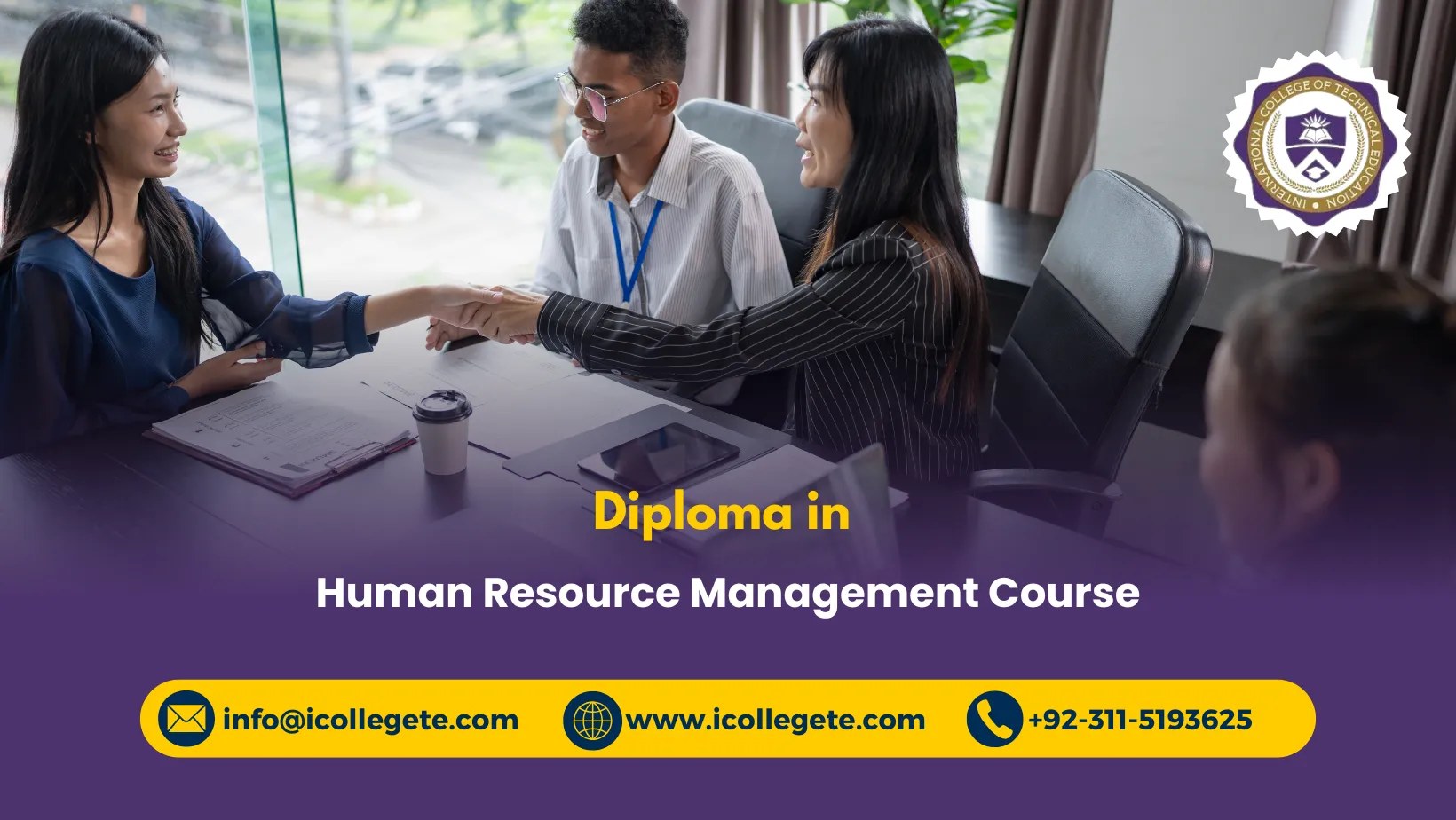
The Diploma in Human Resource Management Course in Pakistan is a career-focused programme designed to develop practical knowledge and professional skills for managing people effectively within modern organisations. Human Resource Management (HRM) plays a critical role in recruitment, employee development, performance improvement, workplace relationships, compensation, legal compliance, and organisational growth. This diploma provides learners with a structured understanding of essential HR functions while developing the ability to apply HR principles in real workplace situations.
The course covers key areas including Principles of Human Resource Management, Recruitment and Selection Strategies, Training and Development Programs, Performance Management Systems, Employee Relations and Conflict Resolution, Compensation and Benefits Management, Labor Laws and Compliance in Pakistan, and Strategic HR Planning and Organizational Development. Learners explore how HR departments attract suitable employees, develop workforce capabilities, manage performance, resolve workplace issues, maintain fair reward systems, and support organisational objectives.
This Human Resource Management diploma in Pakistan is suitable for students, HR professionals, supervisors, administrators, managers, business owners, and individuals seeking to build or advance a career in human resources. Through practical and workplace-oriented learning, learners can develop skills relevant to HR administration, recruitment, employee engagement, training coordination, performance management, and strategic workforce planning.
The programme also provides a foundation for further professional development and progression into advanced HR qualifications, specialist roles, and management-level career opportunities.
Course Study Units
Unit 1: Principles of Human Resource Management
This unit introduces the fundamental concepts, functions, and importance of Human Resource Management. Learners explore the role of HR professionals in supporting employees and organisational objectives.
Key topics include:
- Introduction to Human Resource Management
- Role and responsibilities of HR professionals
- HR functions and organisational structures
- Workforce planning fundamentals
- Employee lifecycle management
- HR policies and procedures
- Employee engagement and retention
- Ethical principles in HRM
- Modern HR practices and technology
Unit 2: Recruitment and Selection Strategies
This unit develops an understanding of effective recruitment and selection processes. Learners examine how organisations identify workforce requirements and attract, assess, and select suitable candidates.
Key topics include:
- Workforce requirements and job analysis
- Job descriptions and person specifications
- Recruitment planning
- Internal and external recruitment
- Recruitment advertising
- Candidate sourcing
- Application screening
- Interview techniques
- Selection methods
- Reference and background checks
- Fair and objective recruitment practices
- Onboarding and induction
Unit 3: Training and Development Programs
This unit focuses on developing employee knowledge, skills, competencies, and career potential. Learners explore how organisations identify training needs and design effective employee development programmes.
Key topics include:
- Training and development principles
- Training needs analysis
- Learning objectives
- Employee skills development
- Training methods and delivery approaches
- Workplace coaching and mentoring
- Career development
- Leadership development
- Training evaluation
- Learning and development strategies
- Employee career progression
Unit 4: Performance Management Systems
This unit examines how organisations establish, monitor, and improve employee performance. Learners develop an understanding of performance objectives, appraisal systems, feedback, and continuous improvement.
Key topics include:
- Principles of performance management
- Setting SMART objectives
- Key performance indicators
- Performance appraisal methods
- Employee feedback
- Performance reviews
- Performance improvement plans
- Managing underperformance
- Recognition and employee motivation
- Continuous performance improvement
Unit 5: Employee Relations and Conflict Resolution
This unit explores workplace relationships and methods for managing employee concerns and organisational conflict. Learners examine how effective communication and fair HR procedures contribute to positive working environments.
Key topics include:
- Employee relations principles
- Workplace communication
- Employee engagement
- Grievance management
- Disciplinary procedures
- Workplace conflict
- Conflict resolution techniques
- Mediation and negotiation
- Employee wellbeing and support
- Workplace conduct
- Building positive organisational relationships
Unit 6: Compensation and Benefits Management
This unit introduces the principles of employee compensation and benefits. Learners examine how organisations develop fair and competitive reward systems that support recruitment, motivation, performance, and retention.
Key topics include:
- Compensation management principles
- Salary and wage structures
- Pay grades and job evaluation
- Employee benefits
- Incentive and bonus schemes
- Performance-related rewards
- Non-financial rewards
- Payroll coordination
- Compensation benchmarking
- Pay equity and fairness
- Employee reward strategies
Unit 7: Labor Laws and Compliance in Pakistan
This unit provides learners with an understanding of important employment-related legal and compliance considerations in Pakistan. It focuses on the responsibilities of employers and HR professionals in maintaining lawful and fair employment practices.
Key topics include:
- Employment legislation in Pakistan
- Employment contracts
- Working conditions
- Wages and remuneration
- Working hours and leave provisions
- Workplace health and safety responsibilities
- Employee rights and employer responsibilities
- Social security and employment-related requirements
- Termination and separation procedures
- Workplace discrimination and harassment considerations
- HR documentation and record keeping
- Legal and regulatory compliance.
Unit 8: Strategic HR Planning and Organizational Development
This unit develops strategic HR knowledge by examining how human resources contribute to organisational performance, transformation, and long-term business objectives.
Key topics include:
- Strategic Human Resource Management
- HR strategy development
- Workforce forecasting
- Talent management
- Succession planning
- Organisational development
- Change management
- Organisational culture
- Employee engagement strategies
- HR analytics and workforce data
- Strategic workforce planning
- Aligning HR objectives with business strategy
Learning Outcomes
After successfully completing the Diploma in Human Resource Management Course in Pakistan, learners should be able to:
- Explain fundamental principles, functions, and practices of Human Resource Management.
- Understand the complete recruitment and selection process.
- Develop effective approaches for attracting and selecting suitable employees.
- Identify employee training and development requirements.
- Support the design and implementation of workplace learning programmes.
- Apply performance management principles to improve employee performance.
- Understand appraisal, feedback, objectives, and performance improvement processes.
- Manage common employee relations issues using appropriate HR approaches.
- Apply effective communication, negotiation, and conflict-resolution techniques.
- Understand compensation structures, employee benefits, and reward strategies.
- Recognise key employment law and HR compliance requirements applicable in Pakistan.
- Maintain appropriate HR records, policies, and workplace documentation.
- Develop basic strategic workforce planning approaches.
- Understand the relationship between HR strategy and organisational objectives.
- Support organisational development, employee engagement, talent management, and change initiatives.
- Apply HR knowledge to practical workplace situations and professional decision-making.
Course Benefits
Completing a Diploma in Human Resource Management can provide learners with several academic and professional benefits:
- Develop practical knowledge of modern HR practices.
- Understand recruitment and employee selection processes.
- Improve employee training and development capabilities.
- Build knowledge of performance management systems.
- Develop workplace communication and conflict-resolution skills.
- Understand compensation and employee benefits management.
- Gain awareness of employment laws and HR compliance in Pakistan.
- Develop workforce planning and strategic HR skills.
- Improve employee engagement and retention practices.
- Strengthen professional HR administration capabilities.
- Develop knowledge applicable across different industries and organisations.
- Build a foundation for further HR education and professional qualifications.
- Enhance career opportunities in HR and people-management functions.
Who Is This Course For?
The Diploma in Human Resource Management Course in Pakistan is suitable for:
- Students who want to establish a career in Human Resource Management.
- HR professionals who want to strengthen their existing knowledge and skills.
- HR assistants and administrators seeking professional development.
- Recruitment professionals involved in talent acquisition and selection.
- Training and development staff responsible for employee learning programmes.
- Supervisors and team leaders who manage employees and workplace performance.
- Managers who want to improve their people-management capabilities.
- Business owners and entrepreneurs who need practical HR knowledge.
- Administrative professionals looking to move into HR roles.
- Career changers interested in entering the human resources profession.
- Professionals seeking knowledge of employment practices and HR compliance in Pakistan.
Why Choose This Course?
The Diploma in Human Resource Management Course in Pakistan offers a comprehensive pathway for learners who want practical knowledge of people management and organisational development.
Comprehensive HR Curriculum
The course covers the major areas of HRM, from recruitment and selection to strategic workforce planning and organisational development.
Practical Workplace Skills
Learners develop knowledge that can be applied to recruitment, employee development, performance management, workplace relations, compensation, and HR administration.
Pakistan-Relevant HR Knowledge
The programme includes a dedicated unit covering Labor Laws and Compliance in Pakistan, helping learners understand important employment-related requirements and HR responsibilities.
Career-Oriented Learning
The course provides a strong foundation for individuals pursuing careers in HR administration, recruitment, training, employee relations, compensation, and other HR functions.
Suitable Across Industries
Human Resource Management skills are relevant to businesses, educational institutions, healthcare organisations, construction companies, manufacturing, hospitality, NGOs, professional services, and many other sectors.
Foundation for Career Progression
The diploma can support progression toward more advanced HR qualifications and specialist or management-level responsibilities.
Future Progression of This Course
The Diploma in Human Resource Management Course in Pakistan can provide a foundation for further academic, professional, and career development. After completing the diploma, learners may choose to pursue advanced qualifications in areas such as:
- Advanced Human Resource Management
- Strategic Human Resource Management
- Talent Management
- Learning and Development
- Recruitment and Talent Acquisition
- Employee Relations
- Compensation and Benefits
- Organisational Development
- Human Resource Analytics
- Leadership and Management
- Business Management
- Strategic Management
Potential Career Progression
Depending on experience, additional qualifications, and employer requirements, learners may progress toward roles such as:
HR Assistant → HR Officer → HR Executive → HR Specialist → HR Manager → Senior HR Manager → HR Business Partner → Head of HR
Specialist career pathways may also include:
Recruitment Coordinator → Recruitment Specialist → Talent Acquisition Specialist → Talent Acquisition Manager
or:
Training Coordinator → Learning & Development Officer → L&D Manager → Head of Learning & Development
With additional strategic and management experience, learners can progress toward senior positions involving workforce strategy, organisational development, talent management, employee engagement, HR analytics, and organisational leadership.
Take the Next Step Toward World Human Resource Management Course-Enroll Now