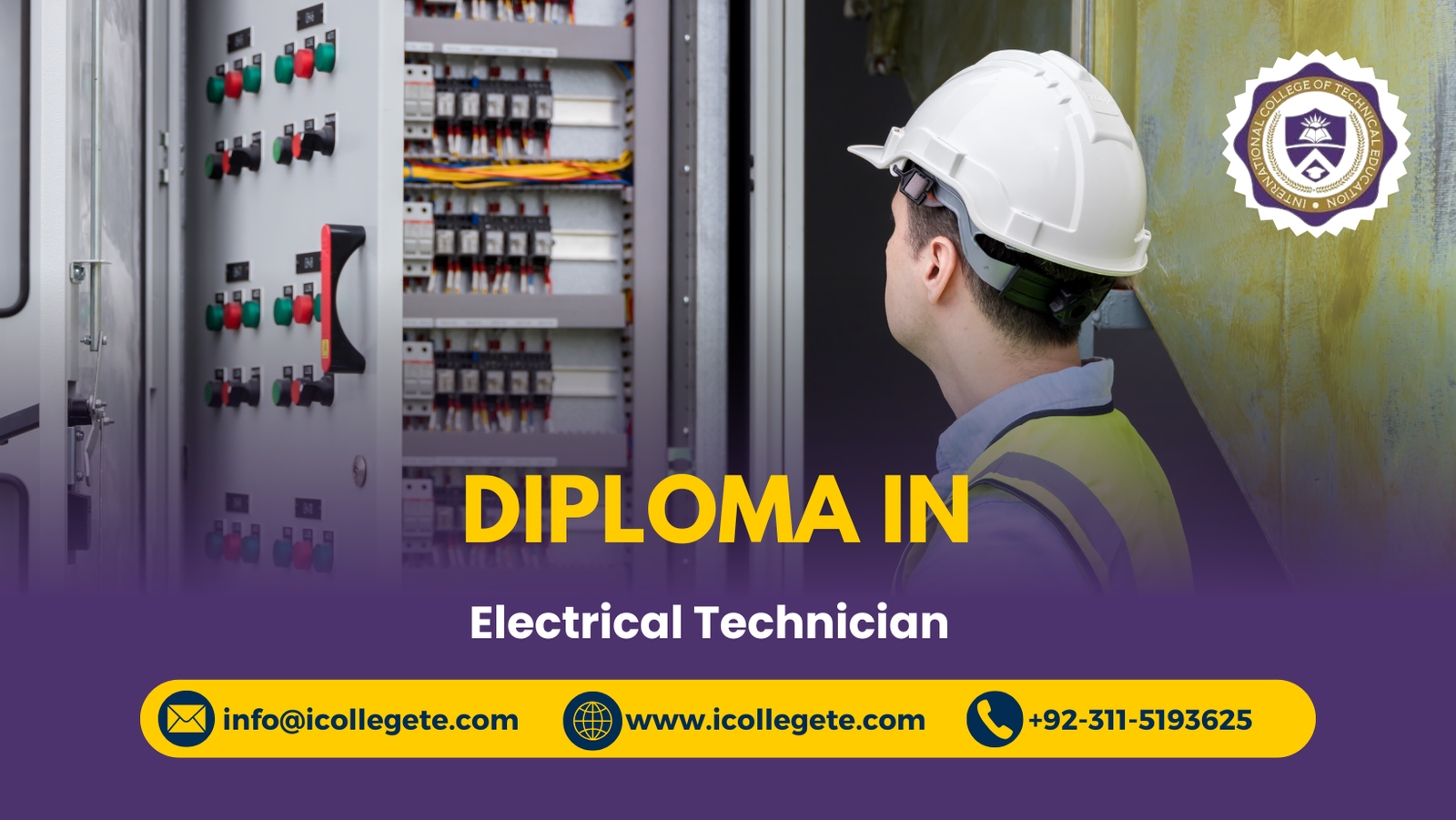
The Diploma in Electrical Technician is a career-oriented training program designed to prepare students for professional roles in electrical installation, maintenance, and repair across residential, commercial, and industrial sectors. With the growing demand for skilled electrical technicians worldwide, this diploma provides both theoretical knowledge and practical expertise to meet industry standards.
The curriculum covers essential areas such as electrical wiring, circuit design, power distribution, motor controls, renewable energy systems, and troubleshooting techniques. Students also gain proficiency in reading electrical blueprints, applying safety codes, and using modern electrical tools and equipment. Hands-on training is a key component of the program, ensuring learners can confidently perform real-world electrical tasks under professional supervision.
Completing this diploma opens doors to diverse career opportunities in industries such as construction, manufacturing, energy, and automation. It is an excellent choice for individuals who want to build a strong technical career, enhance their existing skills, or pursue higher education in electrical engineering and technology.
The Diploma in Electrical Technician course is structured into multiple study units, each focusing on different aspects of electrical technology.
- Introduction to Electrical Technology
- Electrical Safety and Standards
- Wiring and Circuit Design
- Troubleshooting and Fault Detection
- Electrical Power Systems
- Industrial Automation and Control Systems
- Maintenance of Electrical Equipment
- Final Project & Assessment
This course is designed to provide learners with strong foundational and practical knowledge in electrical systems, wiring, safety standards, and modern industrial automation techniques.
Introduction to Electrical Technology
- Understand basic electrical concepts and principles
- Identify electrical components and their functions
- Explain the importance of electricity in modern systems
Electrical Safety and Standards
- Apply electrical safety rules in practical work
- Understand industry safety standards and regulations
- Prevent electrical hazards and accidents
Wiring and Circuit Design
- Design basic electrical wiring circuits
- Understand single-phase and three-phase systems
- Install and connect electrical wiring safely
Troubleshooting and Fault Detection
- Identify common electrical faults
- Apply testing methods for fault detection
- Repair and maintain electrical circuits
Electrical Power Systems
- Understand generation, transmission, and distribution systems
- Analyze power system components and operations
- Ensure efficient power usage and management
Industrial Automation and Control Systems
- Understand basics of automation systems
- Learn PLC and control system applications
- Apply automation in industrial processes
Maintenance of Electrical Equipment
- Perform routine maintenance of electrical systems
- Diagnose equipment performance issues
- Ensure long-term system reliability
Final Project & Assessment
- Complete practical electrical project work
- Demonstrate applied technical skills
- Evaluate overall knowledge and performance
This course provides essential technical knowledge and practical skills in electrical systems, helping learners build strong careers in the electrical and industrial engineering field.
- Develops strong understanding of electrical systems and circuits
- Improves practical skills in wiring and installation work
- Enhances troubleshooting and fault detection abilities
- Provides knowledge of industrial automation and control systems
- Increases job opportunities in electrical and maintenance sectors
- Builds confidence for working in industrial and commercial projects
Diploma in Electrical Technician is suitable for individuals who want to build a professional career in the electrical field and gain practical technical skills.
- Students and fresh learners interested in electrical technology
- Electricians and assistant technicians
- Job seekers aiming for technical and industrial careers
- Workers in construction and maintenance fields
- Individuals planning to work in electrical companies
- Anyone interested in learning electrical systems and wiring skills