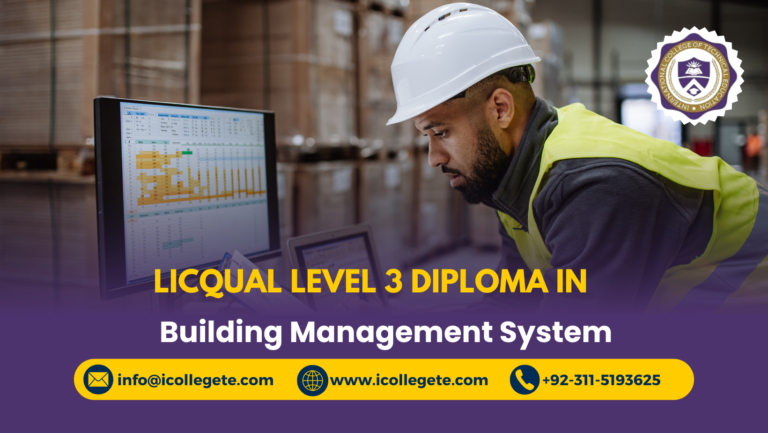
The Diploma in Building Management System (BMS) is a career-focused programme designed to develop practical knowledge and technical skills in the operation, monitoring, control and maintenance of intelligent building systems. The course introduces learners to how BMS technology integrates heating, ventilation and air conditioning (HVAC), lighting, energy management, security, fire and safety systems, electrical equipment and other building services through centralised digital control.
Learners develop an understanding of BMS architecture, sensors, controllers, actuators, communication networks, control strategies, monitoring interfaces and system integration. The programme also covers BMS installation principles, configuration, commissioning, fault diagnosis, preventive maintenance, energy optimisation and system performance monitoring. Practical learning helps learners understand how automated building controls can improve occupant comfort, operational efficiency, energy performance and equipment reliability.
The Diploma in Building Management System (BMS) is suitable for learners seeking technical knowledge for careers in building automation, facilities management, electrical and mechanical services, HVAC controls and smart building technologies. It can support progression into roles such as BMS Technician, Building Automation Technician, BMS Operator, Controls Technician, Facilities Management Technician and Building Systems Specialist. The course also provides a foundation for further professional development in building automation, energy management and smart building systems.
The Diploma in Building Management System (BMS) is divided into the following study units to ensure a comprehensive learning experience:
- Introduction to Building Management Systems (BMS) and Components
- HVAC Systems Integration and Control in BMS
- Electrical Systems, Lighting, and Energy Management
- Fire Alarm, Safety Systems, and Security Integration
- BMS Software, Automation, and Control Systems (PLC/SCADA Basics)
- Installation, Maintenance, and Troubleshooting of BMS Systems
By the end of the Diploma in Building Management System (BMS), graduates will:
Introduction to Building Management Systems (BMS) and Components
- Understand the fundamentals and purpose of BMS in modern buildings
- Identify key components and their functions within a BMS system
HVAC Systems Integration and Control in BMS
- Understand how HVAC systems are integrated and controlled through BMS
- Monitor and optimize temperature, ventilation, and air conditioning systems
Electrical Systems, Lighting, and Energy Management
- Manage electrical systems and lighting through BMS platforms
- Apply energy-saving techniques and monitor energy consumption
Fire Alarm, Safety Systems, and Security Integration
- Understand integration of fire alarm and safety systems in BMS
- Monitor and manage security systems such as access control and CCTV
BMS Software, Automation, and Control Systems (PLC/SCADA Basics)
- Understand basic concepts of PLC and SCADA used in automation
- Operate BMS software for monitoring and controlling building systems
Installation, Maintenance, and Troubleshooting of BMS Systems
- Perform basic installation and configuration of BMS components
- Identify faults and carry out troubleshooting and maintenance activities
The Diploma in Building Management System (BMS) provides learners with practical and technical knowledge required to understand, operate, monitor and maintain modern building automation and control systems. Key benefits include:
- Develop BMS Technical Knowledge: Build a strong understanding of BMS architecture, controllers, sensors, actuators, control panels, communication networks and user interfaces.
- Understand Building Automation: Learn how different building services can be monitored and controlled through an integrated Building Management System.
- Gain Practical Industry Skills: Develop knowledge of BMS installation, configuration, commissioning, operation, maintenance and fault diagnosis.
- Improve HVAC Control Knowledge: Understand how BMS technology supports the monitoring and control of heating, ventilation and air conditioning systems.
- Support Energy Efficiency: Learn how BMS can be used to monitor energy consumption, optimise equipment operation and identify opportunities for improved building performance.
- Develop Fault-Finding Skills: Gain the ability to identify common BMS faults, interpret system information and support effective troubleshooting and corrective actions.
- Understand System Integration: Learn how BMS can communicate with HVAC, lighting, electrical, security, fire and other building services.
- Enhance Career Opportunities: Build relevant skills for roles in BMS operations, building automation, facilities management, HVAC controls and building services.
- Support Smart Building Skills: Develop knowledge relevant to modern smart buildings, automated facilities and digitally connected building environments.
- Strengthen Professional Competence: Develop technical, analytical and problem-solving skills that can support effective BMS operation and maintenance.
- Promote Sustainable Building Management: Understand how automated monitoring and control can contribute to efficient resource use, occupant comfort and improved building performance.
- Provide a Foundation for Progression: Create a strong foundation for further professional development in BMS, building automation, facilities management, energy management and smart building technologies.
The Diploma in Building Management System (BMS) is suitable for learners who want to develop practical and technical knowledge of building automation, control systems and integrated building services. The course can be particularly relevant to:
- BMS Technicians: Learners working with or preparing for roles involving BMS installation, operation, monitoring and maintenance.
- Electrical Technicians and Engineers: Professionals seeking to expand their knowledge of automated building controls and electrical system integration.
- Mechanical Technicians and Engineers: Those involved in HVAC systems who want to understand BMS-based monitoring and control.
- HVAC Professionals: Technicians and specialists looking to develop skills in HVAC automation, control strategies and centralised monitoring.
- Facilities Management Professionals: Individuals responsible for building operations, maintenance, energy performance and building services management.
- Building Services Professionals: Learners involved in mechanical, electrical and automated building systems who want to broaden their technical capabilities.
- Maintenance Technicians: Professionals responsible for maintaining building equipment and diagnosing operational or control-related problems.
- Building Automation Professionals: Individuals seeking structured knowledge of sensors, controllers, actuators, communication networks and BMS interfaces.
- Energy Management Professionals: Those interested in using building automation and monitoring systems to support energy efficiency and operational optimisation.
- Construction and Building Services Personnel: Individuals involved in the installation, coordination or handover of building services and automation systems.
- Technical Supervisors and Site Personnel: Professionals who need a broader understanding of BMS installation, commissioning, testing and maintenance activities.
- Career Changers: Learners seeking to enter the growing fields of building automation, smart buildings, facilities management or building services technology.
- Aspiring BMS Professionals: Learners who want to establish foundational knowledge before progressing into specialised BMS, controls or smart building roles.