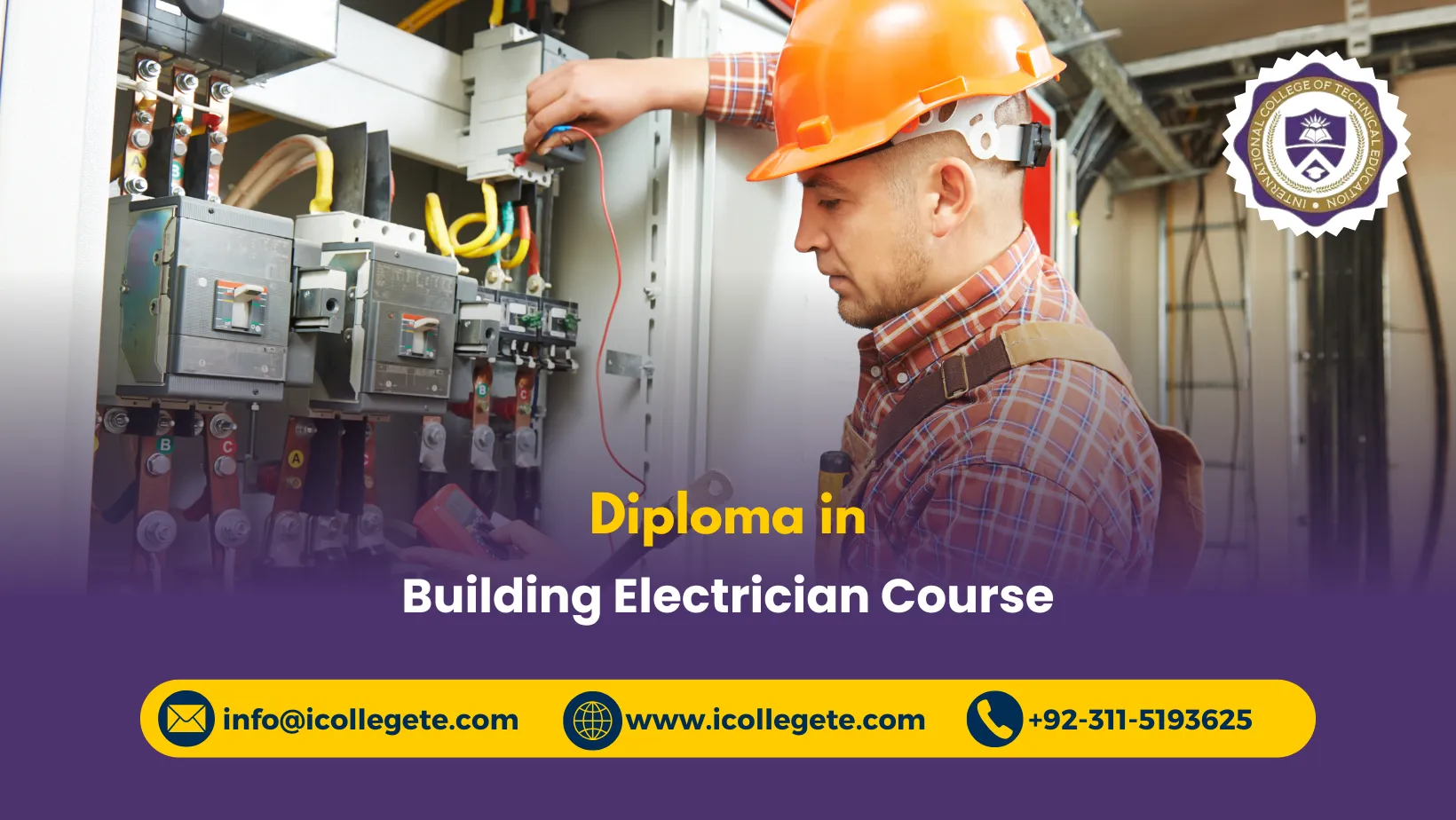
The Diploma in Building Electrician Course in Swabi is a practical, career-focused vocational programme designed to develop the technical knowledge and hands-on skills required to install, maintain, test, and troubleshoot electrical systems in residential, commercial, and building environments. The course provides learners with a structured understanding of electrical principles, wiring methods, circuit design, electrical safety, distribution systems, load calculations, and maintenance practices.
Throughout the programme, learners develop practical competence in using electrician tools and equipment, interpreting basic electrical drawings, installing wiring systems, connecting electrical accessories, carrying out load calculations, and identifying common electrical faults. Particular emphasis is placed on safe working practices, appropriate selection of electrical components, circuit protection, earthing, testing, and preventive maintenance.
The Building Electrician Diploma in Swabi is suitable for beginners as well as individuals who want to strengthen their existing electrical skills and prepare for work in construction, building maintenance, electrical installation, and related technical services. Practical activities and a final project help learners connect theoretical concepts with realistic workplace applications.
By completing this course, learners can build a strong foundation for employment as an electrical technician, building electrician, wiring technician, maintenance electrician, or electrical installation worker, while also developing a basis for further technical training and professional development.
Course Study Units
Unit 1: Introduction to Electrical Systems
This unit introduces learners to the fundamental principles of electricity and electrical systems used in buildings. Learners explore electrical quantities, circuits, current, voltage, resistance, power, energy, conductors, insulators, and common electrical components. The unit also introduces AC and DC systems, basic circuit arrangements, electrical symbols, and the role of electrical installations in modern buildings.
Key topics include:
- Fundamentals of electricity
- Voltage, current and resistance
- Electrical power and energy
- AC and DC electrical systems
- Conductors and insulators
- Electrical components
- Series and parallel circuits
- Basic electrical symbols and diagrams
- Building electrical systems
- Introduction to electrical testing
Unit 2: Tools and Equipment for Electricians
This unit develops learners’ ability to identify, select, use, and maintain common tools and equipment used by electricians. Learners understand the purpose of hand tools, measuring instruments, wiring tools, testing devices, and personal protective equipment.
Key topics include:
- Hand tools for electrical work
- Screwdrivers, pliers and cutters
- Wire strippers and crimping tools
- Cable preparation tools
- Multimeters and voltage testers
- Continuity and insulation testing equipment
- Drilling and fixing equipment
- Cable installation tools
- Personal protective equipment
- Safe storage and maintenance of tools
Unit 3: Basic Wiring and Circuit Design
This unit introduces the principles of electrical wiring and basic circuit design. Learners develop skills in understanding wiring diagrams, selecting appropriate cables and accessories, connecting circuits, and planning simple electrical installations.
Key topics include:
- Electrical wiring principles
- Cable types and sizes
- Wiring methods
- Circuit diagrams and symbols
- Switches, sockets and lighting points
- Junction boxes and connection methods
- Series and parallel circuit applications
- Basic lighting circuits
- Cable routing and termination
- Circuit testing
Unit 4: Electrical Safety Standards and Practices
This unit focuses on electrical hazards and safe working practices. Learners develop an understanding of electric shock, short circuits, overloads, fire risks, damaged equipment, isolation procedures, earthing, circuit protection, and safe working environments.
Key topics include:
- Electrical hazards
- Electric shock prevention
- Short circuits and overloads
- Earthing and bonding
- Fuses and circuit breakers
- Residual current protection
- Safe isolation procedures
- Lockout and warning practices
- Personal protective equipment
- Electrical fire prevention
- Safe testing procedures
- Workplace electrical safety
Unit 5: Residential and Commercial Wiring Systems
This unit develops practical knowledge of electrical installations used in houses, offices, shops, workshops, and other buildings. Learners examine different wiring arrangements, distribution boards, lighting circuits, socket circuits, protective devices, and electrical accessories.
Key topics include:
- Residential electrical installations
- Commercial electrical installations
- Lighting systems
- Socket outlet circuits
- Distribution boards
- Protective devices
- Consumer units
- Cable containment systems
- Switchgear and accessories
- Earthing arrangements
- Electrical installation testing
- Building maintenance requirements
Unit 6: Load Calculations and Distribution Systems
This unit introduces learners to electrical load assessment and distribution. Learners learn how to identify connected loads, estimate demand, select appropriate cable sizes and protective devices, and understand how electrical power is distributed throughout buildings.
Key topics include:
- Electrical load identification
- Connected load calculations
- Demand and diversity concepts
- Power calculations
- Single-phase systems
- Three-phase systems
- Cable selection principles
- Protective device selection
- Distribution boards
- Circuit balancing
- Voltage drop considerations
- Electrical distribution planning
Unit 7: Troubleshooting and Maintenance Techniques
This unit develops learners’ ability to identify common electrical faults and apply systematic troubleshooting and maintenance techniques. Learners learn how to inspect installations, use testing instruments, identify fault conditions, and carry out appropriate corrective actions safely.
Key topics include:
- Electrical fault identification
- Fault-finding procedures
- Testing and measurement
- Open-circuit faults
- Short-circuit faults
- Overload conditions
- Loose connections
- Lighting faults
- Socket circuit faults
- Preventive maintenance
- Electrical equipment inspection
- Safe repair procedures
Unit 8: Final Project and Practical Applications
The final unit allows learners to apply the knowledge and skills developed throughout the diploma to a practical electrical installation project. Learners plan an installation, select appropriate tools and materials, interpret electrical drawings, perform wiring activities, conduct testing, and demonstrate safe working practices.
Practical activities may include:
- Planning a basic building electrical installation
- Preparing tools and materials
- Reading wiring diagrams
- Installing lighting circuits
- Installing socket circuits
- Connecting electrical accessories
- Preparing distribution arrangements
- Performing basic electrical tests
- Identifying and correcting faults
- Applying electrical safety procedures
- Completing practical documentation
- Presenting the final project
Learning Outcomes
After successfully completing the Diploma in Building Electrician Course in Swabi, learners should be able to:
- Explain fundamental electrical principles and building electrical systems.
- Identify and correctly use common electrician tools and equipment.
- Interpret basic electrical symbols, diagrams, and wiring plans.
- Install basic electrical wiring and building circuits.
- Connect switches, sockets, lighting points, and electrical accessories.
- Apply safe electrical working practices during installation and maintenance.
- Identify electrical hazards and implement appropriate control measures.
- Understand earthing, bonding, fuses, circuit breakers, and other protective measures.
- Install and understand residential and commercial wiring systems.
- Perform basic electrical load calculations.
- Understand electrical distribution arrangements within buildings.
- Select electrical components according to installation requirements.
- Conduct basic inspection, testing, and measurement activities.
- Diagnose common electrical faults using systematic troubleshooting methods.
- Carry out basic preventive electrical maintenance.
- Plan and complete a practical building electrical installation project.
- Apply professional workmanship and safe working procedures in practical environments.
- Develop a foundation for employment and further technical development in electrical installation.
Course Benefits
The Diploma in Building Electrician Course in Swabi offers several practical and professional benefits:
Practical Electrical Skills
Learners gain hands-on knowledge relevant to building wiring, electrical installations, maintenance, testing, and fault finding.
Strong Foundation in Electrical Work
The programme provides a structured foundation for individuals entering the electrical installation and building services sector.
Workplace Safety Awareness
Learners develop knowledge of electrical hazards, safe isolation, protective devices, earthing, PPE, and safe working practices.
Residential and Commercial Knowledge
The course covers electrical systems commonly encountered in homes, offices, shops, workshops, and other buildings.
Troubleshooting Skills
Learners develop a systematic approach to identifying electrical faults and selecting appropriate corrective actions.
Improved Employment Readiness
Practical knowledge can support applications for entry-level roles in electrical installation, building maintenance, construction, and technical services.
Self-Employment Potential
With appropriate practical competence, experience, and any locally required licensing or registration, learners may use their skills to develop electrical installation and maintenance services.
Professional Development
The diploma provides a foundation for developing more advanced electrical, electrical engineering, building services, or maintenance competencies.
Who Is This Course For?
The Diploma in Building Electrician Course in Swabi is suitable for:
- Students interested in electrical installation
- School and college leavers seeking technical skills
- Beginners entering the electrical trade
- Aspiring building electricians
- Electrical helpers seeking structured training
- Construction workers who want electrical skills
- Building maintenance workers
- Facilities maintenance personnel
- Individuals interested in residential wiring
- Individuals interested in commercial electrical systems
- Technicians seeking to strengthen their electrical knowledge
- People interested in developing electrical installation as a career
- Individuals considering self-employment in electrical services
The course can be particularly valuable for learners who prefer practical, skill-based vocational education and want to develop competencies applicable to real building environments.
Why Choose the Diploma in Building Electrician Course in Swabi?
Career-Focused Vocational Training
The programme concentrates on practical electrical skills that can be applied across construction, property maintenance, building services, and electrical installation environments.
Comprehensive Course Structure
It covers the complete foundation—from electrical principles and tools to wiring, safety, distribution, troubleshooting, maintenance, and practical project work.
Practical Learning Approach
Learners can connect theoretical knowledge with practical applications through wiring exercises, testing activities, fault-finding tasks, and project-based learning.
Relevant Building Electrical Skills
The programme addresses residential and commercial electrical systems, making the learning relevant to common building environments.
Safety-Centred Training
Electrical safety is integrated throughout the course so learners understand the importance of risk control and safe working procedures.
Suitable for Beginners
The programme starts with fundamental electrical concepts before progressing toward practical installation and troubleshooting skills.
Local Learning Opportunity
For learners in Swabi and surrounding areas, the course provides an opportunity to develop technical electrical competencies without needing to begin with highly advanced engineering studies.
Foundation for Career Development
The skills developed can support progression toward more specialised electrical installation, maintenance, construction, and building-services roles.
Future Progression of the Course
After completing the Diploma in Building Electrician Course in Swabi, learners can continue developing their technical competence through practical experience, advanced vocational training, and specialist electrical programmes.
Potential progression areas include:
- Advanced Electrical Installation
- Industrial Electrical Systems
- Electrical Maintenance
- Building Services Engineering
- Electrical Control Systems
- Industrial Automation
- Motor Control and Installation
- Solar PV Installation
- Renewable Energy Systems
- Electrical Testing and Inspection
- Facilities and Building Maintenance
- Construction Electrical Services
- Electrical Estimation and Costing
With additional training and workplace experience, learners may work toward roles such as Building Electrician, Electrical Installer, Electrical Maintenance Technician, Wiring Technician, Electrical Helper, Construction Electrician, or Building Services Technician, depending on their competence and the licensing or regulatory requirements applicable to their location.
For experienced learners, further technical education can also provide a pathway toward more specialised electrical and engineering disciplines. The exact progression route will depend on the learner’s previous qualifications, practical experience, local certification requirements, and career objectives.
Career Opportunities
The diploma can help learners prepare for entry-level or developing roles in areas such as:
- Building Electrical Installation
- Residential Electrical Work
- Commercial Wiring
- Construction Projects
- Property Maintenance
- Facilities Management
- Electrical Repair and Maintenance
- Electrical Contracting Support
- Building Services
- Electrical Installation Assistance
Take the Next Step Toward World Building Electrician Course-Enroll Now