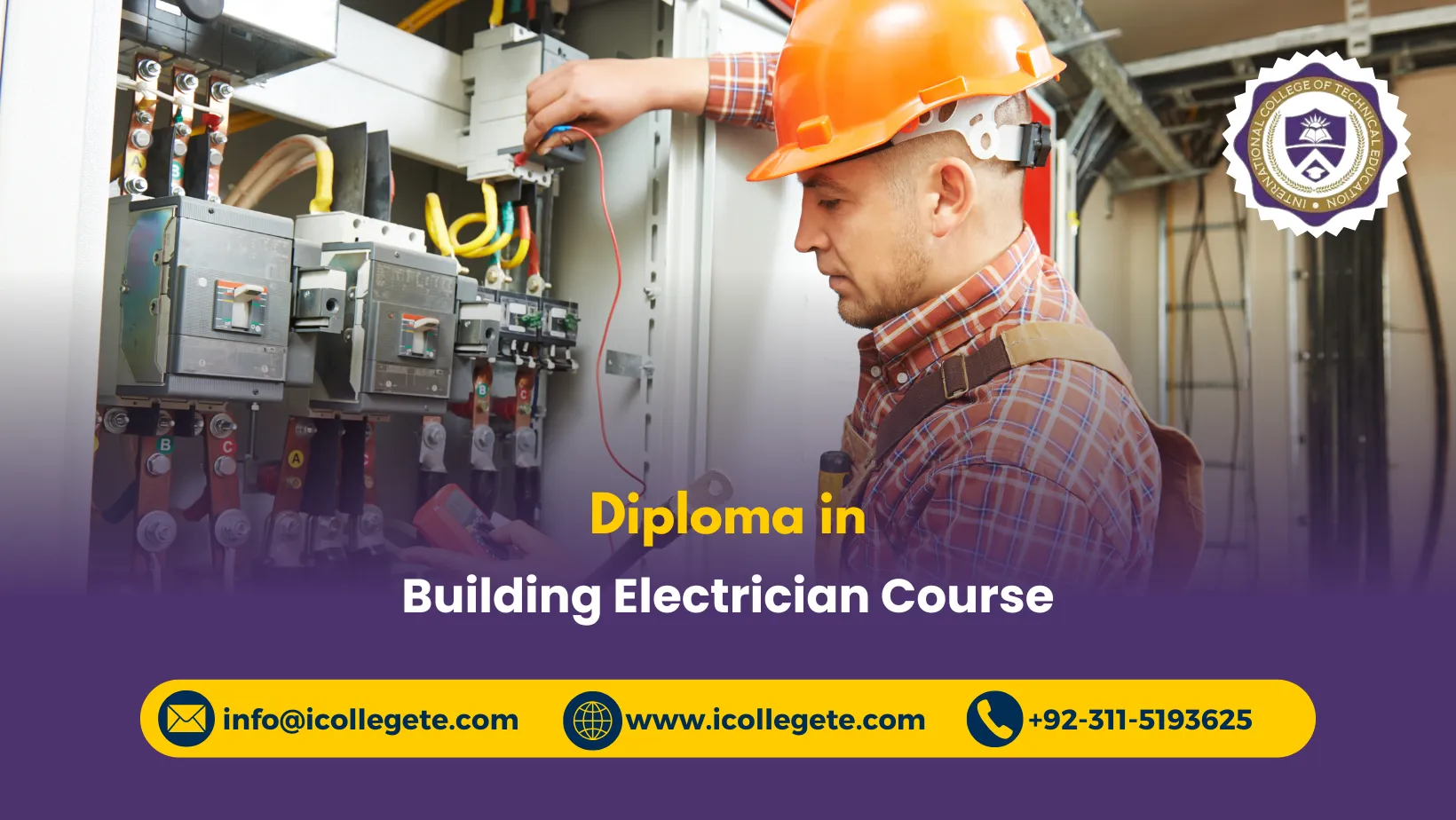
Diploma in Building Electrician Course Pakistan
The Diploma in Building Electrician Course in Pakistan is designed to provide learners with the essential skills and knowledge required to work as professional electricians in residential, commercial, and industrial settings. With the growing demand for skilled electricians in Pakistan’s construction and infrastructure sectors, this course offers a structured pathway to develop technical expertise, safety awareness, and practical experience. Learners will gain hands-on training in electrical installation, maintenance, troubleshooting, and compliance with safety standards.
Course Overview
This diploma introduces participants to the fundamentals of electrical systems, wiring techniques, and installation practices. The curriculum covers both theoretical knowledge and practical applications, ensuring learners are well-prepared to handle real-world electrical tasks. Students will learn about electrical circuits, equipment installation, fault diagnosis, and preventive maintenance. By the end of the course, participants will be capable of working independently or as part of a team in construction projects, building maintenance, and industrial operations. The program is ideal for those seeking to build a career in the electrical trade or enhance their existing technical skills.
Entry Requirements
To ensure learners are prepared for the training, specific entry requirements must be met. These requirements help maintain the quality of learning and ensure participants can successfully complete the program.
- Age Requirements: Applicants must be at least 16 years old.
- Qualification Requirements: A minimum of matriculation (secondary school certificate) is required.
- Professional Experience: Prior experience in technical or construction fields is beneficial but not mandatory.
- Educational Background: Students with backgrounds in science or technical subjects will find the course easier, though it is open to all.
- Language Proficiency: Basic understanding of English or Urdu is required, as technical manuals and resources may use these languages.
- Technical Access: Learners must have access to basic electrical tools and equipment for practice and assignments.
Course Study Units
- Introduction to Electrical Systems and Safety
- Tools, Equipment, and Materials in Electrical Work
- Basic Electrical Circuits and Wiring Techniques
- Residential and Commercial Electrical Installation
- Lighting Systems and Power Distribution
- Fault Diagnosis and Troubleshooting
- Preventive Maintenance and Repair Practices
- Electrical Codes, Standards, and Compliance
- Final Project and Practical Assessment
Course Learning Outcomes
By completing this diploma, learners will achieve practical skills aligned with the study units. These outcomes ensure participants are ready to apply their knowledge in professional settings.
Introduction to Electrical Systems and Safety
- Understand the fundamentals of electrical systems and their applications.
- Apply essential safety practices during electrical work.
- Identify hazards and implement preventive measures to ensure safe operations.
Tools, Equipment, and Materials in Electrical Work
- Recognize and correctly use electrical tools and equipment.
- Select appropriate materials for different electrical tasks.
- Maintain tools and equipment for efficiency and safety.
Basic Electrical Circuits and Wiring Techniques
- Construct and test simple electrical circuits.
- Apply wiring methods for residential and commercial projects.
- Ensure accuracy, safety, and compliance in wiring practices.
Residential and Commercial Electrical Installation
- Install electrical systems in homes, offices, and commercial buildings.
- Manage power distribution networks effectively.
- Apply industry standards for efficient and safe installations.
Lighting Systems and Power Distribution
- Design and install lighting systems for various environments.
- Implement power distribution methods for balanced load management.
- Ensure energy efficiency and reliability in electrical systems.
Fault Diagnosis and Troubleshooting
- Identify faults in electrical circuits and systems.
- Apply systematic troubleshooting techniques to resolve issues.
- Restore functionality while ensuring safety and compliance.
Preventive Maintenance and Repair Practices
- Perform routine maintenance to prevent electrical failures.
- Apply repair techniques to extend the lifespan of electrical systems.
- Reduce risks and downtime through proactive maintenance.
Electrical Codes, Standards, and Compliance
- Understand national and international electrical codes.
- Apply compliance standards in installations and maintenance.
- Maintain proper documentation for audits and inspections.
Final Project and Practical Assessment
- Apply all acquired skills in a comprehensive final project.
- Demonstrate competence in electrical installation and troubleshooting.
- Build a professional portfolio showcasing practical work for career advancement.
Course Benefits
This diploma offers multiple benefits that extend beyond technical knowledge, preparing learners for professional success.
Career Opportunities
- Access to jobs in construction and maintenance sectors.
- Opportunities in residential and commercial projects.
- Roles in industrial electrical departments.
Skill Development
- Gain hands-on experience with electrical systems.
- Learn installation, troubleshooting, and repair skills.
- Improve problem-solving and technical creativity.
Industry Relevance
- Curriculum aligned with current construction needs.
- Exposure to real-world projects and case studies.
- Training in compliance with safety standards.
Flexibility and Accessibility
- Online and offline learning options.
- Self-paced modules for convenience.
- Affordable fees compared to international programs.
Personal Growth
- Boost confidence in technical skills.
- Develop teamwork and communication abilities.
- Build a professional portfolio for career advancement.
Who Can Enroll in This Course
The diploma is open to a wide range of learners, making it accessible and inclusive.
Students
- Technical and vocational students.
- Learners seeking careers in electrical trades.
- Those wanting to enhance academic knowledge with practical skills.
Professionals
- Employees in construction and maintenance sectors.
- Technicians seeking specialization in electrical work.
- Freelancers aiming to expand their service offerings.
Entrepreneurs
- Business owners managing electrical projects.
- Contractors seeking compliance knowledge.
- Individuals aiming to establish electrical service businesses.
Career Changers
- People transitioning from non-technical fields.
- Individuals seeking stable careers in electrical trades.
- Those interested in construction and infrastructure industries.
Future Progression
Completing this diploma opens doors to advanced learning and career growth.
Advanced Electrical Training
- Progress to specialized electrical engineering courses.
- Learn advanced installation and design techniques.
- Build expertise in industrial electrical systems.
Renewable Energy Programs
- Explore solar and wind energy systems.
- Learn installation of renewable energy solutions.
- Work on sustainable energy projects.
Higher Education Opportunities
- Pursue diplomas in engineering or technical fields.
- Enroll in bachelor’s programs in electrical engineering.
- Access international certifications in electrical technologies.
Freelancing and Entrepreneurship
- Establish a freelance career in electrical services.
- Offer consultancy services to construction projects.
- Build a business providing electrical solutions.
Supervisory and Leadership Roles
- Progress to supervisory positions in construction.
- Lead electrical teams in industrial environments.
- Contribute to organizational safety and efficiency.
The Diploma in Building Electrician Course in Pakistan provides a strong foundation for learners to enter the construction and electrical trades with confidence. It not only teaches technical skills but also nurtures responsibility, problem-solving, and safety awareness. By covering essential topics such as electrical systems, wiring techniques, installation, troubleshooting, and compliance, the course ensures participants are industry-ready. The entry requirements are minimal, making it accessible to students, professionals, and entrepreneurs alike.
Take the Next Step Toward World Building Electrician Course- Enroll Now