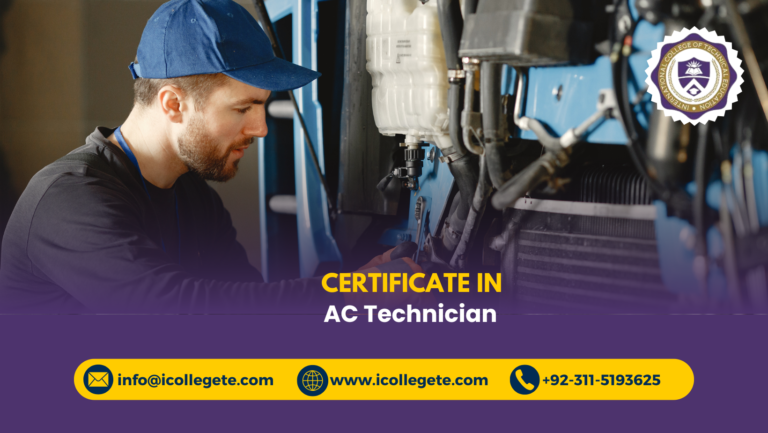
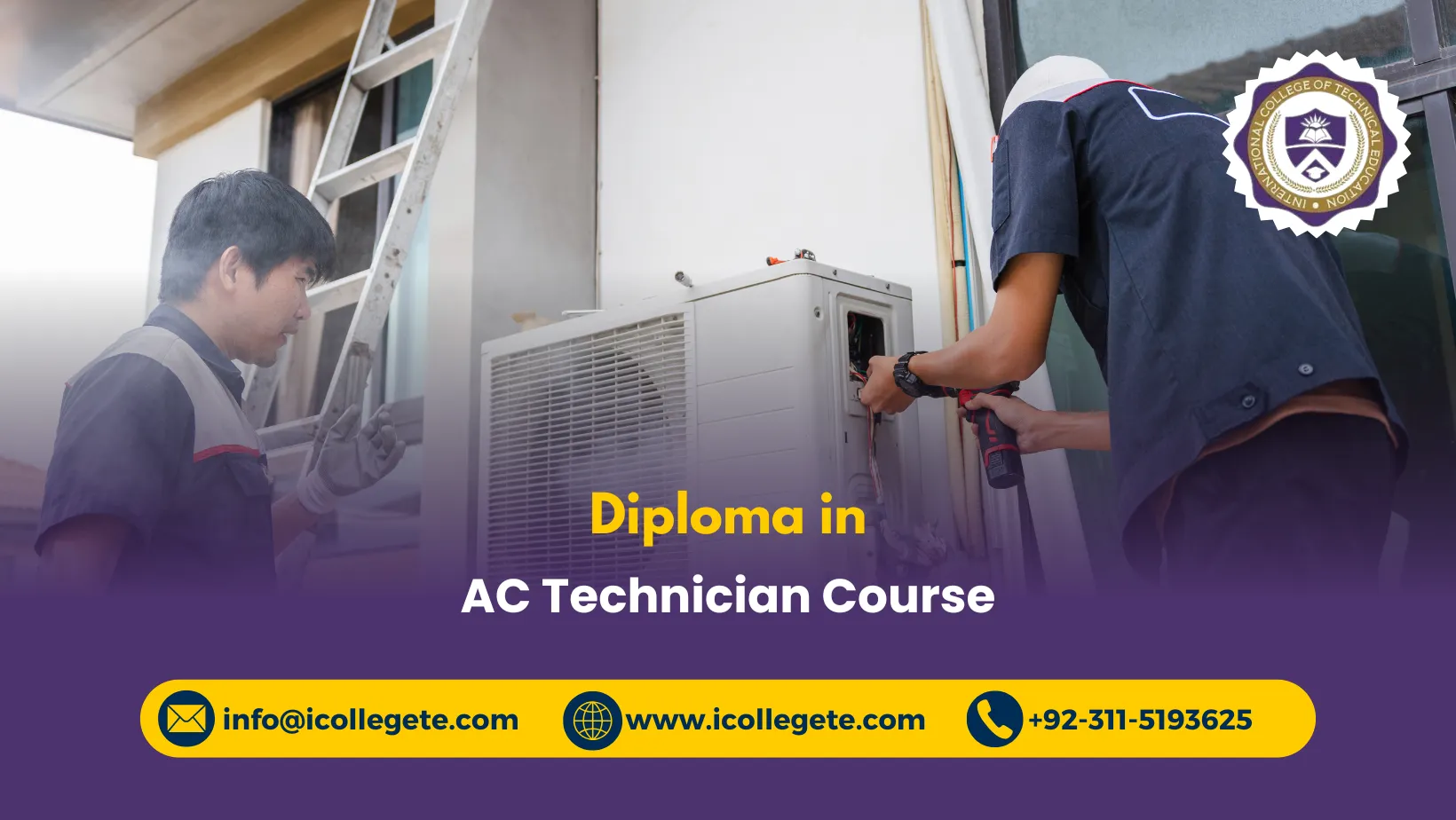
The Diploma in AC Technician Course in Pakistan is a practical vocational programme designed to develop the technical knowledge and hands-on skills required to install, operate, maintain, service and repair air conditioning systems. The course provides learners with a structured understanding of refrigeration principles, cooling cycles, electrical components, AC tools, installation procedures, fault diagnosis and preventive maintenance.
Learners explore different types of air conditioning equipment, including split AC, window AC and central air conditioning systems. The programme also introduces safe working practices, electrical safety, refrigerant handling, system testing and troubleshooting methods relevant to residential, commercial and selected industrial environments.
Practical learning is an important component of the Diploma in AC Technician Course. Learners develop the ability to use common tools and testing equipment, identify system faults, perform routine maintenance and apply systematic diagnostic procedures. Energy efficiency and environmental considerations are also covered to help learners understand responsible AC servicing and modern cooling technologies.
The course is suitable for individuals seeking practical technical skills for employment, self-employment or progression within the heating, ventilation, air conditioning and refrigeration sector. It can provide a foundation for AC technician roles, maintenance services, installation work and further technical training in refrigeration and HVAC-related disciplines.
Course Overview
The Diploma in AC Technician Course in Pakistan is a practical vocational programme designed to develop essential skills in air conditioning installation, servicing, maintenance and repair. Learners gain knowledge of refrigeration principles, cooling cycles, AC components, electrical systems, tools, equipment, safety procedures and fault diagnosis.
The course combines technical knowledge with practical applications covering split, window and central AC systems. Learners also develop skills in preventive maintenance, troubleshooting, energy-efficient operation and environmental considerations, providing a strong foundation for employment, self-employment and further training in HVAC and refrigeration.
Entry Requirements
To ensure learners are prepared for the training, specific entry requirements must be met. These requirements help maintain the quality of learning and ensure participants can successfully complete the program.
- Age Requirements: Applicants must be at least 16 years old.
- Professional Experience: Prior experience in technical or mechanical fields is beneficial but not mandatory.
- Educational Background: Students with backgrounds in science or technical subjects will find the course easier, though it is open to all.
- Language Proficiency: Basic understanding of English or Urdu is required, as technical manuals and resources may use these languages.
Course Study Units
Unit 1: Introduction to Air Conditioning Systems and Safety
This unit introduces the fundamental concepts of air conditioning and the main components used in cooling systems. Learners develop awareness of workplace safety, electrical hazards, refrigerant risks, personal protective equipment and safe working procedures.
Unit 2: Refrigeration Principles and Cooling Cycle
Learners explore the basic principles of refrigeration and understand how heat is transferred within an air conditioning system. Topics include the refrigeration cycle, compressor, condenser, expansion device, evaporator, refrigerant flow and pressure-temperature relationships.
Unit 3: Tools, Equipment, and Materials in AC Work
This unit develops practical knowledge of tools and equipment used by AC technicians. Learners become familiar with manifold gauges, vacuum pumps, multimeters, clamp meters, recovery equipment, flaring tools, pipe cutters and other installation and servicing materials.
Unit 4: Electrical Components and Wiring in AC Systems
Learners study electrical principles relevant to air conditioning equipment. The unit covers compressors, capacitors, relays, contactors, thermostats, motors, sensors, circuit protection and basic wiring arrangements, with emphasis on safe testing and electrical fault identification.
Unit 5: Installation of Split, Window, and Central AC Units
This unit focuses on practical AC installation procedures. Learners explore equipment positioning, mounting, copper pipework, drainage, electrical connections, refrigerant-related procedures, pressure testing, vacuuming, commissioning and operational checks for different AC systems.
Unit 6: Fault Diagnosis and Troubleshooting Techniques
Learners develop systematic approaches to identifying common AC faults. The unit covers symptoms such as inadequate cooling, unusual noise, water leakage, electrical failure, abnormal pressures, compressor problems and airflow issues.
Unit 7: Preventive Maintenance and Repair Practices
This unit focuses on maintaining AC systems for reliable and efficient operation. Learners study cleaning procedures, filter maintenance, coil inspection, electrical checks, drainage maintenance, performance testing and basic repair practices.
Unit 8: Energy Efficiency and Environmental Considerations
Learners examine methods for improving AC efficiency and reducing unnecessary energy consumption. The unit also introduces responsible refrigerant practices, environmental considerations, efficient equipment operation and sustainable approaches to cooling-system maintenance.
Unit 9: Final Project and Practical Assessment
The final unit enables learners to demonstrate their knowledge through a practical AC-related project. Learners may be required to inspect, install, test, diagnose or maintain an air conditioning system while demonstrating safe working practices and appropriate technical procedures.
Learning Outcomes
On successful completion of the Diploma in AC Technician Course in Pakistan, learners should be able to:
- Explain the basic principles and operation of air conditioning and refrigeration systems.
- Identify major AC components and explain their functions.
- Apply appropriate health and safety procedures during AC work.
- Select and use common AC installation and servicing tools safely.
- Understand electrical components and basic wiring used in AC systems.
- Install and commission split, window and central AC equipment using appropriate procedures.
- Apply systematic techniques for diagnosing common AC faults.
- Perform routine preventive maintenance and basic repair activities.
- Conduct appropriate operational and performance checks.
- Apply energy-efficiency principles to AC installation and servicing.
- Recognise environmental considerations associated with refrigerants and cooling systems.
- Demonstrate practical AC technician skills through a final project or practical assessment.
Course Benefits
- Develops practical air conditioning installation and servicing skills.
- Provides knowledge of refrigeration and cooling-cycle principles.
- Builds confidence in using AC tools and testing equipment.
- Develops electrical troubleshooting knowledge relevant to AC systems.
- Covers split, window and central air conditioning systems.
- Strengthens fault diagnosis and problem-solving abilities.
- Introduces preventive maintenance and repair procedures.
- Develops awareness of energy-efficient cooling practices.
- Supports preparation for technician and maintenance-related employment.
- Can provide a foundation for self-employment and AC servicing work.
- Combines technical theory with practical vocational learning.
- Supports progression into wider HVAC and refrigeration training.
Who is This Course For?
The Diploma in AC Technician Course in Pakistan is suitable for:
- Individuals starting a career as an AC technician.
- School leavers seeking practical technical training.
- Existing technicians who want to strengthen their AC knowledge.
- Maintenance workers involved in building services.
- Electricians interested in expanding into air conditioning work.
- Plumbing and mechanical tradespeople seeking additional technical skills.
- Individuals interested in AC installation and repair services.
- Learners planning to establish an AC maintenance or servicing business.
- Workers seeking skills applicable to residential and commercial cooling systems.
- International learners seeking practical vocational knowledge relevant to AC servicing.
Why Choose the Diploma in AC Technician Course?
Practical Technical Skills
The course focuses on skills that can be applied to real AC installation, maintenance, servicing and troubleshooting activities.
Comprehensive AC Knowledge
Learners study the complete basic AC service cycle, from refrigeration principles and components to installation, testing, maintenance and fault diagnosis.
Industry-Relevant Training
The course covers commonly encountered AC systems, tools, electrical components and servicing practices relevant to modern technical workplaces.
Employment and Self-Employment Potential
AC technicians can work in installation, maintenance, repair and building-services environments. The practical nature of the course can also support learners interested in providing independent AC servicing.
Strong Foundation for HVAC Development
The qualification can provide a foundation for learners who want to develop broader knowledge of heating, ventilation, air conditioning and refrigeration systems.
Focus on Safety and Responsible Practice
Learners develop awareness of electrical safety, refrigerant-related risks, equipment handling, environmental considerations and safe working procedures.
Future Progression
After completing the Diploma in AC Technician Course in Pakistan, learners may progress towards roles and further training such as:
AC Technician
Learners can pursue technician-level opportunities involving AC installation, servicing, maintenance and basic troubleshooting.
HVAC Technician
Additional technical training can help learners broaden their skills into heating, ventilation and wider HVAC systems.
Refrigeration Technician
Learners may progress into further refrigeration-focused training covering commercial and industrial refrigeration systems.
AC Installation Specialist
With additional practical experience, learners can develop specialist skills in installing and commissioning different types of air conditioning equipment.
AC Maintenance Technician
The qualification can support progression into maintenance-focused roles involving inspection, servicing, performance testing and preventive maintenance.
HVAC Maintenance Roles
Further experience and training can open pathways into building maintenance and facilities services where HVAC equipment forms part of wider building systems.
AC Service Business
Learners with appropriate practical experience, business knowledge and any required local permissions may use their technical skills as a foundation for developing an independent AC installation and maintenance service.
Advanced Technical Training
Learners can continue developing specialist knowledge through advanced HVAC, refrigeration, electrical, building services, energy-efficiency and related technical programmes.
Take the Next Step Toward World AC Technician Course-Enroll Now