
Rigger vs Crane Operator: What is the Difference?
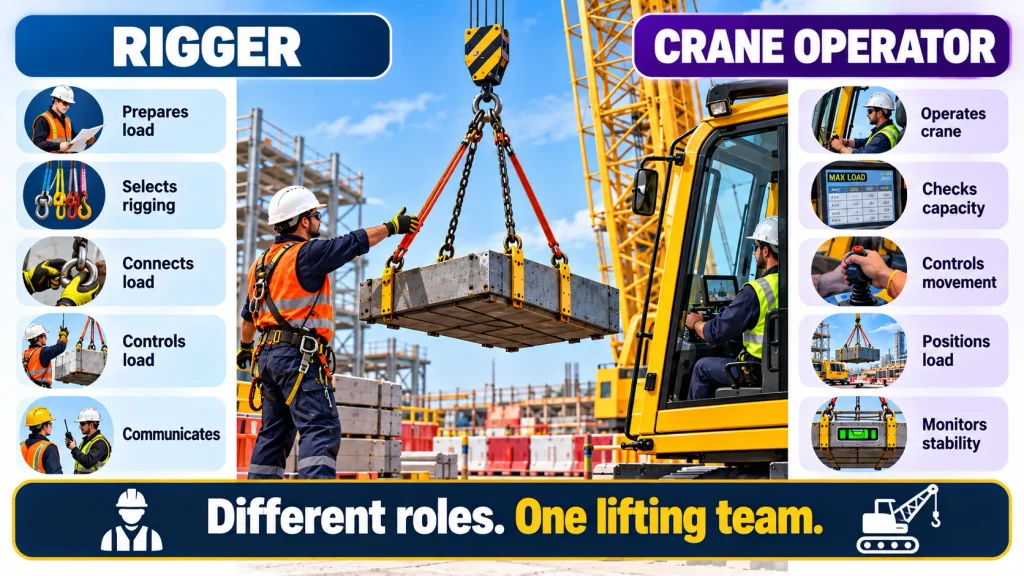
A rigger and crane operator are both important members of a lifting team, but each has a distinct role. The rigger focuses on preparing, attaching, securing and controlling loads using appropriate lifting accessories and rigging techniques.
The crane operator operates the crane and controls its movements to lift, move and position loads safely. This includes working within the crane’s rated capacity, operating limitations and established lifting procedures.
These roles work together rather than compete with each other. Effective communication, careful planning and coordinated teamwork between the rigger and crane operator help ensure that lifting operations are carried out safely and efficiently.
What is a Rigger?
A rigger is a trained and competent member of a lifting team who prepares, secures, controls and positions loads before and during lifting operations. Riggers work with cranes, lifting accessories and other equipment to ensure that loads are connected correctly, remain stable and can be moved safely. Their role requires practical knowledge of load characteristics, lifting accessories, communication procedures, workplace hazards and the requirements of the lifting plan.
What Does a Rigger Do?
A rigger is responsible for preparing loads for lifting and ensuring that the selected rigging arrangement is suitable for the task. This can involve assessing the load, identifying suitable attachment points, checking the load weight and considering its centre of gravity. The rigger also helps establish safe working arrangements around the lifting area and ensures that the load can be moved and landed without creating unnecessary risks.
Load Preparation
Before a lift begins, the rigger prepares the load by checking its condition, weight, dimensions and lifting points. The load should be positioned and arranged so that it can be lifted in a stable and controlled manner. Loose materials, unsecured components and potential obstructions should be identified and addressed before the lifting operation starts.
Selection and Inspection of Lifting Accessories
Selecting suitable lifting accessories is an important rigging responsibility. Depending on the lifting task, equipment may include slings, shackles, hooks, lifting beams and other approved accessories. The rigger checks that equipment is appropriate for the load and lifting arrangement and carries out the required pre-use inspection. Damaged, defective or unsuitable equipment should not be used.
Slinging and Connecting Loads
The rigger connects the load to the crane using an appropriate rigging arrangement. This requires attention to sling configuration, attachment points, load balance and the working limits of the lifting accessories. Connections should be secure and arranged to prevent the load from slipping, tilting or becoming unstable during lifting.
Maintaining Load Stability
Load stability is a critical part of safe rigging. The rigger considers the centre of gravity, shape, weight distribution and attachment points before the lift begins. Correct rigging helps keep the load balanced and controlled when it is raised, moved and lowered. Where necessary, suitable methods are used to prevent rotation or unexpected movement.
Signalling and Communication
Riggers often work closely with the crane operator through agreed communication and signalling arrangements. Depending on the lifting operation, communication may involve standard hand signals, radios or other approved methods. Instructions should be clear and understood before the lift begins. Where a designated signal person is used, the lifting team should follow the established communication procedure.
Tag Lines and Load Control
Tag lines can be used where appropriate to help control the movement or rotation of a suspended load. They can provide additional control from a safe position while the crane operator moves the load. Riggers must avoid placing themselves or others in positions where a suspended or moving load could create a crushing, striking or other serious hazard.
Supporting Lift Planning
A rigger can contribute valuable practical information during lift planning. This may include information about the load, attachment points, lifting accessories, access conditions, load movement and the landing area. The rigger should understand the relevant lifting plan and carry out rigging activities in accordance with the approved method and site procedures.
Identifying Hazards
Riggers need to identify hazards before and during lifting operations. Potential hazards may include unstable loads, damaged lifting accessories, restricted access, overhead obstructions, poor ground conditions, nearby personnel and uncontrolled load movement. If conditions become unsafe or differ significantly from the planned operation, the lift should be stopped or reassessed in accordance with workplace procedures.
Working Within the Lifting Plan
A rigger should work within the established lifting plan, risk controls and method of work. This includes using specified equipment, following agreed communication arrangements, maintaining exclusion zones and applying the required control measures. Any unexpected change should be communicated to the responsible lifting personnel before the operation continues.
Practical Example
For example, a construction project needs to lift a large steel component using a mobile crane. The rigger checks the load information, identifies suitable lifting points, selects appropriate slings and shackles, inspects the equipment and connects the load. The rigger then confirms that the load is stable and communicates with the crane operator during the lift. As the crane moves the component into position, the rigger helps control the load from a safe location and guides the landing process. This coordinated approach allows the crane operator to control the crane while the rigger manages the load and rigging arrangement.
What is a Crane Operator?
A crane operator is a trained and competent professional responsible for controlling and operating a crane to lift, move and position loads safely. The operator works closely with riggers, signal persons and other members of the lifting team to carry out planned lifting operations. Crane operation requires concentration, technical understanding, knowledge of equipment limitations and the ability to respond appropriately to changing conditions at the worksite.
Crane Inspection
Before starting a lifting operation, the crane operator carries out the required pre-use checks and inspections. This may include checking the crane structure, controls, lifting mechanisms, hooks, wire ropes, safety devices and other relevant components. Any defect or abnormal condition should be reported and addressed according to workplace procedures before the crane is used.
Crane Controls
The operator uses the crane controls to manage movements such as hoisting, lowering, slewing and travelling, depending on the type of crane. Controlled and precise operation is essential to prevent sudden load movement, collisions and excessive forces on the crane or lifting equipment.
Lifting Operations
During a lifting operation, the crane operator follows the approved lifting plan and agreed communication arrangements. The operator confirms that the crane is correctly positioned and operates within the specified limits. Lifting should be carried out smoothly and progressively, avoiding unnecessary acceleration, sudden stops or uncontrolled movements.
Load Movement and Positioning
The crane operator controls the movement of the suspended load from the lifting point to the designated landing area. Accurate positioning requires coordination with the rigger or signal person, particularly where visibility is restricted. The operator must maintain controlled movements and avoid contact with structures, equipment, personnel or other obstacles.
Monitoring Crane Stability
Crane stability is an essential consideration during lifting operations. The operator monitors conditions that may affect safe crane operation, including load characteristics, operating radius, ground conditions, crane configuration and environmental factors. The crane should always be operated within its specified limitations and the requirements of the lifting plan.
Following Signals
The crane operator follows the agreed signals or communication instructions provided by the designated person responsible for directing the lift. Signals must be clear and understood before movement begins. If a stop signal is given or communication becomes unclear, the operator should stop the relevant movement and only continue when safe communication has been re-established.
Working Within Rated Capacity
A crane operator must understand and respect the crane’s rated capacity and applicable load chart information. The permitted lifting capacity can vary according to factors such as boom configuration, operating radius, counterweight, attachments and other equipment conditions. The crane should never be overloaded or operated outside its specified limits.
Communication with the Lifting Team
Effective communication between the crane operator, rigger and signal person is essential for safe lifting. The team should agree on communication methods before the lift begins, including hand signals or radio communication where appropriate. The operator should maintain communication throughout the operation and raise concerns when instructions, site conditions or load behaviour are unclear.
Responding to Changing Site Conditions
Worksite conditions can change during a lifting operation. Unexpected obstacles, changing weather, poor visibility, ground movement, personnel entering restricted areas or changes to the load may affect safety. A competent crane operator must recognise when conditions are no longer suitable and follow the established procedure for stopping, reassessing or modifying the lifting operation.
Practical Workplace Example
For example, a crane operator is assigned to lift a heavy steel component onto a construction structure. Before the lift, the operator completes the required crane checks, reviews the lifting information and confirms the crane configuration and operating limits. The rigger connects and checks the load while the designated signal person establishes communication with the operator. During the lift, the operator carefully raises and slews the load while following the agreed signals. When unexpected site activity develops near the lifting area, the operator stops the movement until the area is made safe and the lifting team confirms that the operation can continue. This demonstrates how crane operation depends on technical control, communication and coordinated teamwork.
Rigger vs Crane Operator: Key Differences
A rigger and a crane operator perform different but closely connected functions within a lifting operation. The rigger is primarily responsible for preparing, securing and controlling the load, while the crane operator is responsible for operating the crane and controlling its movements. Understanding this distinction is important because safe lifting depends on each person performing the responsibilities for which they are competent and authorised.
| Area | Rigger | Crane Operator |
|---|---|---|
| Primary role | Prepares, secures and controls the load | Operates and controls the crane |
| Main equipment | Slings, shackles, hooks and lifting accessories | Crane and crane controls |
| Load connection | Selects and connects suitable rigging | Lifts the correctly connected load |
| Crane operation | Does not automatically operate the crane | Operates the crane within required limits |
| Load positioning | Helps guide and control the load | Controls crane movements |
| Communication | Communicates with the operator and lifting team | Follows agreed signals and instructions |
| Safety focus | Load security and rigging arrangement | Crane operation, stability and movement |
| Main knowledge | Rigging methods and lifting accessories | Crane operation, capacity and limitations |
| Work environment | Load area and lifting zone | Crane cab or control station |
| Team relationship | Works closely with the crane operator | Works closely with the rigger and lifting team |
Rigger vs Crane Operator Responsibilities
A rigger and crane operator have separate responsibilities, but both contribute directly to the safety and efficiency of lifting operations. The rigger primarily manages the load, rigging arrangement and load control, while the crane operator manages the crane, its movements and operating limits. Their responsibilities must be coordinated through the lifting plan and agreed communication procedures.
Rigger Responsibilities
The rigger prepares the load and ensures that the selected rigging arrangement is suitable for the planned lifting operation. This involves considering the load characteristics, attachment points, lifting accessories and potential hazards before the lift begins. The rigger also remains involved during the lift to help maintain load stability and communicate relevant information to the crane operator.
Key rigger responsibilities include:
- Assessing the load, including its weight, shape and centre of gravity.
- Determining an appropriate rigging arrangement for the lifting task.
- Inspecting slings, shackles, hooks and other lifting accessories before use.
- Connecting and securing the load correctly.
- Ensuring the load remains balanced and stable during lifting.
- Establishing or supporting suitable exclusion zones around the lifting area.
- Controlling suspended loads using appropriate methods where required.
- Communicating clearly with the crane operator and lifting team.
- Checking the landing area before the load is positioned.
- Stopping or suspending the operation when unsafe conditions arise.
A competent rigger should also work within the approved lifting plan and follow site procedures. If the load behaves unexpectedly, equipment becomes defective or communication breaks down, the rigger should raise the concern immediately rather than allowing the lifting operation to continue under unsafe conditions.
Crane Operator Responsibilities
The crane operator is responsible for operating the crane safely and controlling its movements throughout the lifting operation. The operator must understand the crane’s rated capacity, configuration and operating limitations and ensure that movements remain controlled. Effective communication with the rigger and other members of the lifting team is essential, particularly when visibility is restricted.
Key crane operator responsibilities include:
- Completing required pre-use crane checks.
- Understanding the crane’s rated capacity and operating limitations.
- Monitoring ground, weather and other operating conditions.
- Responding to agreed and authorised signals.
- Maintaining smooth and controlled crane movements.
- Avoiding overload and operation outside specified limits.
- Monitoring crane stability throughout the lifting operation.
- Positioning the load accurately at the designated location.
- Maintaining effective communication with the lifting team.
- Stopping the crane when conditions become unsafe or communication is unclear.
The crane operator should remain alert throughout the entire lift rather than relying solely on the initial assessment. Changes in weather, ground conditions, site activity, load behaviour or visibility can affect the operation. When conditions change significantly, the operator should stop or suspend the lift and follow the established procedure for reassessment.
Can a Rigger Operate a Crane?
Not automatically. A person who is trained or competent in rigging is not automatically authorised or competent to operate a crane. Rigging and crane operation are separate areas of competence, with different practical skills, responsibilities and safety considerations. Crane operation normally requires the appropriate training, practical competence, authorisation and, where applicable, certification for the particular type of crane and lifting work.
Rigging Competence
A rigger’s competence focuses primarily on preparing, connecting, securing and controlling loads. This includes selecting and inspecting lifting accessories, assessing load stability, understanding lifting arrangements and communicating with the crane operator.
Crane-Operation Competence
Crane operation requires specific knowledge and practical ability to control the crane safely. This can include understanding crane controls, rated capacity, load charts, operating radius, stability, equipment limitations and safe movement of suspended loads.
Employer Authorisation
Even where a person has completed relevant training, the employer or responsible organisation may have its own competency assessment and authorisation process. A worker should only operate equipment when appropriately trained, competent and authorised for the task.
Equipment-Specific Competence
Different cranes can have significantly different controls, configurations and operating characteristics. Competence with one type of crane does not necessarily mean that a person is competent to operate every other crane. Training and assessment should be appropriate to the equipment and work being undertaken.
Local Legal Requirements
Requirements for crane operators vary between countries and may also depend on the crane type, industry and workplace. Some jurisdictions require specific licences, certificates or formal assessments, while employers may impose additional competency requirements. Therefore, learners and employers should always check the regulations and requirements applicable to their location and lifting operation.
Can a Rigger Become a Crane Operator?
Yes. A rigger can progress into crane operation by completing the appropriate crane-operation training, gaining the required practical competence and meeting applicable employer and legal requirements. However, holding a rigging qualification alone should not be treated as automatic permission to operate a crane.
How Do a Rigger and Crane Operator Work Together?
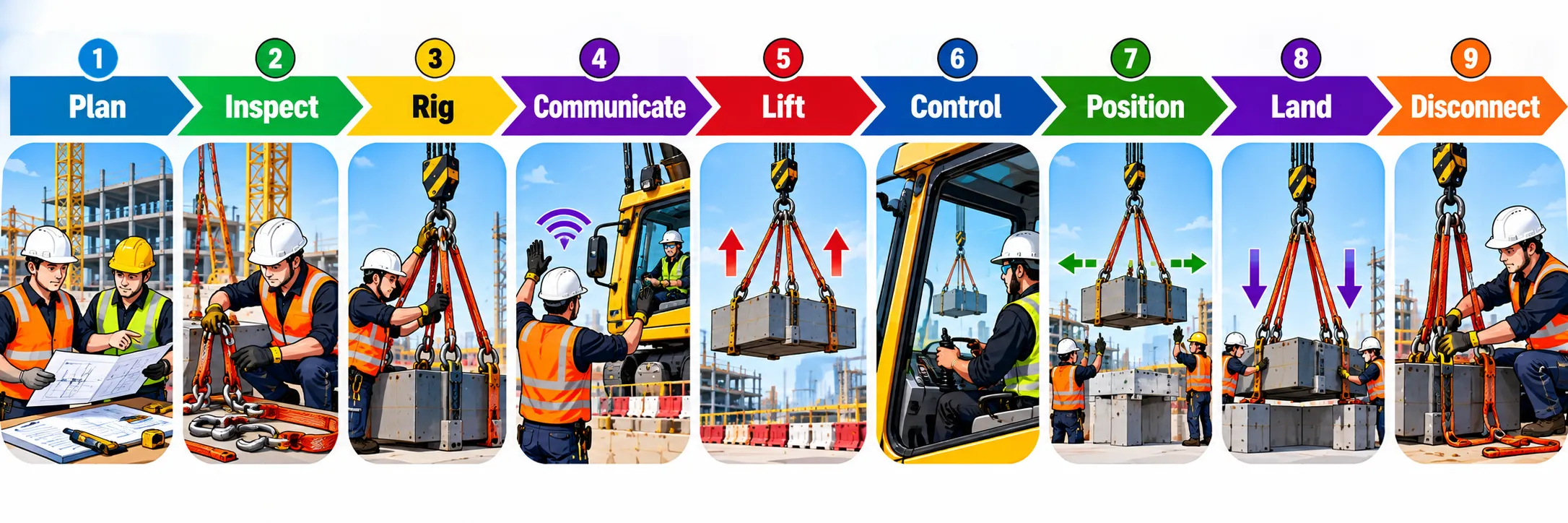
A rigger and crane operator work as a coordinated team throughout a lifting operation. The rigger focuses on preparing, securing and controlling the load, while the crane operator focuses on operating the crane and controlling its movements. Safe lifting depends on both roles understanding their responsibilities and maintaining clear communication.
Plan → Inspect → Rig → Communicate → Lift → Control → Position → Land → Disconnect
- Plan: The lifting team reviews the lifting plan, load information, equipment and work area.
- Inspect: The rigger checks the load and lifting accessories, while the crane operator completes the required crane checks.
- Rig: The rigger selects and connects suitable lifting accessories to secure the load.
- Communicate: The team agrees on signals or radio communication before the lift begins.
- Lift: The crane operator raises the load in a controlled manner following the agreed instructions.
- Control: The rigger helps monitor and control the load while maintaining a safe position.
- Position: The crane operator moves the load toward the planned location while the rigger provides guidance.
- Land: The load is carefully lowered into the designated landing area.
- Disconnect: Once the load is stable and secure, the rigger disconnects the lifting accessories safely.
Neither role should be viewed as working independently. The crane operator controls the crane, while the rigger manages the load and rigging arrangement. Effective teamwork, communication and adherence to the lifting plan help reduce risks and support a safe lifting operation.amwork, communication and adherence to the lifting plan help reduce risks and support a safe lifting operation.
Rigger and Crane Operator Communication
Clear communication between the rigger and crane operator is essential for safe lifting operations. Before the lift begins, the team should agree on the communication method, identify the person responsible for giving signals and confirm how instructions will be communicated.
- Standard signals: Agreed hand signals can be used to direct crane movements.
- Radio communication: Radios can support communication where the operator cannot clearly see the lifting area.
- Designated signal person: A competent person may be appointed to provide lifting signals to the crane operator.
- Clear instructions: Instructions should be simple, clear and understood before movement begins.
- Stop signals: The operator should respond immediately to an authorised stop signal.
- Visibility limitations: Poor visibility or obstructions may require alternative communication methods.
- Communication failure: If communication is lost or unclear, the lifting operation should be stopped until communication is restored.
- Emergency situations: The lifting team should know how to communicate urgent instructions and stop the operation safely.
Establishing communication arrangements before lifting begins helps ensure that the rigger, crane operator and other lifting personnel understand their roles and can coordinate each movement safely.
What Skills Does a Rigger Need?
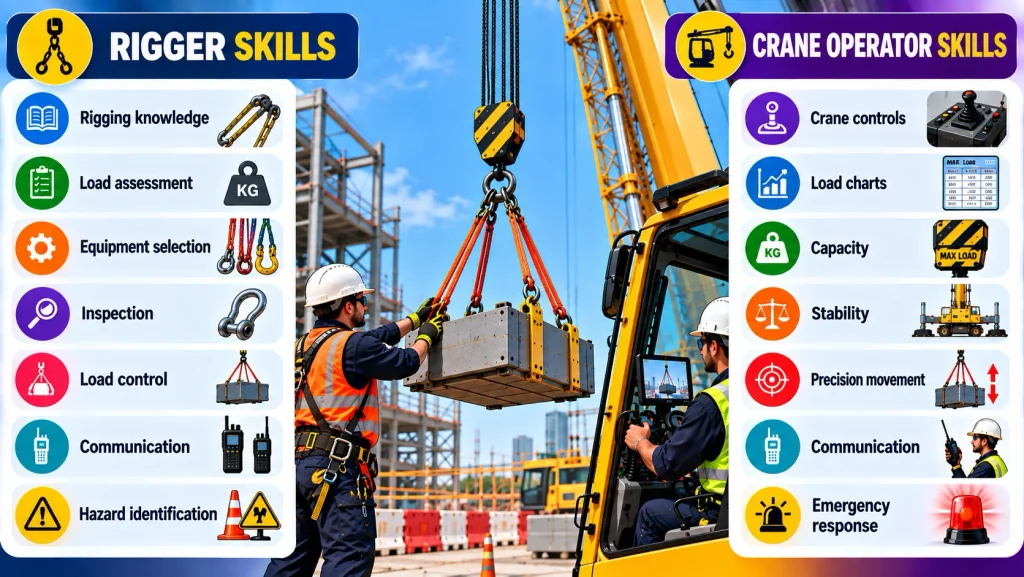
A competent rigger needs a combination of practical rigging knowledge, safety awareness and communication skills. These skills help ensure that loads are prepared, connected, controlled and positioned safely during lifting operations.
Key skills include:
- Rigging knowledge: Understanding common rigging methods and lifting practices.
- Load assessment: Identifying load weight, shape, condition and lifting points.
- Lifting accessory selection: Choosing suitable slings, shackles, hooks and other equipment.
- Inspection skills: Recognising damaged or unsuitable lifting accessories.
- Working load limits: Understanding equipment capacity and avoiding overloading.
- Centre-of-gravity awareness: Understanding how load balance affects lifting stability.
- Communication: Giving and receiving clear instructions during lifting operations.
- Hazard identification: Recognising potential risks around the load and lifting area.
- Problem-solving: Responding appropriately to unexpected lifting conditions.
- Teamwork: Working effectively with crane operators and other lifting personnel.
- Safe load control: Guiding and controlling loads while maintaining a safe position.
What Skills Does a Crane Operator Need?
A competent crane operator needs technical knowledge, practical operating skills and strong safety awareness. These skills help the operator control the crane accurately, understand its limitations and respond safely to changing workplace conditions.
- Crane controls: Operate hoisting, lowering, slewing and other crane functions correctly.
- Load charts: Understand load charts and apply the correct information for each lift.
- Crane capacity: Know the crane’s rated capacity and avoid overloading.
- Stability: Understand factors that can affect crane stability during lifting.
- Pre-use inspections: Check the crane and relevant safety components before operation.
- Operating limitations: Work within the crane manufacturer’s and workplace operating requirements.
- Weather awareness: Consider wind, rain, visibility and other weather conditions.
- Ground conditions: Recognise how ground stability and site conditions can affect crane operation.
- Communication: Communicate clearly with the rigger, signal person and lifting team.
- Precision movement: Move and position loads smoothly and accurately.
- Emergency response: Know how to respond appropriately when unsafe or unexpected situations occur.
Rigger vs Crane Operator Qualifications
Rigger and crane operator qualification requirements are not identical, and there is no single qualification system that applies worldwide. Requirements can vary depending on the country, type of crane, industry, employer, lifting activity and applicable regulatory framework. A person should therefore check the requirements that apply to the specific job and location.
| Factor | Rigger | Crane Operator |
|---|---|---|
| Core training | Rigging and lifting practices | Crane operation |
| Equipment knowledge | Slings, shackles, hooks and lifting accessories | Crane systems and controls |
| Practical competence | Load connection and control | Crane operation and load movement |
| Assessment | Rigging and load-handling tasks | Crane operating tasks |
| Employer requirements | Competency verification may be required | Operator authorisation may be required |
| Legal requirements | Depend on local regulations | Depend on local regulations |
Rigger vs Crane Operator: Which Career Is Better?
There is no single answer to which career is better because both roles offer different types of work, skills and responsibilities. The right choice depends on the learner’s interests, strengths, career goals and preferred working environment.
Rigger May Be a Better Fit for Learners Who Enjoy
A rigger role may suit learners who prefer practical, hands-on lifting activities and working closely with a lifting team.
- Practical lifting work
- Load preparation and securing
- Equipment inspection
- Hands-on tasks
- Team communication
- Lifting planning and coordination
Crane Operator May Be a Better Fit for Learners Who Enjoy
A crane operator role may suit learners who are interested in machinery, technical controls and precise load movement.
- Machinery operation
- Precision control
- Technical equipment
- Crane systems and controls
- Concentration-intensive work
- Load movement and positioning
Both careers can provide valuable opportunities in construction, industrial, infrastructure, logistics and other lifting-related sectors. The best choice depends on the learner’s abilities, interests and the specific career pathway being pursued.
Common Misconceptions About Riggers and Crane Operators
There are several common misunderstandings about the responsibilities of riggers and crane operators. Understanding the difference helps learners, employers and lifting teams recognise why both roles require specific skills and responsibilities.
Misconception: The Crane Operator Does All the Lifting Work
The crane operator controls the crane and its movements, but does not normally manage every aspect of the load. The rigger and other lifting personnel prepare, secure and help control the load.
Misconception: A Rigger Can Automatically Operate a Crane
Being competent as a rigger does not automatically mean a person is competent or authorised to operate a crane. Separate training, competence and authorisation may be required.
Misconception: A Crane Operator Automatically Knows Every Rigging Method
Crane operation and rigging involve different areas of knowledge. A crane operator may understand basic lifting principles, but specific rigging competence may be required for load connection and rigging activities.
Misconception: A Rigger Only Attaches Slings
A rigger’s responsibilities can extend beyond attaching slings. The role may include assessing the load, selecting suitable lifting accessories, checking equipment, maintaining load control and communicating with the lifting team.
Rigger vs Crane Operator vs Signal Person
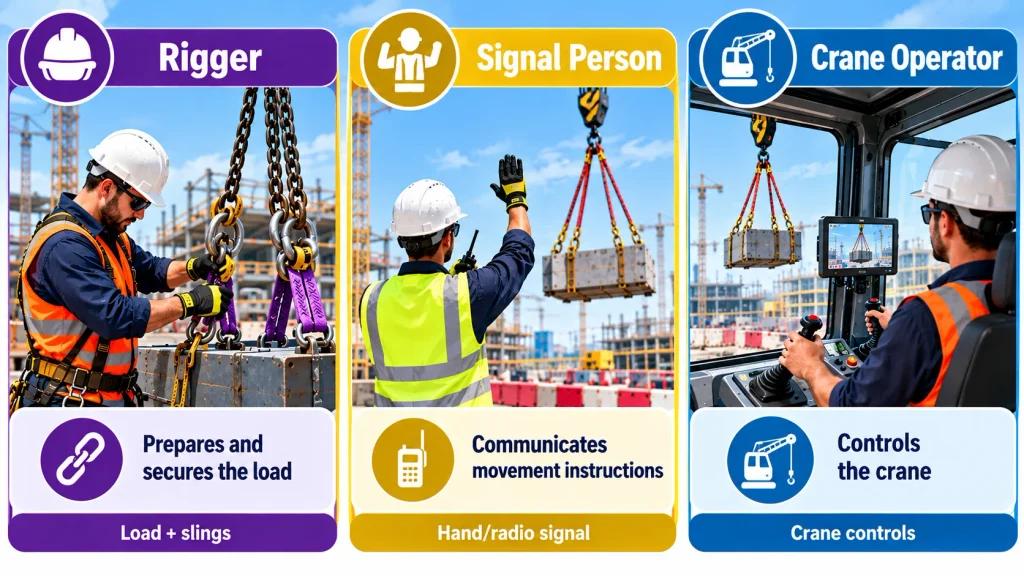
These three roles can have different responsibilities within a lifting operation:
| Role | Main Responsibility |
|---|---|
| Rigger | Prepares, secures and helps control the load |
| Signal Person | Communicates agreed movement instructions |
| Crane Operator | Operates and controls the crane |
One person may perform more than one role only where the required competence, site arrangements and applicable requirements allow it.
Why Both Roles Are Important for Lifting Safety
Riggers and crane operators work together to identify and control different lifting hazards. Their coordinated responsibilities can help reduce the risk of:
- Dropped loads
- Overloading
- Unstable loads
- Poor communication
- Incorrect rigging
- Contact with structures or equipment
- Uncontrolled load movement
- Equipment misuse
- Exclusion-zone breaches
The distinction matters because safe lifting does not depend on the crane operator alone. It requires competent people working together, following the lifting plan and maintaining effective communication.
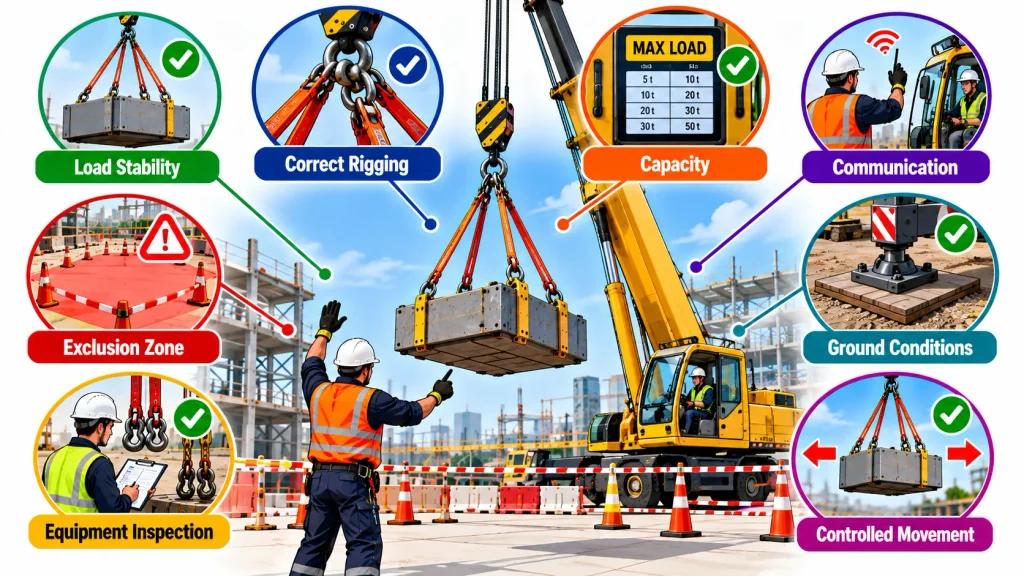
Practical Example: Rigger and Crane Operator on a Construction Site
Consider a construction project where a heavy steel component needs to be lifted onto an elevated structure.
The rigger:
- Reviews the load information.
- Checks the lifting accessories.
- Selects a suitable rigging arrangement.
- Connects and secures the load.
- Establishes communication with the lifting team.
- Checks the landing area.
The crane operator:
- Completes the required crane checks.
- Confirms the crane configuration.
- Reviews the applicable capacity information.
- Responds to agreed signals.
- Lifts and moves the load in a controlled manner.
- Positions the load accurately.
Throughout the operation, the rigger manages the load and rigging arrangement, while the crane operator manages the crane and its movements. Their coordination helps ensure that the load is lifted, moved and positioned safely.
Conclusion
A rigger and crane operator have different but closely connected responsibilities. The rigger focuses on preparing, securing and controlling the load, while the crane operator operates the crane and manages its movements. Both roles require appropriate competence, communication and awareness of lifting hazards.
Neither career is universally better. The right choice depends on the learner’s interests and strengths. Understanding the difference between rigging and crane operation helps learners choose suitable training and supports safer, more coordinated lifting operations.