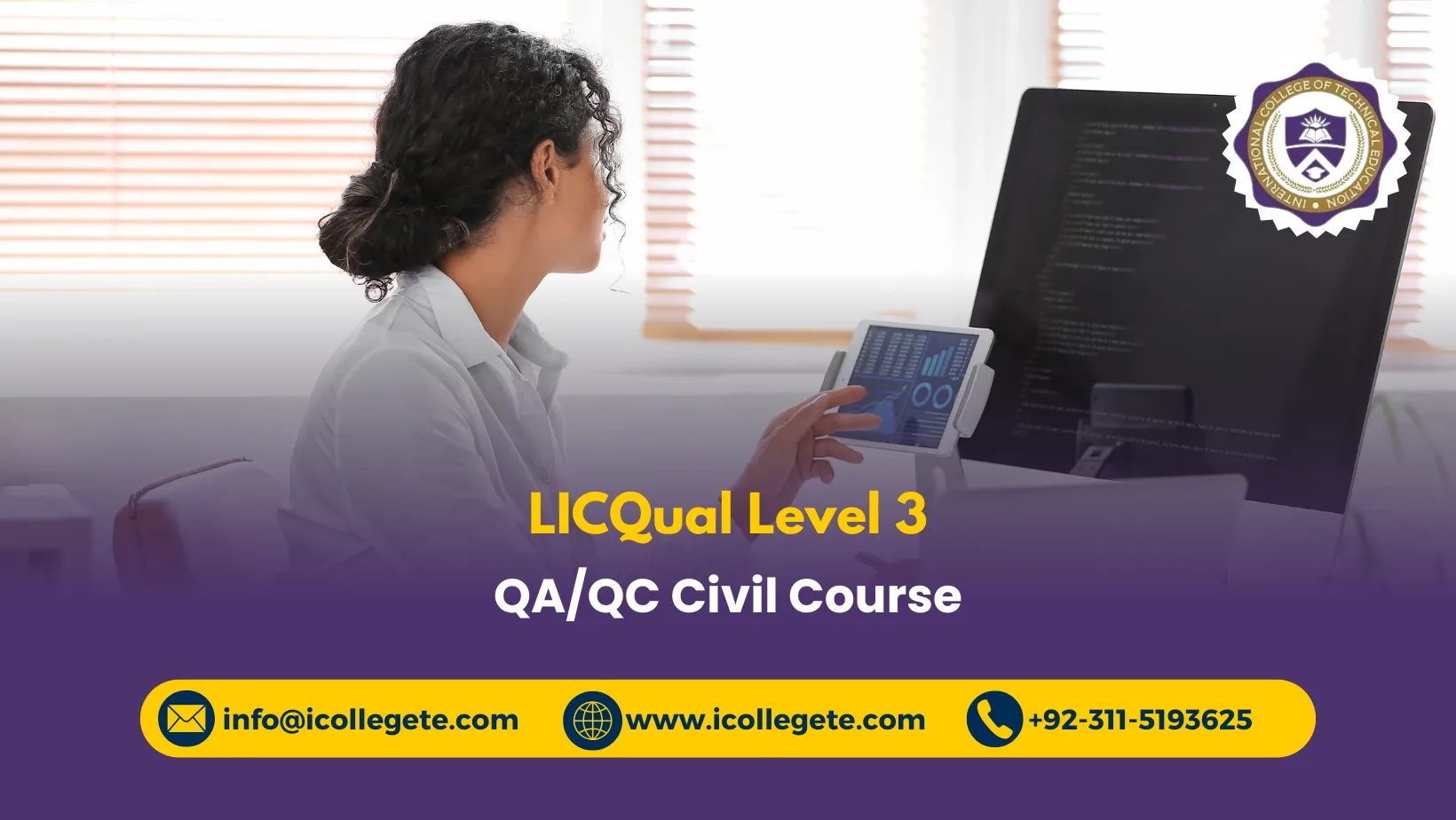
The LICQual Level 3 QA/QC Civil Course in Pakistan is a career-focused qualification designed to develop essential knowledge and practical skills in Quality Assurance (QA) and Quality Control (QC) for civil engineering and construction projects. As construction projects increasingly demand reliable workmanship, compliant materials, accurate inspection, and proper documentation, competent QA/QC personnel play an important role in maintaining project quality and reducing defects, rework, delays, and non-conformities.
This course provides learners with a structured understanding of civil construction materials, concrete inspection and testing, non-destructive testing (NDT), structural inspection, Quality Management Systems (QMS), engineering codes and standards, and QA/QC documentation. Learners develop the ability to understand inspection requirements, assess construction quality, review test results, identify potential quality issues, and maintain appropriate quality records.
The programme is suitable for individuals seeking to enter or progress within civil construction, site inspection, quality control, and quality assurance roles. It can support career development toward positions such as QA/QC Assistant, Civil QA/QC Inspector, Quality Control Technician, Site Quality Inspector, and Junior Quality Engineer, depending on experience and employer requirements.
By combining technical concepts with practical QA/QC principles, the LICQual Level 3 QA/QC Civil Course provides a strong foundation for learners who want to build a professional career in Pakistan’s construction and civil engineering sector.
Course Study Units
Unit 1: Introduction to QA/QC in Civil Engineering
This unit introduces the fundamental principles of Quality Assurance and Quality Control in civil engineering. Learners explore the purpose of QA/QC, the difference between quality assurance and quality control, quality responsibilities on construction projects, inspection processes, quality planning, and the importance of preventing defects.
Key topics include:
- Fundamentals of QA and QC
- Role of QA/QC in civil construction
- Responsibilities of QA/QC personnel
- Quality planning and control processes
- Inspection and verification procedures
- Quality risks and common construction defects
- Quality control checkpoints and hold points
- Introduction to Inspection and Test Plans (ITPs)
- Quality culture and continual improvement
Unit 2: Civil Construction Materials and Standards
This unit develops knowledge of common civil construction materials and the standards used to assess their quality and suitability.
Key topics include:
- Cement and concrete materials
- Aggregates and their properties
- Reinforcement steel
- Bricks, blocks, and masonry materials
- Bituminous and road construction materials
- Soil and earthwork materials
- Material inspection and approval
- Material certificates and traceability
- Sampling and testing requirements
- Storage and handling of construction materials
- Understanding material specifications and standards
Unit 3: Concrete Inspection and Testing
Concrete quality is critical to the strength, durability, and serviceability of civil structures. This unit introduces learners to concrete inspection and commonly used testing procedures.
Key topics include:
- Concrete constituents and basic properties
- Concrete mix requirements
- Batching and mixing inspection
- Concrete transportation and placement
- Reinforcement and formwork inspection
- Slump testing
- Concrete temperature checks
- Compressive strength testing
- Concrete cube/cylinder testing
- Curing inspection
- Identification of common concrete defects
- Test result interpretation and reporting
Unit 4: Non-Destructive Testing (NDT) Methods
This unit introduces the principles and applications of Non-Destructive Testing used to assess materials and structures without causing significant damage.
Key topics include:
- Purpose and importance of NDT
- Visual Testing (VT)
- Ultrasonic Testing (UT)
- Radiographic Testing (RT)
- Magnetic Particle Testing (MT)
- Liquid Penetrant Testing (PT)
- Rebound hammer testing
- Ultrasonic pulse velocity testing
- NDT selection and limitations
- Basic interpretation of NDT reports
- Defect identification and evaluation
NDT is an important component of modern QA/QC because inspection and testing help verify the condition and quality of civil engineering components.
Unit 5: Civil Structures and Equipment Inspection
This unit focuses on inspection techniques for civil structures and construction-related equipment. Learners develop awareness of how inspection activities support structural quality, safety, and compliance.
Key topics include:
- Foundations and excavation inspection
- Reinforcement inspection
- Formwork and shuttering inspection
- Columns, beams, slabs, and structural elements
- Masonry and finishing inspections
- Roads and pavement inspection
- Drainage and infrastructure works
- Structural defects and deterioration
- Construction equipment quality checks
- Inspection checklists
- Site inspection procedures
- Defect identification and reporting
Unit 6: Quality Management Systems (QMS)
This unit introduces learners to Quality Management Systems and their application within civil engineering and construction organisations.
Key topics include:
- QMS fundamentals
- Quality policies and objectives
- Quality planning
- Quality procedures and work instructions
- Quality audits
- Quality monitoring
- Non-conformance management
- Corrective and preventive actions
- Continual improvement
- Introduction to ISO 9001 principles
- Quality performance monitoring
Effective QMS knowledge helps QA/QC personnel connect individual inspections with broader organisational quality processes.
Unit 7: Codes, Standards, and Specifications
This unit develops learners’ ability to understand the role of engineering codes, standards, specifications, drawings, and project requirements in maintaining construction quality.
Key topics include:
- Purpose of engineering codes and standards
- Project specifications
- Client requirements
- Construction drawings
- Inspection requirements
- Acceptance criteria
- Material standards
- Testing standards
- International standards awareness
- Compliance verification
- Document control and revision management
Learners will develop an understanding of how applicable standards and project specifications guide inspection, testing, and acceptance decisions.
Unit 8: Documentation and Reporting in QA/QC
Accurate documentation is essential for demonstrating that construction activities, inspections, materials, and tests meet specified requirements. This unit develops practical awareness of QA/QC records and reporting.
Key topics include:
- QA/QC documentation systems
- Inspection requests
- Inspection checklists
- Inspection and Test Plans (ITPs)
- Material Inspection Reports
- Test reports
- Non-Conformance Reports (NCRs)
- Corrective Action Reports
- Daily quality reports
- Site inspection reports
- Material traceability records
- Quality dossiers
- Handover documentation
- Document control
Proper documentation supports traceability, transparency, compliance, and project handover.
Learning Outcomes
After successfully completing the LICQual Level 3 QA/QC Civil Course, learners should be able to:
- Explain the fundamental principles of QA and QC in civil engineering.
- Understand the responsibilities of QA/QC personnel on construction projects.
- Identify quality requirements for common civil construction materials.
- Understand basic material inspection and testing procedures.
- Apply fundamental principles of concrete inspection and quality control.
- Understand common concrete testing methods and test results.
- Recognise the purpose and application of major NDT methods.
- Identify common defects in civil structures and construction works.
- Conduct or support systematic site quality inspections.
- Understand the purpose and application of Quality Management Systems.
- Recognise the importance of ISO-based quality management principles.
- Interpret basic project specifications, drawings, codes, and standards.
- Understand inspection and acceptance requirements.
- Prepare and maintain essential QA/QC records.
- Understand ITPs, inspection checklists, test reports, and NCRs.
- Support corrective action and continual quality improvement.
- Communicate quality findings through professional reports.
- Contribute effectively to quality assurance and control activities on civil construction projects.
Course Benefits
The LICQual Level 3 QA/QC Civil Course in Pakistan offers several professional and practical benefits:
1. Build Civil QA/QC Knowledge
Develop a structured understanding of quality assurance and quality control principles specifically applicable to civil engineering and construction.
2. Develop Inspection Skills
Gain knowledge of material, concrete, structural, site, and construction inspection procedures.
3. Understand Construction Testing
Learn the fundamentals of concrete testing, material testing, and NDT techniques used to assess construction quality.
4. Improve Documentation Skills
Develop knowledge of professional QA/QC documentation, inspection reports, test records, NCRs, and quality dossiers.
5. Understand Industry Standards
Build awareness of engineering codes, specifications, standards, acceptance criteria, and QMS requirements.
6. Enhance Employability
The qualification can strengthen a learner’s profile when applying for entry-level and junior QA/QC positions in the construction sector.
7. Support Career Progression
The course provides a foundation for progressing toward higher-level QA/QC, civil engineering, inspection, and quality management qualifications.
8. Develop Internationally Relevant Knowledge
Understanding quality systems, inspection practices, standards, and documentation can help learners prepare for work with construction companies and engineering organisations operating in Pakistan and international markets.
Who Is This Course For?
The course is suitable for:
- Civil engineering students and graduates
- Diploma holders in civil engineering
- Construction workers seeking QA/QC knowledge
- Junior civil engineers
- Site engineers and site supervisors
- Construction supervisors
- QA/QC assistants
- Junior QA/QC inspectors
- Quality control technicians
- Civil inspection personnel
- Construction professionals seeking career advancement
- Individuals entering the construction quality sector
- Professionals wishing to strengthen their understanding of civil QA/QC
- Learners preparing for higher-level QA/QC qualifications
It can be particularly useful for individuals who want to establish a foundation before progressing into more advanced civil QA/QC responsibilities. Existing civil or construction experience can be beneficial, although entry requirements should be confirmed with the approved training centre.
Why Choose LICQual Level 3 QA/QC Civil Course in Pakistan?
Choosing the LICQual Level 3 QA/QC Civil Course can provide a focused route into construction quality assurance and quality control.
Industry-Focused Curriculum
The course covers key areas including civil materials, concrete inspection, NDT, structural inspection, QMS, standards, and QA/QC documentation.
Practical QA/QC Orientation
Learners develop knowledge that can be applied to common construction inspection and quality-control activities.
Career-Focused Learning
The programme is designed to support learners interested in developing careers in civil construction quality and inspection.
Strong Foundation for Further Study
Level 3 provides a foundation from which learners can pursue higher-level qualifications and specialised inspection training.
Relevant to Construction Projects
The knowledge gained can be applied across areas such as buildings, infrastructure, roads, bridges, foundations, and other civil engineering works.
Documentation and Compliance Skills
The course gives particular attention to documentation, reporting, standards, and compliance—essential areas of professional QA/QC practice.
Career Opportunities After the Course
Depending on qualifications, practical experience, employer requirements, and additional certifications, graduates may pursue or support roles such as:
- QA/QC Assistant
- Junior QA/QC Inspector
- Civil Quality Control Technician
- Site Quality Inspector
- Civil Inspection Assistant
- QA/QC Site Assistant
- Construction Quality Technician
- Junior Quality Engineer
- Civil Site Supervisor
- Quality Documentation Assistant
The qualification should be viewed as a professional development foundation; specific job titles and responsibilities vary according to employer, project requirements, experience, and additional professional certifications.
Future Progression for This Course
The LICQual Level 3 QA/QC Civil Course can serve as a foundation for continued professional development in civil engineering quality management.
Progression to Higher-Level QA/QC Qualifications
After completing Level 3 and gaining relevant practical experience, learners can consider progressing toward Level 4, Level 5, Level 6, or other advanced QA/QC and civil engineering qualifications, subject to the entry requirements of the relevant qualification.
Higher-level study can develop advanced competencies in:
- Quality management
- Construction quality planning
- Advanced inspection
- Quality auditing
- Risk management
- Non-conformance management
- Advanced materials testing
- Project quality management
- Quality leadership
Specialised Inspection Certifications
Learners may also consider additional specialist training in areas such as:
- Concrete inspection
- NDT
- Welding inspection
- Coating inspection
- Structural inspection
- Material testing
- Construction auditing
- ISO 9001 Quality Management Systems
Career Advancement
With additional qualifications and relevant site experience, learners can work toward progressively more responsible positions such as:
QA/QC Assistant → QA/QC Inspector → QA/QC Engineer → Senior QA/QC Engineer → QA/QC Manager → Quality Manager
This progression is dependent on professional experience, technical competence, employer requirements, and any additional certifications required for specific roles.
Take the Next Step Toward World LICQual Level 3 QA/QC Civil Course-Enroll Now