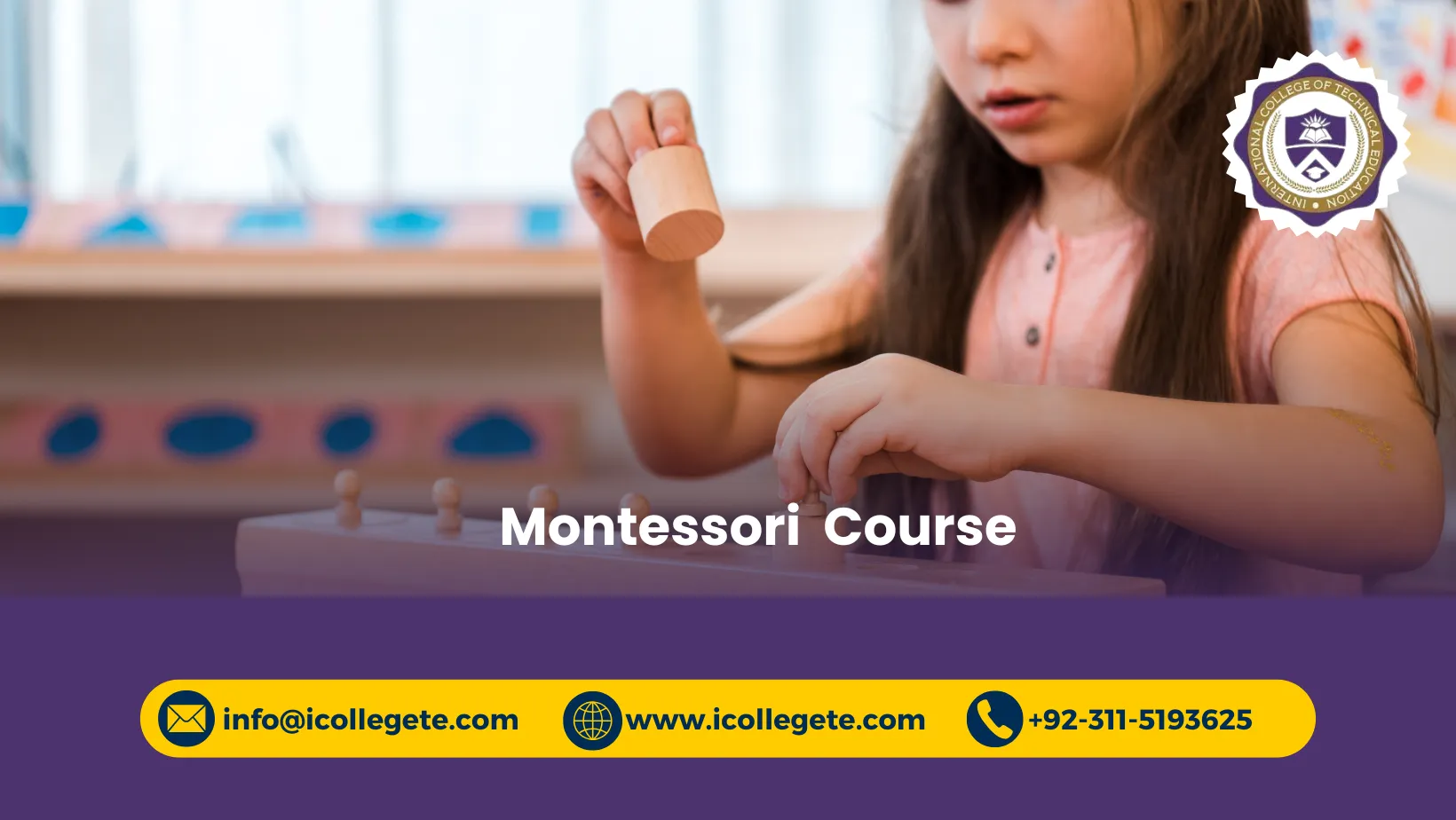
Discover the art of nurturing young minds with the Montessori Course in Rawalpindi, a foundational training program designed for aspiring early childhood educators. Montessori Course in Rawalpindi introduces learners to the core principles, methods, and materials of the Montessori philosophy, equipping them with the skills needed to create child-centered learning environments that foster independence, curiosity, and holistic development.
Ideal for individuals passionate about early education, the Montessori Course in Rawalpindi blends theoretical understanding with practical application. Participants will explore the stages of child development, the role of the prepared environment, and the use of Montessori materials across key learning areas such as language, mathematics, sensory development, and practical life skills. Through interactive sessions and guided practice, learners gain the confidence to support children’s natural growth and learning processes.
Delivered in Rawalpindi, this course offers accessible, career-focused training aligned with international Montessori standards. Whether you’re a school graduate, teaching assistant, or someone transitioning into education, the Montessori Course in Rawalpindi provides a strong foundation for working in preschools, daycare centers, and early learning institutions. Montessori Course in Rawalpindi also serves as a stepping stone for further specialization in Montessori education.
By the end of the Montessori Course in Rawalpindi, participants will be able to design age-appropriate activities, manage classroom dynamics, and apply Montessori techniques effectively. Enroll today to begin your journey as a Montessori educator and make a lasting impact in early childhood education.
Course Overview
The Montessori Course in Rawalpindi is a structured, entry-level training program designed to introduce learners to the fundamentals of Montessori education. As a course-level qualification, Montessori Course in Rawalpindi is ideal for individuals seeking to build a career in early childhood teaching, with a focus on child-led learning and developmental support.
Organized into six comprehensive study units, the Montessori Course in Rawalpindi covers key areas including Montessori philosophy, child psychology, classroom setup, learning materials, activity planning, and observation techniques. Each unit is crafted to build practical teaching skills while reinforcing theoretical knowledge, ensuring learners are prepared to implement Montessori methods in real-world settings.
What makes Montessori Course in Rawalpindi unique is its emphasis on hands-on learning and relevance to local educational needs. Delivered in Rawalpindi, the Montessori Course in Rawalpindi provides aspiring educators with access to expert instruction, practical workshops, and internationally aligned content. Montessori Course in Rawalpindi is suitable for school leavers, teaching assistants, and career changers who want to enter the early education field with confidence. The Montessori Course not only equips learners with essential teaching tools but also fosters a mindset of empathy, patience, and creativity—qualities that define successful educators. With its balanced approach to theory and practice, Montessori Course in Rawalpindi offers a meaningful first step into the world of Montessori teaching.
Course Study Units
- Montessori Philosophy and Educational Principles
- Child Development and Early Learning Psychology
- Prepared Environment and Classroom Management
- Montessori Materials and Practical Life Activities
- Language, Math, and Sensorial Development Techniques
- Observation, Assessment, and Child-Centered Planning
Learning Outcomes for this course
Understanding Montessori Philosophy and Principles
- Explain the core values of Montessori education
- Understand the role of the teacher as a guide, not a director
- Recognize the importance of self-directed learning
- Describe the concept of the prepared environment
- Identify how Montessori supports holistic child development
- Appreciate the emphasis on independence and choice
- Apply Montessori principles to early learning settings
Supporting Child Development and Psychology
- Understand key stages of early childhood development
- Recognize developmental milestones in physical, emotional, and cognitive growth
- Support age-appropriate learning through observation
- Apply psychological insights to classroom interactions
- Foster emotional intelligence and social skills in children
- Encourage curiosity and intrinsic motivation
- Adapt teaching strategies to individual learning needs
Creating and Managing the Prepared Environment
- Design child-friendly learning spaces using Montessori guidelines
- Organize materials to promote exploration and independence
- Maintain cleanliness, order, and accessibility in the classroom
- Facilitate uninterrupted work cycles for focused learning
- Ensure safety and comfort in the learning environment
- Promote respect for materials and shared spaces
- Support calm, purposeful classroom dynamics
Using Montessori Materials Effectively
- Identify and use core Montessori materials across learning areas
- Demonstrate correct presentation techniques for each material
- Guide children in practical life exercises
- Support sensorial exploration through structured activities
- Integrate math and language tools into daily routines
- Encourage repetition and mastery through hands-on practice
- Maintain and rotate materials to sustain engagement
Planning and Facilitating Learning Activities
- Develop lesson plans aligned with Montessori principles
- Create individualized learning paths based on observation
- Balance structured and open-ended activities
- Support cross-curricular integration in early learning
- Encourage peer collaboration and group work
- Monitor progress and adjust activities accordingly
- Promote creativity and problem-solving through play
Observation and Assessment Techniques
- Conduct systematic observations of child behavior and learning
- Record developmental progress using Montessori assessment tools
- Identify learning styles and preferences
- Use observation to inform planning and support
- Communicate findings with parents and caregivers
- Reflect on teaching practices for continuous improvement
- Ensure assessments align with child-centered learning goals
Entry Requirements for this course
- Age Requirement Applicants must be at least 18 years old to enroll. This ensures maturity and readiness to engage with early childhood education concepts and classroom responsibilities.
- Educational Qualification A minimum of secondary school education (Matric or equivalent) is required. Basic literacy and communication skills are essential for understanding course content and interacting with children.
- Work Experience No prior teaching experience is required. However, individuals with volunteer or assistant roles in schools or daycare centers will benefit from their background during training.
- Language Proficiency Applicants should have a basic understanding of Urdu or English. This is necessary to follow course materials, participate in discussions, and communicate effectively in classroom settings.
- Personal Attributes Candidates must demonstrate patience, empathy, and a genuine interest in child development. These qualities are essential for creating a nurturing and respectful learning environment.
- Health and Physical Fitness Participants should be in good physical and mental health. The role involves active engagement with children, classroom setup, and participation in practical activities.
- Identification Documents A valid CNIC or passport is required for registration. Supporting documents such as educational certificates may be requested during the admission process.
- Commitment to Learning Applicants must be willing to attend all sessions, complete assignments, and participate in practical training. A strong commitment to professional growth is expected throughout the course.
Course Benefits of this course
Foundation in Montessori Philosophy
- Understand the core principles of child-centered education
- Learn the role of independence in early childhood development
- Gain insights into Maria Montessori’s educational approach
- Apply holistic learning strategies in classroom settings
- Promote respect, empathy, and self-discipline in children
- Encourage exploration and curiosity through guided learning
- Build a nurturing and inclusive learning environment
- Develop a strong theoretical base for future specialization
- Align teaching practices with global Montessori standards
Practical Teaching Skills
- Learn to present Montessori materials effectively
- Develop lesson plans tailored to individual learning styles
- Facilitate hands-on activities that promote cognitive growth
- Manage classroom routines with confidence and structure
- Support children’s emotional and social development
- Use observation to guide instructional decisions
- Encourage self-paced learning and peer collaboration
- Apply techniques for behavior management and redirection
- Build adaptability in diverse classroom scenarios
Career Advancement Opportunities
- Qualify for teaching roles in Montessori and early learning centers
- Strengthen your resume with a recognized certification
- Increase employability in private and international schools
- Prepare for roles in daycare, preschool, and nursery settings
- Gain credibility as a trained early childhood educator
- Open pathways to further Montessori training and diplomas
- Build a foundation for long-term career growth in education
- Position yourself for leadership roles in early learning environments
- Access opportunities in curriculum development and teacher training
Child Development Expertise
- Understand developmental milestones from birth to age six
- Recognize cognitive, emotional, and physical growth patterns
- Support age-appropriate learning through structured activities
- Foster independence and problem-solving in young learners
- Encourage language development and early literacy skills
- Promote sensory exploration and fine motor coordination
- Build emotional resilience and social awareness in children
- Adapt teaching strategies to individual developmental needs
- Create a supportive environment for holistic growth
Classroom Management and Prepared Environment
- Design organized and engaging learning spaces
- Maintain cleanliness, order, and accessibility of materials
- Promote calm and focused classroom behavior
- Encourage responsibility and care for shared resources
- Facilitate uninterrupted work cycles for deep learning
- Support transitions between activities smoothly
- Build routines that foster independence and cooperation
- Ensure safety and comfort in the learning environment
- Create a space that reflects Montessori values
Confidence in Instructional Delivery
- Present lessons with clarity and purpose
- Engage children through interactive and meaningful activities
- Respond to classroom challenges with patience and skill
- Use feedback to improve teaching practices
- Build rapport with students and parents
- Maintain professionalism in educational settings
- Demonstrate initiative and creativity in lesson planning
- Reflect on teaching experiences for continuous improvement
- Lead group activities with confidence and enthusiasm
Community and Parent Engagement
- Communicate effectively with parents about child progress
- Share Montessori principles with families and caregivers
- Build trust and collaboration with the school community
- Support parent involvement in early learning
- Provide guidance on home-based Montessori practices
- Encourage consistent developmental support across settings
- Participate in school events and parent meetings
- Promote awareness of Montessori education in the community
- Strengthen relationships that support child development
Personal and Professional Growth
- Develop empathy, patience, and emotional intelligence
- Cultivate a reflective and mindful teaching approach
- Build resilience in dynamic classroom environments
- Enhance communication and leadership skills
- Gain satisfaction from meaningful educational impact
- Foster a lifelong passion for early childhood education
- Embrace continuous learning and self-improvement
- Contribute to the future of child-centered teaching
- Empower yourself with globally relevant teaching skills
Who Should Enroll in this course
- Aspiring Early Childhood Educators Individuals who wish to begin a career in preschool or nursery teaching with a structured foundation.
- School Leavers Seeking Teaching Careers Students who have completed secondary education and want to enter the early education sector.
- Daycare and Nursery Staff Caregivers working in early learning centers who want formal training in Montessori methods.
- Teaching Assistants in Pre-Primary Schools Support staff looking to upgrade their skills and take on more instructional responsibilities.
- Parents Interested in Montessori Education Mothers and fathers who want to apply Montessori principles at home for their children’s development.
- Career Changers Entering Education Professionals from other fields transitioning into early childhood teaching roles.
- Private School Educators Teachers in private institutions seeking to specialize in Montessori techniques.
- Community Education Volunteers Individuals involved in informal education who want structured training for better impact.
- Tutors and Home-Based Educators Those offering home tuition or small group instruction for young children.
- NGO and Social Sector Workers Professionals working in child welfare or education-focused NGOs.
- Preschool Administrators and Coordinators Staff responsible for curriculum planning and teacher supervision in early learning centers.
- Education Students and Trainees Learners enrolled in general education programs who want to specialize in Montessori.
- Women Rejoining the Workforce Homemakers or mothers returning to professional life through teaching careers.
- Youth Preparing for Overseas Employment Individuals aiming to work in international schools or childcare settings abroad.
- Montessori School Founders and Entrepreneurs Those planning to establish or manage Montessori-based institutions.
- Special Needs Support Workers Educators working with children who require individualized learning approaches.
- Language and Literacy Trainers Professionals focusing on early language development and reading readiness.
- Education Consultants and Curriculum Designers Specialists developing early childhood programs and materials.
- Teachers Seeking Professional Development Certified educators looking to expand their teaching toolkit with Montessori strategies.
- Anyone Passionate About Child Development Individuals committed to nurturing young minds through structured, empathetic education.
Future Progression of this course
Advancement to Montessori Diploma Programs
- Enroll in internationally recognized Montessori diploma courses
- Deepen understanding of advanced Montessori theory and practice
- Gain eligibility for lead teacher roles in Montessori institutions
- Specialize in age-specific Montessori levels (infant, toddler, primary)
- Access higher-level training in curriculum design and classroom leadership
- Prepare for roles in Montessori teacher training and mentoring
- Build credentials for global teaching opportunities
Employment in Early Learning Institutions
- Qualify for teaching roles in Montessori and pre-primary schools
- Work in daycare centers, nurseries, and early childhood programs
- Support classroom instruction as a certified Montessori educator
- Assist in curriculum delivery and activity planning
- Manage small groups and individualized learning sessions
- Contribute to school readiness and foundational learning
- Build experience for future promotions in educational settings
Specialization in Child Development
- Pursue short courses in child psychology and behavior management
- Learn techniques for supporting children with learning differences
- Develop expertise in emotional and social development strategies
- Apply developmental knowledge to classroom planning
- Support inclusive education practices in early learning environments
- Collaborate with therapists and specialists in child-focused programs
- Enhance ability to tailor instruction to individual needs
Curriculum and Resource Development
- Assist in designing Montessori-aligned lesson plans and materials
- Create age-appropriate learning resources for classroom use
- Contribute to curriculum updates and instructional improvements
- Support integration of Montessori principles into broader education models
- Participate in educational content creation for early learners
- Develop thematic units and seasonal activity guides
- Collaborate with educators on resource sharing and innovation
Classroom Leadership and Coordination
- Take on responsibilities as a lead teacher or classroom coordinator
- Manage daily routines and learning schedules
- Supervise teaching assistants and support staff
- Facilitate parent-teacher meetings and progress discussions
- Monitor classroom behavior and learning outcomes
- Ensure adherence to Montessori standards and practices
- Lead group activities and collaborative learning sessions
Community and Outreach Roles
- Conduct Montessori workshops for parents and caregivers
- Promote early childhood education in community settings
- Support awareness campaigns on child development and learning
- Collaborate with NGOs and social programs for early education
- Train volunteers and informal educators in Montessori basics
- Participate in outreach initiatives for underserved populations
- Advocate for quality early learning through public engagement
Educational Entrepreneurship
- Establish home-based Montessori learning centers
- Launch early childhood education startups or consultancies
- Develop branded Montessori kits and learning tools
- Offer private Montessori tutoring and enrichment programs
- Create digital content for Montessori learning platforms
- Build partnerships with schools and training institutes
- Explore franchising opportunities in early education
Continuous Professional Development
- Attend seminars and conferences on Montessori education
- Join professional networks and educator associations
- Stay updated with global trends in early childhood teaching
- Participate in online courses and certification programs
- Reflect on teaching practices for ongoing improvement
- Engage in peer learning and collaborative projects
- Maintain a portfolio of training, experience, and achievements
Conclusion
The Montessori Course in Rawalpindi offers more than a qualification—it’s a transformative experience that reshapes how educators view childhood learning. Rooted in respect, observation, and purposeful engagement, Montessori Course in Rawalpindi cultivates a mindset that values the individuality of every child. Montessori Course in Rawalpindi encourages future educators to become facilitators of growth rather than enforcers of instruction, empowering them to create environments where children thrive naturally.
Montessori Course in Rawalpindi is not just about teaching methods—it’s about developing a professional identity grounded in empathy, patience, and intentional practice. Participants leave with more than technical skills; they gain a deeper understanding of how to nurture curiosity, independence, and emotional well-being in young learners. The Montessori Course in Rawalpindi fosters a reflective approach, helping educators evolve with each classroom experience.
Whether you’re entering the field or redefining your role in early education, Montessori Course in Rawalpindi equips you with the insight and confidence to make a meaningful impact. Montessori Course in Rawalpindi is a step toward becoming not just a teacher, but a guide who shapes the earliest stages of lifelong learning. In a world that increasingly values child-centered education, Montessori Course in Rawalpindi positions you to lead with purpose, compassion, and clarity.