Enroll LICQual Level 1 Rigger Course in Peshawar
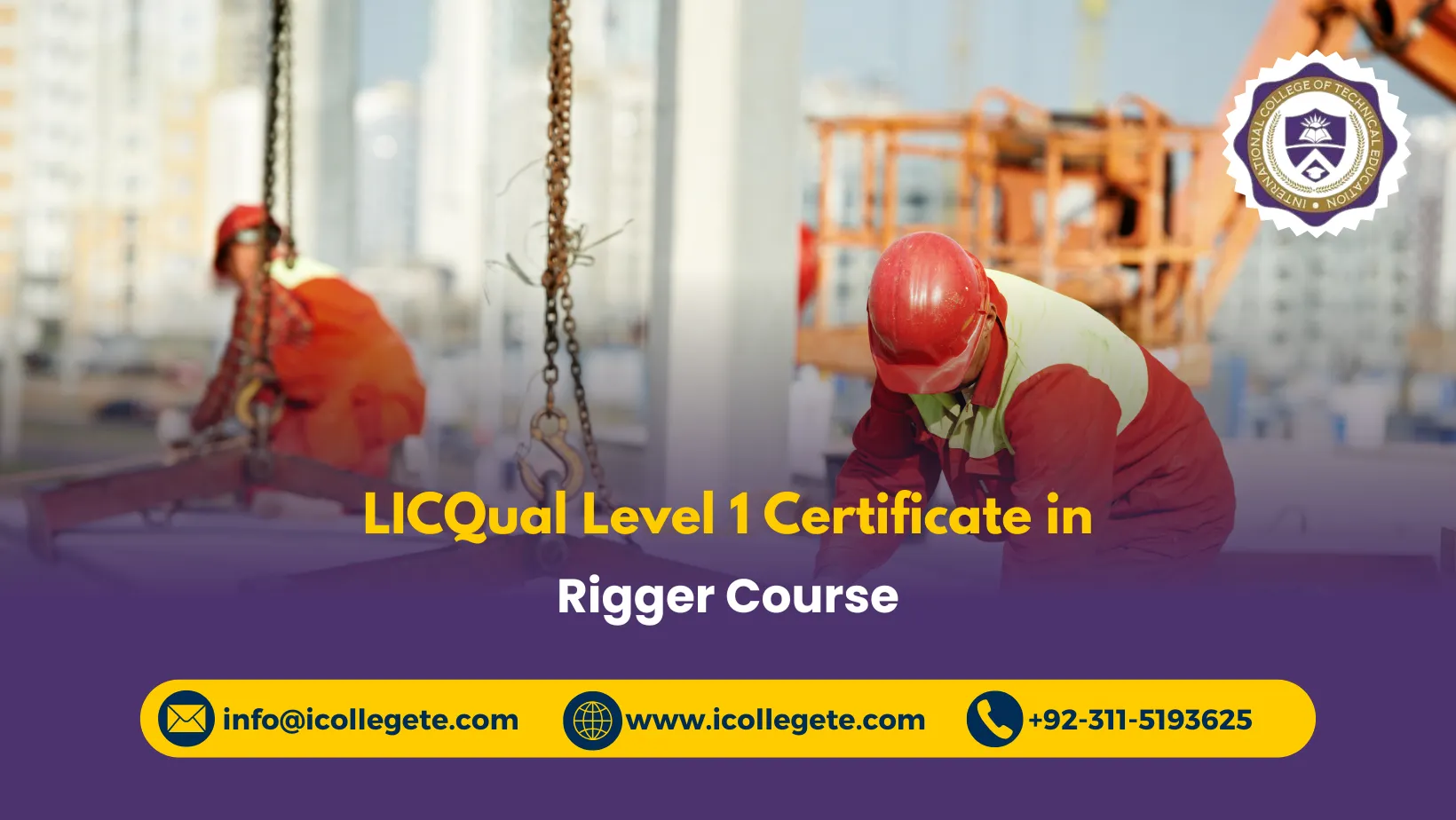
The LICQual Level 1 Certificate in Rigger Course in Peshawar is designed to provide learners with the essential knowledge and practical skills required for safe rigging operations. This beginner‑level program introduces participants to the fundamentals of rigging, focusing on safety standards, equipment handling, and basic lifting techniques. With a strong emphasis on practical training, the course prepares individuals to work confidently in construction, oil and gas, shipping, and other industrial environments.
Through a structured curriculum, learners will explore rigging tools, load calculations, hazard control, and inspection procedures. The program blends theoretical knowledge with hands‑on exercises, ensuring participants are well‑prepared to meet workplace demands. By completing this course, learners will not only develop technical expertise but also gain a recognized qualification that enhances employability in industries where rigging plays a critical role.
The LICQual Level 1 Certificate in Rigger Course in Peshawar also provides opportunities for career advancement, equipping learners with the skills to perform rigging tasks safely, efficiently, and in compliance with international standards. Graduates of this program will be valuable assets to employers and industry leaders, contributing to safer and more effective workplace operations.
Course Overview
This course introduces the fundamentals of rigging operations, focusing on safety, equipment usage, and practical techniques. Learners will gain knowledge of rigging tools, lifting equipment, load handling, and risk management. The program is designed to balance theoretical concepts with practical exercises, ensuring participants are ready to perform rigging tasks in diverse industrial settings.
Entry Requirements
To enroll in the LICQual Level 1 Certificate in Rigger Course in Peshawar, applicants must meet the following criteria:
- Age Requirements: Applicants must be at least 18 years old.
- Qualification Requirements: A minimum of matriculation or equivalent qualification is required.
- Professional Experience: Prior industrial or construction experience is preferred but not mandatory.
- Educational Background: Candidates with technical or vocational education will be given preference.
- Language Proficiency: Basic understanding of English or Urdu is required to follow course materials.
- Health and Fitness: Applicants should be physically fit to perform rigging tasks safely.
Course Study Units
- Introduction to Rigging and Safety Standards
- Rigging Tools and Equipment
- Load Calculations and Weight Estimation
- Safe Lifting Practices
- Rigging Procedures and Techniques
- Inspection and Maintenance of Rigging Equipment
- Risk Assessment and Hazard Control
- Practical Rigging Exercises
Course Learning Outcomes
By the end of the course, participants will be able to apply rigging principles effectively in workplace settings. The learning outcomes are aligned with the study units to ensure practical and theoretical mastery.
Introduction to Rigging and Safety Standards
- Understand the importance of safety in rigging operations.
- Apply workplace safety standards during rigging tasks.
- Identify hazards and implement preventive measures.
Rigging Tools and Equipment
- Recognize different rigging tools and their functions.
- Use rigging equipment correctly and safely.
- Maintain tools to ensure reliability and efficiency.
Load Calculations and Weight Estimation
- Calculate load weights accurately using standard methods.
- Determine the center of gravity for safe lifting.
- Apply estimation techniques to prevent overloading.
Safe Lifting Practices
- Demonstrate correct lifting techniques for various loads.
- Apply safety procedures to minimize risks during lifting.
- Coordinate lifting operations effectively with team members.
Rigging Procedures and Techniques
- Perform rigging tasks using standardized procedures.
- Apply techniques for securing, moving, and positioning loads.
- Demonstrate efficiency in handling rigging operations.
Inspection and Maintenance of Rigging Equipment
- Conduct thorough inspections of rigging tools and equipment.
- Identify defects and take corrective measures promptly.
- Implement maintenance schedules to ensure equipment safety.
Risk Assessment and Hazard Control
- Carry out risk assessments before rigging operations.
- Identify potential hazards and apply effective control measures.
- Promote a culture of safety and hazard awareness in the workplace.
Practical Rigging Exercises
- Apply theoretical knowledge in supervised practical sessions.
- Demonstrate competence in real‑world rigging scenarios.
- Build confidence in performing rigging tasks independently.
Course Benefits
This course offers numerous benefits for learners aiming to build a career in rigging.
Professional Recognition
- Gain a globally recognized certification.
- Strengthen credibility in industrial sectors.
- Enhance employability in entry‑level rigging roles.
Skill Development
- Acquire practical rigging skills through hands‑on training.
- Learn effective load handling and safety techniques.
- Improve problem‑solving and decision‑making abilities.
Career Opportunities
- Access employment in construction, oil and gas, and shipping industries.
- Qualify for entry‑level rigging positions.
- Build a foundation for advanced rigging certifications.
Workplace Safety Contribution
- Promote safe practices in industrial environments.
- Reduce risks and accidents during lifting operations.
- Contribute to compliance with workplace safety standards.
Who Can Enroll
This course is suitable for individuals seeking to start or advance their careers in rigging.
Aspiring Workers
- Those interested in entering the rigging profession.
- Individuals seeking technical training for industrial jobs.
- Students looking for vocational qualifications.
Experienced Workers
- Professionals aiming to upgrade their rigging skills.
- Workers seeking formal certification for career growth.
- Employees transitioning into safety and rigging roles.
Industry Professionals
- Construction workers seeking specialization.
- Oil and gas employees requiring rigging knowledge.
- Supervisors aiming to strengthen safety compliance.
Future Progression
Completing the LICQual Level 1 Certificate in Rigger Course in Peshawar opens pathways to advanced opportunities.
Advanced Rigging Certifications
- Pursue higher‑level rigging qualifications.
- Specialize in complex rigging operations.
- Gain expertise in advanced lifting techniques.
Safety and Supervisory Roles
- Move into supervisory positions in industrial settings.
- Lead safety and rigging teams.
- Train and mentor new riggers.
International Opportunities
- Apply for rigging jobs abroad.
- Access global industrial networks.
- Participate in international safety workshops.
Career Diversification
- Transition into related fields such as crane operation.
- Explore opportunities in logistics and heavy equipment handling.
- Establish consultancy services in rigging and safety.
The LICQual Level 1 Certificate in Rigger Course in Peshawar is a comprehensive training program that equips learners with the foundational skills and knowledge required for safe rigging operations. By combining theoretical instruction with practical training, the course ensures participants are prepared to meet the demands of industrial workplaces. Learners will gain expertise in equipment handling, load calculations, hazard control, and safe lifting practices, making them valuable assets in industries such as construction, oil and gas, and shipping. The program not only enhances employability but also contributes to workplace safety, reducing risks and promoting efficiency
Take the Next Step Toward World LICQual Level 1 Certificate in Rigger Course – Enroll Now