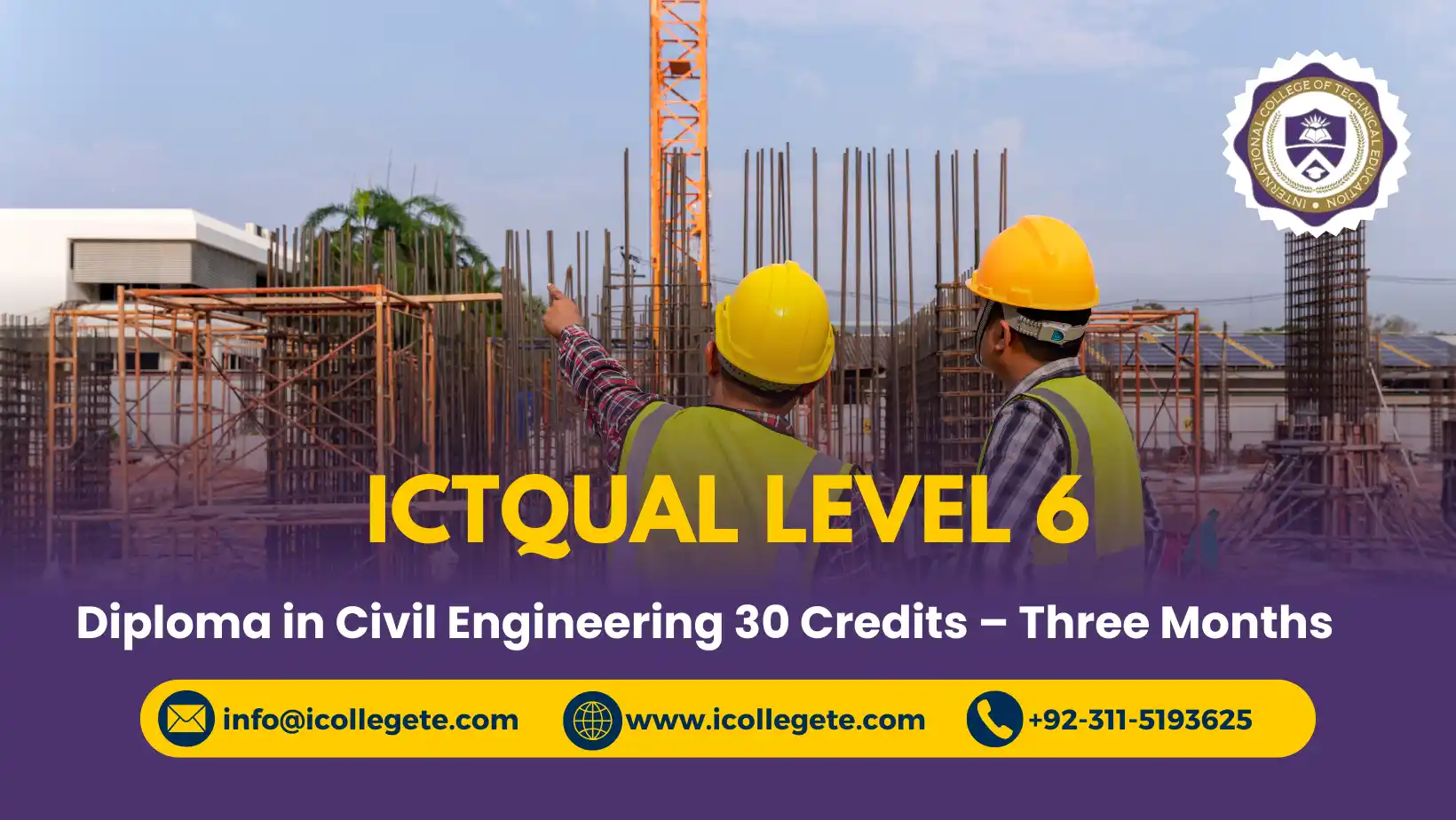
The ICTQual Level 6 Diploma in Civil Engineering (360 Credits – Three Years) is an advanced professional qualification designed to provide learners with in-depth technical knowledge, practical expertise, and leadership skills in civil engineering and construction project management. This program is ideal for individuals aiming to take on senior-level responsibilities, manage large-scale construction projects, and make strategic decisions in the infrastructure sector.
Throughout the three-year program, learners will gain mastery in structural design, advanced surveying, construction technologies, project planning, and site supervision. The curriculum blends theoretical concepts with hands-on practical applications, preparing students to address complex engineering challenges, ensure compliance with safety standards, and deliver efficient, sustainable construction solutions.
Delivered through an approved ICTQual training center, this diploma offers structured learning, practical assignments, and industry-relevant projects. Graduates will obtain recognized certification and the professional competence required to pursue careers as senior civil engineers, project managers, construction supervisors, or continue to higher-level professional engineering qualifications.
Year 1: Foundation and Core Engineering Concepts (120 Credits)
- Introduction to Civil Engineering
- Mathematics for Engineers
- Engineering Mechanics
- Construction Materials
- Surveying and Measurement
- Environmental Science for Engineers
- Technical Drawing and CAD
- Hydraulics and Fluid Mechanics
- Geology and Soil Mechanics
- Health and Safety in Construction
- Construction Methods and Technologies
- Communication and Professional Skills
Year 2: Advanced Engineering Topics and Specializations (120 Credits)
- Structural Analysis and Design
- Geotechnical Engineering
- Transportation Engineering
- Water Resources Engineering
- Building Information Modeling (BIM)
- Advanced Surveying and GPS Technologies
- Steel and Concrete Structures
- Sustainable Construction Practices
- Highway Design and Maintenance
- Construction Contracts and Law
- Project Planning and Management
- Engineering Economics
Year 3: Professional Practice, Innovation, and Capstone Projects (120 Credits)
- Professional Ethics and Responsibilities in Civil Engineering
- Advanced Structural Engineering Applications
- Bridge Design and Construction Management
- Foundation Engineering for Complex Projects
- Urban Infrastructure Planning and Development
- Earthquake-Resistant Structural Design
- Construction Site Management and Supervision
- Environmental Impact Assessment for Civil Projects
- Risk Assessment and Mitigation in Construction Projects
- Entrepreneurship and Leadership in Civil Engineering
- Smart Cities and Sustainable Infrastructure
- Capstone Project (Professional Practice)
Upon completing this course, learners will gain advanced civil engineering knowledge, expert technical skills, and the ability to manage large-scale projects efficiently and safely.”
Year 1: Foundation and Core Engineering Concepts (120 Credits)
Introduction to Civil Engineering
- Understand the scope and significance of civil engineering in infrastructure development.
- Recognize the professional responsibilities and ethical practices in civil engineering.
Mathematics for Engineers
- Apply mathematical techniques to solve engineering problems involving calculus, algebra, and statistics.
- Develop analytical skills for engineering applications.
Engineering Mechanics
- Analyze forces and moments in static and dynamic systems.
- Apply principles of mechanics to solve practical engineering challenges.
Construction Materials
- Understand the properties and uses of common construction materials like concrete, steel, and timber.
- Evaluate material suitability for various construction applications.
Surveying and Measurement
- Conduct accurate land measurements using surveying instruments.
- Interpret survey data for construction planning.
Environmental Science for Engineers
- Understand the environmental impacts of engineering projects.
- Apply sustainable practices in engineering solutions.
Technical Drawing and CAD
- Create precise technical drawings using traditional and computer-aided design (CAD) tools.
- Interpret and produce engineering schematics and blueprints.
Hydraulics and Fluid Mechanics
- Analyze fluid behavior in engineering systems.
- Design basic hydraulic systems for infrastructure projects.
Geology and Soil Mechanics
- Understand geological processes and their impact on construction projects.
- Evaluate soil properties for foundation design.
Health and Safety in Construction
- Identify workplace hazards in construction environments.
- Apply safety standards and protocols to minimize risks.
Construction Methods and Technologies
- Understand modern construction techniques and technologies.
- Evaluate their application in diverse engineering projects.
Communication and Professional Skills
- Develop clear and effective professional communication skills.
- Work collaboratively within multidisciplinary teams.
Year 2: Advanced Engineering Topics and Specializations (120 Credits)
Structural Analysis and Design
- Analyze structural systems for stability and strength.
- Design components like beams, columns, and trusses.
Geotechnical Engineering
- Evaluate soil and rock mechanics for advanced foundation designs.
- Apply geotechnical principles to mitigate site-specific challenges.
Transportation Engineering
- Plan and design roadways and transportation systems.
- Assess traffic flow and implement solutions for improved safety.
Water Resources Engineering
- Design systems for effective water distribution and wastewater management.
- Analyze hydrological data for infrastructure planning.
Building Information Modeling (BIM)
- Utilize BIM software to design and manage construction projects.
- Integrate BIM techniques for project efficiency and collaboration.
Advanced Surveying and GPS Technologies
- Apply GPS technology for precise land surveying and mapping.
- Implement advanced surveying methods in complex projects.
Steel and Concrete Structures
- Design and analyze steel and concrete structures for various applications.
- Evaluate the performance of structural elements under different conditions.
Sustainable Construction Practices
- Implement sustainable methods to reduce environmental impacts.
- Promote energy-efficient construction techniques.
Highway Design and Maintenance
- Design highways and plan maintenance strategies for long-term usability.
- Assess material and technology options for road construction.
Construction Contracts and Law
- Understand legal frameworks governing construction projects.
- Manage contractual obligations and disputes effectively.
Project Planning and Management
- Develop project schedules and resource allocation plans.
- Implement risk management strategies for successful project delivery.
Engineering Economics
- Evaluate economic factors influencing engineering decisions.
- Conduct cost-benefit analyses for infrastructure projects.
Year 3: Professional Practice, Innovation, and Capstone Projects (120 Credits)
Professional Ethics and Responsibilities in Civil Engineering
- Understand ethical principles and professional responsibilities.
- Apply ethical decision-making in project execution.
Advanced Structural Engineering Applications
- Design and assess advanced structural systems like high-rises and bridges.
- Utilize cutting-edge tools for structural analysis.
Bridge Design and Construction Management
- Plan and execute bridge designs considering functional and aesthetic aspects.
- Manage bridge construction processes efficiently.
Foundation Engineering for Complex Projects
- Design foundations for complex structures like skyscrapers and offshore platforms.
- Address geotechnical challenges using innovative solutions.
Urban Infrastructure Planning and Development
- Plan sustainable urban infrastructure, including utilities and transport systems.
- Assess the impact of urban development on communities and ecosystems.
Earthquake-Resistant Structural Design
- Design structures to withstand seismic activities.
- Apply international standards for earthquake resilience.
Construction Site Management and Supervision
- Oversee construction site operations for efficiency and safety.
- Manage on-site teams to achieve project milestones.
Environmental Impact Assessment for Civil Projects
- Conduct environmental assessments for large-scale civil projects.
- Implement mitigation strategies to minimize environmental damage.
Risk Assessment and Mitigation in Construction Projects
- Identify potential risks in construction projects.
- Develop and apply mitigation strategies for project continuity.
Entrepreneurship and Leadership in Civil Engineering
- Cultivate leadership skills for managing engineering firms.
- Explore entrepreneurial opportunities in civil engineering.
Smart Cities and Sustainable Infrastructure
- Integrate smart technologies into infrastructure planning.
- Promote sustainability through innovative urban solutions.
Capstone Project (Professional Practice)
- Apply learned concepts to design and execute a comprehensive civil engineering project.
- Demonstrate problem-solving, innovation, and professional skills in real-world applications.
This diploma equips learners with advanced civil engineering expertise, practical construction skills, and professional competencies for senior engineering roles.
Advanced Technical Expertise
- Master structural analysis, construction technology, and design principles.
- Develop skills in advanced surveying, materials selection, and quality control.
- Apply theoretical knowledge to complex engineering challenges.
2. Practical Project Experience
- Work on real-world construction and civil engineering projects.
- Gain hands-on experience in site management, project execution, and problem-solving.
- Learn to use engineering software and tools for effective project planning.
3. Project Management & Leadership Skills
- Learn project planning, resource allocation, and team management.
- Develop skills to manage budgets, schedules, and project risks.
- Gain leadership and decision-making capabilities for senior engineering roles.
4. Health, Safety & Sustainability
- Understand advanced safety protocols and legal compliance on construction sites.
- Learn sustainable construction practices and environmental regulations.
- Promote safe, efficient, and environmentally responsible project execution.
5. Career Progression Opportunities
- Prepare for senior roles like Civil Engineer, Project Manager, or Construction Supervisor.
- Gain a recognized qualification to enhance professional credibility.
- Build a pathway for further professional certifications or advanced engineering studies.
ICTQual Level 6 Diploma in Civil Engineering 360 Credits – Three Years is designed for learners seeking advanced civil engineering expertise, leadership skills, and preparation for senior roles in construction and infrastructure projects.
- Level 5 Diploma Graduates: Individuals progressing from Level 5 Civil Engineering or equivalent qualifications.
- Experienced Technicians & Supervisors: Professionals aiming to advance into senior or management positions.
- Career Changers: Individuals from related technical or construction fields seeking advanced civil engineering skills.
- Project Leaders & Engineers: Staff looking to manage projects, lead teams, and enhance strategic engineering competencies.