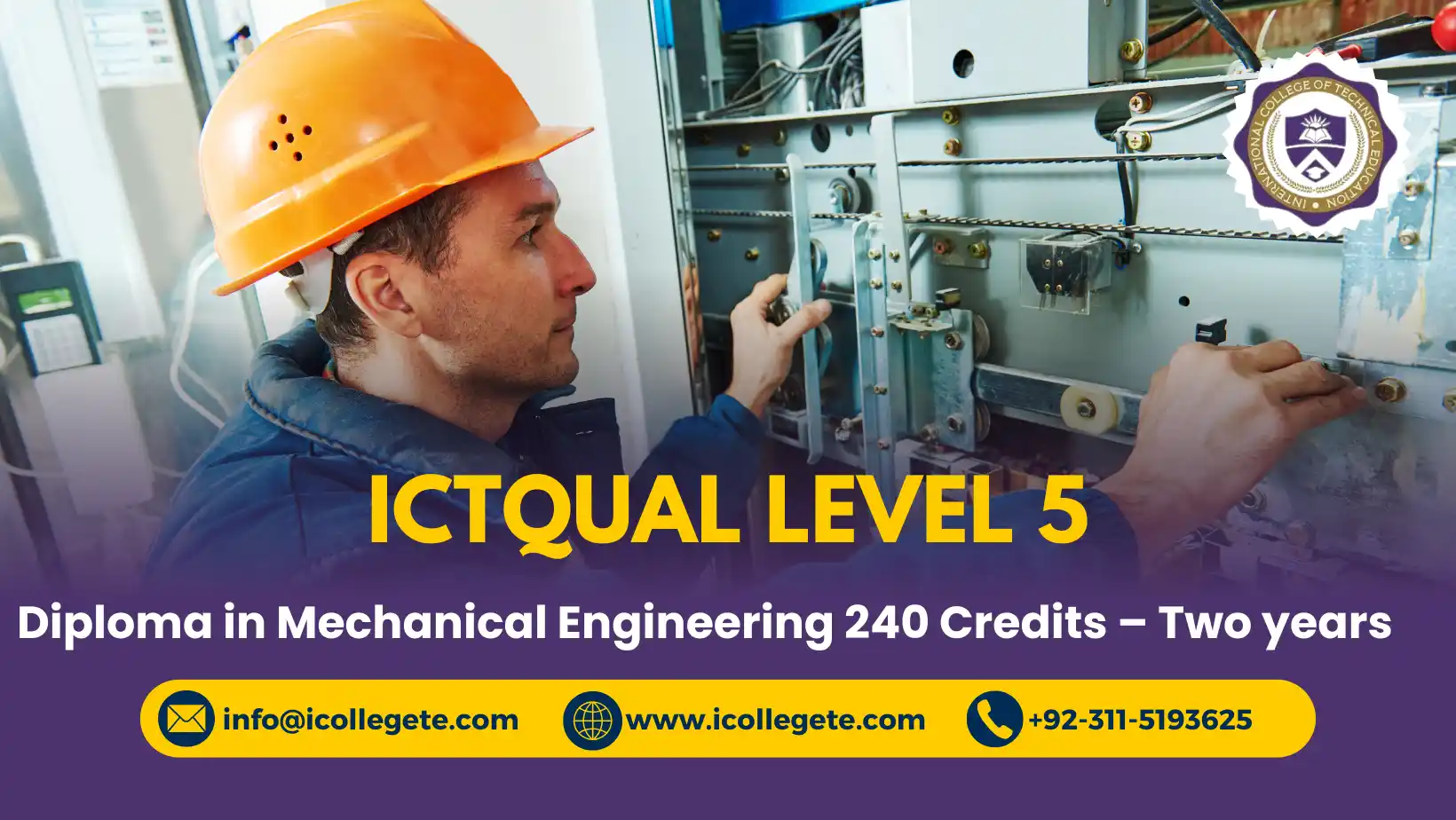
The ICTQual Level 5 Diploma in Mechanical Engineering (240 Credits – Two Years) is an advanced, industry-focused qualification designed to provide learners with in-depth technical knowledge, leadership skills, and practical expertise in mechanical engineering. This program prepares professionals to take on senior engineering roles, manage complex projects, and drive innovation in mechanical systems and industrial processes.
The course covers advanced topics including mechanical design, thermodynamics, hydraulics and pneumatics, advanced fabrication, maintenance management, and quality control. Learners gain hands-on experience with industry-standard tools and equipment, as well as project management and problem-solving skills essential for high-level engineering roles.
Structured for both experienced professionals and learners progressing from Level 4, this diploma offers flexible learning pathways. Delivered through an approved ICTQual training center, learners complete guided projects, practical assessments, and theoretical assignments, equipping them with the expertise and confidence to excel in senior engineering positions or pursue further professional certifications.
Year 1 (120 Credits)
- Introduction to Mechanical Engineering
- Engineering Mathematics
- Physics for Engineers
- Engineering Materials
- Technical Drawing and CAD
- Thermodynamics
- Mechanics of Solids
- Fluid Mechanics
- Health and Safety in Engineering
- Introduction to Manufacturing Processes
- Electrical and Electronics Fundamentals for Engineers
- Communication and Professional Skills
Year 2 (120 Credits)
- Advanced Thermodynamics
- Mechanics of Machines
- Engineering Design and Analysis
- Computer-Aided Engineering (CAE)
- Automation and Control Systems
- Renewable Energy Systems
- Heat Transfer Applications
- Dynamics of Machinery
- Advanced Manufacturing Processes
- Robotics and Mechatronics
- Engineering Project Management
- Capstone Project in Mechanical Engineering
Upon completing this course, learners will gain advanced mechanical engineering knowledge, practical expertise, and leadership skills to excel in senior engineering and industrial roles.
Year 1 (120 Credits)
- Introduction to Mechanical Engineering
- Recognize key concepts and applications in mechanical engineering.
- Identify industry roles and responsibilities of mechanical engineers.
- Engineering Mathematics
- Apply mathematical techniques to solve engineering problems.
- Use computational tools to analyze engineering equations.
- Physics for Engineers
- Understand fundamental principles of mechanics and energy transfer.
- Apply physics concepts to engineering scenarios.
- Engineering Materials
- Identify properties and applications of common engineering materials.
- Evaluate material selection based on performance criteria.
- Technical Drawing and CAD
- Create engineering drawings using CAD software.
- Interpret technical drawings for manufacturing and design purposes.
- Thermodynamics
- Understand basic principles of thermodynamics and energy systems.
- Analyze thermodynamic processes in mechanical systems.
- Mechanics of Solids
- Calculate stress, strain, and deformation in solid materials.
- Assess material behavior under various loading conditions.
- Fluid Mechanics
- Analyze fluid behavior in engineering applications.
- Solve basic fluid flow problems using governing equations.
- Health and Safety in Engineering
- Recognize workplace hazards and implement safety procedures.
- Apply engineering controls to ensure a safe working environment.
- Introduction to Manufacturing Processes
- Explain key manufacturing processes used in engineering.
- Select appropriate processes for specific engineering applications.
Year 2 (120 Credits)
- Advanced Thermodynamics
- Analyze complex thermodynamic cycles and energy systems.
- Apply advanced thermodynamic principles to practical scenarios.
- Mechanics of Machines
- Analyze forces and motions in mechanical systems.
- Evaluate machine components for performance and reliability.
- Engineering Design and Analysis
- Apply design principles to create engineering solutions.
- Use analysis techniques to optimize mechanical designs.
- Computer-Aided Engineering (CAE)
- Utilize CAE tools for simulation and analysis of engineering designs.
- Interpret simulation results to improve system performance.
- Automation and Control Systems
- Understand principles of automation and control technologies.
- Design basic control systems for engineering applications.
- Renewable Energy Systems
- Explain the principles of renewable energy generation.
- Evaluate renewable energy systems for engineering projects.
- Heat Transfer Applications
- Analyze heat transfer processes in mechanical systems.
- Apply heat transfer principles to improve system efficiency.
- Dynamics of Machinery
- Evaluate dynamic behavior of mechanical components.
- Analyze vibration and motion in engineering systems.
- Advanced Manufacturing Processes
- Explore modern manufacturing techniques and technologies.
- Assess manufacturing processes for cost and efficiency.
- Robotics and Mechatronics
- Understand principles of robotics and mechatronics integration.
- Design basic robotic systems for engineering tasks.
This course equips learners with advanced mechanical engineering knowledge, hands-on expertise, and leadership skills to excel in senior technical and industrial roles.
1. Advanced Technical Skills
- Master complex mechanical systems and engineering design.
- Gain expertise in thermodynamics, hydraulics, and pneumatics.
- Develop advanced fabrication, assembly, and maintenance skills.
- Apply problem-solving techniques to real-world engineering challenges.
2. Practical Industry Experience
- Hands-on training with industry-standard machinery and tools.
- Conduct real-world projects and practical assessments.
- Learn to implement engineering solutions efficiently and safely.
3. Leadership & Management
- Develop team management and supervisory skills.
- Learn project planning, execution, and quality control.
- Enhance decision-making and strategic thinking for industrial projects.
4. Career Advancement
- Prepare for senior mechanical engineering and supervisory roles.
- Enhance employability in manufacturing, construction, and industrial sectors.
- Strengthen your resume with an internationally recognized diploma.
5. Industry Readiness
- Gain skills applicable to engineering, maintenance, and industrial operations.
- Build confidence to manage complex projects and teams.
- Ensure compliance with workplace safety and industry standards.
This course is designed for professionals aiming to advance their mechanical engineering expertise, take on senior roles, and gain leadership skills in industrial projects.
- Level 4 Diploma Graduates: Learners progressing from Level 4 Mechanical Engineering.
- Technicians & Junior Engineers: Professionals seeking to advance into senior roles.
- Apprentices & Trainees: Individuals wanting to formalize practical experience into an accredited qualification.
- Career Changers: Professionals from related technical or industrial fields seeking advanced specialization.
- Workshop & Industrial Supervisors: Staff aiming to develop advanced technical knowledge and team management capabilities.