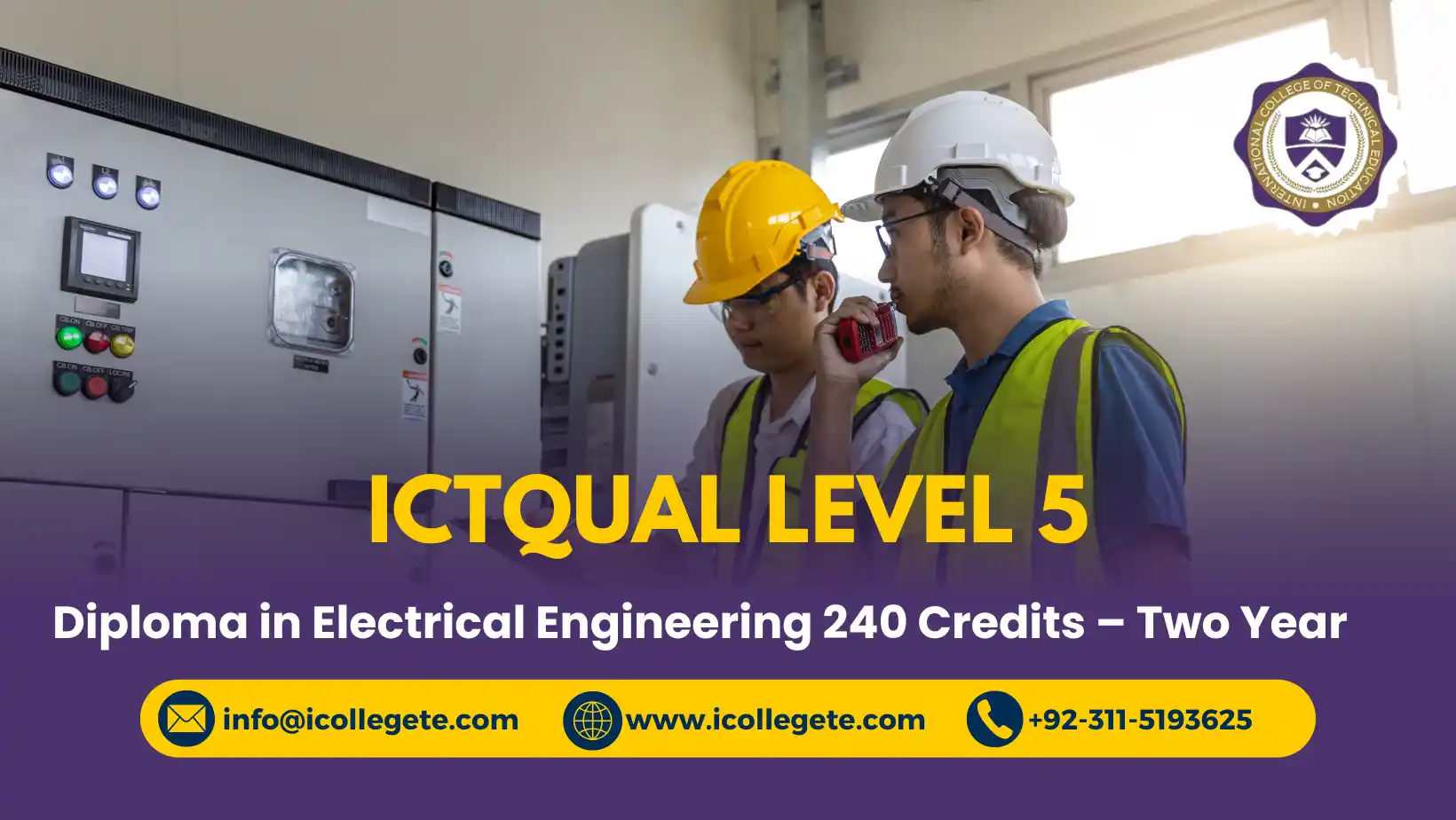
The ICTQual Level 5 Diploma in Electrical Engineering (240 Credits – Two Years) is an advanced qualification designed to provide learners with comprehensive technical knowledge and practical expertise in electrical systems. This program prepares professionals to take on senior technical roles, manage complex projects, and ensure compliance with safety and industry standards.
The course covers advanced topics such as electrical system design, power distribution, automation, control systems, circuit analysis, and maintenance strategies. Learners gain extensive hands-on experience with modern electrical equipment, tools, and industry-standard practices, enabling them to solve complex technical challenges effectively.
Structured for both experienced electrical professionals and learners progressing from Level 4, this diploma is delivered through an approved ICTQual training center. Graduates complete guided projects, practical assessments, and theoretical assignments, equipping them with the skills and confidence needed for senior technical roles, project management, or further professional certifications in electrical engineering.
Year 1 (120 Credits)
- Introduction to Electrical Engineering
- Engineering Mathematics
- Basic Circuit Analysis
- Electrical Machines and Transformers
- Digital Electronics
- Electrical Power Systems Fundamentals
- Electromagnetic Principles
- Health and Safety in Engineering
- Physics for Electrical Engineers
- Technical Drawing and CAD for Electrical Systems
- Introduction to Renewable Energy Systems
- Communication and Professional Skills
Year 2 (120 Credits)
- Advanced Circuit Design
- Power Electronics
- Control Systems Engineering
- Electrical Machines and Drives
- High Voltage Engineering
- Energy Management and Power Distribution
- Microcontroller and Microprocessor Systems
- Automation and Industrial Control Systems
- Instrumentation and Measurement
- Electrical System Protection and Relaying
- Project Management for Engineers
- Capstone Project in Electrical Engineering
Upon completing this course, learners will acquire advanced electrical engineering knowledge, practical technical skills, and the ability to manage complex projects with confidence and precision.
Year 1 (120 Credits)
Introduction to Electrical Engineering
- Understand the fundamental principles of electrical engineering and their applications.
- Develop the ability to apply basic electrical concepts to real-world engineering problems.
Engineering Mathematics
- Solve engineering problems using mathematical techniques and methods.
- Apply calculus, linear algebra, and differential equations in electrical engineering contexts.
Basic Circuit Analysis
- Analyze simple electrical circuits using Ohm’s law, Kirchhoff’s laws, and basic circuit theorems.
- Design and simulate basic electrical circuits to understand their behavior.
Electrical Machines and Transformers
- Understand the working principles and applications of electrical machines and transformers.
- Analyze the performance characteristics of transformers and rotating machines.
Digital Electronics
- Comprehend the fundamentals of digital electronics, including logic gates and binary systems.
- Design and analyze digital circuits and systems using combinational and sequential logic.
Electrical Power Systems Fundamentals
- Understand the basic components and operation of electrical power systems.
- Analyze the transmission and distribution of electrical power in a grid system.
Electromagnetic Principles
- Apply electromagnetic theory to understand electric and magnetic fields and their interactions.
- Analyze the behavior of electromagnetic waves and their applications in electrical engineering.
Health and Safety in Engineering
- Identify potential hazards in an engineering environment and apply safety protocols.
- Understand legal and ethical responsibilities related to health and safety in engineering practice.
Physics for Electrical Engineers
- Apply physics principles to solve electrical engineering problems.
- Understand key concepts in mechanics, electricity, and magnetism relevant to electrical systems.
Technical Drawing and CAD for Electrical Systems
- Create and interpret technical drawings for electrical systems using CAD software.
- Develop design solutions for electrical engineering projects through detailed technical drawings.
Introduction to Renewable Energy Systems
- Understand the basic principles and types of renewable energy systems.
- Analyze the potential of renewable energy technologies in electrical engineering applications.
Communication and Professional Skills
- Develop effective communication skills, both written and verbal, for professional environments.
- Apply professional and ethical standards in engineering practice and teamwork.
Year 2 (120 Credits)
Advanced Circuit Design
- Design and analyze complex electrical circuits using advanced techniques.
- Apply simulation software to model and test circuit designs.
Power Electronics
- Understand the principles of power electronics and their applications in electrical systems.
- Design and analyze power electronic circuits for energy conversion and control.
Control Systems Engineering
- Analyze and design control systems to regulate dynamic processes in electrical engineering.
- Apply control theories to solve real-world engineering problems.
Electrical Machines and Drives
- Understand the principles and operation of electrical machines and their drive systems.
- Design and analyze systems involving electrical motors and drives.
High Voltage Engineering
- Understand the principles and safety measures involved in high voltage systems.
- Analyze and design components and systems for high voltage electrical applications.
Energy Management and Power Distribution
- Understand the principles of energy management and optimize energy usage in power systems.
- Design and analyze power distribution networks to ensure reliability and efficiency.
Microcontroller and Microprocessor Systems
- Understand the architecture and operation of microcontrollers and microprocessors.
- Design and implement systems using microcontroller-based control for electrical applications.
Automation and Industrial Control Systems
- Understand the principles of industrial automation and control systems.
- Design, implement, and troubleshoot automated control systems in industrial settings.
Instrumentation and Measurement
- Understand the principles of instrumentation and measurement techniques for electrical systems.
- Design and use measurement systems to collect and analyze data for electrical engineering applications.
Electrical System Protection and Relaying
- Analyze and design protection systems for electrical networks using relays and protective devices.
- Understand the principles of fault detection and isolation in electrical power systems.
Project Management for Engineers
- Apply project management techniques to plan, execute, and close electrical engineering projects.
- Develop the ability to manage engineering teams and resources effectively.
Capstone Project in Electrical Engineering
- Apply knowledge gained throughout the program to a real-world electrical engineering project.
- Demonstrate the ability to solve complex engineering problems independently and in teams.
This course equips learners with advanced electrical engineering knowledge, practical skills, and industry-ready expertise to excel in senior technical and supervisory roles.
1. Advanced Technical Skills
- Learn power distribution, electrical system design, and control systems.
- Develop skills in automation, circuit analysis, and fault diagnosis.
- Gain expertise in maintenance strategies for industrial and commercial systems.
- Apply problem-solving techniques to complex electrical engineering challenges.
2. Hands-On Practical Experience
- Conduct real-world projects and practical exercises.
- Learn to operate industry-standard electrical tools and equipment.
- Apply theoretical knowledge in residential, commercial, and industrial settings.
3. Leadership & Project Management
- Develop supervisory and team management skills.
- Learn project planning, execution, and quality assurance.
- Enhance strategic decision-making for industrial and technical projects.
4. Career Advancement
- Prepare for senior electrician, electrical engineer, or project supervisor roles.
- Gain a recognized qualification that enhances employability.
- Build a strong foundation for further professional certifications.
5. Industry Readiness
- Gain skills applicable to commercial, industrial, and technical roles.
- Ensure compliance with electrical safety standards and regulations.
- Build confidence to manage projects independently or in teams.
This course is designed for professionals seeking advanced electrical engineering skills, leadership roles, and career progression in industrial and technical projects.
- Level 4 Diploma Graduates: Learners progressing from Level 4 Electrical Engineering or equivalent.
- Experienced Technicians & Engineers: Professionals aiming for senior technical or supervisory positions.
- Apprentices & Trainees: Individuals seeking advanced practical skills and formal recognition.
- Career Changers: Professionals from other technical fields looking to specialize in electrical engineering.
- Workshop & Industrial Supervisors: Staff seeking enhanced knowledge and leadership skills in electrical systems.