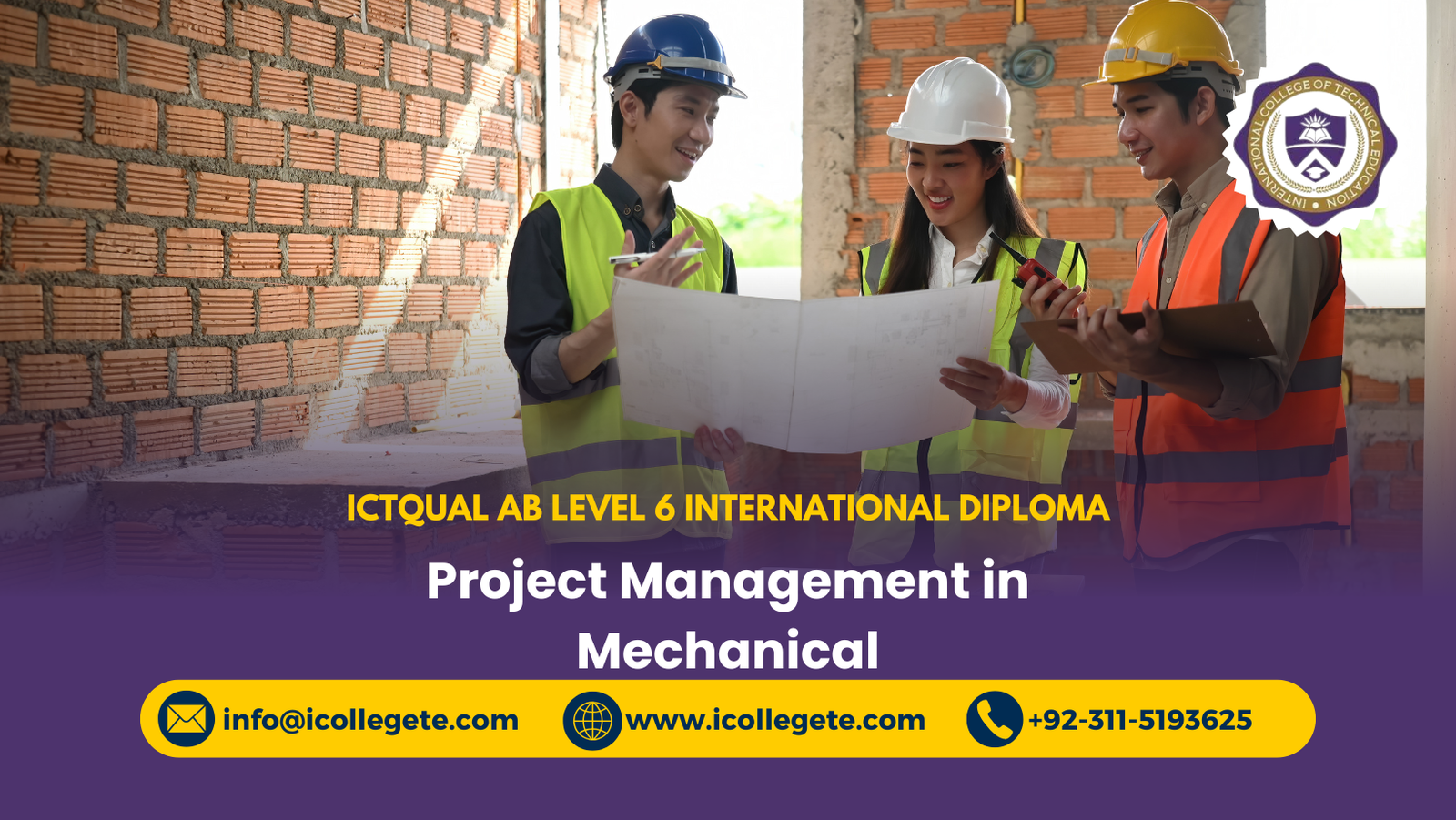
The ICTQual AB Level 6 International Diploma in Project Management in Mechanical is a globally recognized qualification designed to equip learners with advanced skills in mechanical project planning, execution, and control. This diploma bridges the gap between technical expertise and managerial competence, making it ideal for professionals aiming to lead complex mechanical engineering projects across industries such as manufacturing, energy, construction, and infrastructure.
By focusing on project management methodologies, risk assessment, cost control, and quality assurance, the program prepares graduates to take on leadership roles in mechanical engineering projects worldwide. With international attestation options, it opens doors to career opportunities in regions with high demand for mechanical project managers, including the Middle East, Europe, and Asia.
This diploma is particularly valuable for mechanical engineers, construction professionals, and career changers seeking to transition into project leadership roles.
Year 1 – Foundation in Mechanical Project Management
- Principles of Project Management
- Introduction to Mechanical Engineering Projects
- Mechanical Materials and Methods
- Project Planning and Scheduling
- Risk Assessment and Management
- Health, Safety, and Environmental Awareness
- Project Communication and Stakeholder Management
- Mechanical Technology Fundamentals
- Financial Management in Projects
- Quality Assurance and Control
- Legal and Regulatory Frameworks in Mechanical Engineering
- Professional Ethics and Conduct
Year 2 – Intermediate Mechanical Project Management Practices
- Advanced Project Planning Techniques
- Resource Management and Allocation
- Project Cost Estimation and Budgeting
- Mechanical System Design Principles
- Contract Management in Mechanical Projects
- Project Risk Analysis and Mitigation
- Leadership and Team Management
- Mechanical Site and Workshop Management
- Sustainability and Environmental Management
- Project Monitoring and Reporting
- Problem-Solving and Decision-Making in Projects
- Communication and Negotiation Skills
Year 3 – Advanced Mechanical Project Management and Strategic Leadership
- Strategic Project Management in Mechanical Engineering
- Advanced Mechanical System Design
- Industrial Project Management
- Innovation in Mechanical Projects
- Advanced Risk and Crisis Management
- Procurement and Supply Chain Management
- Leadership in Mechanical Engineering Projects
- Advanced Project Control and Performance Measurement
- Project Governance and Compliance
- Research Methods and Project Analysis
- Capstone Project in Mechanical Project Management
- Professional Development and Career Planning
Year 1 – Foundation in Mechanical Project Management
Principles of Project Management
- Understand core project management concepts, methodologies, and frameworks.
- Apply project life cycle principles to mechanical engineering projects.
- Identify project constraints and key success factors.
- Utilise basic project management tools and techniques effectively.
Introduction to Mechanical Engineering Projects
- Recognise different types of mechanical projects and their objectives.
- Understand project stages from initiation to completion.
- Identify roles and responsibilities within mechanical project teams.
- Assess feasibility and initial planning requirements for projects.
Mechanical Materials and Methods
- Describe properties and applications of common mechanical materials.
- Understand standard fabrication and assembly techniques.
- Evaluate material selection based on project requirements.
- Apply best practices for material handling and storage.
Project Planning and Scheduling
- Develop project plans with timelines, milestones, and deliverables.
- Use scheduling tools to sequence tasks efficiently.
- Identify task dependencies and critical paths.
- Adjust schedules to accommodate delays or resource changes.
Risk Assessment and Management
- Identify potential risks in mechanical projects.
- Conduct risk assessments using standard tools.
- Develop mitigation and contingency plans.
- Monitor and update risk registers throughout the project.
Health, Safety, and Environmental Awareness
- Demonstrate awareness of safety regulations and environmental standards.
- Apply safe working practices in mechanical projects.
- Conduct basic site or workshop safety inspections.
- Promote a safety-first culture within project teams.
Project Communication and Stakeholder Management
- Identify key stakeholders and their expectations.
- Communicate project information clearly to diverse audiences.
- Develop basic stakeholder engagement and communication plans.
- Resolve minor conflicts and maintain positive relationships.
Mechanical Technology Fundamentals
- Understand the application of mechanical technologies in projects.
- Evaluate technology options for suitability and efficiency.
- Explore emerging technologies impacting mechanical engineering.
- Apply digital tools for project documentation and planning.
Financial Management in Projects
- Interpret basic financial statements and reports.
- Apply cost estimation and budgeting principles.
- Monitor expenditures and track variances.
- Prepare simple forecasts for project activities.
Quality Assurance and Control
- Understand quality management principles in Project Management in Mechanical.
- Implement basic quality control measures.
- Conduct inspections to ensure compliance with standards.
- Identify areas for improvement in project processes.
Legal and Regulatory Frameworks in Mechanical Engineering
- Understand statutory and regulatory requirements.
- Apply compliance measures in project planning and execution.
- Recognise contractual obligations and legal risks.
- Evaluate the impact of legislation on project outcomes.
Professional Ethics and Conduct
- Recognise professional ethical standards in Project Management in Mechanical.
- Demonstrate ethical decision-making in project scenarios.
- Promote integrity, accountability, and transparency.
- Understand responsibilities to clients, colleagues, and stakeholders.
Year 2 – Intermediate Mechanical Project Management Practices
Advanced Project Planning Techniques
- Apply advanced planning methods to complex mechanical projects.
- Develop integrated schedules optimising resources and time.
- Analyse interdependencies and project constraints.
- Use project management software for effective planning and monitoring.
Resource Management and Allocation
- Allocate human, material, and financial resources efficiently.
- Analyse resource requirements and optimisation strategies.
- Monitor utilisation and productivity of project resources.
- Adjust resource plans to meet project objectives.
Project Cost Estimation and Budgeting
- Prepare detailed cost estimates and project budgets.
- Monitor and control project expenditures.
- Conduct cost-benefit analysis to inform decision-making.
- Identify financial risks and implement mitigation strategies.
Mechanical System Design Principles
- Apply mechanical design principles in project planning.
- Evaluate feasibility, safety, and efficiency of designs.
- Integrate functional, technical, and environmental considerations.
- Communicate design solutions effectively to stakeholders.
Contract Management in Mechanical Projects
- Understand different types of contracts used in Project Management in Mechanical.
- Manage contractual obligations and deliverables effectively.
- Implement contract negotiation and administration processes.
- Resolve disputes and ensure compliance with contract terms.
Project Risk Analysis and Mitigation
- Conduct comprehensive risk analyses for mechanical projects.
- Develop and implement effective risk mitigation plans.
- Monitor risks throughout the project lifecycle.
- Evaluate the effectiveness of mitigation strategies.
Leadership and Team Management
- Demonstrate leadership skills in multidisciplinary project teams.
- Manage team dynamics and resolve conflicts effectively.
- Motivate team members to achieve project objectives.
- Foster collaboration, accountability, and high performance.
Mechanical Site and Workshop Management
- Plan and supervise mechanical site or workshop operations.
- Ensure safety, efficiency, and compliance on site.
- Coordinate logistics, tools, and workforce effectively.
- Monitor daily operations and report progress to stakeholders.
Sustainability and Environmental Management
- Apply sustainability principles to mechanical projects.
- Evaluate environmental impacts and implement management strategies.
- Promote eco-friendly practices in project execution.
- Integrate sustainability into project planning and reporting.
Project Monitoring and Reporting
- Track project progress against planned objectives.
- Prepare clear and accurate project progress reports.
- Analyse performance data to identify issues or delays.
- Recommend corrective actions to maintain project alignment.
Problem-Solving and Decision-Making in Projects
- Apply analytical techniques to resolve project challenges.
- Make informed decisions under complex scenarios.
- Evaluate alternative solutions and implement optimal strategies.
- Document decisions to support accountability and learning.
Communication and Negotiation Skills
- Demonstrate effective verbal and written communication.
- Apply negotiation strategies to achieve project goals.
- Engage stakeholders in collaborative problem-solving.
- Resolve conflicts and secure agreement on project decisions.
Year 3 – Advanced Mechanical Project Management and Strategic Leadership
Strategic Project Management in Mechanical Engineering
- Develop long-term strategies for complex mechanical projects.
- Align project objectives with organisational goals and priorities.
- Analyse market, technical, and regulatory influences on projects.
- Apply strategic planning tools to guide project execution.
Advanced Mechanical System Design
- Lead the design process for advanced Project Management in Mechanical.
- Integrate technical, financial, and regulatory considerations.
- Evaluate alternative solutions for risk, cost, and feasibility.
- Communicate design decisions to project stakeholders effectively.
Industrial Project Management
- Plan and manage large-scale industrial projects efficiently.
- Address technical, logistical, and stakeholder challenges.
- Implement operational and maintenance planning for industrial systems.
- Monitor performance to ensure timely project delivery.
Innovation in Mechanical Projects
- Identify and apply innovative solutions to project challenges.
- Evaluate emerging technologies for practical implementation.
- Foster a culture of creativity and continuous improvement.
- Integrate innovation into project processes for enhanced outcomes.
Advanced Risk and Crisis Management
- Analyse high-level risks and develop contingency plans.
- Manage crises to ensure continuity of project operations.
- Conduct risk simulations and scenario planning.
- Implement proactive measures to prevent project disruptions.
Procurement and Supply Chain Management
- Plan and manage procurement for mechanical projects.
- Optimise supply chains to enhance project efficiency.
- Select suppliers and manage contracts effectively.
- Monitor supply chain performance and address bottlenecks.
Leadership in Mechanical Engineering Projects
- Lead multidisciplinary teams to achieve project goals.
- Foster accountability, collaboration, and high performance.
- Mentor and develop team members’ skills.
- Implement strategies to maintain team motivation and cohesion.
Advanced Project Control and Performance Measurement
- Use advanced control techniques to monitor project progress.
- Measure and evaluate performance using KPIs and benchmarks.
- Analyse variances and implement corrective actions.
- Prepare comprehensive performance reports for stakeholders.
Project Governance and Compliance
- Apply governance frameworks to ensure accountability.
- Ensure compliance with statutory, regulatory, and contractual requirements.
- Establish monitoring mechanisms for governance adherence.
- Review project processes to maintain transparency and ethics.
Research Methods and Project Analysis
- Conduct research to support project decision-making.
- Analyse project data to improve planning and execution.
- Apply statistical and analytical tools for evaluation.
- Present research findings clearly for strategic use.
Capstone Project in Mechanical Project Management
- Integrate knowledge and skills from all units into a practical project.
- Demonstrate problem-solving, planning, and leadership in a real-world scenario.
- Apply advanced project management tools to execute the project.
- Produce a professional project report and presentation for assessment.
Professional Development and Career Planning
- Develop a personal career plan aligned with Project Management in Mechanical.
- Identify opportunities for lifelong learning and professional growth.
- Reflect on strengths and areas for development.
- Set achievable goals to advance career prospects in mechanical engineering.
- Earn an internationally recognized diploma in mechanical project management
- Strengthen leadership and project coordination abilities
- Develop expertise in cost estimation, scheduling, and budgeting
- Gain practical understanding of risk and quality management
- Build proficiency in sustainability and energy-efficient engineering practices
- Learn modern digital tools and automation systems for project control
- Increase employability in manufacturing, energy, and industrial sectors
- Gain insights into global standards of mechanical project management
- Learn from real-world case studies and professional simulations
- Improve communication, teamwork, and decision-making skills
- Advance toward higher qualifications in engineering and management
- Build a strong foundation for senior or managerial roles
- Enhance technical documentation and reporting skills
- Develop innovative approaches to mechanical engineering challenges
- Expand professional networking and career growth opportunities
The ICTQual AB Level 6 International Diploma in Project Management in Mechanical is designed for learners and professionals aiming to advance careers in mechanical engineering project planning, execution, and leadership.
- Fresh graduates: Individuals with degrees in mechanical engineering, industrial engineering, or related fields who want to enter project management roles in mechanical industries.
- Mechanical professionals: Engineers, supervisors, and technical specialists seeking advanced knowledge in project planning, risk management, and cost control.
- Project managers: Professionals already managing projects who want to specialize in mechanical systems, manufacturing, or energy projects.
- Career changers: Individuals from related industries such as construction, manufacturing, or industrial design who wish to transition into mechanical project leadership.
- International learners: With global recognition and attestation options, the diploma is ideal for those pursuing international career opportunities in mechanical engineering and infrastructure development.
- Middle East job seekers: The program aligns with the region’s growing demand for mechanical project managers in energy, oil & gas, and large-scale industrial projects.