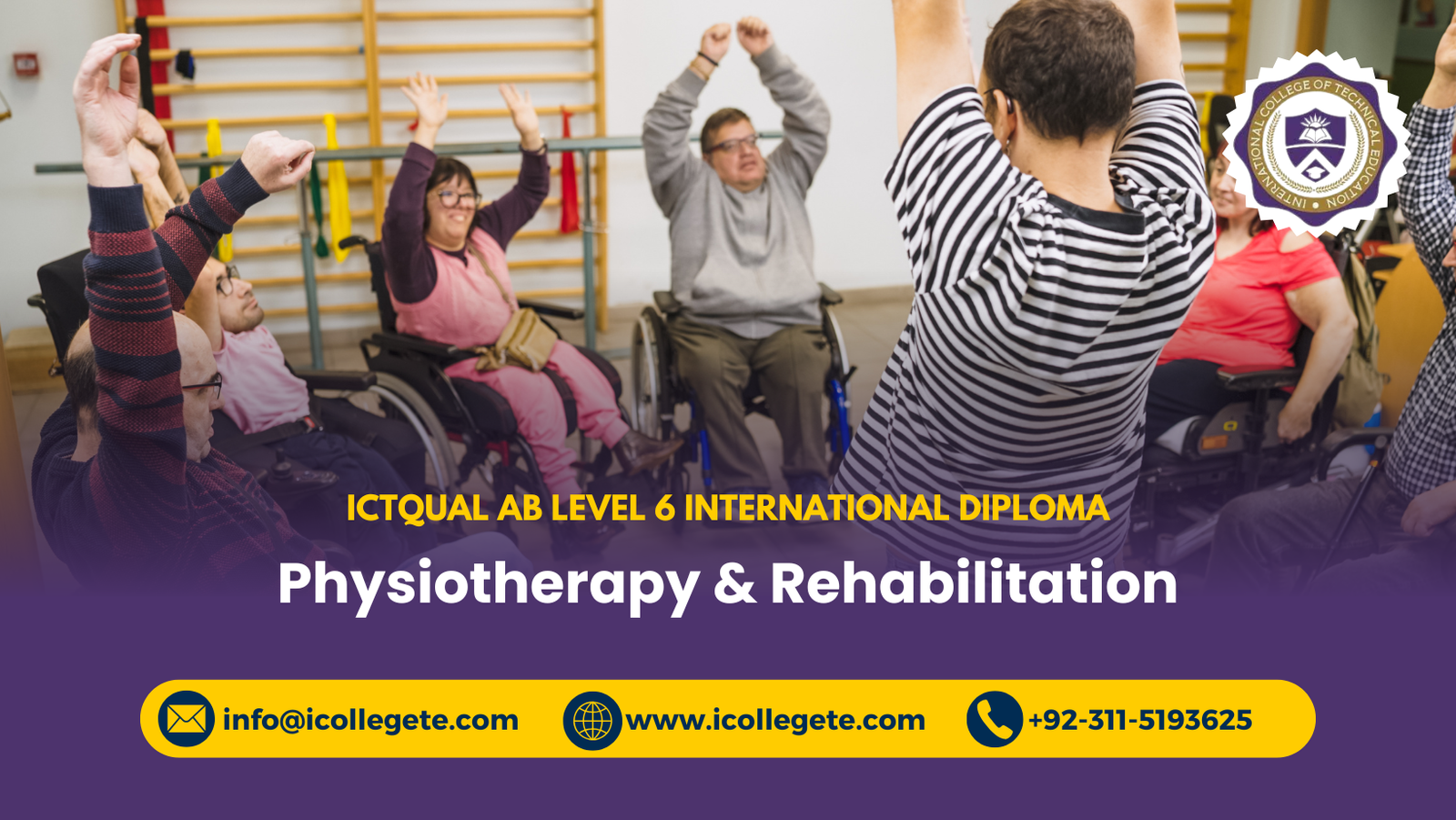
The ICTQual AB Level 6 International Diploma in Physiotherapy & Rehabilitation is a comprehensive program designed to equip learners with advanced knowledge and practical skills in physical therapy, injury management, and patient rehabilitation. This diploma focuses on understanding human anatomy, musculoskeletal conditions, therapeutic techniques, and evidence-based rehabilitation practices to support patient recovery and mobility.
The course covers key areas such as physiotherapy assessment, exercise therapy, manual therapy techniques, pain management, neurological rehabilitation, and patient care planning. Learners develop the ability to design and implement effective rehabilitation programs that promote physical function, independence, and overall well-being.
Ideal for aspiring physiotherapists, rehabilitation assistants, and healthcare professionals, this internationally recognized qualification enhances career opportunities in hospitals, rehabilitation centers, sports clinics, and community healthcare settings, while also providing pathways for further professional and academic progression in physiotherapy and related fields.
Year 1: Foundation in Physiotherapy & Rehabilitation
- Introduction to Human Anatomy and Physiology
- Principles of Rehabilitation Science
- Foundations of Musculoskeletal Physiotherapy
- Introduction to Neurological Rehabilitation
- Therapeutic Exercise and Movement Science
- Basic Patient Assessment Techniques
- Principles of Pain Management
- Introduction to Manual Therapy
- Healthcare Ethics and Professional Practice
- Medical Terminology and Communication Skills
- Introduction to Research Methods in Healthcare
- Health and Safety in Clinical Environments
Year 2: Intermediate Physiotherapy & Rehabilitation
- Advanced Musculoskeletal Rehabilitation
- Neurological Physiotherapy Techniques
- Exercise Prescription and Functional Training
- Clinical Assessment and Diagnostic Methods
- Therapeutic Modalities and Equipment
- Patient-Centred Care and Communication
- Rehabilitation in Sports and Orthopaedics
- Evidence-Based Practice in Physiotherapy
- Pain Science and Management Strategies
- Clinical Decision-Making in Rehabilitation
- Rehabilitation for Special Populations
- Professional Development and CPD Planning
Year 3: Advanced Physiotherapy & Rehabilitation
- Advanced Neurological Rehabilitation Techniques
- Complex Musculoskeletal Management
- Integrated Rehabilitation Programmes
- Leadership and Management in Physiotherapy
- Clinical Research and Evidence Application
- Advanced Manual Therapy and Techniques
- Rehabilitation in Critical Care and Chronic Conditions
- Advanced Patient Assessment and Diagnostics
- Innovation and Technology in Physiotherapy
- Professional Ethics and Legal Considerations
- Independent Project or Capstone in Rehabilitation
- Advanced CPD and Career Development Strategies
Year 1: Foundational Knowledge
Introduction to Human Anatomy and Physiology
- Demonstrate understanding of the structure and function of major body systems.
- Explain the relationship between anatomy, physiology, and rehabilitation practices.
- Apply basic anatomical knowledge to support patient care and assessment.
Principles of Rehabilitation Science
- Describe the fundamental concepts and goals of rehabilitation.
- Explain recovery processes and functional restoration in patients.
- Apply rehabilitation principles to simple case scenarios.
Foundations of Musculoskeletal Physiotherapy
- Identify common musculoskeletal conditions and their causes.
- Apply basic physiotherapy techniques to support musculoskeletal recovery.
- Understand musculoskeletal anatomy relevant to clinical practice.
Introduction to Neurological Rehabilitation
- Describe common neurological conditions and their impact on patients.
- Understand basic interventions used in neurological rehabilitation.
- Recognise the principles of patient-centred neurological care.
Therapeutic Exercise and Movement Science
- Demonstrate knowledge of fundamental exercise techniques.
- Apply basic movement science to enhance mobility and strength.
- Assess patient physical function and prescribe simple exercises.
Basic Patient Assessment Techniques
- Perform fundamental patient assessments including posture and gait analysis.
- Record and interpret basic clinical findings accurately.
- Identify deviations from normal function for rehabilitation planning.
Principles of Pain Management
- Understand biological and psychological aspects of pain.
- Apply simple strategies to support patient comfort and recovery.
- Evaluate pain responses to inform rehabilitation approaches.
Introduction to Manual Therapy
- Demonstrate foundational manual therapy techniques under supervision.
- Understand indications and contraindications for manual therapy.
- Apply basic manual skills safely during patient interaction.
Healthcare Ethics and Professional Practice
- Explain ethical principles and professional responsibilities in healthcare.
- Demonstrate understanding of patient confidentiality and consent.
- Apply ethical decision-making in basic clinical scenarios.
Medical Terminology and Communication Skills
- Use correct medical terminology in professional communication.
- Communicate effectively with patients and healthcare teams.
- Interpret and convey clinical information clearly.
Introduction to Research Methods in Healthcare
- Understand basic research concepts and study designs.
- Analyse simple research data for application in practice.
- Recognise the importance of evidence-based practice in rehabilitation.
Health and Safety in Clinical Environments
- Apply standard health and safety procedures in clinical settings.
- Identify potential risks and implement risk mitigation strategies.
- Ensure adherence to infection control and patient safety protocols.
Year 2: Intermediate Proficiency
Advanced Musculoskeletal Rehabilitation
- Assess and manage musculoskeletal conditions effectively.
- Apply intermediate physiotherapy techniques in patient care.
- Evaluate rehabilitation outcomes and adjust treatment plans.
Neurological Physiotherapy Techniques
- Implement targeted neurological interventions for various conditions.
- Monitor patient progress and adapt treatment strategies.
- Integrate theoretical knowledge with clinical practice.
Exercise Prescription and Functional Training
- Design individualised exercise programmes for rehabilitation.
- Evaluate functional outcomes and adjust training plans.
- Apply safe exercise techniques to promote patient recovery.
Clinical Assessment and Diagnostic Methods
- Conduct comprehensive patient assessments using clinical tools.
- Interpret diagnostic results to inform treatment planning.
- Identify patient needs and establish rehabilitation priorities.
Therapeutic Modalities and Equipment
- Select appropriate therapeutic tools and modalities.
- Apply equipment safely and effectively in treatment sessions.
- Evaluate the effectiveness of therapeutic interventions.
Patient-Centred Care and Communication
- Engage patients in shared decision-making and goal setting.
- Demonstrate empathetic and clear communication skills.
- Adapt communication to diverse patient needs and backgrounds.
Rehabilitation in Sports and Orthopaedics
- Manage sports-related injuries using evidence-based techniques.
- Apply orthopaedic rehabilitation strategies to restore function.
- Assess risk and plan interventions for optimal recovery.
Evidence-Based Practice in Physiotherapy
- Critically appraise research literature for clinical application.
- Integrate evidence into clinical decision-making.
- Demonstrate understanding of best practices in patient care.
Pain Science and Management Strategies
- Understand advanced pain mechanisms and pathways.
- Implement multi-modal pain management strategies.
- Evaluate patient responses and adapt interventions accordingly.
Clinical Decision-Making in Rehabilitation
- Apply critical thinking to complex rehabilitation cases.
- Make informed decisions to optimise patient outcomes.
- Integrate assessment findings into clinical planning.
Rehabilitation for Special Populations
- Adapt rehabilitation strategies for children, elderly, and chronic patients.
- Recognise the unique needs of different patient groups.
- Plan interventions that are safe and effective for special populations.
Professional Development and CPD Planning
- Plan and monitor personal professional development.
- Identify opportunities to expand knowledge and skills.
- Maintain standards of practice in line with CPD principles.
Year 3: Advanced Specialization and Application
Advanced Neurological Rehabilitation Techniques
- Implement complex neurological rehabilitation interventions.
- Evaluate patient progress and adjust strategies for optimal outcomes.
- Integrate advanced knowledge into practice for specialised cases.
Complex Musculoskeletal Management
- Manage complicated musculoskeletal conditions with advanced techniques.
- Analyse patient responses to treatment and refine interventions.
- Develop comprehensive care plans for musculoskeletal rehabilitation.
Integrated Rehabilitation Programmes
- Design holistic rehabilitation programmes tailored to individual needs.
- Coordinate multi-disciplinary approaches to care.
- Monitor and evaluate outcomes for continuous improvement.
Leadership and Management in Physiotherapy
- Demonstrate leadership in clinical settings.
- Manage teams and resources effectively.
- Implement strategies for service improvement and patient care excellence.
Clinical Research and Evidence Application
- Conduct independent research in rehabilitation practice.
- Apply research findings to improve patient outcomes.
- Critically analyse evidence for integration into clinical protocols.
Advanced Manual Therapy and Techniques
- Perform advanced manual therapy interventions safely.
- Evaluate therapeutic effectiveness and adapt techniques.
- Demonstrate high-level clinical competence in manual therapy.
Rehabilitation in Critical Care and Chronic Conditions
- Manage rehabilitation for patients with complex and chronic conditions.
- Implement interventions that improve functional independence.
- Collaborate with multidisciplinary teams for comprehensive care.
Advanced Patient Assessment and Diagnostics
- Perform in-depth assessments using advanced diagnostic tools.
- Interpret complex clinical data to guide rehabilitation.
- Develop precise, evidence-informed treatment plans.
Innovation and Technology in Physiotherapy
- Integrate new technologies into rehabilitation programmes.
- Evaluate digital tools for patient monitoring and care delivery.
- Explore innovative approaches to improve outcomes.
Professional Ethics and Legal Considerations
- Apply ethical principles in complex clinical scenarios.
- Ensure compliance with legal and regulatory requirements.
- Maintain professional accountability in patient care.
Independent Project or Capstone in Rehabilitation
- Conduct a substantial research or practice-based project.
- Analyse findings and present evidence-based conclusions.
- Demonstrate mastery of physiotherapy and rehabilitation principles.
Advanced CPD and Career Development Strategies
- Plan long-term professional growth and career development.
- Identify opportunities for advanced specialisation and leadership.
- Maintain lifelong learning and reflective practice to enhance professional expertise.
- Internationally recognized qualification in physiotherapy and rehabilitation sciences
- Combines theoretical knowledge with extensive hands-on clinical experience
- Enhances employability in hospitals, clinics, and rehabilitation centers worldwide
- Develops advanced skills in physiotherapeutic assessment and patient management
- Equips learners with knowledge of modern rehabilitation tools and techniques
- Encourages evidence-based practice and continuous professional improvement
- Prepares learners for leadership and specialist roles in rehabilitation care
- Fosters ethical, patient-centered, and multidisciplinary healthcare practice
- Strengthens analytical, diagnostic, and research capabilities
- Provides career flexibility across diverse healthcare environments
- Offers opportunities to specialize in sports, neurological, or geriatric physiotherapy
- Builds confidence in managing patients with acute and chronic conditions
- Opens global pathways for career advancement and higher education
- Promotes lifelong learning and innovation in therapeutic healthcare
- Contributes to improved community health and patient well-being
The ICTQual AB Level 6 International Diploma in Physiotherapy & Rehabilitation is designed for learners and professionals who wish to build or advance their careers in physiotherapy, physical therapy, and rehabilitation services. Enrollment is suitable for:
Healthcare graduates: Individuals with backgrounds in physiotherapy, sports science, nursing, healthcare sciences, or related fields who want to enhance their clinical and rehabilitation skills.
Rehabilitation professionals: Therapy assistants, sports therapists, and healthcare practitioners seeking advanced knowledge in injury management, exercise therapy, and patient rehabilitation planning.
Career changers: Professionals from allied health, fitness, or wellness industries who wish to transition into physiotherapy and rehabilitation services.
Medical support staff: Individuals working in hospitals, clinics, or rehabilitation centers who want to strengthen their understanding of therapeutic techniques and patient recovery processes.
International learners: With global recognition and progression opportunities, this diploma is ideal for those pursuing local and international careers in hospitals, sports clinics, rehabilitation centers, and community healthcare organizations.