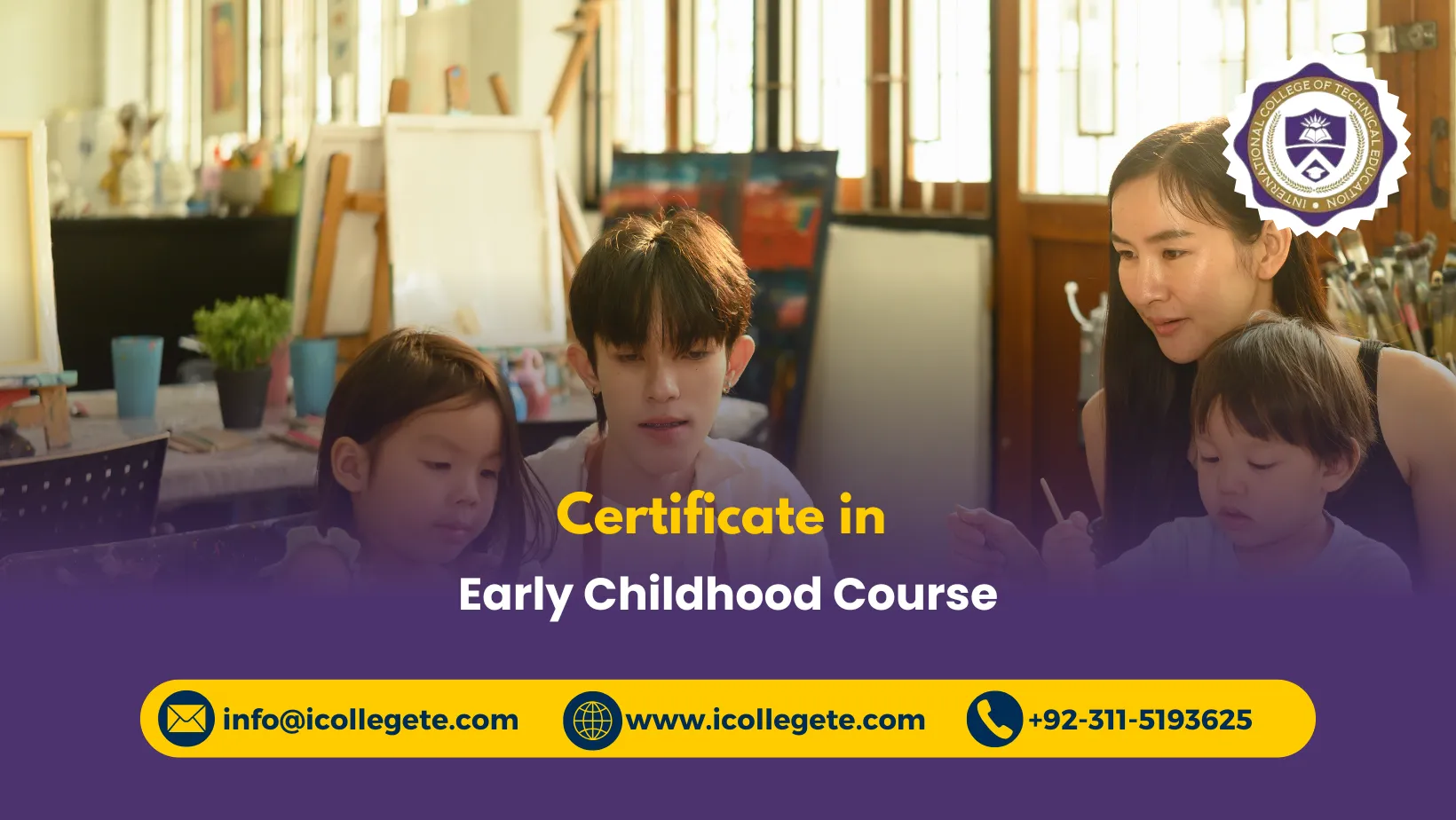
Early Childhood Education Training Course Pakistan
The Early Childhood Course in Pakistan is designed to provide learners with the essential knowledge and skills required to nurture and educate young children during their formative years. Early childhood education plays a vital role in shaping a child’s personality, cognitive development, and social skills. This course equips learners with the expertise to create supportive learning environments that foster growth and development.
Through a combination of theoretical learning and practical training, students will gain insights into child psychology, teaching methodologies, classroom management, and developmental milestones. The course emphasizes hands-on approaches, ensuring learners are prepared to meet the needs of children in diverse educational settings.
The program is tailored for individuals seeking to build careers in early childhood education, daycare management, or primary teaching. It provides a structured pathway to develop teaching strategies, communication skills, and child-centered approaches that are essential in this field.
Course Overview
The Early Childhood Course in Pakistan provides a comprehensive curriculum covering child development, teaching methodologies, classroom management, and inclusive education practices. Learners will explore both theoretical concepts and practical applications, ensuring they are job-ready upon completion. The course emphasizes creativity, empathy, and effective communication to prepare students for roles in early childhood education.
Entry Requirements
To enroll in this course, candidates must meet the following eligibility criteria:
- Age Requirements: Applicants must be at least 18 years old.
- Qualification Requirements: A minimum of high school completion or equivalent is required.
- Professional Experience: Prior experience in teaching or childcare is beneficial but not mandatory.
- Educational Background: Basic knowledge of English and general education subjects is preferred.
- Language Proficiency: Candidates should have a good command of English or Urdu to understand course materials.
- Technology Access: Learners must have access to a computer or smartphone for online learning resources.
Course Study Units
- Introduction to Early Childhood Education
- Child Development and Psychology
- Teaching Methodologies for Young Learners
- Classroom Management and Learning Environment
- Play-Based Learning and Creativity
- Inclusive Education and Special Needs Support
- Communication Skills for Educators
- Practical Training and Case Studies
Course Learning Outcomes
Upon successful completion of the course, learners will achieve the following outcomes aligned with the study units:
Introduction to Early Childhood Education
- Understand the importance of early childhood education in shaping a child’s future.
- Recognize the role of educators in supporting holistic child development.
- Apply child-centered approaches to teaching and learning.
Child Development and Psychology
- Identify physical, cognitive, emotional, and social developmental milestones.
- Apply psychological theories to support children’s growth.
- Provide age-appropriate guidance and support for young learners.
Teaching Methodologies for Young Learners
- Implement effective teaching strategies tailored for early learners.
- Use creative and engaging methods to enhance learning outcomes.
- Adapt teaching approaches to diverse learning needs and abilities.
Classroom Management and Learning Environment
- Create safe, supportive, and inclusive classroom environments.
- Apply discipline strategies with empathy and understanding.
- Organize classroom activities to encourage participation and collaboration.
Play-Based Learning and Creativity
- Integrate play into educational activities to support cognitive and social development.
- Encourage creativity and imagination in children through structured play.
- Use play-based methods to develop motor and problem-solving skills.
Inclusive Education and Special Needs Support
- Recognize the needs of children with learning difficulties or disabilities.
- Apply inclusive teaching practices to support diverse learners.
- Promote equality, diversity, and acceptance in early childhood education.
Communication Skills for Educators
- Demonstrate effective communication with children, parents, and colleagues.
- Apply active listening and empathy in educational settings.
- Build strong relationships with families and communities to support learning.
Practical Training and Case Studies
- Apply theoretical knowledge in real-world teaching environments.
- Gain confidence through hands-on practice with children.
- Analyze case studies to improve teaching strategies and problem-solving skills.
Course Benefits
Completing this course offers numerous advantages for learners:
Career Opportunities
- Access to jobs in schools and daycare centers.
- Opportunities in NGOs and educational institutions.
- Potential to work internationally in early childhood education.
Practical Skills Development
- Hands-on training with teaching methodologies.
- Ability to manage classrooms effectively.
- Confidence in supporting child development.
Contribution to Society
- Play a role in shaping future generations.
- Support communities through quality education.
- Promote inclusive and equitable learning.
Professional Recognition
- Gain a recognized qualification in early childhood education.
- Enhance employability with industry-relevant skills.
- Build credibility as a certified early childhood educator.
Who Can Enroll
This course is suitable for a wide range of learners:
Students and Graduates
- Those seeking a career in teaching or childcare.
- Individuals with education or psychology backgrounds.
- Fresh graduates looking for specialized training.
Working Professionals
- Teachers wanting to expand their expertise.
- Childcare workers interested in formal training.
- Professionals seeking career advancement.
Entrepreneurs and Business Owners
- Individuals planning to start daycare centers.
- Business owners aiming to improve childcare services.
- Entrepreneurs exploring education ventures.
Future Progression
After completing this course, learners can pursue advanced opportunities:
Higher Education
- Progress to advanced diplomas in education.
- Enroll in degree programs in child development.
- Specialize in psychology or teaching courses.
Career Advancement
- Move into supervisory or managerial roles in schools.
- Work as curriculum developers or education consultants.
- Lead early childhood education projects.
International Opportunities
- Access global job markets in education.
- Collaborate with international schools and NGOs.
- Participate in cross-border education initiatives.
Entrepreneurship
- Establish daycare or preschool centers.
- Offer consultancy services in early childhood education.
- Develop innovative learning programs for children.
The Early Childhood Course in Pakistan is a gateway to a rewarding career in education and childcare. By combining theoretical knowledge with practical training, it prepares learners to meet the growing demand for skilled educators in diverse settings. The course not only enhances employability but also empowers individuals to contribute to the holistic development of children. With structured study units, clear learning outcomes, and comprehensive benefits, this program is ideal for students, professionals, and entrepreneurs alike. Graduates can look forward to diverse career opportunities, international prospects, and entrepreneurial ventures.
Take the Next Step Toward World Early Childhood Course-Enroll Now