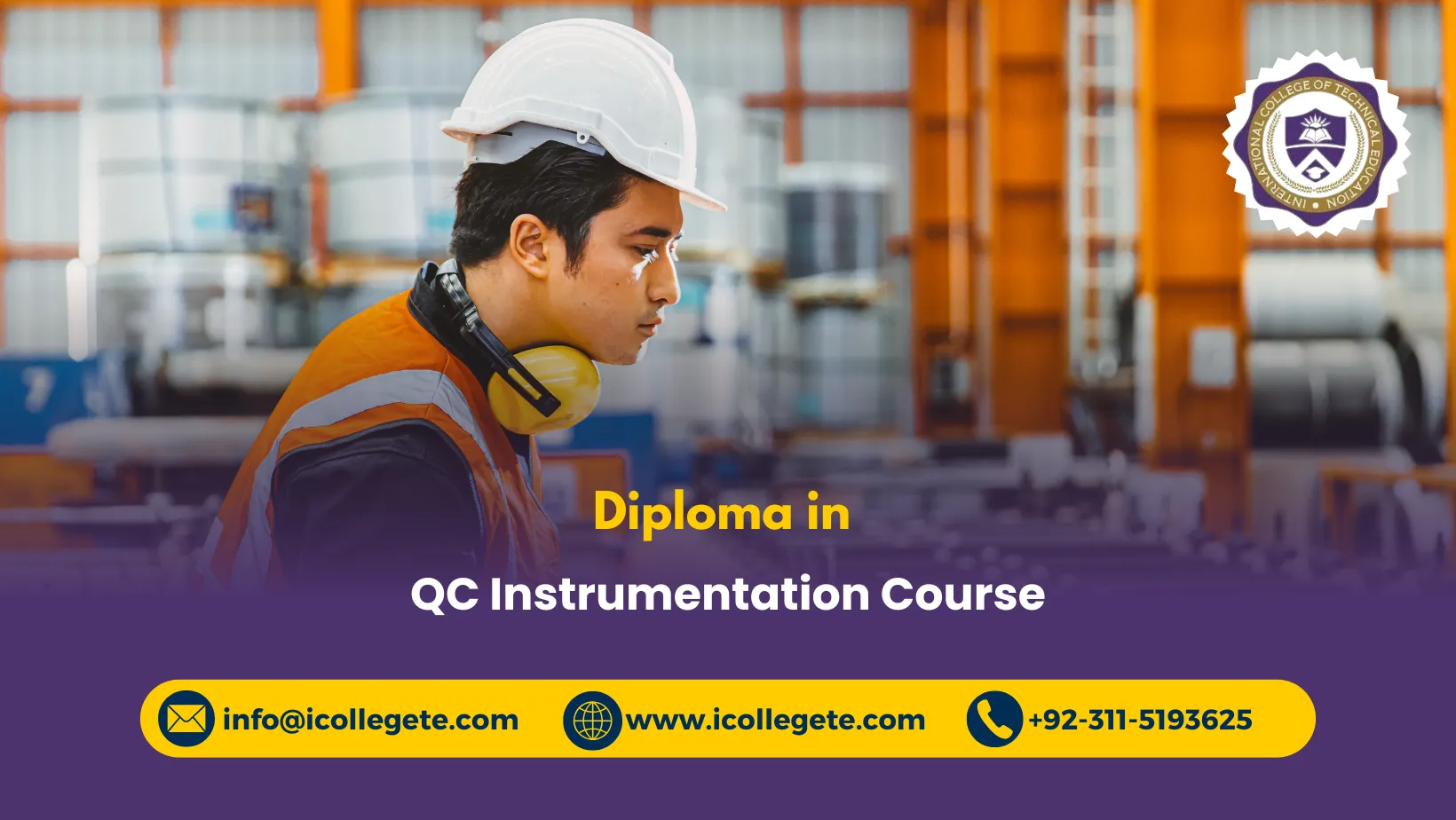
The Diploma in QC Instrumentation Course in Rawalpindi is a specialized training program designed for individuals who aspire to build a career in quality control, instrumentation, and industrial process management. This course equips learners with the technical knowledge and practical skills required to operate, maintain, and calibrate instruments used in industries such as oil and gas, power plants, pharmaceuticals, and manufacturing. With a strong emphasis on practical training, students gain expertise in ensuring accuracy, safety, and efficiency in industrial operations.
Quality control instrumentation plays a vital role in modern industries by ensuring that processes meet required standards and regulations. This diploma provides a structured pathway to develop expertise in instrumentation systems, calibration techniques, and quality assurance procedures. Learners are trained to meet the demands of both local and international industries, making them highly employable in diverse technical fields.
Rawalpindi, being a hub of technical education, offers an ideal environment for this diploma. With experienced instructors, industry-aligned curriculum, and hands-on laboratory practice, learners gain confidence in applying their skills to real-world projects. Whether you are a student seeking a technical career or a professional aiming to upgrade your expertise, this diploma provides the right foundation for success in instrumentation and quality control.
Course Overview
The Diploma in QC Instrumentation Course in Rawalpindi covers essential topics such as instrumentation systems, calibration methods, quality assurance, and industrial safety. Learners are introduced to modern equipment, testing standards, and documentation techniques. The course ensures participants can perform accurate measurements, maintain instruments, and contribute effectively to industrial projects.
Entry Requirements
To enroll in this course, candidates must meet the following criteria:
- Age Requirements: Minimum age of 16 years.
- Qualification Requirements: At least matriculation or equivalent qualification.
- Professional Experience: No prior experience required, but exposure to technical fields is beneficial.
- Educational Background: Basic knowledge of mathematics and science preferred.
- Additional Requirement 1: Ability to work with instruments and technical data.
- Additional Requirement 2: Commitment to practical training and accuracy in quality control.
Course Study Units
- Fundamentals of Instrumentation
- Calibration Techniques
- Quality Control Procedures
- Industrial Safety Standards
- Process Measurement and Control
- Documentation and Reporting
- Practical Laboratory Training
Course Learning Outcomes
By completing the Diploma in QC Instrumentation Course in Rawalpindi , learners will achieve the following outcomes:
Instrumentation Skills
- Operate and maintain industrial instruments effectively.
- Apply calibration techniques to ensure accuracy.
- Use modern tools for process measurement and control.
Quality Control Expertise
- Implement quality assurance procedures in industrial settings.
- Analyze data for compliance with standards.
- Prepare structured quality control reports.
Industrial Applications
- Support engineers in process management.
- Apply instrumentation techniques in diverse industries.
- Ensure safety and efficiency in industrial operations.
Course Benefits
This diploma offers multiple advantages for learners:
Career Opportunities
- Opens doors to jobs in oil and gas industries.
- Provides access to government and private sector roles.
- Enhances employability in Pakistan and abroad.
Technical Skill Development
- Builds expertise in instrumentation and calibration.
- Strengthens analytical and problem-solving skills.
- Improves practical knowledge of industrial processes.
Professional Recognition
- Adds a recognized qualification to your profile.
- Demonstrates specialized skills in quality control.
- Increases credibility in technical fields.
Practical Exposure
- Offers hands-on training in real laboratory settings.
- Provides fieldwork experience for confidence building.
- Prepares learners for industry challenges.
Personal Growth
- Develops discipline and responsibility.
- Enhances teamwork and communication skills.
- Boosts confidence through technical mastery.
Who Can Enroll
This course is suitable for a wide range of learners:
Students
- Those seeking a career in technical fields.
- Individuals preparing for industrial diplomas.
- Learners aiming to enhance employability.
Professionals
- Technicians and supervisors in industries.
- Junior engineers and quality control staff.
- Workers seeking skill enhancement.
Job Seekers
- Candidates looking for government jobs.
- Individuals aiming for private sector roles.
- Those interested in overseas employment.
Career Switchers
- Professionals transitioning into technical fields.
- Individuals seeking new career opportunities.
- Workers upgrading their skill set for better prospects.
Future Progression
Completing this diploma opens pathways to advanced opportunities:
Higher Education
- Progress to advanced diplomas in instrumentation.
- Pursue degrees in industrial engineering.
- Enroll in specialized quality assurance courses.
Career Opportunities
- Employment in oil and gas companies.
- Roles in power plants and manufacturing industries.
- Opportunities in pharmaceutical and chemical sectors.
International Prospects
- Work opportunities abroad in instrumentation roles.
- Recognition in multinational organizations.
- Access to global career pathways.
Specialized Training
- Advanced training in automation systems.
- Specialization in industrial safety management.
- Certification in modern instrumentation technologies.
Entrepreneurship
- Start freelance calibration services.
- Offer consultancy in industrial projects.
- Build a career in technical training services.
The Diploma in QC Instrumentation Course in Rawalpindi is a career-focused program that equips learners with essential instrumentation skills, technical expertise, and practical knowledge. By mastering calibration techniques, quality control procedures, and industrial safety standards, students gain the ability to contribute effectively to diverse industries. The course not only enhances employability but also builds confidence, discipline, and professional recognition. With structured study units, clear learning outcomes, and multiple benefits, this diploma is ideal for students, professionals, and job seekers alike. Future progression opportunities ensure that learners can continue to grow academically and professionally, whether through advanced studies, specialized training, or international employment. Ultimately, this course serves as a gateway to career advancement, personal growth, and long-term success in technical and industrial fields.
Take the Next Step Toward World QC Instrumentation Course– Enroll Now