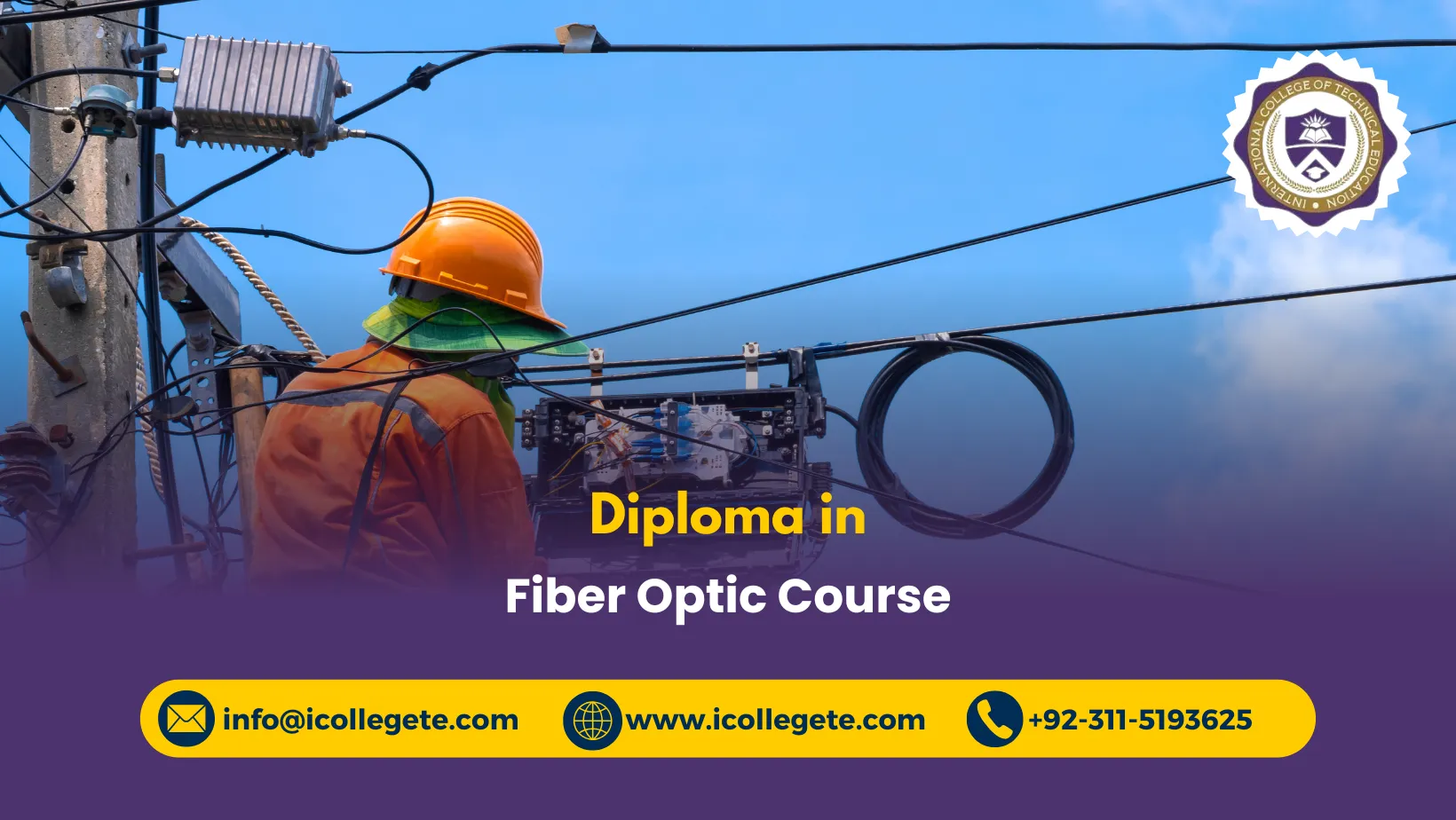
The Diploma in Fiber Optic Course in Islamabad is a specialized training program designed to equip learners with the technical expertise required in the fast-growing telecommunications and networking industry. Fiber optic technology has revolutionized communication systems worldwide, and this course provides the essential skills to install, maintain, and troubleshoot fiber optic networks. Learners will gain both theoretical knowledge and practical experience, making them job-ready for local and international opportunities.
This diploma emphasizes hands-on training with modern equipment, ensuring that students understand the complexities of fiber optic cables, splicing techniques, and testing procedures. The course is structured to meet industry standards, offering a blend of classroom instruction and workshop practice. By completing this program, learners will be prepared to work in diverse environments such as telecom companies, IT firms, and data centers.
With the increasing demand for high-speed internet and advanced communication systems, fiber optic professionals are highly sought after. This diploma not only enhances technical skills but also boosts career prospects by opening doors to employment in Pakistan and abroad. It is an ideal choice for individuals who want to build a strong foundation in modern communication technologies and secure a future in a rapidly evolving industry.
Course Overview
The Diploma in Fiber Optic Course in Islamabad provides comprehensive training in fiber optic systems, covering installation, splicing, testing, and maintenance. Learners will study the principles of light transmission, cable structures, and advanced diagnostic tools. The program ensures that students develop practical expertise alongside theoretical knowledge, preparing them for real-world applications in telecommunications and networking.
Entry Requirements
To enroll in this course, applicants must meet the following requirements:
- Age Requirements: Minimum age of 16 years.
- Qualification Requirements: At least matriculation (secondary school certificate).
- Professional Experience: No prior experience required, but technical exposure is an advantage.
- Educational Background: Preference for students with science or technical subjects.
- Physical Fitness: Must be physically fit to handle installation and maintenance tasks.
- Language Skills: Basic understanding of English or Urdu for instructions.
Course Study Units
- Fundamentals of Fiber Optic Technology
- Fiber Optic Cable Types and Structures
- Splicing and Termination Techniques
- Optical Testing and Measurement Tools
- Installation and Maintenance Procedures
- Safety Standards in Fiber Optic Work
- Advanced Networking Applications
Course Learning Outcomes
By the end of this diploma, learners will be able to apply knowledge and skills according to the study units.
Fundamentals of Fiber Optic Technology
- Understand principles of light transmission.
- Identify components of fiber optic systems.
- Explain advantages of fiber optics over traditional cabling.
Fiber Optic Cable Types and Structures
- Differentiate between single-mode and multi-mode cables.
- Recognize cable structures and their applications.
- Select appropriate cables for specific projects.
Splicing and Termination Techniques
- Perform mechanical and fusion splicing.
- Apply proper termination methods.
- Ensure low-loss connections in fiber networks.
Optical Testing and Measurement Tools
- Use OTDR and power meters effectively.
- Interpret test results for troubleshooting.
- Maintain accuracy in measurement procedures.
Installation and Maintenance Procedures
- Plan and execute fiber optic installations.
- Conduct routine maintenance checks.
- Troubleshoot common fiber optic issues.
Safety Standards in Fiber Optic Work
- Follow occupational safety guidelines.
- Handle fiber materials safely.
- Maintain a hazard-free work environment.
Advanced Networking Applications
- Integrate fiber optics in modern networks.
- Apply knowledge in telecom and IT systems.
- Support high-speed data transmission projects.
Course Benefits
This diploma offers multiple benefits for learners aiming to excel in fiber optic technology.
Career Opportunities
- Access to jobs in telecom companies.
- Opportunities in IT and networking firms.
- Pathway to international employment.
Practical Skills Development
- Hands-on training with modern equipment.
- Real-world splicing and testing practice.
- Confidence in handling complex installations.
Industry-Relevant Knowledge
- Curriculum aligned with global standards.
- Exposure to advanced fiber optic technologies.
- Training by experienced professionals.
Personal Growth
- Development of problem-solving skills.
- Improved technical communication abilities.
- Enhanced confidence in professional settings.
Long-Term Value
- Certification recognized by employers.
- Strong foundation for advanced studies.
- Lifelong skills applicable across industries.
Who Can Enroll
This course is suitable for a wide range of learners.
Students
- School graduates seeking technical education.
- Learners interested in telecom careers.
- Individuals wanting practical skills after matriculation.
Professionals
- Workers in IT and networking fields.
- Technicians seeking formal certification.
- Employees wanting career progression.
Entrepreneurs
- Individuals planning to start telecom services.
- Business owners expanding into networking solutions.
- Self-employed technicians seeking credibility.
Enthusiasts
- Technology lovers wanting technical knowledge.
- Hobbyists interested in communication systems.
- Learners passionate about fiber optic technology.
Future Progression
Completing this diploma opens doors to further opportunities.
Advanced Diplomas
- Specialization in fiber optic engineering.
- Courses in advanced telecom systems.
- Higher-level certifications in networking.
Higher Education
- Pathway to bachelor’s degree in telecommunication engineering.
- Opportunities in technical institutes.
- Eligibility for international study programs.
Employment Growth
- Jobs in multinational telecom companies.
- Positions in IT and networking departments.
- Opportunities in government communication projects.
Entrepreneurship
- Establishing personal telecom services.
- Expanding into fiber optic installation businesses.
- Offering consultancy in networking solutions.
International Opportunities
- Work abroad in telecom industries.
- Access to Gulf and European job markets.
- Recognition of skills for migration programs.
The Diploma in Fiber Optic Course in Islamabad is a comprehensive program tailored for individuals who aspire to build a strong career in telecommunications and networking. It combines practical training with theoretical knowledge, ensuring learners are fully prepared to meet the demands of modern communication systems. With a curriculum covering fiber optic technology, splicing, testing, installation, and safety standards, students gain a complete understanding of the field. The entry requirements are accessible, making the course suitable for beginners and professionals alike. Graduates benefit from enhanced career opportunities, personal growth, and industry recognition.
Take the Next Step Toward World Diploma in Fiber Optic Course– Enroll Now