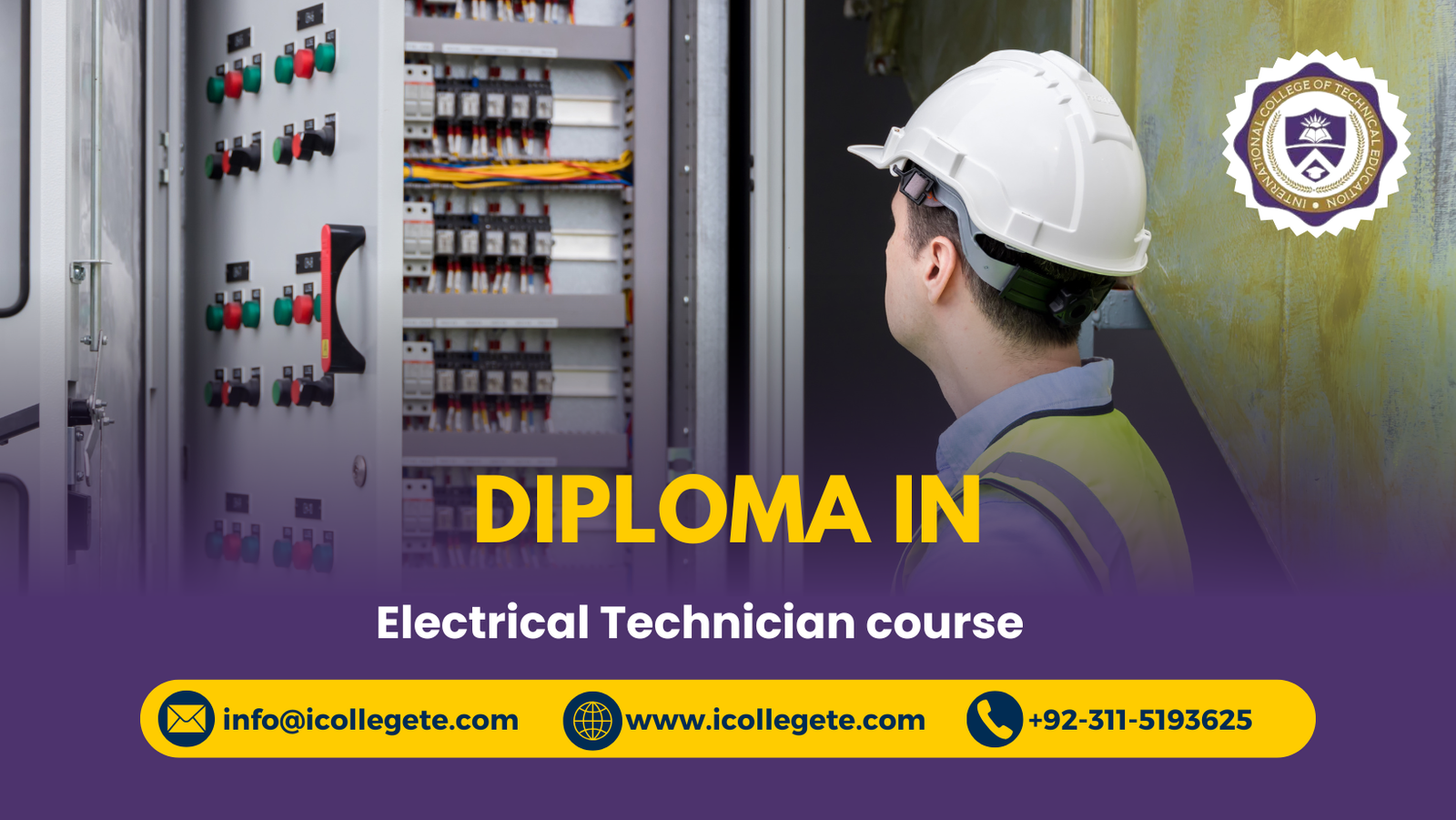
The Diploma in Electrical Technician course is a career-focused training program designed to prepare learners for professional roles in electrical installation, maintenance, and repair across residential, commercial, and industrial sectors. With the increasing demand for skilled electrical technicians worldwide, this diploma provides both theoretical knowledge and practical expertise to meet industry standards.
The curriculum covers essential areas such as electrical wiring, circuit design, power distribution, motor controls, renewable energy systems, and troubleshooting techniques. Students also gain proficiency in reading electrical blueprints, applying safety codes, and using modern electrical tools and equipment.
Hands-on training is a key component of the program, ensuring learners can confidently perform real-world electrical tasks under professional supervision. By the end of the course, graduates are equipped to work as electrical technicians, maintenance specialists, or supervisors in construction, manufacturing, energy, and facility management industries.
The Diploma in Electrical Technician is composed of several essential units designed to build both your theoretical knowledge and practical skills:
Unit 1: Introduction to Electrical Engineering
- Overview of electrical engineering principles.
- Basic electrical theory and concepts.
- Understanding of current, voltage, resistance, and power.
Unit 2: Electrical Safety and Regulations
- Key safety guidelines and regulations for electrical work.
- Risk assessment and hazard prevention in electrical systems.
- Personal protective equipment (PPE) and safety protocols.
Unit 3: Circuit Design and Installation
- Designing and installing electrical circuits.
- Wiring systems and circuit protection.
- Residential, commercial, and industrial electrical installations.
Unit 4: Electrical Components and Tools
- Study of electrical components such as transformers, resistors, capacitors, and inductors.
- Use of electrical tools like multimeters, testers, and circuit analyzers.
- Hands-on experience with electrical devices and components.
Unit 5: Electrical Motors and Controls
- Types of electrical motors and their applications.
- Installation, troubleshooting, and maintenance of motors.
- Motor control systems and wiring diagrams.
Unit 6: Power Distribution Systems
- Understanding power generation, transmission, and distribution.
- Overview of substations, circuit breakers, and transformers.
- Distribution networks and electrical grid systems.
Unit 7: Troubleshooting Electrical Systems
- Identifying faults in electrical systems.
- Methods of troubleshooting and repair.
- Techniques for diagnosing circuit problems and electrical faults.
Unit 8: Advanced Electrical Technologies
- Study of automation systems, programmable logic controllers (PLCs), and smart grid technologies.
- Renewable energy systems, such as solar and wind power.
- Integration of energy-efficient solutions.
Unit 9: Electrical Maintenance and Service
- Preventive and corrective maintenance of electrical systems.
- Routine checks and troubleshooting.
- Techniques for servicing electrical components.
Upon completion of the Diploma in Electrical Technician course, you will be able to:
- Understand Electrical Theory: Gain a thorough understanding of electrical theory, including Ohm’s Law, circuit analysis, power generation, and electrical components.
- Design and Install Electrical Systems: Learn how to design, install, and troubleshoot electrical circuits and systems in residential, commercial, and industrial settings.
- Troubleshoot Electrical Problems: Identify and resolve electrical faults quickly and efficiently using testing tools and techniques.
- Ensure Electrical Safety: Master safety practices related to electrical installations and maintenance to ensure compliance with electrical codes and regulations.
- Work with Advanced Electrical Equipment: Gain hands-on experience with electrical equipment such as transformers, motors, and wiring systems.
- Understand Electrical Regulations: Learn about national and international electrical codes, standards, and regulations.
- Maintain Electrical Systems: Develop skills for the regular maintenance and servicing of electrical systems to ensure their optimal performance.
- Industry-Relevant Skills: Learn the practical skills required for immediate employment in various sectors of the electrical industry.
- Hands-on Training: Gain practical experience with real-world electrical systems, using industry-standard tools and techniques.
- Increased Employability: Graduates of the course will be equipped with the qualifications and skills required to pursue various roles in the electrical field.
- High Demand for Technicians: Electrical technicians are in high demand due to the ever-expanding need for skilled professionals in residential, commercial, and industrial sectors.
- Career Advancement Opportunities: This diploma serves as a gateway to further specialization in areas like automation, renewable energy systems, and power distribution.
- Industry Recognition: The diploma is highly regarded in the industry, ensuring that graduates stand out in a competitive job market.
The Diploma in Electrical Technician is ideal for:
- Aspiring Electrical Technicians: Individuals looking to start a career in the electrical industry, focusing on installation, maintenance, and troubleshooting of electrical systems.
- Existing Technicians: Professionals in related fields such as electronics or HVAC who want to upgrade their skills and broaden their expertise in electrical systems.
- Career Changers: Individuals from other sectors interested in switching to the electrical industry for job stability, growth, and financial rewards.
- Hands-On Learners: People who enjoy practical, technical work and are eager to solve real-world electrical problems.
- Entrepreneurs: Individuals who want to start their own electrical business or freelance career in electrical installations and repairs.