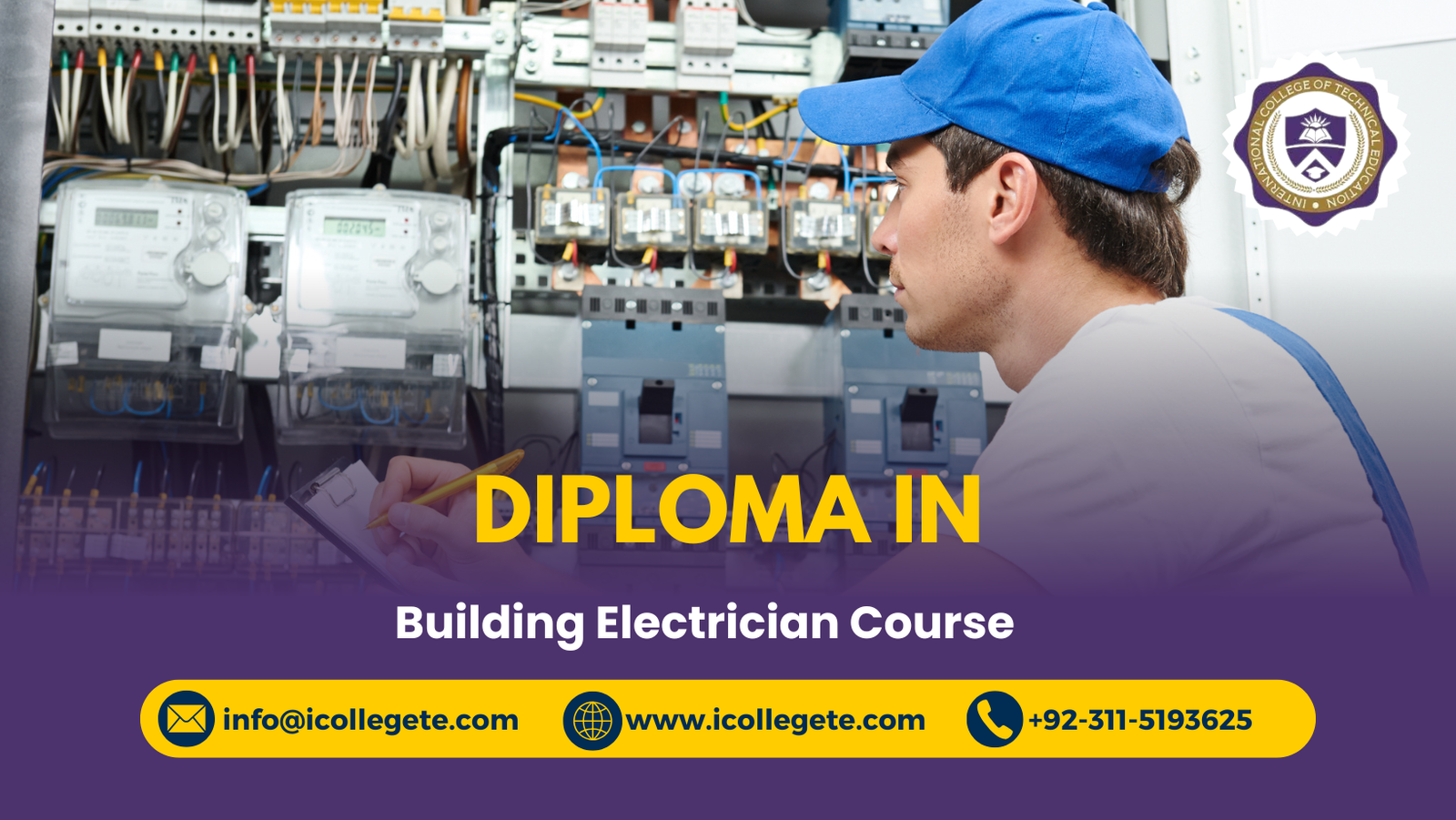
The Diploma in Building Electrician course is a professional training program designed to equip learners with the technical skills and practical knowledge required to work as qualified electricians in residential, commercial, and industrial settings. With the growing demand for skilled electrical technicians worldwide, this diploma provides a strong foundation in electrical installation, maintenance, and safety practices.
The curriculum covers essential topics such as electrical wiring, circuit design, power distribution, lighting systems, troubleshooting, and the use of modern electrical tools. Students also gain expertise in reading blueprints, adhering to building codes, and applying safety standards to ensure reliable and secure electrical systems.
Hands-on training is a key component of the program, allowing learners to practice real-world electrical installations and repairs under professional supervision. By the end of the course, graduates are prepared to work as building electricians, electrical supervisors, or maintenance technicians across diverse industries.
The course is structured into several units that cover the key aspects of building electrical work. The study units include:
- Unit 1: Introduction to Electrical Systems
- Understanding electrical theory and principles
- Basics of electrical circuits and components
- Types of electrical systems in buildings
- Unit 2: Electrical Safety and Standards
- Electrical hazards and safety precautions
- National electrical codes and standards
- Personal protective equipment (PPE) for electricians
- Unit 3: Wiring Systems and Installation
- Types of wiring systems used in buildings
- Installing and connecting electrical wires and cables
- Electrical load calculations and distribution
- Unit 4: Circuit Design and Troubleshooting
- Understanding circuit diagrams and designs
- Identifying faults in circuits and electrical systems
- Troubleshooting and repairing electrical issues
- Unit 5: Power Distribution and Equipment
- Installing and maintaining circuit breakers and fuses
- Electrical panels and distribution boards
- Power outlets, switches, and other equipment
- Unit 6: Electrical Tools and Equipment
- Using hand tools and power tools for electrical work
- Understanding testing and measuring instruments
- Safe operation and maintenance of electrical tools
- Unit 7: Advanced Electrical Systems
- Working with complex electrical systems (e.g., industrial machinery)
- Wiring for high-voltage systems and equipment
- Integrating renewable energy systems (solar, wind, etc.)
Upon completing the Diploma in Building Electrician course, students will:
- Understand Electrical Systems: Gain in-depth knowledge of electrical systems, wiring, and circuit designs used in buildings.
- Follow Safety Procedures: Master electrical safety protocols and regulations to prevent accidents and ensure safe working practices.
- Install and Maintain Electrical Wiring: Learn how to install and maintain electrical wiring and systems, from power distribution to lighting and appliance wiring.
- Troubleshoot Electrical Problems: Develop the ability to diagnose and fix faults in electrical circuits and systems quickly and safely.
- Understand National Codes and Standards: Familiarize yourself with national electrical codes, standards, and building regulations to ensure compliance in all electrical work.
- Work with Electrical Tools and Equipment: Become skilled in the use of electrical tools, including voltmeters, wire strippers, and circuit testers.
- Work on Complex Electrical Installations: Develop the skills necessary to handle complex electrical installations in residential, commercial, and industrial buildings.
Enrolling in the Diploma in Building Electrician course provides several benefits:
- Industry-Relevant Skills: The course is designed to meet the current demands of the building and construction industry, providing you with skills that are immediately applicable in the workplace.
- Practical Training: The course emphasizes hands-on experience, ensuring that students are job-ready by the time they graduate.
- High Demand for Electricians: Qualified electricians are in high demand, particularly in construction projects, renovations, and infrastructure development.
- Career Opportunities: Upon completing the course, you will have access to a wide range of career options, including working as a residential or commercial electrician, maintenance electrician, electrical technician, or even self-employed contractor.
- Comprehensive Knowledge: The course covers all aspects of building electrical work, from wiring and circuit installation to troubleshooting and system maintenance.
- Certification: Graduating with a diploma provides you with a recognized qualification that enhances your credibility and employability in the electrical industry.
The Diploma in Building Electrician course is suitable for:
- Aspiring Electricians: Individuals who want to pursue a career as a building electrician and gain the necessary qualifications to work in the field.
- Current Electricians Seeking Certification: Electricians who have on-the-job experience but want to formalize their skills and gain certification.
- Construction Workers or Tradespeople: Those working in construction or related fields who want to broaden their skill set by specializing in electrical systems.
- Those Interested in Electrical Maintenance: Individuals looking to enter the electrical maintenance field, working to maintain and repair electrical systems in residential, commercial, or industrial settings.
- Career Changers: Anyone looking to switch careers into the high-demand field of electrical work.